What to Do When a Dracaena fragrans Gets Bugs? Pesticide Methods for Controlling the Sugarcane Borer and Other Pests and Diseases
Dracaena fragrans, native to Guinea, has gradually begun to be cultivated in our country in recent years because of its sturdy, handsome form and its lovely, emerald-green leaves, and it has slowly become one of the most popular foliage plants today. However, because most of the flower lovers who grow Dracaena fragrans are beginners, improper care often occurs, causing the plant to get bugs and fall ill. So what should you do when a Dracaena fragrans gets bugs? The following are several pest and disease control methods for Dracaena fragrans; let's take a look together.
I. When a Dracaena fragrans Gets Bugs, Spray with Pesticide
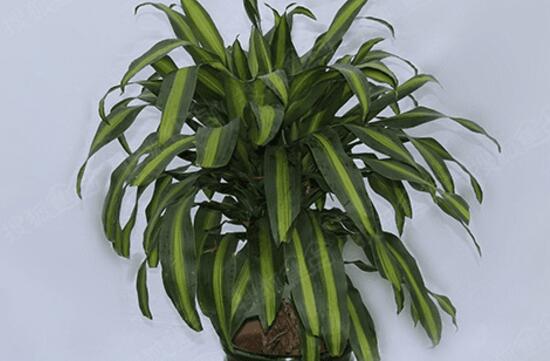
As a foliage plant, Dracaena fragrans is not difficult to grow, but because beginners make up the majority, they often make mistakes in care, and the result is that the plant gets bugs and falls ill. It is understood that the main insect pests of Dracaena fragrans are the sugarcane borer and the granular bark beetle, and the main diseases are stem rot, phytophthora blight, anthracnose, and so on. As for what to do when a Dracaena fragrans gets bugs, just identify the specific pest and spray with pesticide.
II. Pest and Disease Control of Dracaena fragrans
1. Sugarcane borer on Dracaena fragrans
When it comes to bugs on Dracaena fragrans, the first one to consider should be the sugarcane borer, an insect with great potential danger. When the damage is severe, the fleshy part beneath the epidermis of the Dracaena fragrans is entirely eaten out and replaced with insect frass; with further damage, the plant will face death.
Control method: After discovering the sugarcane borer, you can drench the affected part of the stem with fast-killing agents such as fenvalerate-malathion emulsifiable concentrate, and make a toxic soil with trichlorfon and scatter it in the surface soil of the flowerpot. In addition, when purchasing plants, you should observe carefully and choose healthy plants free of disease, so as to eliminate the problem at the source.
2. Granular bark beetle
A pest that harms Dracaena fragrans, it mostly appears during the growing season, and the damage is very serious. The granular bark beetle is small in size, its frass is slightly fine, and it usually occurs together with the sugarcane borer. Therefore, after being attacked by this insect, the damage symptoms are basically similar to those caused by the sugarcane borer.
Control method: Once the granular bark beetle is found, pesticide should be sprayed immediately for control; you can spray a mixture of 40% omethoate emulsifiable concentrate at 1000 times dilution and 90% trichlorfon at 800 times dilution, once every 7 to 10 days, and 4-5 consecutive applications will take effect.
3. Stem rot
A disease that harms the stem of Dracaena fragrans, it generally spreads through splashing water, and long periods of retained moisture make it easy to develop. Symptoms: the stem or base of the stem of the Dracaena fragrans rots, causing the whole plant to wither and die quickly.
Control method: When the above symptoms are found, you can spray 27% copper hydroxide suspension concentrate at 600 times dilution; when the disease is severe, you can also add some Ralstonia solanacearum control agent or hymexazol when spraying, about once every 10 days, and 2 to 3 sprays will suffice.
4. Anthracnose
One of the pests and diseases of Dracaena fragrans, its main damage site is the leaves. Symptoms: in the early stage, the diseased leaves of the Dracaena fragrans show several small patches of pale yellow, dark brown, or light gray, with many black spots inside, and in severe cases it can infect the stems and branches.
Control method: After confirming it is anthracnose, you can spray 75% chlorothalonil at 600 times dilution or 50% thiram wettable powder at 500 times dilution, once every 7-10 days, and 3 consecutive sprays will take effect. In addition, during the peak growing season of Dracaena fragrans, fertilizing about once every 20 to 30 days can effectively reduce the occurrence of this disease.
5. Phytophthora blight
It mainly harms the leaves and the ground-level parts of Dracaena fragrans. Symptoms: in the early stage, the diseased leaves show water-soaked spots, which then quickly expand and turn into dark brown rot, causing leaf drop, and sometimes there is a thin white mold layer on the affected surface of the leaves.
Control method: Promptly cut off the diseased leaves and burn them in a concentrated pile or bury them in soil to reduce the source of infection. When the disease occurs, you can spray 72.2% propamocarb aqueous solution at 600-700 times dilution for control. If grown outdoors, rain-shelter measures should be taken, and excessive moisture must also be prevented, as these are factors that trigger this disease.
6. Gray mold
In the process of growing Dracaena fragrans, you should pay attention to its growing environment, keeping the soil moist, with sufficient light and good ventilation; a slight negligence may lead to gray mold. Symptoms: the leaves and leaf stalks of the Dracaena fragrans appear grayish white, water-soaked, and even the tissue softens to the point of rotting.
Control method: When the above symptoms are found, promptly cut off the diseased leaves to reduce the source of infection; in the early stage of the disease, you can spray 70% thiophanate-methyl wettable powder at 1000 times dilution for control.
Overall, Dracaena fragrans is not hard to grow; you just need to care for it carefully, and only then will bugs not come calling. That is all for the introduction to pest and disease control of Dracaena fragrans; I believe everyone should now know what to do when a Dracaena fragrans gets bugs or falls ill! Finally, may everyone's Dracaena fragrans grow beautifully~
How to Grow the Brazilian Iron Tree: Cultivation Methods and Precautions for the Brazilian Iron Tree / Avoid Exposure to Strong Sun
The Brazilian iron tree, also called Dracaena fragrans, has a sturdy, handsome form and leaves that are emerald green and tender all year round. It is currently the most popular foliage plant and is widely loved by flower lovers. In daily life, many people want to grow a pot of Brazilian iron tree, so how do you grow it? The following is a carefully compiled set of cultivation methods and precautions for the Brazilian iron tree; it is very detailed, and friends who want to grow it should definitely take a look~
I. How to Grow the Brazilian Iron Tree: Understand Its Habits
The Brazilian iron tree likes a hot and humid environment; it fears waterlogging, is not cold-tolerant, and dislikes long periods of shade and strong sun exposure. So how do you grow the Brazilian iron tree? You should place it in a ventilated spot with diffused light, water it appropriately during daily care to keep the potting soil slightly moist, and take good cold-protection measures in winter. As for the growing medium, it is best to use soil that is loose, fertile, well-drained, and contains humus.
II. Cultivation Methods and Precautions for the Brazilian Iron Tree
1. Potting soil
How do you grow an indoor Brazilian iron tree? I suggest everyone prepare the potting soil. Nowadays, when growing Brazilian iron trees, everyone likes to buy online, with ready-made flowerpots and soil, but they are all very cheap; they are fine for normal care, but if you want to grow the Brazilian iron tree well, it is best to reselect the flowerpot and soil.
Flowerpot: The flowerpot for the Brazilian iron tree needs to be chosen according to the plant's stems. Generally speaking, a pot with a 12-20 cm diameter is enough, but for a Brazilian iron tree with 3 stems, use a pot with a 25 cm diameter.
Soil: According to the growth habits of the Brazilian iron tree, it likes soil that is loose, fertile, well-drained, and contains humus. For this, I recommend choosing soil mixed in equal proportions of peat soil, leaf mold, garden soil, and perlite.
2. Light
In the cultivation methods for the Brazilian iron tree, light is very important, though it has strong adaptability to light and can grow normally whether in semi-shade or under sunlight. However, the Brazilian iron tree dislikes long periods of shade and strong sun exposure, and apart from summer, it needs at least 3 hours of direct sunlight every day, so when growing it indoors, it is best to place it in a bright, well-ventilated spot.
Precautions: Although the Brazilian iron tree is shade-tolerant, the light must not be too little, otherwise symptoms of yellowing leaves will appear; however, the Brazilian iron tree dislikes strong sun exposure, so in summer, avoid direct sunlight to prevent the leaves from being scorched by the sun, and you can choose a shading object for shade.
3. Temperature
How do you grow the Brazilian iron tree? Adjusting the temperature in good time is also crucial. It is understood that the most suitable growing temperature for the Brazilian iron tree is 18-24°C, of which March to September is 24-30°C, and September to March of the following year is 13-18°C. If the Brazilian iron tree's growth needs can be met at all times, it can grow lush branches and leaves.
Precautions: The Brazilian iron tree is not cold-tolerant; when the winter temperature is below 13°C it enters dormancy, and below 5°C the plant suffers cold damage. So if you want it to overwinter safely, it is best to keep the room temperature above 10°C in winter.
4. Watering
Water is the source of life, so in the cultivation methods for the Brazilian iron tree, watering is a very important part. The Brazilian iron tree likes a humid environment; during daily care, it should be watered about once every 10 days, and the potting soil should be kept half dry and half moist. In winter, the plant enters dormancy, and at this time try to let the potting soil be a bit drier.
Precautions: The Brazilian iron tree dislikes water accumulation, so when watering it, you must not give too much, otherwise after water accumulates in the potting soil, the trunk will rot. In addition, when growing it in the north, because the air is very dry, you also need to frequently spray water on the leaf surface and the surrounding ground to raise the surrounding air humidity, so as to benefit the growth of the Brazilian iron tree.
5. Fertilizing
How do you grow the Brazilian iron tree? After saying that, let's talk about fertilizing, which is also very important in the growth process of the Brazilian iron tree. The Brazilian iron tree likes fertilizer; during the growing season, flower lovers should fertilize the Brazilian iron tree once every half month; in addition, you can also appropriately carry out foliar topdressing, spraying the leaves with nutrient solution diluted 100 times, once every half month.
Precautions: When fertilizing the Brazilian iron tree, you must not give too much, especially nitrogen fertilizer, which should not be applied too much, otherwise the golden-yellow markings on the leaves will be inconspicuous, affecting the ornamental effect; in addition, by September, you should stop applying nitrogen fertilizer, and applying phosphorus and potassium fertilizer two or three times in about a month is enough, so as to increase the plant's cold resistance.
6. Repotting
During the growth process of the Brazilian iron tree, as time passes, the plant will consume a large amount of nutrients in the pot. So for the healthy growth of the plant, flower lovers should repot it in spring, with new plants repotted once a year and old plants repotted once every 2 years.
7. Pests and diseases
In the cultivation methods for the Brazilian iron tree, pests and diseases are also something everyone needs to pay attention to. It is understood that under improper care, the Brazilian iron tree will get bugs and fall ill, seriously affecting the plant's health and appearance. So after discovering the problem, pesticide should be sprayed immediately for control; as for what pesticide to spray, there is a detailed introduction in the pest and disease control for the Brazilian iron tree, so I won't say more here.
Overall, the Brazilian iron tree is still quite easy to grow, but if you want to grow it beautifully, everyone needs to put in more effort and care for it according to the above requirements, so that it can grow lush branches and leaves. That is all for the introduction to the cultivation methods and precautions for the Brazilian iron tree; friends who are tempted might as well try growing one~