What to Do When the Pagoda Tree Flowers Have Bugs? Control Methods for 2 Pests and 2 Diseases
I. What to Do When the Pagoda Tree Flowers Have Bugs: Find the Cause
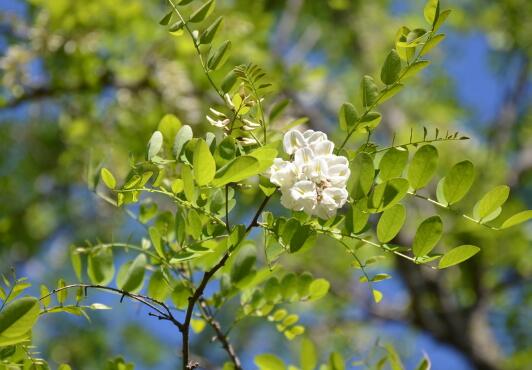
To know what to do when the pagoda tree flowers have bugs, we first need to know what kind of bug it is, so that we can deal with it in a targeted way, because the control methods for each pest and disease of pagoda tree flowers are different. The details are described below, let us take a look.
II. Pest and Disease Control of Pagoda Tree Flowers (Pests)
1. Pagoda tree looper (Semiothisa cinerearia)
The pagoda tree looper is a leaf-eating pest, and its peak period is in summer every year, so everyone must pay special attention at this time. This pest mainly feeds on the leaves of pagoda tree flowers, and in severe cases it can even cause the plant to die.
Control method: When dealing with this pest and disease of pagoda tree flowers, for the larvae we can use 50% fenitrothion (sumithion) emulsifiable concentrate at 1000—1500 times dilution to spray and kill them. If there are many pests, we can use dichlorvos tube-insertion smoke agent for fumigation.
2. Aphids
Aphids are a phytophagous insect that mainly sucks the sap from the leaves of pagoda tree flowers, causing the leaves to gradually lose their green color, and in severe cases causing the leaves to continuously shrink and fall off, and also affecting flowering.
Control method: For this pest and disease of pagoda tree flowers, we can use 50% pirimicarb wettable powder at 3000 times dilution or 50% malathion emulsion at 1000 times dilution to spray and kill them.
III. Pest and Disease Control of Pagoda Tree Flowers (Diseases)
1. Rot disease
Rot disease, also called bark rot, is a relatively common disease of pagoda tree flowers. This disease appears without a regular pattern and can occur in any season. When it occurs, many small black spots appear on the trunk, and as time goes on they gradually spread to the lower part, eventually causing the plant to gradually rot.
Control method: When dealing with this pest and disease of pagoda tree flowers, we can use 1 bottle of the mother liquor of "Guardian General" (Hushu Dajiangjun) diluted with 30 kg of water, then apply it to the plant body. Generally, apply once about every 15 days, and 2-3 times is enough for it to recover.
2. Leaf scorch disease
Leaf scorch disease mainly harms the leaves of pagoda tree flowers. When it occurs, the edges of the leaves turn withered and yellow, and many brown diseased spots also appear. As time goes on they gradually spread, eventually causing the plant to gradually wither.
Control method: For this pest and disease of pagoda tree flowers, we can use chlorothalonil at 800 times dilution or "Meike" at 3000-4000 times dilution to spray the diseased plants. Generally, spray once every 7-10 days, and about 3 times is enough for them to recover.
What to Do When the Banks' Rose Has Bugs: Pest and Disease Control of Banks' Rose / 2 Pests and 2 Diseases
During the growth of Banks' rose, the last thing we want to encounter is problems such as pests and diseases. Such problems are extremely harmful to the plant, not only affecting its appearance, but in severe cases also causing the plant to wither and die. So what should be done when Banks' rose has bugs? How should pest and disease control of Banks' rose be carried out? Below, the editor will take everyone through it.
I. What to Do When the Banks' Rose Has Bugs: Find the Cause
To know what to do when Banks' rose has bugs, we first need to find the cause, that is, what kind of bug it is, so that we can deal with it in a targeted way, because the control methods for each pest and disease are different. The details are described below, and interested friends can take a look.
II. Pest and Disease Control of Banks' Rose (Pests)
1. Scarab beetles
Scarab beetles are invertebrates, and they mainly harm the root system, leaves and flower buds of Banks' rose, thereby affecting the yield and quality of its flowering, and in severe cases even causing the plant not to bloom.
Control method: When dealing with this pest and disease of Banks' rose, we can use 2.5% deltamethrin at 2000-3000 times dilution to spray and kill them, or we can trap and kill them under light.
2. Aphids
Aphids are one of the most destructive pests on Earth. Many plants may suffer from this pest during growth, and Banks' rose is no exception. This pest mainly sucks the sap from the plant, causing a massive loss of nutrients and making it wither.
Control method: For this pest and disease of Banks' rose, we can use 50% pirimicarb wettable powder at 3000 times dilution to spray and kill them.
III. Pest and Disease Control of Banks' rose (Diseases)
1. Powdery mildew
Powdery mildew mainly threatens the leaves, petioles, young shoots and flower buds of Banks' rose. When it occurs, many irregular white powdery mold spots appear on the leaves, and as time goes on they gradually spread, eventually causing the plant to shrivel and die, losing its ornamental value.
Control method: When dealing with this pest and disease of Banks' rose, we can use 50% carbendazim wettable powder at 800 times dilution to spray it. Generally, spray once every 5-7 days, and 3-4 times is enough for it to recover.
2. Black spot disease
Black spot disease is a disease caused by fungi, mainly harming the leaves, petioles and young shoots of Banks' rose. When it occurs, many purplish-brown diseased spots appear on the affected parts, and as time goes on the spots gradually expand and their color slowly changes, eventually causing the plant to gradually wither.
Control method: For this pest and disease of Banks' rose, we can use thiophanate-methyl or carbendazim, etc. to spray the diseased plants. Generally, once every 7-10 days, and 2-3 times is enough for them to recover.
What to Do When the Hollyhock Has Bugs: Pest and Disease Control of Hollyhock / 2 Pests and 2 Diseases
During the process of growing hollyhock, the last thing we want to encounter is problems such as pests and diseases. Such problems are extremely harmful to the plant, not only affecting its ornamental value, but in severe cases also causing it to wither. So what should be done when the hollyhock has bugs? How should pest and disease control of hollyhock be carried out? Below, the editor will take everyone through it.
I. What to Do When the Hollyhock Has Bugs: Find the Cause
To know what to do when the hollyhock has bugs, we first need to know what kind of bug it is, so that we can deal with it in a targeted way, because the control methods for each pest and disease are different, and we need to use different medicines for treatment according to different pests and diseases. The details are below, let us take a look.
II. Pest and Disease Control of Hollyhock (Pests)
1. Red spider mites
Among the pests and diseases of hollyhock, red spider mites are one of the more common ones. This pest is red in appearance and is a very small organism. This pest mainly feeds on the leaves of hollyhock, causing many pitted little holes to appear on the leaves, which greatly affects their appearance.
Control method: When dealing with this pest, the red spider mite, we can use 15% pyridaben emulsifiable concentrate at 2500-3000 times dilution to spray and kill them. It is best not to use pyrethroid pesticides, because they have no effect on mite pests.
2. Stem borers
Stem borers are a pest belonging to the order Lepidoptera. This pest is generally more common in the southern regions. It mainly harms the leaves of hollyhock, causing the leaves to gradually curl and wither, and finally gradually fall off.
Control method: When controlling this pest and disease of hollyhock, we can directly use Bt wettable powder with a content of 16000 IU/mg at 500-700 times dilution to spray and kill them.
III. Pest and Disease Control of Hollyhock (Diseases)
1. Rust disease
Rust disease is a disease that appears in many plants, and hollyhock is no exception. This disease mainly threatens the leaves, stems and fruits of the plant. When it occurs, many small blister-like spots appear on the affected parts, and in severe cases the spots densely merge into patches, and the plant also rapidly withers and dies as a result.
Control method: When controlling this pest and disease of hollyhock, we can use 70% thiophanate-methyl wettable powder at 1000-1500 times dilution to spray the diseased plants. Generally, spray once every 7-10 days, and after 2-3 times they can recover.
2. White spot disease
White spot disease is a relatively common disease that appears on many plants. It mainly threatens the leaves of hollyhock. When it occurs, many small brown diseased spots appear on the leaves, and as time goes on the center of the spots turns grayish-white while the outer edge turns reddish-brown, and in humid environments a grayish-brown mold layer also grows on the spots.
Control method: When controlling this pest and disease of hollyhock, we can use 75% chlorothalonil wettable granules at 800 times dilution to spray it. Generally, spray once every 10 days, and 3-4 times is enough for it to recover.