What to Do When Giant Crinum Lily Gets Bugs? Master the Control Methods for 2 Pests and 2 Diseases
In the process of growing giant crinum lily, the last thing we want to encounter is problems like pests and diseases. Such problems are extremely harmful to the plant, not only affecting its ornamental value, but in severe cases even causing the plant to wither and die. So what should you do when giant crinum lily gets bugs? How should pest and disease control for giant crinum lily be done? Let's take a look below.
I. What to Do When Giant Crinum Lily Gets Bugs - Find the Cause
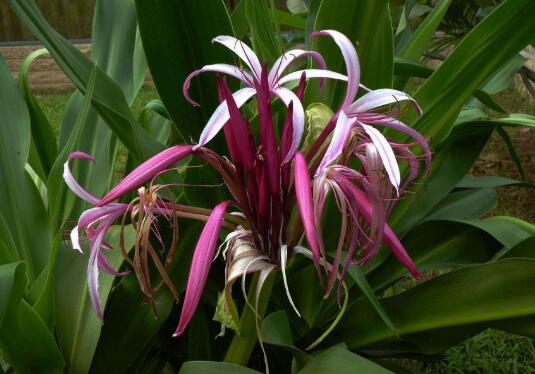
II. Pest and Disease Control for Giant Crinum Lily (Pests)
1. Aphids
Among the pests and diseases of giant crinum lily, aphids are one of the most frequently occurring. They mainly harm the leaves, stems, tender tips and tender spikes of the giant crinum lily, gradually sucking out the sap within, which causes the plant to lose a large amount of nutrients and gradually wither and die.
Control method: For this pest, we can use a 50% fenitrothion emulsion at 1000 times dilution to spray and kill them directly.
2. Whiteflies
Whiteflies are a very small pest, but among the pests and diseases of giant crinum lily they are one of the most harmful. This pest feeds on the sap of the giant crinum lily, gradually sucking the sap from the stems, which causes the plant to lose a large amount of nutrients and eventually wither and die.
Control method: When dealing with whitefly infestation, we can use a 20% buprofezin wettable powder solution to spray the plant, generally spraying once every 5-7 days, and after 3 applications this pest can be completely eliminated.
III. Pest and Disease Control for Giant Crinum Lily (Diseases)
1. Leaf Spot Disease
Leaf spot disease is a disease caused by fungi. When it occurs, many yellow-brown spots appear on the leaves of the giant crinum lily, and as time passes the spots gradually expand, eventually causing the plant to gradually wither and die.
Control method: When controlling this pest and disease of giant crinum lily, we can use a 65% duokexin wettable powder at 800 times dilution to spray the affected plant, generally spraying once every 7-15 days, and after 2-3 applications it can be cured.
2. Soft Rot Disease
Soft rot is a relatively common plant disease and is also one of the diseases affecting giant crinum lily. In the early stages of the disease, the leaves gradually show signs of green wilt, and many water-soaked lesions appear on the stem, light yellow in color, giving off waves of foul odor, and eventually gradually causing the plant to rot to death.
Control method: When controlling this pest and disease of giant crinum lily, we can use a 77% copper hydroxide wettable powder at 400-600 times dilution to spray it, generally at intervals of 7-10 days, and after about 3 applications it can be cured.
How to control pests and diseases of potted giant crinum lily?
During the spring and summer growing season, the giant crinum lily needs to keep its potting soil moist. Because it grows rapidly and has a strong ability to absorb water and nutrients, it needs frequent watering and fertilizing before and after the flowering period. After autumn begins, the weather gradually turns cool, and the giant crinum lily's growth begins to slow down, so watering should be gradually reduced. In Beijing, it should be moved indoors after mid-October and can be placed in a semi-shaded spot. In winter the bulb goes dormant. The suitable temperature is 7-10°C. If the room temperature is low, watering should be strictly controlled and fertilizing stopped.
For potted giant crinum lily, after the flowers fade the flower stalk should be pruned promptly, which can reduce nutrient consumption and promote bulb development. As long as you do a good job of shading in summer, keeping warm in winter, and frequent fertilizing and watering during the growing season, the pure white flowers of the giant crinum lily will surely bloom abundantly from June to September.
Giant crinum lily is commonly propagated by sowing and by division. Sowing propagation is best done in March to April; if propagating only a small amount, after collecting seeds they can be directly sown in small pots, and the seedlings will bloom after 3-4 years of growing. Division propagation is carried out in spring in March to April, combined with repotting and soil changing.
Pest and Disease Control
Giant crinum lily is usually susceptible to the harm of cottony cushion scale. If only a small number is found, they can be washed off with clean water or removed by hand brushing; if the number is large, a 40% omethoate emulsion at 1000 times dilution can be sprayed for control, and the effect is also very good.
Ornamental Value
The giant crinum lily is beautiful in both flower and foliage and has high ornamental value. It can be used as a decorative accent for green spaces in scenic areas, school campuses and government offices, and lawns in residential communities, as a decorative flower for courtyards, and also as a hedge around buildings. If grown in pots, it can be placed in solemn conference halls, magnificent hotels, banquet hall entrances and so on, elegant and graceful, filling the hall with fragrance and delighting the eye.
That's all for the care methods of potted giant crinum lily. Everyone is welcome to continue following Duorou Huapu to learn more about orchids and related plants!
Giant Crinum Lily Growing Tips - Giant Crinum Lily Disease Control Methods
The name giant crinum lily may make people mistake this variety for an orchid, but in fact this variety is a perennial robust herbaceous plant of the Amaryllidaceae family. Today let's learn together the growing tips and disease control methods for the giant crinum lily.
Giant Crinum Lily Growing Tips
In summer provide plenty of water and keep the potting soil moist; apply a dilute liquid fertilizer once a week.
Before the flower scape emerges, it is advisable to apply superphosphate once. After flowering, the flower stalk should be pruned promptly. In March to April, plant the bulb in a 20-25 cm pot, not too shallow, so that the bulb is not visible. After planting, water thoroughly and place in a shaded spot. Ground-planted giant crinum lilies should be divided and replanted every 2-3 years to keep the plant robust and blooming abundantly; otherwise growth will be poor and flowering sparse.
Division and sowing propagation are commonly used.
Division Propagation
Division can be done in spring or autumn, preferably in spring when repotting. Turn the mother plant out of the pot, peel off the bulbs around it, and plant them separately.
Sowing Propagation
Best done in March to April. In the north, artificial pollination is needed, otherwise it is difficult for seeds to set. The seeds have high water content and are best sown immediately after collection. They can be sown in shallow pots by dibbling, covered with about 2 cm of soil, watered thoroughly, and kept at 16-22°C with moderate moisture, not too wet. They will germinate in about 2 weeks. When the seedlings grow 2-3 true leaves, they can be transplanted into small pots. After 3-4 years of cultivation they can bloom.
Key Management Points
1. Deep planting in large pots. In order to meet the nutrients needed during the growth period of the giant crinum lily, a larger flower pot should be chosen for deep planting during cultivation, to help retain water and soil and supply root development.
2. Water and fertilizer management. During the normal growth period of the giant crinum lily, from May to September, water an appropriate amount every day, alternating between dry and moist. Every 7 to 10 days apply a fertilizer solution made by fermenting oil cake residue with black vitriol (ferrous sulfate), with the concentration going from dilute to strong, and stop applying in winter.
3. Remove side shoots. During the vigorous growth period, the giant crinum lily always tends to produce side shoots around the rhizome. To ensure an upright plant shape, neat rhizome and normal growth of the whole plant, the side shoots should be removed promptly.
4. Sunlight and shading. To make the leaves emerald green, beautiful and neat without affecting light exposure, during the scorching heat of midsummer the giant crinum lily should be properly shaded. From 7 a.m. to 12 p.m. it should receive full sun, and from 12 p.m. to 3 p.m. a shade awning should be set up for shading.
Indoor Management
In northern China, giant crinum lilies are all grown in pots. In early September or late October, when the temperature drops to 8°C, move the potted flowers indoors and place them in a dry spot at about 10°C, without watering, and stop fertilizing. Once damaged by cold it is very hard to recover. When the room temperature is below 6°C and the potting soil is too wet, it will rot from the ground level and die. So when bringing it indoors it should be placed in a bright spot, the potting soil should not be too wet, and when the air humidity is too low, spray water to wash the leaves and improve air humidity.[8]
① Cool down and increase humidity in summer. The giant crinum lily fears scorching sun exposure in summer, so after summer arrives, move the plant to a shade shed or a north-facing balcony for care, and frequently sprinkle water on the ground to create a cool and moist micro-environment.
② Water frequently during the growing season. In spring, water once every 1-2 days; in summer, water once every evening; after autumn begins, reduce watering; in winter, strictly control watering (generally water once every 2 weeks or so).
③ Do a good job of keeping warm in winter. In northern regions, move the plant indoors in early October, and in southern regions in early November, place it in a sunny spot, and keep the temperature between 8-10°C for it to overwinter.
Giant Crinum Lily Disease Control Methods
Leaf Spot Disease Symptoms
Leaf spots mostly start from the leaf tip or leaf margin, semicircular, elliptical,
spindle-shaped to irregular, yellow-brown, brown or gray-brown, with the lesions having a yellow halo. The lesions are usually relatively large, with a horizontal diameter reaching more than 1 cm and a length reaching several cm; some merge into long streaks. On the surface of the spots, small black dots or small black grains appear (the fungal fruiting bodies).
Pathogen and Disease Characteristics
The pathogens are fungi of the subphylum Deuteromycotina, including Colletotrichum, Pestalotia, Hendersonia, Septoria and Phyllosticta. The pathogens all overwinter as mycelium and fruiting bodies on diseased leaves and diseased debris, and spread by conidia via wind and rain, invading through stomata or wounds. Warm and humid weather and a densely shaded garden environment favor the disease.
Control Methods
① Remove diseased debris and burn it in a centralized manner.
② In the early stage of the disease, spray 75% chlorothalonil + 70% thiophanate-methyl wettable powder (1:1) at 800-1000 times dilution, or 30% copper oxychloride at 500 times dilution, or 50% carbendazim wettable powder at 800 times dilution, or 40% sulfur-multi suspension concentrate at 600 times dilution, or 25% carbon wettable powder at 500 times dilution, or 50% sporgon wettable powder at 1000 times dilution, or 69% anke-manganese-zinc + 75% chlorothalonil wettable powder (1:1) at 1000-1500 times dilution, or 15% imibenconazole wettable powder at 2000 times dilution, or 65% duokexin wettable powder at 800 times dilution, or 40% duofengnong wettable powder at 600 times dilution. Depending on the weather, spray once every 7-15 days, for several consecutive sprays.