Control Techniques for Three Pests and Two Diseases of Chinese Milk Vetch
Although Chinese milk vetch is easy to grow, if you do not pay attention to cultivation methods, not only will it be difficult to see its purplish-red flowers, but the plant may even die, because improper care will make Chinese milk vetch susceptible to pests and diseases. So what other common pests and diseases are there? Today let us learn about the control methods for Chinese milk vetch pests and diseases.
Control of Chinese Milk Vetch Pests and Diseases
I. Common Pests
1. Aphids
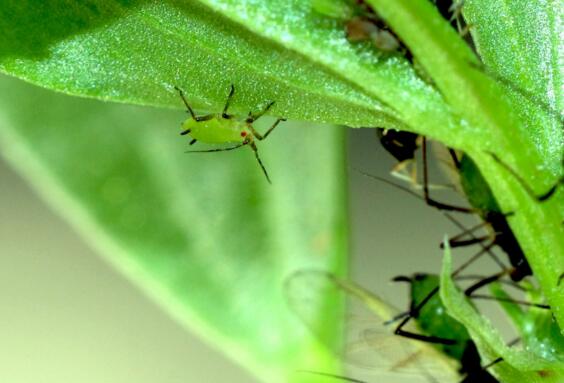
They are one of the most harmful pests to plants worldwide. They usually appear on the leaves of Chinese milk vetch, feeding by sucking the sap from the mesophyll tissue. Infested leaves will wither and turn yellow, and the overall growth of the plant will weaken. Aphids can also spread to other plants with wind and rain, and if not controlled in time, they can cause damage to an entire patch of Chinese milk vetch.
Control method: Spray with omethoate or dichlorvos diluted 1000 times. Afterward, strengthen cultivation management and avoid excessively high temperature and humidity.
2. Leafminer flies
They hide within the leaf tissue of Chinese milk vetch to feed, leaving irregular white streaks on the leaves, which are left behind by the activity of leafminer flies. The chlorophyll in infested leaves is broken down, reducing sugar content, which causes the plant's leaves to turn yellow, and at the seedling stage it can even cause seedling death.
Control method: In the cultivation methods for Chinese milk vetch, attention should be paid to scientific and reasonable watering, and weeds should be removed regularly to reduce pest sources. When leafminer flies are numerous, you can spray 40% dimethoate emulsifiable concentrate diluted 1000 times, 50% naled emulsifiable concentrate diluted 1500 times, and so on.
3. Thrips
In the control of Chinese milk vetch pests and diseases, thrips refers to the collective name for insects of the order Thysanoptera. They mainly suck the sap of Chinese milk vetch or feed on fungi, so when thrips appear, they may also cause some diseases, and their presence indicates that the environment is relatively dry with humidity at 40-70%.
Control method: Regularly remove fallen leaves, dead branches, and so on, and make sure not to let Chinese milk vetch lack water or let the soil become too dry. When thrips are numerous, spraying is needed, generally using 10% imidacloprid wettable powder diluted 2000 times for spraying.
II. Common Diseases
1. Sclerotinia rot
On the affected parts of Chinese milk vetch, mycelium gathers into structures, and on the surface there will also be sclerotia of different colors and sizes. It causes the affected parts of Chinese milk vetch to rot and the stems to become hollow, and eventually the plant dries out and dies. It is one of the most harmful diseases of many plants.
Control method: Strengthen management, select excellent varieties when sowing, and it is best to select seeds before sowing with 10%-15% salt water or ammonium sulfate water. After the disease occurs, spray with 70% mancozeb wettable powder diluted 500 times.
2. Powdery mildew
Usually, white powdery mold spots appear on the upper and lower surfaces of Chinese milk vetch leaves. The spots continue to expand and then join together into one patch, after which the leaves become covered with white powder, turn yellowish-brown and dry up, and spots also appear on the stems and petioles.
Control method: In the propagation methods for Chinese milk vetch, we once emphasized that seeds must be sun-dried before sowing, the purpose being to eliminate miscellaneous fungi and reduce the chance of powdery mildew occurring. When the disease occurs, spray the leaf surfaces with 50% carbendazim diluted 800-1000 times.
How to Control Chinese Milk Vetch Pests and Diseases
Chinese milk vetch (scientific name: Astragalus sinicus L.) is a biennial herbaceous plant in the Fabaceae family, genus Astragalus. It is prostrate and much-branched, reaching up to 30 cm in height, with odd-pinnate compound leaves, and the petiole is shorter than the rachis; stipules are free, leaflets are obovate or elliptic, with obtuse or slightly retuse apex and broadly cuneate base, nearly hairless above and sparsely covered with white pubescence below, racemes bear flowers in umbel-like clusters; the peduncle is axillary, bracts are triangular-ovate, pedicels are short; the calyx is campanulate, calyx teeth are lanceolate, the corolla is purplish-red or orange-yellow, the standard petal is obovate, the petal lobes are oblong, the pod is linear-oblong, the seeds are kidney-shaped and chestnut brown, flowering from February to June and fruiting from March to July. How to Control Chinese Milk Vetch Pests and DiseasesControl of Chinese milk vetch pests and diseases: Chinese milk vetch likes moisture and is afraid of both drought and waterlogging. Throughout the growth period, a certain level of soil moisture should be maintained, and the field should be able to both drain and irrigate; after the late rice is harvested, cross ditches and encircling field ditches should be opened well, with all ditches connected so that heavy rain does not accumulate and the field dries after the rain; if drought occurs and the soil turns white, “running horse water” should be irrigated in time to moisten the soil, so as to meet the growth requirements of Chinese milk vetch.
Chinese milk vetch should be appropriately topdressed, especially in rice fields with poor fertility, where fertilizer should be applied 1-2 times, using “small fertilizer to nourish big fertilizer,” which can significantly increase green manure yield. Fertilization is divided into three stages: base fertilizer, pre-winter fertilizer, and spring fertilizer.
The diseases of Chinese milk vetch include sclerotinia rot and powdery mildew, and the pests include thrips, leafminer flies, aphids, pea pod borers, cotton leafworms, and so on, and comprehensive control should be emphasized.
Control of the Main Pests and Diseases of Chinese Milk Vetch
The main disease of Chinese milk vetch ispowdery mildew. During the growth period (especially in seed-production fields), if powdery mildew is found
Control method: Spray with carbendazim or thiophanate diluted 1000 times, or spray with 0.4 degree lime sulfur mixture;
The main pests includeaphids, thrips, leafminer fliesand so on
Control method: Per 667 sq m, use 10-20 g of imidacloprid, or 150 g of 90% trichlorfon, add 30-50 kg of water and spray, or spray with 40% dimethoate emulsion diluted 1000-1500 times for control.