Freesia pest and disease control methods: one pest, three diseases, treated with these sprays
As a common indoor potted plant, freesia has many uses. Not only are its flowers beautiful, but its flowers can also be used to extract fragrance, making it deeply loved by flower enthusiasts. However, during cultivation, improper care can cause freesia to suffer pest and disease damage, which affects its ornamental value. So what should you do when freesia gets pests? Below are 4 kinds of freesia pests and diseases, along with control methods. Let's take a look together.
1. When freesia gets pests, spray with pesticide
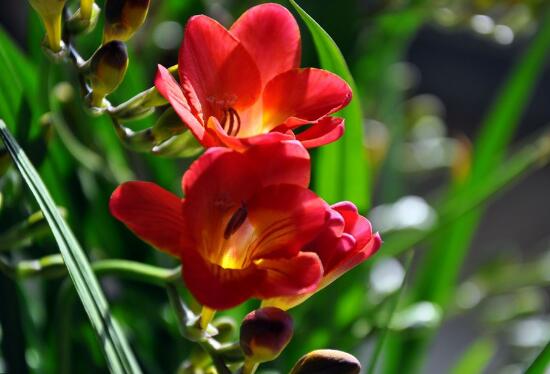
As a beautiful flower, freesia is grown in pots at home by many people. However, because most are beginners, they do not care for it according to freesia cultivation methods, and as a result pests and diseases appear. As for what to do when freesia gets pests, we first identify the pest, then solve it accordingly. For this, the editor has summarized 4 kinds of freesia pests and diseases, with control methods attached. Let's continue reading.
2. Prevention and control of freesia pests and diseases
1. Aphids
If you find that your freesia has pests, it is basically aphids. They generally appear on tender leaves and newly grown buds, feeding on the sap in the leaves. Symptoms of damage: freesia leaves turn yellow, and black or yellow spots also appear.
Control method: In the early stage of aphid occurrence, spray 40% omethoate 1500x solution or 90% trichlorfon solution for control. Usually pay attention to reasonable watering and fertilizing to improve its resistance to pests and diseases.
2. Mosaic disease
This is one of the main diseases of freesia, and it mainly harms the leaves. Symptoms: In the early stage, green angular spots appear on the leaves of freesia, then fade to brown; in severe cases, the plant becomes short and stunted, shrivels and turns yellow, the corms degenerate, and flowering is affected. So mosaic disease is also a reason why freesia does not bloom.
Control method: Once diseased plants are found, pull them out in time to avoid attracting insects that feed on sap and spread it through friction. In addition, spray the leaf surface with chemicals, mainly using 40% omethoate 1500x solution or 2.5% cypermethrin 3000x solution for spray control.
3. Root rot
During the growth of freesia, beginners easily encounter root rot in the plants. Symptoms: freesia leaves begin to wither and die, and when storing corms, the corms easily rot and become dry and hard.
Control method: When the above symptoms are found, if the condition is mild, spray 500x zineb solution; if the rot is severe and the corms have seriously degenerated, just throw them away.
4. Sclerotinia rot
In addition to the above points, freesia pests and diseases also include sclerotinia rot, which may occur at multiple stages of the plant. Symptoms: the leaves turn pale yellow, plant growth is stunted, and the leaves gradually wither and fall; in addition, the inside of the freesia bulb changes color and gradually rots.
Control method: Check the health of the bulbs in time, and promptly remove and destroy any diseased ones to reduce sources of infection; afterward spray 50% iprodione wettable powder 800x solution or 70% mancozeb wettable powder 500x solution for control.
In the process of growing freesia, due to various reasons, it is inevitable to encounter pests and diseases. At this time, everyone should not panic, but should calmly find the cause, then solve it according to the above control methods. Only in this way can you grow a beautiful pot of freesia. That is all the editor has to introduce about freesia pest and disease control, and I hope it can help everyone.
What to do when freesia leaves turn yellow
The story took place when this flower was still in the wild and had no name. One day, a Dutch young lady was hunting in South Africa and saw this flower for the first time, so she collected it herself and brought it back. The fragrant flowers were blown by the wind onto the snow along the way, and as a result even the ice and snow were stained with a rich fragrance. From this, people gave it a pleasant name, freesia.
How poetic and romantic a flower is that can even make snow fragrant! But flowers and leaves will always get sick. At this time, how should we protect them?
What is the flower language of freesia? Freesia flower language and legend / purity and happiness
As an elegant early spring flower, freesia blooms very beautifully and has been loved by flower enthusiasts around the world in recent years. The freesia flower has a graceful posture and pure white, lovely colors. And beautiful flowers always have their own unique flower language. So what is the flower language of freesia? With questions and expectations, follow the editor to look at freesia flower language and legend.
1. The flower language of freesia: purity / happiness / elegant simplicity
1. Purity, deep affection
Freesia gets its name because its flower color is as white as snow and its fragrance is as delicate as an orchid. Looking at the pure white flowers of freesia, a person's soul seems to be purified, very calm, just like returning home. So the flower language of freesia is purity and deep affection.
2. Happiness, delicate fragrance
Anyone who has seen freesia bloom will be fascinated by it. This is not only because its flowers are beautiful, but also because the fragrance of freesia is rich and pleasant. Smelling the delicate fragrance of freesia flowers cannot help but make a person feel a sense of happiness. Therefore, the flower language of freesia is happiness and delicate fragrance.
3. Elegant simplicity
Freesia has rich flower colors, and no matter which color, it gives people a feeling of elegant simplicity. Not only that, when freesia is not blooming, its leaves and stems can remain evergreen all year round, giving a fresh and comfortable feeling. So the flower language of freesia also includes elegant simplicity.
2. The symbolism of freesia
Freesia not only has a beautiful flower language, but its symbolism after blooming is also very good: happiness and fulfillment, and a comfortable life. Its colorful flowers give people a slow sense of happiness, and the atmosphere it creates is intoxicating. Especially when it blooms at New Year's Day and the Spring Festival, it adds a festive atmosphere to the holiday and has a very beautiful symbolism.
3. The legend of freesia
After talking about the beautiful freesia flower language, let's look at the legend of freesia. According to legend, in the early 18th century, freesia was still in the wild. One day, a noble young lady from the Netherlands and her lover were hunting in South Africa and saw this flower for the first time, and they liked it very much. When you like something, you naturally want to keep it, so afterward they dug up this flower and brought it back to Europe.
Later, people gradually became familiar with this flower. Looking at the fragrant flowers that were blown by the wind onto the snow along the way, even the ice and snow were stained with a rich fragrance. So based on this situation, people gave this flower a pleasant name: freesia. This is the legend of freesia.
Everyone has seen the beauty of freesia, but after reading the flower language and legend of freesia, do you think it is even more beautiful? If your heart is moved, do not hesitate, quickly get a pot and grow it at home. When it blooms, you can enjoy this beautiful scene. If you do not know how to grow it, you can look at freesia cultivation methods, which will be helpful to you~