5 Top Tips for Preventing and Controlling Pests and Diseases in Oxalis: Prevention Is Key
Oxalis is a relatively easy plant to grow, but if it is often kept in rather extreme conditions, or if the cultivation methods are not quite scientific, pests such as oxalis mite and green peach aphid can appear on the plant. So when planting, flower lovers should learn some methods for preventing and controlling pests and diseases in oxalis, which can keep oxalis from being troubled by pests.
Prevention and Control of Pests and Diseases in Oxalis
1. Oxalis mite
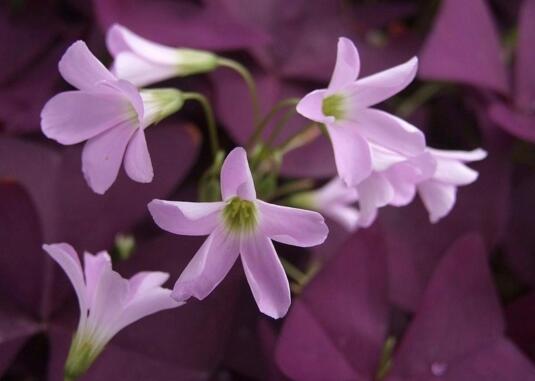
Besides harming oxalis, it may also attack plants such as Japanese snowbush and white magnolia. It mainly pierces plant tissues to suck sap, then leaves small yellowish-white spots on the surface of oxalis leaves, causing the leaves to turn yellow and wither.
Control method: It usually occurs in early summer and mid-autumn. The control method used is spraying chemicals, such as 50% monocrotophos emulsifiable concentrate, 40% dimethoate emulsifiable concentrate at 1500 times dilution, and so on. Ordinary acaricides are ineffective against this pest, and it is best to use several different chemicals in rotation.
2. Green peach aphid
A pest belonging to the Aphididae family, it is not only very destructive but also multiplies in huge numbers. It sucks the sap from oxalis leaves and also secretes honeydew on the surface, which can make oxalis susceptible to sooty mold. In the prevention and control of pests and diseases in oxalis, it is extremely fearsome.
Control method: When planting, take care to remove weeds from the soil and avoid excessive air humidity. When the pest appears, spraying chemicals is needed; generally use 80% dichlorvos emulsifiable concentrate in water at 1500 times dilution, or spray 50% malathion emulsifiable concentrate in water at 1500 times dilution, and so on.
3. Root rot
The roots of oxalis are the main part harmed by root rot. It causes the leaves to show signs of nutrient deficiency and loss of green color, and there will be relatively few fibrous roots. Even in sufficient daylight, the plant will be rather wilted and listless, and finally oxalis will dry up and die from lack of water.
Control method: When fertilizing and watering, be sure to avoid excess. Do not let water accumulate in the flower pot, and the fertilizer concentration should not be too high either. Before planting, disinfect the soil with a fungicide. After the disease occurs, spray 50% carbendazim at 500 times dilution.
4. Leaf spot
When oxalis plants are too densely packed and light penetration is poor, leaf spot is easily triggered. It causes water-soaked lesions to appear on the leaves and also produces a black powdery mold layer. In severe cases, it makes the leaves dry up and curl.
Control method: If oxalis grows relatively fast and many branches and leaves cross each other, take care to prune in time, improve light penetration and keep humidity from getting too high. At the same time, spray chemicals on the plants, such as 50% carbendazim at 500 times dilution, 70% thiophanate-methyl at 1000 times dilution, and so on.
5. Gray mold
It not only harms the roots of oxalis but may also harm its leaves, causing brown patches to appear on the leaves, while the roots also rot. The base of the lesions produces a gray mold layer, ultimately causing the whole plant to wither and die.
Control method: Reduce the frequency and amount of watering, avoid overly moist soil in normal times, increase the ventilation of the environment, lower the humidity to below 80%, and then carry out chemical control on diseased plants. You can use 50% meimailing at 800 times dilution, or 50% carbendazim at 500-800 times dilution for control.
Prevention and Control Methods for Pests and Diseases in Red Wood Sorrel
Red wood sorrel is native to Brazil. It likes warmth, moisture and plenty of sunlight, has fairly high drought resistance and strong adaptability to soil, and is best planted in fertile, moist, well-drained soil. It has few pests and diseases, is relatively simple to manage and easy to propagate. It is fairly shade-tolerant, fears extreme summer heat, is slightly cold-tolerant, and in North China it can overwinter in the ground with only a little cold protection.
Red wood sorrel flowers are sensitive to light, opening in sunlight and closing in the evening or on cloudy and rainy days, with a flowering period lasting more than 5 months. The leaf clumps are very dense with high coverage, making it hard for weeds to grow on the ground.
Because red wood sorrel has a long flowering period, it needs a large amount of fertilizer and water during the growing season. Before it turns green again in spring, apply 15 to 20 kg of compound fertilizer per mu, either by hole application or by broadcasting with watering according to soil moisture. During the growing season, fertilize and water in time. Except during the dormant period, applying manure or cake fertilizer water 1-2 times a month can ensure lush leaves and abundant flowers. In the high-temperature period of midsummer in July and August, red wood sorrel sometimes enters forced dormancy, with flowers and leaves turning yellow and flowering decreasing. At this time, if you pay attention to shading and cooling, its obvious dormancy can basically be avoided and it can keep blooming continuously. During this period, promptly remove any yellow leaves that appear so they do not spoil the ornamental effect.
Red wood sorrel is most susceptible to red spider mite damage, which mostly occurs in the high-temperature, dry periods from June to August each year. Severe damage can cause the leaves of the whole plant to turn yellow and wither. As long as you see dense small yellowish-white spots on the leaf surface, it is very likely caused by red spider mite damage. For control, you can spray 40% omethoate at 1500 times dilution, or 40% dicofol emulsifiable concentrate at 1000--1500 times dilution, 2 to 3 times, with good results.
Prevention and Control of Pests and Diseases in Red Wood Sorrel
Red wood sorrel is native to Brazil. It likes warmth, moisture and plenty of sunlight, has fairly high drought resistance and strong adaptability to soil, and is best planted in fertile, moist, well-drained soil. It has few pests and diseases, is relatively simple to manage and easy to propagate. It is fairly shade-tolerant, fears extreme summer heat, is slightly cold-tolerant, and in North China it can overwinter in the ground with only a little cold protection. Red wood sorrel flowers are sensitive to light, opening in sunlight and closing in the evening or on cloudy and rainy days, with a flowering period lasting more than 5 months. The leaf clumps are very dense with high coverage, making it hard for weeds to grow on the ground.
Because red wood sorrel has a long flowering period, it needs a large amount of fertilizer and water during the growing season. Before it turns green again in spring, apply 15 to 20 kg of compound fertilizer per mu, either by hole application or by broadcasting with watering according to soil moisture. During the growing season, fertilize and water in time. Except during the dormant period, applying manure or cake fertilizer water 1-2 times a month can ensure lush leaves and abundant flowers. In the high-temperature period of midsummer in July and August, red wood sorrel sometimes enters forced dormancy, with flowers and leaves turning yellow and flowering decreasing. At this time, if you pay attention to shading and cooling, its obvious dormancy can basically be avoided and it can keep blooming continuously. During this period, promptly remove any yellow leaves that appear so they do not spoil the ornamental effect. Red wood sorrel is most susceptible to red spider mite damage, which mostly occurs in the high-temperature, dry periods from June to August each year. Severe damage can cause the leaves of the whole plant to turn yellow and wither. As long as you see dense small yellowish-white spots on the leaf surface, it is very likely caused by red spider mite damage. For control, you can spray 40% omethoate at 1500 times dilution, or 40% dicofol emulsifiable concentrate at 1000——1500 times dilution, 2 to 3 times, with good results.