The 3 major pests and 3 major diseases of yew and their control: prevention and treatment must be combined
The yew has been able to survive on Earth for more than 2.5 million years, which shows that its disease resistance is relatively strong. However, with the development of container cultivation techniques, many people growing it at home may cause pests and diseases on the plant because they do not understand how to grow yew or do not provide good care and management. So what should be done if pests appear? Let us look at the methods for controlling yew pests and diseases.
Yew pest and disease control
I. Common pests of yew
1. Spider mites
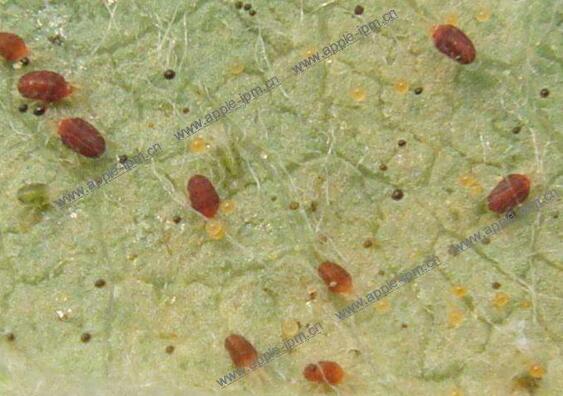
Also known as red spiders, they are one of the pests most harmful to plants. They feed on the sap of yew, often parasitize leaves and stems, and can also fall into the soil to overwinter and lay eggs, causing curved marks and some irregular spots on yew leaves.
2. Aphids
When growing other flowers, aphids are one of the most common pests. They hide among the branches and leaves of yew, feed on mesophyll tissue, continuously produce some black spots, and can also cause leaves to turn yellow, wither and fall off. They may even attract ants and trigger other pests and diseases.
3. Scale insects
Called by many flower lovers one of the three major pests, their harm is comparable to that of aphids, spider mites and so on. They are not only highly damaging but also reproduce very quickly. A large number of scale insects can not only cause leaves to turn yellow and become deformed, but also hinder plant growth. In yew pest and disease control, scale insects need to be cleaned up as soon as possible.
Control methods: The appearance of the above three major pests is closely related to the care environment. In daily care, try to keep the environment tidy, clean and ventilated, avoid excessively high humidity and so on, and do not let water accumulate when watering. When pests appear, spray with drugs such as carbendazim and scale insect specific treatments.
II. Common diseases of yew
1. Damping-off
Also called seedling death, it is caused by Rhizoctonia solani and usually appears in the middle and late stages of seedling raising. It harms the stem of seedlings and the underground roots. Diseased areas develop oval dark brown lesions. During the day the plant wilts, and at night it recovers, but if not treated in time the plant will eventually dry up and die.
2. Southern blight
It generally occurs at the root and stem area. The affected part shows cortex rot, and the roots develop problems absorbing water and nutrients, causing leaves to become smaller and yellow, and causing branches and leaves to wither and fall prematurely. Some leaves also develop concentric ring-shaped brown lesions.
3. Stem rot
If individual plants become infected and are not treated in time, it can spread to other plants. When the disease occurs, leaves lose their green color, begin to die and fall off. Stem rot usually occurs easily in summer when temperatures are relatively high, especially during cutting propagation, when pathogens are more likely to invade.
Control methods: The soil used should be carefully disinfected to ensure there are no pathogens in the soil, increase fertilizer application to improve the yew's resistance to disease, and at the same time ensure that summer temperatures are not too high. When disease occurs, spray drugs such as carbendazim and thiophanate-methyl wettable powder.
Yew pest and disease control
During the entire growing period, greenhouse cuttings of southern yew have a total of 7 pests and diseases, namely damping-off, stem rot, southern blight, phytophthora root rot, spider mites, aphids and scale insects. Among them, stem rot, southern blight and aphids are the most serious.
Control of stem rot in cuttings
Two months after cutting, stem rot occurs at the base of the seedling stem. At first individual plants are affected, and afterward it spreads into entire clusters. It mainly occurs in the high-temperature seasons of summer and autumn. The occurrence and spread of the disease mainly depend on the temperature in July to August. If the disease occurs earlier, the seedlings have weak heat resistance, so the disease will be more severe. Therefore, between summer and autumn, lower the temperature of the surface layer of the seedbed soil to prevent scorching the base of the seedling stem, so as to avoid wounds that allow pathogens to invade; increase fertilizer application to promote the growth of cuttings and enhance disease resistance.
Control of southern blight in cuttings
This disease generally begins to occur in early June. When the temperature rises to around 30°C in July to August, it is the early peak stage of the disease. When the temperature reaches as high as 35°C, it is the peak period of the disease. By the end of September the disease basically stops. When it causes harm, it produces white mycelium accompanied by small brown spots. Control measures: strengthen management, build raised beds, and dredge ditches for drainage; loosen the soil and remove weeds in time; increase application of nitrogen fertilizer and organic fertilizer to promote robust seedling growth and enhance disease resistance; after cuttings become diseased, promptly remove diseased plants, fallen leaves and infected substrate. Using quintozene and Bingwuzong mixed with yellow subsoil and sprinkling it on the seedbed can effectively control southern blight in cuttings, with a control effect of more than 95%%.
Aphid control
Aphids are one of the main pests of greenhouse southern yew cuttings. Because the temperature in the greenhouse remains above 18°C all year round, in winter aphids do not have the problem of overwintering. In summer, if the outside temperature is not particularly high (not more than 38°C), and the cuttings in the greenhouse still have a certain leaf area, aphids can continue to reproduce and cause harm. Therefore, the characteristic of aphid occurrence in the greenhouse is that they reproduce parthenogenetically, occur and reproduce year-round in the greenhouse, and have overlapping generations. Using aphid and whitefly horse emulsion sprinkled on the seedbed can effectively control aphids on cuttings, with a control effect of more than 95%%.
Integrated control techniques
Greenhouse disinfection. Before cutting, disinfecting the greenhouse is very effective.
Disinfection methods:
(1) Greenhouse frame disinfection: use insecticides and fungicides such as trisodium phosphate, sulfur and formalin to spray or fumigate the steel supports, walkways and surrounding plastic film in the greenhouse;
(2) Soil and substrate disinfection: use formalin, methyl bromide and natural high summer temperatures to disinfect soil and substrate;
(3) Drip irrigation system disinfection: use nitric acid and formalin solution to rinse and soak the drippers, drip tubes, sand filters and mother liquor tanks for disinfection;
(4) Reservoir disinfection: remove debris and sludge from the bottom of the reservoir, rinse the reservoir with clean water, and then disinfect the reservoir with formalin or other disinfectants.
Ecological control
By regulating the temperature and humidity in the greenhouse, keep the greenhouse air temperature at 15°C to 18°C at night and around 25°C during the day, with a day-night temperature difference not exceeding 10°C. In this way, the relative humidity in the greenhouse can be controlled below 90%%, and no water film will form on the leaf surface of southern yew cuttings, so pathogens cannot invade leaf tissues and cause disease. Using heating technology is one of the effective measures to control temperature and humidity in the greenhouse.
Cultivation management
Prune in good time and remove old leaves to prevent excessively dense branches and leaves from creating a microclimate favorable to disease spread and occurrence; promptly remove diseased and pest-damaged branches and leaves, keep the greenhouse clean, and reduce as much as possible the sources of pathogens and pests that cause pests and diseases; strictly formulate and implement production operating procedures, and prevent operators, visitors and production tools from becoming spreaders of pests and diseases.
Biological control
This is the technique of using microbial preparations and predatory or parasitic beneficial insects (that is, natural enemies) to control pests and diseases in southern yew cuttings: use biological insecticides such as insecticidal agents to control pests such as aphids and spider mites; use natural enemies such as Aphidoletes aphidimyza, Aphidius gifuensis and Phytoseiulus persimilis to control pests on southern yew cuttings.
Chemical control
On the basis of the above four control techniques, if stem rot, southern blight and aphids still occur and cause harm, chemical pesticides or biological pesticides can be selected for 1 to 2 treatments.
Yew pest and disease control
The occurrence and harm characteristics of pests and diseases in greenhouse southern yew are also significantly different from those of open-field southern yew seedlings. Therefore, to control pests and diseases of southern yew in greenhouses, new control strategies and control techniques need to be applied. In order to effectively control yew pests and diseases, experts from relevant departments in our city, in Sanming urban area, Mingxi County and other places, starting in 1975 and beginning with yew cutting seedling propagation, monitored, investigated, studied and practiced the main pest and disease occurrence types and characteristics throughout the entire growth period, adopted integrated techniques such as ecological control, physical control, cultivation control, disinfection and chemical control, and established an integrated control technical system for pests and diseases of greenhouse southern yew cuttings, which has now achieved obvious control effects.
Types of pest and disease occurrence
During the entire growing period, greenhouse cuttings of southern yew have a total of 7 pests and diseases, namely damping-off, stem rot, southern blight, phytophthora root rot, spider mites, aphids and scale insects. Among them, stem rot, southern blight and aphids are the most serious.
Control of stem rot in cuttings. Two months after cutting, stem rot occurs at the base of the seedling stem. At first individual plants are affected, and afterward it spreads into entire clusters. It mainly occurs in the high-temperature seasons of summer and autumn. The occurrence and spread of the disease mainly depend on the temperature in July to August. If the disease occurs earlier, the seedlings have weak heat resistance, so the disease will be more severe. Therefore, between summer and autumn, lower the temperature of the surface layer of the seedbed soil to prevent scorching the base of the seedling stem, so as to avoid wounds that allow pathogens to invade; increase fertilizer application to promote the growth of cuttings and enhance disease resistance. Using quintozene + Dexon powder mixed with water at a concentration of 0.5%% for watering gives a control effect of 89%%, and carbendazim + thiophanate-methyl wettable powder mixed with water at a concentration of 0.4%% for watering gives a control effect of 83%%.
Control of southern blight in cuttings. This disease generally begins to occur in early June. When the temperature rises to around 30°C in July to August, it is the early peak stage of the disease. When the temperature reaches as high as 35°C, it is the peak period of the disease. By the end of September the disease basically stops. Control measures: strengthen management, build raised beds, and dredge ditches for drainage; loosen the soil and remove weeds in time; increase application of nitrogen fertilizer and organic fertilizer to promote robust seedling growth and enhance disease resistance; after cuttings become diseased, promptly remove diseased plants, fallen leaves and infected substrate. Using quintozene mixed with yellow subsoil and sprinkling it on the seedbed can effectively control southern blight in cuttings, with a control effect of more than 95%%.
Aphid control. Aphids are one of the main pests of greenhouse southern yew cuttings. Because the temperature in the greenhouse remains above 18°C all year round, in winter aphids do not have the problem of overwintering. In summer, if the outside temperature is not particularly high (not more than 38°C), and the cuttings in the greenhouse still have a certain leaf area, aphids can continue to reproduce and cause harm. Therefore, the characteristic of aphid occurrence in the greenhouse is that they reproduce parthenogenetically, occur and reproduce year-round in the greenhouse, and have overlapping generations. Using 10%% imidacloprid emulsion sprinkled on the seedbed can effectively control aphids on cuttings, with a control effect of more than 95%%.
Integrated control techniques
Greenhouse disinfection. Before cutting, disinfecting the greenhouse is very effective. Disinfection methods: (1) Greenhouse frame disinfection: use insecticides and fungicides such as trisodium phosphate, sulfur and formalin to spray or fumigate the steel supports, walkways and surrounding plastic film in the greenhouse; (2) Soil and substrate disinfection: use formalin, methyl bromide and natural high summer temperatures to disinfect soil and substrate; (3) Drip irrigation system disinfection: use nitric acid and formalin solution to rinse and soak the drippers, drip tubes, sand filters and mother liquor tanks for disinfection; (4) Reservoir disinfection: remove debris and sludge from the bottom of the reservoir, rinse the reservoir with clean water, and then disinfect the reservoir with formalin or other disinfectants.
Ecological control. By regulating the temperature and humidity in the greenhouse, keep the greenhouse air temperature at 15°C to 18°C at night and around 25°C during the day, with a day-night temperature difference not exceeding 10°C. In this way, the relative humidity in the greenhouse can be controlled below 90%%, and no water film will form on the leaf surface of southern yew cuttings, so pathogens cannot invade leaf tissues and cause disease. Using heating technology is one of the effective measures to control temperature and humidity in the greenhouse.
Cultivation management. Prune in good time and remove old leaves to prevent excessively dense branches and leaves from creating a microclimate favorable to disease spread and occurrence; promptly remove diseased and pest-damaged branches and leaves, keep the greenhouse clean, and reduce as much as possible the sources of pathogens and pests that cause pests and diseases; strictly formulate and implement production operating procedures, and prevent operators, visitors and production tools from becoming spreaders of pests and diseases.
Biological control. This is the technique of using microbial preparations and predatory or parasitic beneficial insects (that is, natural enemies) to control pests and diseases in southern yew cuttings: use biological insecticides such as insecticidal agents to control pests such as aphids and spider mites; use natural enemies such as Aphidoletes aphidimyza, Aphidius gifuensis and Phytoseiulus persimilis to control pests on southern yew cuttings.
Chemical control. On the basis of the above four control techniques, if stem rot, southern blight and aphids still occur and cause harm, chemical pesticides or biological pesticides can be selected for 1 to 2 treatments.