Why is maidenhair fern hard to grow well? Common pest and disease control and care methods
Maidenhair fern relatively rarely suffers from pests and diseases, but if the environment is unsuitable or care techniques are improper, it can also lead to the occurrence of some pests and diseases, which will have a huge impact on the ornamental value of maidenhair fern. At present, the main pest is scale insects, and the main disease is leaf blight. Below, the editor teaches everyone the common pest and disease control methods for maidenhair fern.
Common pest and disease control methods for maidenhair fern
I. Scale insects
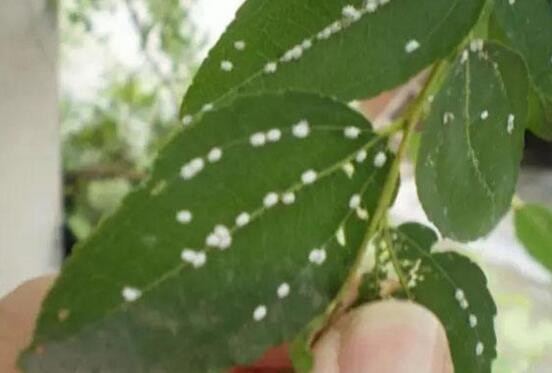
Symptoms: They live on the branches and leaves of maidenhair fern, feeding on the sap in the mesophyll tissue, causing leaves to turn yellow, branch tips to wither, and growth to weaken. If not cleaned up in time, they will remain on the maidenhair fern plant, and may also cause sooty mold.
Control methods:
(1) In routine care and management, attention should be paid to scientific fertilization, which can increase the maidenhair fern's resistance to scale insects. In autumn, dead leaves and diseased branches should be removed in time and burned in a centralized manner to reduce insect sources and avoid spread, while also doing a good job of pruning the maidenhair fern.
(2) Use medication for spraying. Generally, a 750-1000 times dilution of Jiebizhi is used. When using it, the temperature is best kept at 28-32 degrees, and two consecutive applications can maximize the control effect.
II. Leaf blight
Symptoms: It generally starts from the leaf tip and leaf margin, first appearing as multiple irregular red-brown or gray-brown lesions, which then connect into a single patch and become blighted spots, covering more than one third of the leaf area. Usually the lower leaves are more severely affected. It is one of the most common diseases in the control of common pests and diseases of maidenhair fern.
Control methods:
(1) Before winter begins, remove old dead leaves, which can reduce pathogens entering the soil from fallen leaves.
(2) The soil used should be well-drained and fertile. Usually, more organic fertilizer should be applied, especially phosphorus and potassium fertilizer.
(3) Keep the environment well ventilated, reduce the humidity around the plant, and when watering avoid splashing the leaves; instead use spraying or drip irrigation.
(4) When disease occurs, medication is needed for control. Generally, 50% carbendazim wettable powder at 1000 times dilution, 65% zineb at 500 times dilution, etc. are used. It is best to alternate several medications.
Why maidenhair fern is hard to grow well
In addition, when cultivating maidenhair fern, you may also encounter brown scorched leaf edges or blackening of the leaves. The main cause is improper care. To solve this problem, the following points need to be done well.
1. When winter temperatures are low, do a good job of keeping warm, avoid frost damage to the leaves during late frost or early frost, and keeping the temperature above 10 degrees is relatively safe, while below 5 degrees the leaves may turn black.
2. During care, the environment must not be too shaded; ensure it can receive sufficient light. In summer, it is best to place it in a shaded spot, but it cannot be kept in a dark environment.
3. Strengthen fertilizer and water supply. When planting, it is best to add some charcoal powder or brick crumbs to the soil, as they can improve soil aeration. Usually pay attention to reasonable fertilization and watering to improve soil fertility.
Common pests and diseases of maidenhair fern and control methods
Maidenhair fern pest - scale insects
Symptoms
Scale insects are a common pest of maidenhair fern and are extremely likely to occur under warm, humid, and poorly ventilated conditions. When affected, white raised spots can be seen on the leaves, the leaves droop and wither, and in severe cases the entire leaf becomes scorched yellow.
Control methods
Maidenhair fern has many leaves, making it difficult to inspect every leaf for scale insects, so when scale insects are found, directly cut off the leaves.
For chemical control, insecticide (sold in flower and bird markets) can be applied to the soil around the roots; usually 2-5 grams per 10-15 cm is sufficient. Or when affected, spray a 1000 times solution of omethoate emulsifiable concentrate, once every 5-7 days, and 2-3 consecutive sprays are sufficient.
Maidenhair fern disease - leaf blight
Symptoms
During care, yellowing leaves and scorched edges often occur. Excluding improper care as the cause, it is infection by pathogens that causes the leaves to turn yellow. When affected, yellow-brown lesions appear on the leaves. As the lesions expand, they gradually merge, and then the leaves wilt.
Control methods
Strengthen care. If yellow-brown spots appear on the leaves, appropriately reduce air humidity and pay attention to ventilation and light transmission.
When disease occurs, spray medication in time. Bordeaux mixture or carbendazim wettable powder can be selected, sprayed once every 10 days, and 2-3 consecutive sprays can improve the condition.
Maidenhair fern Adiantum capillus-veneris L. Maidenhair fern illustrated guide: how to grow maidenhair fern / how to propagate maidenhair fern
Maidenhair fern profileMaidenhair fern Adiantum capillus-veneris L.
Maidenhair fern cultivation methods and precautions, introduction to maidenhair fern
Maidenhair fern (scientific name: Adiantum capillus-veneris Linn.) is a perennial evergreen herbaceous plant, also known as wire grass, maiden's hair, iron wire grass, and water pig bristle soil. Its pale green thin-textured leaves paired with jet-black glossy leaf stalks make it appear especially elegant and graceful. Height 0.1-0.5 m. Because its stems are slender and resemble iron wire in color, it is named maidenhair fern. Maidenhair fern is also an indicator of calcareous soil. Because it fears dryness and strong light, it must be placed in a spot without direct sunlight for care. Maidenhair fern also has many varieties, such as lotus-leaf maidenhair fern and kidney-leaved maidenhair fern. It is a cosmopolitan species, growing wild in all regions.
Maidenhair fern prefers loose, permeable, fertile calcareous sandy loam. For potting, the growing medium can be made by mixing loam, leaf mold, and river sand in equal parts. During the growing season, apply liquid fertilizer once a week, and take care to keep the pot soil moist and the air humidity relatively high. In dry seasons, water can often be sprinkled on the ground around the plant to increase air humidity.
Morphological characteristics of maidenhair fern
Perennial herb, plant height 15-40 cm. Rhizome slender and creeping horizontally, densely covered with brown lanceolate scales. Fronds distant or subcontiguous; stipe 5-20 cm long, about 1 mm thick, slender, chestnut-black, glossy, base covered with the same scales as on the rhizome, smooth above; lamina ovate-triangular, 10-25 cm long, 8-16 cm wide, pointed at the tip, wedge-shaped at the base, mostly bipinnate below the middle, odd-pinnate once above the middle; pinnae 3-5 pairs, alternate, slanting upward, stalked (up to 1.5 cm long), the basal pair larger, 4.5-9 cm long, 2.5-4 cm wide, oblong-ovate, rounded-obtuse at the tip, odd-pinnate once (rarely twice), lateral ultimate pinnules 2-4 pairs, alternate, slanting upward, 6-15 mm apart, nearly equal in size or the basal pair slightly larger, symmetrically or asymmetrically obliquely fan-shaped or nearly obliquely square, 1.2-2 cm long, 1-1.5 cm wide, upper margin rounded, with 2-4 shallow lobes or deeply divided into linear segments, sterile segments with obtuse-rounded tips, with broad triangular small serrations or erose small teeth, fertile segments truncate at the tip, straight or slightly sunken, entire or with erose small teeth on both sides, both sides entire, base gradually narrowed into an oblique broad wedge shape, with a slender chestnut-black short stalk (1-2 mm long), terminal pinnule fan-shaped, base narrowly wedge-shaped, often larger than the lateral pinnules below it, stalk up to 1 cm; the second pair of pinnae 2.5-5 cm from the basal pair, the pairs above gradually becoming smaller and similar in shape to the basal pair.
Veins dichotomously branched several times, reaching the margin, obvious on both sides. When dried, the lamina is thinly herbaceous, grass-green or brown-green, hairless on both sides; rachis, all orders of pinna rachises, and pinnule stalks are the same color as the stipe, often slightly zigzag to the left and right. Sori 3-10 per pinna, borne transversely on the upper margin of the fertile ultimate pinnules; indusia elongated, long kidney-shaped to round kidney-shaped, upper margin straight, pale yellow-green, brown when old, membranous, entire, persistent. Spore perispore with coarse granular ornamentation, often preserved after treatment.
Ecological habits of maidenhair fern
Often grows on limestone beside flowing streams or on limestone cave bottoms and dripping rock walls; it is an indicator plant of calcareous soil, at altitudes of 100-2800 m; on rocks under hillside forests or in relatively sunny and moist places.
Originally wild-growing on wet stones in streamside valleys, it prefers warm, humid, and semi-shaded environments, is cold-tolerant, and avoids direct sunlight. It prefers loose, fertile, calcareous sandy loam.
Maidenhair fern prefers loose, permeable, fertile calcareous sandy loam. For potting, the growing medium can be made by mixing loam, leaf mold, and river sand in equal parts. During the growing season, apply liquid fertilizer once a week, and take care to keep the pot soil moist and the air humidity relatively high. In dry seasons, water can often be sprinkled on the ground around the plant to increase air humidity.
Maidenhair fern prefers bright indirect light and avoids direct sunlight. If the light is too strong, the leaves become scorched yellow or even die. It prefers warmth and is also cold-tolerant. The suitable growth temperature is 13-22. In winter in Northeast China it can overwinter safely, and sprout again the following spring.
Maidenhair fern is mainly propagated by division. Division is best done in spring before new buds sprout, in combination with repotting. Take the plant that has filled the pot out of the pot, remove most of the old growing medium, cut its rhizome, divide it into two to several clumps, and pot them separately to form new plants. In addition, after the spores of maidenhair fern mature, they scatter in a warm and humid environment and reproduce and grow on their own; once they grow to a certain size, they can also be potted.
Cultivation techniques for maidenhair fern
Planting
For potting, light-colored glazed pots and clay pots can be chosen; the pot soil must have good water permeability and aeration. Generally, humus-rich peat soil or leaf mold is used, with about 1/3 coarse sand and fine sand added, and some bone meal placed in, and the bottom of the pot should be lined with some broken tiles or coarse sand to facilitate drainage. The rhizome planting depth is 1.5-2.5 cm. Plant or repot and change soil in spring. For potting, a growing medium commonly made by mixing humus soil or peat soil with a small amount of river sand and base fertilizer is used. Change the pot every spring; when repotting, do not damage the roots, avoid wind, and keep the pot soil moist and the air humidity relatively high. Once new branches grow, normal management can resume.
Bottle cultivation
For bottle-cultivating maidenhair fern, it is best to choose a colorless, transparent, flat-surfaced square glass bottle, so that the plant will not look deformed and will appear attractive. Mix peat and fine sand in equal parts as the growing substrate and put it into the bottle. It is best to first put some old wall ash at the bottom of the bottle, which is more beneficial to the growth of maidenhair fern. The growing substrate should be 2-3 cm thick, and be careful not to stick the growing substrate to the bottle wall. Then use a sharp knife to divide the mother maidenhair fern into several clumps, clamp them with chopsticks, and carefully plant them into the bottle. A large bottle can hold several clumps, while a small bottle should hold fewer clumps. Gently press the area where the plant roots contact the growing substrate firmly, then water. Next, put the bottle cap on and place the bottle in a place without direct sunlight.
Because the inside of the bottle is sealed, watering once a month and topdressing once every few months is sufficient. To prevent water mist from forming on the inner wall of the bottle and affecting the display, in addition to thoroughly washing it with laundry detergent before use, special care should be taken not to place them in places with large temperature differences. After autumn begins, as the temperature drops, maidenhair fern enters a slow-growth stage and old leaves gradually turn yellow; at this time they should be cut off. Throughout winter, the ambient temperature should not be lower than 5°C. When the weather warms up the following spring, the plant will grow a large number of new leaves, presenting a flourishing scene.
Bottle-grown maidenhair fern not only saves effort and labor, but also avoids the phenomenon of leaves withering and branches being damaged because you are away on a business trip and cannot water on time. Under the high-humidity conditions inside the bottle, maidenhair fern plants grow exceptionally vigorously. Place a bottle of maidenhair fern on the tea table in front of the window; seen from afar, the glass bottle is crystal clear and the fern leaves sway, like a green gem sparkling.
Temperature and light
Maidenhair fern prefers warm, humid, and semi-shaded environments. The suitable growth temperature is 21-25°C during the day and 12-15°C at night. In winter it should be moved into a greenhouse; at temperatures above 5°C the leaves can still remain fresh green, but below 5°C the leaves will suffer frost damage. It prefers bright indirect light and fears direct sun exposure. In summer it can be appropriately shaded; long periods of strong direct light will cause most leaves to become scorched yellow. Indoors, it should be placed in a dark place; even if placed for 1 year, it can still grow normally.
Watering and fertilizing
Maidenhair fern prefers a humid environment. During the peak growing season, water sufficiently; in addition to keeping the pot soil moist, also pay attention to relatively high air humidity. When the air is dry, sprinkle water around the plant. Especially in summer, water 1-2 times a day; if water is lacking, it will cause leaf shrinkage. Avoid alternating dry and wet pot soil when watering, as this easily causes leaves to turn yellow. Apply dilute liquid fertilizer 2-3 times a month; when fertilizing, do not contaminate the leaf surface, to avoid causing leaf rot. Because maidenhair fern prefers calcium, the pot soil should be mixed with an appropriate amount of lime and crushed eggshells; frequently applying calcium fertilizer will produce better results. In winter, reduce watering and stop fertilizing.
Maidenhair fern likes warm, shady, and humid environments, is not cold-tolerant, is not drought-tolerant, and prefers acidic soil. For potting, it can often be placed flat indoors in a spot with indirect light, where it will grow well. The pot soil is best made as a growing medium mixed with equal parts mountain forest soil and fertile garden soil. During the growing season, watering should be sufficient, and thin fertilizer should be applied once about every 2 weeks to promote lush growth. In summer, it is best to place it under a shade shed outdoors for care. When the leaf clumps are too dense, the old leaves can be appropriately pruned; otherwise the leaves easily turn yellow and affect the appearance. After winter begins, move it indoors and place it in indirect light; keeping room temperature at about 10°C is enough for it to overwinter safely.
In winter, temperatures are low, and it suffers frost damage from late frost or early frost. Maidenhair fern likes a warm and humid climate, is not cold-tolerant, and the suitable growth temperature is 15-24°C. If the winter room temperature is above 10°C, the leaves can remain emerald green; below 5°C they turn black and yellow. Too shaded, with no sunlight for a long time. Maidenhair fern fears summer heat and cannot be exposed to the sun, but it also cannot be completely shaded. In summer, it is best placed outdoors under a shade shed and under large trees, or moved outdoors at night and moved back indoors during the day. In winter it should receive sufficient light.
In summer, the climate is stuffy and hot, and ventilation is poor. Air humidity should be increased and ventilation strengthened.
Can maidenhair fern be grown well at home?
To grow maidenhair fern well in the home, the following points should be done:
① Maidenhair fern likes warm, humid, and semi-shaded environments and avoids direct sunlight. It is best to place the plant in a spot indoors that receives no sunlight; too much and too strong light will cause leaf edges to become scorched. It grows well at 10-20°C. High summer temperatures inhibit growth. Only if winter does not go below 5°C can it remain evergreen all year.
② Ferns all grow in humid environments, and maidenhair fern is no exception. When cultivating, in addition to keeping the soil moist, also frequently spray water on the leaf surface to increase air humidity. Yellowing of the plant is often caused by insufficient humidity. In addition, it may also be frost damage.
③ Repot once every spring, and prune away dry leaves and old roots. The pot soil should be replaced with fresh, fertile, and loose leaf mold, and it is best to add a small amount of brick crumbs.
What to do if maidenhair fern leaves have scorched edges?
Maidenhair fern leaves most easily develop brown scorched edges. This is a common problem encountered in cultivation. Maidenhair fern originally grows in shady, damp wall cracks or on stone surfaces, and likes moisture most. Because summer light is strong, if maidenhair fern is not placed in a shaded environment, it cannot grow normally. Direct sunlight causes the water in the leaves to evaporate quickly. Before the roots can absorb water upward, some leaf cells have already shrunk and dehydrated, and the green color gradually fades, thus scorched edges appear.
Remedial measures:
① It must immediately be placed in a semi-shaded place for cultivation.
② Cut off the scorched leaves, and promptly spray water on the leaf surface and the surrounding ground.
③ Care should be taken carefully to avoid being stimulated by strong light again.
How to keep maidenhair fern evergreen all year?
① During the growing period, water sufficiently and maintain relatively high air humidity. During the peak growing season, spray water on the branches and leaves 2-3 times a day to keep the leaf color deep green. If the water supply is insufficient or the air is dry, the leaves will turn yellow or curl with scorched edges.
② Maidenhair fern does not need much fertilizer. Generally, applying a dilute cake fertilizer solution once every 2-3 weeks is sufficient. If a small amount of calcium fertilizer can be added, the effect is even better. But note: when watering and fertilizing, the leaf surface must not be contaminated; otherwise it easily causes leaves to become scorched yellow and affects the ornamental effect.
③ Although maidenhair fern belongs to shade-loving plants, it still needs a certain amount of light during the growing season. When caring for it indoors in spring, summer, and autumn, it is best to place the flowerpot on a windowsill on the east or north side of the room. If cultivated outdoors, absolutely avoid direct sunlight; strong direct light can very easily cause leaf edges to become scorched and leaves to turn yellow.
④ During care, if dead leaves are found, they should be cut off in time to keep the plant fresh and attractive and to help new leaves sprout. When the leaf clumps are too dense, the old leaves can be appropriately pruned each autumn; otherwise, if the branches and leaves are too messy and crowded, growth will weaken and leaves will turn yellow.
⑤ In winter, place the flowerpot near a south-facing windowsill for cultivation, keep the air moist, and maintain room temperature above 12°C; in this way the leaves will grow fresh green and lovely.
⑥ Maidenhair fern grows quickly and needs repotting every spring. When repotting, be sure to add new growing medium.
How to scientifically propagate maidenhair fern?
Maidenhair fern is usually mainly propagated by division, which can maintain the parent plant's characteristics. It is generally done in April of the following year when repotting. Depending on the size of the mother plant, the base of the plant can be divided into two or three parts for cultivation. In addition, once mature spores scatter into moist soil, they will also develop into seedlings; after they grow a little larger, dig them up and pot them to become new plants.
Propagation methods of maidenhair fern
Commonly used methods are division or spore propagation:
Division propagation can be done indoors in all four seasons, but is generally done in early spring in combination with repotting. Take the mother plant out of the pot, cut its rhizome so that each piece has some rhizome and leaves, then plant them separately in small pots. Cover the area around the rhizome with mixed soil, water, and place in a shady, humid environment for cultivation to obtain new plants.
The method of spore propagation is: place peat and fine sand used as the substrate in an oven for high-temperature sterilization to kill pathogens and weed seeds. Then, put the sterilized soil into a shallow sowing pot. Cut off leaves with mature spores, collect the spores, and evenly scatter them on the shallow sowing pot. No soil covering is needed. Cover with a glass piece, immerse from the bottom of the pot, keep the pot soil moist, and place in a semi-shaded environment at 20-25°C. After about one month, the spores can germinate into prothalli. After they fill the pot, they can be divided and planted. Note that 1-2 days before dividing and planting, the glass on the sowing pot should be removed for ventilation to avoid causing plant rot or pest and disease occurrence. In addition, in warm and humid environments, spores are very easily dispersed and reproduce on their own.
Disease control of maidenhair fern
Potted maidenhair fern often suffers from leaf blight. In the early stage, Bordeaux mixture can be used for control; in severe cases, 70% thiophanate-methyl at 1000-1500 times dilution can be used for control. If scale insects harm the plant, 40% omethoate at 1000 times dilution can be used for control.
Variety classification of maidenhair fern
Fan-leaved maidenhair fern
Leaves fan-shaped to irregularly broad-ovate, 2-3 times palmately branched to bird-foot-like dichotomous branching; the central pinna is the largest, and the pinnules have short stalks.
Whip-leaved maidenhair fern
Also known as bristle maidenhair fern, leaves linear-lanceolate, about 10-25 cm long, the apex often extending into a whip shape and rooting when touching the ground. Leaves sword-shaped rectangular, once pinnate or twice lacerate, upper margin and outer margin often deeply divided into narrow segments, lower margin straight and entire.
Wedge-leaved maidenhair fern
Leaves broadly triangular, 2-4 times pinnately divided, segments rhombic or oblong.
Distribution range of maidenhair fern
Distributed in Africa, the Americas, Europe, Oceania, and warm regions of Asia.
Taiwan, China, Fujian, Guangdong, Guangxi, Hunan, Hubei, Jiangxi, Guizhou, Yunnan, Sichuan, Gansu, Shaanxi, Shanxi, Henan, Hebei, Beijing, and Northeast China.
Cosmopolitan species. Widely distributed in Africa, the Americas, Europe, Oceania, and other warm regions of Asia. The type specimen was collected from Europe (the United Kingdom).
Medicinal or dietary therapeutic value of maidenhair fern
The medical information and health dietary therapy information on Hugarden Network is for reference only and cannot be used as a basis for diagnosis or medical treatment. Any health problems should be consulted with professional medical staff, and treatment for any disease should follow a doctor's advice.
Ultimate flower-care mission: love yourself, start from reality, and strictly follow a doctor's advice. For illness, do not be careless, do not delay, do not give up hope, face it bravely, use love to warm the silent world, and use your heart to care for the flower field within.
Medicinal value
Nature and flavor: bitter and slightly sweet, neutral.
① "Dian Nan Ben Cao": "Warm in nature, slightly sweet and slightly sour in taste."
② "Fen Lei Cao Yao Xing": "Slightly bitter, neutral, non-toxic."
③ Jiangxi "Cao Yao Shou Ce": "Sweet, neutral, non-toxic."
Meridian entry: "Dian Nan Ben Cao": "Enters the liver."
Functions and indications: dispel wind, activate collaterals, relieve heat, stop bleeding, and promote tissue regeneration. Treats wind-dampness itching and spasms, hemiplegia, consumptive injury with blood vomiting, traumatic injuries, knife wounds, and chronic shin ulcers. Clear heat and promote urination, dissipate blood stasis and stop bleeding, relax sinews and activate collaterals. Used for upper respiratory tract infections, hepatitis, dysentery, urinary tract infections, epistaxis, hemoptysis, hematemesis, hematochezia, beriberi edema, rheumatic bone pain, urticaria, hemiplegia, numbness of hands and feet, and traumatic injuries; external use for traumatic bleeding, fractures, sores and carbuncles, and lower leg ulcers. Influenza, common cold, cough, hepatitis, dysentery, low back pain, urinary tract stones, breast pain, consumptive injury, traumatic injuries, burns and scalds, snake bites, and furunculosis.
① "Dian Nan Ben Cao": "Travels through the meridians, strengthens tendons and bones, relaxes sinews and activates collaterals. For hemiplegia, spasms of the hands and feet, phlegm-fire flaccidity and weakness, and aching tendons and bones, soaking in wine gives good effects." "Mash and apply to chronic shin ulcers over a long period to promote tissue regeneration; apply to knife wounds and traumatic injuries to stop bleeding and close the wound, and it can reconnect tendons and bones."
② "Fen Lei Cao Yao Xing": "Treats postpartum stroke, treats wind diseases, reduces swelling and toxic qi."
③ "Chongqing Cao Yao": "Reduces fire and relieves heat, promotes tissue regeneration and stops bleeding. Treats rheumatism, consumptive injury with blood vomiting, and dog bites."
Usage and dosage:
1. Internal use: decoct in water, 25-50 grams. External use: mash and apply.
2. Internal use: decoct in water, 30-60 grams. External use: appropriate amount, mash and apply.
Whole plant (pig bristle grass): bland, bitter, cool. Clear heat and detoxify, drain dampness and reduce swelling, promote urination and treat strangury. Used for dysentery, scrofula, lung-heat cough, hepatitis, strangury patterns, venomous snake bites, and traumatic injuries.
Landscape uses of maidenhair fern
Among ferns, maidenhair fern is one of the most widely cultivated species. Its stems and leaves are elegant and varied, its form is graceful, and its plant type is compact, making it very suitable for small-pot cultivation and for accenting rock bonsai. Because the black leaf stalks are slender and glossy, closely resembling human hair, and its texture is very soft and beautiful, like a young girl's soft hair, it is also called "maiden's hair"; its pale green thin-textured leaves paired with jet-black glossy leaf stalks make it appear especially elegant and graceful. It likes shade, has strong adaptability, and is easy to cultivate, making it even more suitable for year-round indoor potted display. As a small potted shade-loving foliage plant, it is superior to asparagus fern in many respects. Small pots can be placed on a desk or tea table; larger pots can be used to decorate the windowsill, hallway, or living room of a shaded room, and can be enjoyed by people for a relatively long time. Maidenhair fern leaves are also good cut-leaf material and dried-flower material.
Cultural background of maidenhair fern, pairing maidenhair fern with home decor styles
The minimalist style is all about a clean, crisp, fashion-forward home look, but at the same time it also pursues a bold expression of personality, bringing out the owner's temperament to the greatest extent possible. It is no exaggeration to say that the minimalist style is the "versatile" style of the home world, and the most suitable pairing for it is none other than those rather slender, fine-leaved plants. If you arrange them this way, they will add a touch of distinctive artistic flair to your room, and that is why the maidenhair fern (Adiantum) is exactly the kind of plant suited to being placed in the home.
Beyond the elegance we are familiar with, the Chinese style can actually also be paired with delicate plants like the maidenhair fern, which better highlights the traditional Chinese spirit of overcoming hardness with softness, while mixing it with other styles may spark even more brilliant chemistry, and adding a maidenhair fern will give the home a touch of fresh elegance.
Maidenhair fern pictures