Sweet alyssum pest and disease control: 2 pests and 1 disease are the most common, pay attention to soil and environment
Every plant can suffer from pests and diseases. Although sweet alyssum is very tenacious, it can also develop yellow leaves, wilt and die due to infection by pathogens and pests. So what are the common pests and diseases of sweet alyssum? And what should we do if the sweet alyssum we grow develops pests and diseases? Let's look at the methods for controlling sweet alyssum pests and diseases.
What pests and diseases does sweet alyssum have
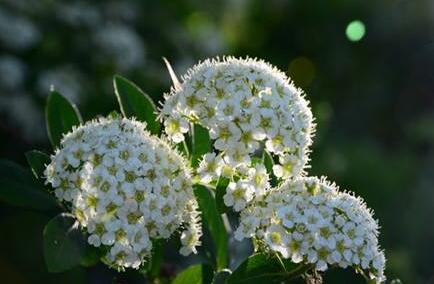
During care, if we do not pay attention to the planting methods for sweet alyssum, it may become infected with root rot, and may also develop pests such as aphids and red spider mites. In the early stage the damage is not so obvious, but it will gradually affect the plant's growth, so prevention and treatment must be done well.
Methods for controlling sweet alyssum pests and diseases
1. Aphids
Aphids suck plant sap, causing the plant's leaves to wilt, and they secrete honeydew on the leaves, causing leaf tips to dry, scorch, wilt, turn yellow and so on. Although at first they will not cause sweet alyssum to die, they will seriously affect its growth, and may also cause the flowers to become dull in color.
Aphid control generally uses pesticide spraying. 50% malathion emulsion at 1000-1500 times dilution can be used to kill them. After eliminating the aphids, we also need to do prevention well, which requires starting with light, humidity and other aspects of daily care, so that a suitable environment can reduce the chance of aphids appearing.
2. Red spider mites
Red spider mites belong to the mite category. They are usually red, with black spots on both sides of the back. When they appear on sweet alyssum, they suck the sap inside the plant tissues, causing the leaves to wither and yellow. They generally occur in June-July, and have a very important impact on the flowering of sweet alyssum.
They usually hide on the underside of leaves, and because they are small they are not easy to notice. However, we can investigate by changes in leaf color. Once the leaves are found to fade and turn yellow, we can check the leaf surface. If red spider mites are found, promptly remove the damaged leaves, then spray 15% pyridaben emulsifiable concentrate at 2000 times dilution.
3. Root rot
The affected part is the root. Nodules will appear on the roots, but the symptoms are mainly shown in slow plant growth. During the vigorous growth period in April-May, the leaves instead turn yellow and wilt. At this time we need to observe the plant's leaves and check whether the roots are damaged.
Root rot is mainly caused by pathogens, but the real reason is that the soil used for planting sweet alyssum is unhealthy. It contains pathogens, which causes sweet alyssum to become infected with root rot. For treatment, the roots can be soaked in streptomycin at 1000 times dilution; for prevention, healthy soil must be used.
Main pests and diseases to prevent in nursery stock
I. Aphids
Aphids are very common on nursery stock in this area. Their hosts mainly include big-leaf euonymus, red-leaf plum, peach, crabapple, firethorn, crape myrtle, Chinese rose, oleander and so on. Their damage not only causes leaf curling and poor growth, but also very easily leads to nursery stock becoming diseased. April is the spring shoot period for nursery stock, when the branches and leaves are tender green and rich in nutrients, and the temperature is suitable. Aphids reproduce very quickly, and the scope of occurrence will also expand rapidly. All localities are requested to pay attention to investigation and timely control. Control pesticides: 10% imidacloprid or 10% Jinshiji at 1500 times dilution.
II. Box tree pyralid
The box tree pyralid overwinters as larvae. After the weather turns warm, this pest will damage boxwood and Japanese boxwood. After damage, it seriously affects the growth of new buds of boxwood, and may even cause death. Control should be carried out when damage is first seen, especially in plots that suffered heavy damage the previous year. Pesticides can use 40% chlorpyrifos emulsifiable concentrate at 800 times dilution or 25% cypermethrin emulsifiable concentrate at 2500 times dilution by spray.
This pest mainly damages big-leaf euonymus, has a large appetite, and likes to gather in groups to cause damage. Pesticides for controlling the box tree pyralid can be used for spot treatment.
III. Scale insects
The felt scale on crape myrtle, the armored scales and cottony cushion scale on Michelia, boxwood, osmanthus and so on, and the horned wax scale on holly, camellia and so on all hatch in April. Please strengthen investigation. Where damaged nursery stock is found, 28% Jiebao emulsifiable concentrate at 1200 times dilution or 40% Lesiben emulsifiable concentrate at 800 times dilution plus 10% imidacloprid at 1000 times dilution can be sprayed for control.
IV. White grubs (white soil silkworms)
White grubs overwinter in the soil. When soil temperature rises in March-April, white grubs begin to become active and feed on and damage seeds, seedlings and tree roots. They are the main underground pests in nurseries. Last year there was a major outbreak of scarab beetles, so great attention should be paid to this pest. Control pesticides can use 10% Yifengshou granules at 0.5-1 kg per mu by broadcasting. Small seedlings inside nylon sheds should not use this, to prevent pesticide damage; 40% acephate at 1000 times dilution can be sprayed and poured instead.
V. Powdery mildew
Powdery mildew is a major disease on nursery stock. There are many susceptible tree species, and the more seriously damaged ones include crape myrtle, peach, Chinese rose, narrow-leaved mahonia, big-leaf euonymus and so on. As temperature rises and rainfall increases, it will occur successively. Powdery mildew control should be based on the principle of "prevention first, integrated control." For nursery stock that had serious disease previously, when new buds grow to a certain extent, M45 Daconil at 600 times dilution can be sprayed. For nursery stock where it has already occurred, seize the early disease stage and use 15% triadimefon wettable powder at 1500 times dilution, or 50% Cuibei dry suspension at 4000 times dilution, or 40% Fuxing emulsifiable concentrate at 8000 times dilution for control. If the condition is severe, spray again after about 15 days.
VI. Longhorn beetles
Longhorn beetles are concealed pests with serious damage and great control difficulty. In recent years their occurrence has increased year by year. The main ones occurring on nursery stock in our area, such as the citrus longhorned beetle and the peach red-necked longhorn beetle, all overwinter as larvae in the host tree trunks. After entering April, they successively begin to move upward and feed. Especially on tree species such as poplar, willow, elm, soapberry, goldenrain tree, peach and plum, once fresh insect frass appears on the ground around the trunk, it indicates that overwintering larvae have begun feeding. A steel wire should be used promptly to hook and kill them, or 40% chlorpyrifos or 80% dichlorvos emulsifiable concentrate at 30 times dilution can be injected into the holes to block and kill them.
VII. Spider mites, crown lace bugs
In a survey in late March, spider mites had already begun activity on some nursery stock, and damage is expected to intensify in April. For chemical control, 15% pyridaben emulsifiable concentrate at 2500 times dilution can be sprayed. Crown lace bugs that damage rhododendron, firethorn, peach, plum, flowering crabapple, cherry blossoms and so on are expected to begin causing damage from late April. For chemical control, 1.8% abamectin at 2500 times dilution, or 2.5% cyhalothrin at 3000 times dilution can be used. When spraying, emphasis should be placed on spraying the undersides of leaves.
What factors affect the emergence of flower seeds? Seed China believes that improving the emergence rate of flower seeds is a highly technical task. To improve the emergence rate, one should first understand the reasons affecting the emergence rate, so as to handle them reasonably.
Seed quality problems
At present there are many flower seeds on the market. When purchasing, whether domestic seeds or imported seeds, flower growers should pay attention to the production date and shelf life marked on the packaging bag. Do not buy seeds without such markings,
because expired seeds have mostly lost their vitality and will not germinate and emerge. In addition, when purchasing seeds, flower growers should have a basic understanding of them, for example, they should know whether the seeds bought are annual or biennial flowers, or perennial flowers, and whether they are spring flowers or autumn flowers. Generally speaking, seeds sown in spring usually bloom in summer and autumn; seeds sown in autumn usually bloom in spring and summer (except woody flowers). If the sowing period is reversed, and there are no certain off-season cultivation conditions, it is very difficult to achieve the expected flowering goal. Purchasing flower varieties that have never been grown should be done with even greater caution.
Inadequate seed treatment
Seeds of different flowers should use different seed treatment methods. Seeds that germinate easily can use the soaking method. For example, salvia seeds can be soaked in warm water at room temperature of 40°C for one day and night, rinsed clean, and then sown. Hard seeds, such as asparagus fern, tree peony, orange jasmine, crape myrtle, and daphne, are best first soaked in hot water at 40°C for about 48 hours before being sown into potting soil, and after 20-30 days they can sprout and grow. For those with a short dormancy period that germinate easily, such as pearl spiraea and redbud, soaking seeds in warm water at 40°C-60°C for 24-48 hours allows direct sowing. Some flower seeds need a certain period of low-temperature treatment to promote after-ripening, break embryo dormancy and germinate, such as lilac, wintersweet and some herbaceous flowers sown in autumn. Some flowers have the characteristic of double dormancy of radicle and hypocotyl, that is, their radicles need to go through a high-temperature stage of 25°C-32°C for 1 to 2 months or longer before dormancy can be broken, such as the seeds of fringetree, viburnum and peony.
Ignoring the suitable germination temperature of seeds
In addition to certain moisture conditions, the germination of dry seeds must also have a certain suitable temperature. For example, the suitable germination temperature for sweet alyssum of the cruciferous family must be 5°C-20°C, and the suitable germination temperature for African daisy must be
20°C-25°C. The suitable germination temperature for primrose must be within the range of 15°C-18°C. Too high or too low a temperature will affect the emergence rate of flowers, and may even cause seed mildew, greatly reducing the germination rate and seedling survival rate.
Unreasonable sowing period
Seeds that are large, have hard outer coats or contain oil, such as the seeds of Chinese rose, rose, pomegranate, kumquat, southern magnolia and other flowers, are suitable for sowing in autumn. Seeds that are smaller and have thin, loose outer coats, such as chrysanthemum, asparagus fern, garden balsam, crape myrtle, trumpet vine and other flowers, are suitable for sowing in late spring. Seeds that need high temperatures to germinate should be sown promptly after maturity. For example, cyclamen, cineraria, amaryllis and other flowers should be sown in early summer.
Problems with sowing quality
Flower sowing has two forms: open-field sowing and pot sowing. Either way requires loose, airy soil with fine particles and good drainage. It is better to use fertile soil rich in humus nutrients with moderate acidity and alkalinity, which is beneficial to seed emergence. Specific sowing methods include broadcasting, drilling and hole sowing. Before sowing, water thoroughly, and after sowing cover with plastic film to prevent the soil from becoming too dry and affecting seed germination and emergence. The sowing depth is generally preferably 2.5 times the diameter of the flower seed. For tiny seeds such as cockscomb, August chrysanthemum, wax begonia and cineraria, mix the seeds evenly with fine sand before broadcasting. After sowing, during seed germination, attention should be paid to spraying water to maintain moisture, but spraying should not be too much, to prevent rotting the seeds and the fibrous roots of the seedlings.
Ignoring the influence of light
After flower seeds are sown, appropriate light can increase soil temperature and induce seed germination. It is especially important for seeds to break through the seed coat and show roots and sprouts. This not only affects the seed emergence rate, but is also directly related to whether good, strong seedlings can be grown. Therefore, from sowing to transplanting, the light needs of flower growth should be met as much as possible, and the light intensity should be a gradual transition from shade to weak light and then to natural light.
Key points of maintenance and management techniques for groundcover plants
At present, groundcover plants are an important component of urban green spaces. In application they have moved from evergreen types to diversification, and from pure lawns to flowering types. Because the characteristic of groundcover plants is large-area cultivation in patches, under normal circumstances fine management and maintenance are generally not allowed or impossible, and only extensive management can be taken as the principle. The maintenance and management of groundcover plants mainly focuses on the following points:
1. Prevent soil erosion
The soil at the planting site must remain loose, fertile and well drained. Under normal circumstances, it should be checked 1-2 times each year, especially after heavy rain or typhoons, to carefully check for scouring damage. For places with severe soil erosion, measures should be taken immediately to promptly plug loopholes and replace soil, and replant to restore the landscape. Otherwise, the eroded areas will continue to expand, creating a situation difficult to clean up.
2. Actively cultivate fertility
During the growth period of groundcover plants, fertility should be supplemented in a timely manner according to the needs of each type of plant, especially for some flowering groundcover plants. Fertilization is mainly based on adding dilute inorganic fertilizers such as ammonium sulfate, urea, superphosphate and potassium chloride. Sometimes in early spring and late autumn or around the plant dormancy period, the broadcasting method can also be used, combined with covering soil. This is beneficial for plants overwintering, and can also adapt to local conditions, making full use of compost, cake fertilizer, river mud and other organic fertilizer sources.
3. Timely drought relief and watering
Under normal circumstances, groundcover plants are all selected from drought-resistant varieties with strong adaptability, so watering may not be necessary. But when continuous drought without rain occurs, in order to prevent groundcover plants from suffering severe drought, watering should be carried out.
4. Pest and disease control
Most groundcover plant varieties have relatively strong resistance to pests and diseases, but sometimes due to poor drainage or improper fertilization and other reasons, pests and diseases can also occur. In large-area groundcover planting, the most likely diseases are damping-off, gray mold, southern blight and so on, which can wither entire patches of groundcover. Spraying measures should be used for control to stop their spread and expansion. The most likely insect pests are cotton leafworm, white grubs, aphids, inchworms and so on. After pest outbreaks occur, spraying should be actively carried out for control.
5. Timely pruning and leveling
Generally, low-growing type varieties do not need frequent pruning, and extensive management is the main approach. However, because in recent years a large number of flowering groundcover plants have been introduced, a small number that retain spent flowers or have tall flower stems must be appropriately lowered after flowering, or appropriately pruned in combination with seed collection.
6. Renewal and recovery
In the maintenance and management of groundcover plants, due to various unfavorable factors, entire patches of groundcover often age prematurely. According to different situations, spike holes in the surface soil to make the root soil loose and airy, and at the same time strengthen fertilization and watering, which is beneficial to renewal and recovery. For some perennial flowering groundcovers, root division and replanting must be carried out every five or six years, otherwise natural decline will also occur. When dividing and replanting, remove the aged plants and diseased plants, and select healthy ones for replanting.
7. Adjust the groundcover community
Groundcover has a longer cultivation period than other plants, but it is not unchanging after one planting. Apart from some varieties that have their own renewal ability, generally appropriate adjustments are needed considering ornamental effect, coverage effect and other aspects. When adjusting, pay attention to coordination of flower colors; it should be eye-catching, and weeds should be avoided. For example, appropriately arranging and planting some flowering groundcovers on green lawns makes the colors easy to coordinate, such as low-growing violet, white clover with white flowers, and dandelion with yellow flowers. Another example is planting snow-white sweet alyssum and sunrose along roads or lawn edges, which appears even more elegant, eye-catching and noble.