What to Do When Gladiolus Gets Pests? Control Methods for 3 Diseases and 1 Pest
The popularity of gladiolus is related to the extremely high ornamental value of its flowers. However, when gardening enthusiasts grow it, improper care can cause pests to appear on the gladiolus plants, not only causing yellowing leaves and fewer flowers, but in severe cases even killing the entire plant. Therefore, we need to find ways to prevent this from happening. So how do you deal with pests on gladiolus? Let's look at the methods for controlling gladiolus pests and diseases.
How to Deal with Pests on Gladiolus
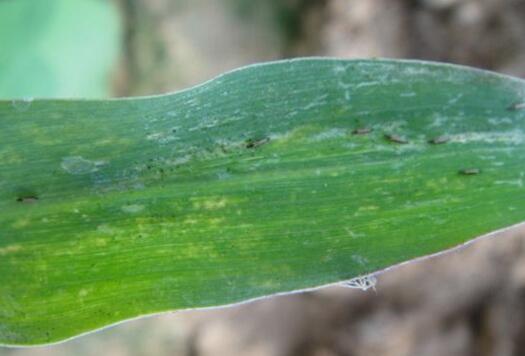
Thrips: This is the most common pest on gladiolus plants. It generally hides by day and comes out at night, hiding among the leaf axils during the day, and emerging on nights with weaker light or on cloudy and rainy days to harm the leaves, feeding on leaves, rhizomes, and flowers, causing leaves to turn from green to yellow, with white-gray spots appearing on the corolla, and the petals eventually curling up.
Control method: For thrips control, attention should be paid to fertilization in gladiolus cultivation methods. Apply more phosphorus and potassium fertilizer to improve disease resistance. When the disease occurs, spray with 40% dimethoate emulsifiable concentrate at 1000 times dilution.
Methods for Controlling Gladiolus Pests and Diseases
1. Mosaic disease
The affected parts are mainly leaves and flowers. Initially, round or angular spots appear on the leaves, then expand into polygonal shapes and turn brown. After the leaves are affected, they turn yellow and curl, the plant becomes stunted, the flower spike also shortens, and the flowers are difficult to bloom.
Control method: When planting, select robust corms free of virus, which can be disinfected with potassium permanganate solution. After the disease occurs, promptly remove diseased corms, then spray the leaf surface with 58% mancozeb wettable powder at 500 times dilution or 75% chlorothalonil wettable powder.
2. Leaf spot disease
Although the main affected part is the leaves, if not treated promptly it will infect the corms. Leaf spot disease causes brown lesions to appear on the leaf surface of gladiolus. The spots will continuously expand and the color will continuously deepen, eventually the entire leaf will wither. If the corms are infected, it will affect the reproduction and growth of gladiolus.
Control method: As with mosaic disease, in the control of gladiolus pests and diseases, the preventive measure for leaf spot disease is also to select excellent varieties free of pathogens for planting. After the disease occurs, the agents used include 75% chlorothalonil at 800 times dilution or 65% zineb solution.
3. Fusarium wilt
It mainly harms the corms of gladiolus, and later infects the entire plant. In the early stage of the disease, small reddish-brown spots appear on the corms, then continuously expand, becoming sunken and shrunken, causing the corms to rot, and white filamentous bodies also appear. In severe cases, the plant grows poorly, and the flowers produced are also deformed.
Control method: When propagating, the seed corms should preferably be soaked in formalin solution for 2 hours, then rinsed clean with warm water at 40 degrees, dried in a cool place, and refrigerated. When sowing, they need to be disinfected again, for example, soaked in carbendazim solution at 500 times dilution, which can prevent the occurrence of fusarium wilt.
Efficient Cultivation Techniques and Main Pest and Disease Control Measures for Gladiolus
How to plant gladiolus? Today the editors of Huinong Network will talk with you in detail about the configuration methods for gladiolus in landscape applications and cultivation management techniques. Friends who want to learn must not miss it.
1 Landscape Application Value and Configuration Methods
Gladiolus leaves are linear, upright like swords; the flower stalks are slender, the flower spikes are upright, the flower shapes are distinctive, and the flower colors are bright and rich; different varieties have consistent flowering periods and high flowering rates, with long flowering periods; different varieties have different plant heights and forms. Its excellent linear flower posture is easy to flexibly match with other types of flowers, and its landscape ornamental value is extremely high. Moreover, gladiolus cultivation and management are relatively simple, making it a good material for flower beds, flower borders, flower seas, foundation planting, lawns and ground cover plants, and water body greening. However, compared with other herbaceous flowers, gladiolus plants are relatively tall, and this characteristic should be fully considered in landscape configuration. When used for flower border arrangements, it is usually used as a background or skeleton flower material. When used for flower bed or flower sea arrangements, gladiolus is usually placed in the center of the planting block or in the background, with some medium-height flowers used as foreground plants for transition, so as to avoid exposing too much of the lower leaves of gladiolus; or it can be paired with stones to create different plant landscapes; it can also be designed as a specialized garden, organizing gladiolus of different strains and color series together according to a certain design pattern and different cultivation environments to create a unique landscape. Gladiolus likes sunlight and fears wind. When planting, avoid planting in positions with insufficient sunlight, and it should not be planted in windy openings, so as to avoid lodging.
As gladiolus is known and loved by more and more people, people are no longer limited to appreciating its beauty from cut flower arrangements. Gladiolus has the characteristics of simple cultivation and management, graceful leaf shape, unique flower shape, rich flower colors, and easy matching, and has the feasibility of home cultivation. People can design and configure it in home terraces and small courtyard gardens according to their own preferences. Or choose shorter varieties and plant them low in tall pots for potted ornamental display.
2 Growth Habits
Gladiolus prefers a climate with warm winters and cool summers. The corms generally begin to sprout and germinate at a temperature of 4-5°C. The suitable temperature for growth and development is 20-25°C during the day and 10-15°C at night. Growth stops at 3°C, and its cold resistance is relatively poor. If it encounters relatively low temperatures for a long time during the 2-5 leaf stage (flower bud growth and development period), it is prone to blind flowers. The critical temperature for root growth is 7-9°C; below this temperature, the roots stop growing. It has strong resistance to high temperatures, but excessive temperature slows growth, reduces flower color, and petals are easily scorched. Gladiolus is native to Africa and the Mediterranean coast, prefers sunny, warm and humid growing conditions, and needs sufficient water during the growing period, but is not tolerant of waterlogging. The soil requires a pH value between 6.0-7.0.
3 Variety Selection
At present, there is no unified international method for classifying gladiolus, but most classify them by habit, growth period, flower shape, flower diameter, flower color, etc. Since gladiolus on the market is mostly used for cut flowers, varieties with large flowers, many florets, and taller plants are more common. However, when these large-flowered, tall varieties are used in landscaping, planting them in flower beds tends to cause lodging. Therefore, in landscape applications, the principles for selecting gladiolus varieties are: flower type should be small rather than large, plants should be short rather than tall, and stems should be hard rather than soft. For growth period selection, early-flowering and mid-flowering types are mainly used. The size of the seed corms also affects plant height, stem thickness, flower spike length, and number of florets. Smaller corms, relative to larger corms, produce slightly shorter plants, slightly thinner stems, and fewer florets. Therefore, selecting seed corms with a circumference of 6-8 cm or 8-10 cm can avoid the problem of easy lodging due to excessively tall plants and excessively long flower spikes.
4 Cultivation Management
4.1 Land Preparation
According to the growth habits of gladiolus, choose sandy loam soil with sufficient sunlight, loose and fertile soil layers, and good drainage for planting. It is best to choose fresh land that has not previously been planted with gladiolus, because gladiolus fears continuous cropping. Farmland that has previously grown gladiolus must undergo strict disinfection. Before planting, remove weeds, deep plow the soil, plow to a depth of 25-30 cm, sun the soil for 2-3 d, apply sufficient base fertilizer, apply 1-2 kg of organic fertilizer per 1 sq m, mix the fertilizer evenly into the soil, and level the ground with a rake. There should be no pits or depressions, to facilitate water storage and drainage. Gladiolus dislikes water accumulation. For large-scale planting, such as flower sea planting, the bed planting method should be used, leaving sufficient drainage ditches. Each bed is 80-120 cm wide, 20-25 cm high, with a 20 cm bed ditch.
4.2 Planting
The planting season of gladiolus is determined according to local climatic conditions and the best viewing time. In the southern subtropical region, there is no severe cold in winter and no extreme heat in summer, so it can be planted all year round. However, the warm, frost-free climate in autumn and winter is very suitable for the growth and flowering of gladiolus. Spring Festival is the main season for gladiolus fresh cut flower production, and also the main season for landscape applications and flower bed planting. Different varieties have different growth periods, and the climate in different years also varies slightly. Production to supply gladiolus cut flowers for the Spring Festival usually requires a growth period of 90-110 d, while landscape applications and flower bed planting require slightly more, 5-10 d. Before planting, grade and select gladiolus corms accordingly, selecting corms that are free of pests and diseases, free of spots, and free of damage to the sprouting and rooting parts, and plant them by grade and in separate plots. The plant and row spacing is about 15 cm x 20 cm. Spot sowing or drill sowing can be used. The cultivation depth is about 2-3 times the size of the corm. The planting depth in sandy soil should be slightly deeper than in heavy clay soil, to prevent lodging after flowering. Water thoroughly once immediately after planting.
5 Maintenance Management
5.1 Watering and Drainage
Gladiolus needs sufficient water during the growing period, but it is not tolerant of waterlogging. During maintenance, it should be watered sufficiently, but not excessively. Gladiolus is not tolerant of water accumulation, so drainage work should be done well to ensure smooth water flow. Water supply methods such as sprinkler irrigation, flood irrigation, and drip irrigation can be used. Sprinkler irrigation can supply water relatively evenly during the gladiolus seedling stage, which is beneficial to plant growth, but it is not suitable after entering the flowering stage, because sprinkler irrigation increases the weight of the flowers and easily causes lodging. Flood irrigation supplies water through the bed ditches to irrigate the planting area to achieve thorough watering. During flood irrigation, the standard is not to flood above the bed surface. Stop irrigation immediately when the bed surface just begins to show waterlogging, and promptly drain excess water from the bed ditches. After each flood irrigation, the bed soil can generally maintain sufficient moisture for 4-5 d. After multiple flood irrigations, the soil will become compacted, so tillage and loosening of the soil are needed. Although flood irrigation can provide sufficient soil moisture, this irrigation method easily causes waste of water resources. Drip irrigation can effectively control soil moisture according to the different water requirements of gladiolus at different growth stages, and can also save water.
5.2 Fertilization
Gladiolus likes fertilizer. Phosphorus fertilizer can improve flower quality, and potassium fertilizer can improve stem hardness. Base fertilizer is mainly organic fertilizer, applying 1-2 kg of organic fertilizer per 1 sq m, with the amount appropriately increased or decreased according to soil fertility. In the early growth stage, gladiolus mainly relies on nutrients provided by the corms. After the seedlings emerge evenly, it begins to need external nutrients. During the entire growth period, the two topdressings of flower bud differentiation fertilizer and booting fertilizer are the most important. The first is at the 2-3 leaf stage of the plant, which is exactly the period of flower bud differentiation, and will affect the length of the flower spike and the number of florets. At this time, sufficient flower-promoting fertilizer mainly composed of P and K should be applied. The second is the booting fertilizer at the 6-7 leaf stage. Fertilization at this time is beneficial to the growth of the flower spike and flowering.
5.3 Weeding
When weeds grow on the bed surface or in the bed ditches, they should be pulled out promptly with roots, and the weeds should be collected and disposed of, to avoid the weeds recovering their growth in place. After flood irrigation, pulling out weeds can not only clean the bed surface, but also achieve the effect of tillage and soil loosening. It can also reduce the occurrence of pests and diseases, and help gladiolus better absorb water and conserve soil and water. After tillage and soil loosening, attention should also be paid to earthing up to prevent lodging of gladiolus plants.
5.4 Other Management Measures
If conditions permit, when the plant height reaches 0.1-0.2 m, nylon support nets must be hung, and gradually raised as the plants grow taller, until about 0.5 m, to prevent the plants from tilting and lodging and the flower spikes from bending. After the early flowers fade, remove the spent flowers promptly to promote the continued opening of the remaining buds and improve the ornamental effect.
5.5 Corm Management
Gladiolus planted in landscapes is generally not harvested for corms. For the sake of landscape effect, after the flowers fade and there is no ornamental value, the aboveground plants and underground rhizomes should be removed promptly. However, sometimes to save costs, harvesting corms can also be considered when the impact on the landscape is not significant. Generally speaking, gladiolus planted in autumn and winter under cool climate conditions first grows new corms and then flowers. After the flowers fade, the nutrients in the leaves continue to transfer to the new corms and cormels, and corms of relatively good quality can be obtained. In summer, especially under the high-temperature and high-humidity climate conditions of the south, gladiolus flowers first and then grows corms. After flowering, the plants often quickly enter senescence, or even become diseased and dry up. The new corms do not have time to absorb the nutrients transferred from the leaves before turning yellow and dying, making it impossible to harvest good-quality corms. If corms are to be harvested, it can be done about half a month after flowering or longer. The specific time depends on whether the plants begin to turn yellow and the impact on the landscape. Stop watering 2-3 weeks before harvest to promote the transfer of leaf nutrients and make it easier to clean the soil on the surface of the corms. The dug corms should be quickly dried and placed in a cool, ventilated place, and the old roots and old stems on the basal plate should be removed promptly. During the drying process, turn them continuously and pick out corms with disease spots. After the corms are dried, place them in a high-temperature cold storage for later use.
6 Pest and Disease Control
6.1 Diseases
Common diseases of gladiolus include gray mold (brown rot), dry rot, stem rot, root rot (fusarium wilt), penicillium disease, scab, and viral diseases.
6.1.1 Gray mold. This disease is caused by a pathogen and can infect leaves, stems, petals, and corms. In the early stage of leaf infection, small yellow to yellow-brown spots appear. Later, the leaves turn yellow and die, stem rot appears at the base, petals show water-soaked brown spots that expand and become light brown, and in cool and humid conditions, the flowers become sticky and rot. Water-soaked round spots appear on the surface of the corms, which later become soft and rot. Control method: Before planting, disinfect the seed corms and soil, maintain ventilation and light transmission, appropriately reduce density, and keep the surface soil dry. In the early stage of plant infection, remove and destroy diseased flowers and leaves, and alternately use 70% thiophanate-methyl at 1000 times dilution or 75% chlorothalonil wettable powder at 800 times dilution for control.
6.1.2 Dry rot. Dry rot is a vascular disease caused by the deuteromycete Fusarium oxysporum f. sp. gladioli, mainly harming corms, but also harming leaves, flowers, and roots. It is one of the main diseases occurring during gladiolus cultivation. When diseased corms are planted in the field, in severe cases they cannot germinate, or they produce weak seedlings that soon die; in mild cases, although they can germinate and grow into normal plants, eventually the top leaves turn yellow and gradually dry up until the entire plant dies. When the disease occurs at the adult plant stage, the tips of the outer leaves begin to turn yellow and dry up, the color of the petals deepens, some varieties have narrower petals with slightly curled edges, fewer and smaller flowers, tilted upward, and unable to open fully. When the disease is severe, plant growth stagnates, the underground corms rot, and the entire plant dies. Control method: Select disease-free seed corms and plant them in treated substrate; disinfect the corms before sowing, first soaking them in 1% potassium permanganate aqueous solution for 6-8 h. Then rinse with clean water, dry, and plant. In the early stage of the disease, alternately spray with 50% carbendazim at 500-600 times dilution, 75% chlorothalonil at 800 times dilution, and 70% thiophanate-methyl at 1000-1500 times dilution for control.
6.1.3 Viral disease. Gladiolus viral disease is a worldwide disease, and it occurs in all areas where gladiolus is planted. It often causes growth disorders in plants, such as shrinking and deformation of stems and leaves, chlorotic spots or even yellowing on leaves, stunted plants, shortened flower spikes, and fewer, smaller, and deformed flowers, affecting or losing ornamental value. The pathogens infecting gladiolus with viral disease include: cucumber mosaic virus, bean yellow mosaic virus, tobacco mosaic virus, tobacco ringspot virus, tomato spotted wilt virus, tomato ringspot virus, tomato black ring virus, tobacco rattle virus, arabis mosaic virus, etc. Control method: Select healthy virus-free seed corms for planting; strengthen inspection, and promptly pull out and destroy diseased plants when found; clear weeds near the planting area to reduce infection sources; spray insecticides to control aphids and eliminate virus-transmitting vectors.
6.2 Pests
Common pests include white grubs, noctuid moths, red spider mites, flower thrips, scale insects, root mites, root-knot nematodes, etc.
6.2.1 White grubs. White grubs is the general term for the larvae of scarab beetles. They bite and feed on rhizomes, affecting corm germination and growth, and causing plant death and lodging. Control method: Keep the planting area clean, and plow the soil to capture and kill the insects; in severe cases, mix carbofuran with fine soil and broadcast it for control. Or drench the soil with 50% phoxim emulsifiable concentrate at 1000 times dilution.
6.2.2 Noctuid moths. Their larvae hide by day and come out at night, gnawing on tender leaves and inflorescences, causing incomplete leaves and floral organs, seriously affecting cut flower quality. Control method: Keep the field environment clean and remove dead branches and weeds. When the number of larvae is small, they can be manually captured at night. In severe cases, spray with 90% trichlorfon at 1000 times dilution, and adults can be trapped and killed with lights.
6.2.3 Red spider mites. They mainly harm stems and leaves, sucking nutrients from within the leaves, causing many gray-white small spots to appear on the leaves and affecting plant photosynthesis. In severe cases, the leaves turn yellow-brown and then dry up and fall off. Control method: Clear field weeds, pay attention to the humidity of the planting environment, and create an environment unsuitable for red spider mite survival. When the disease occurs, spray with tetradifon wettable powder at 800 times dilution or 40% dicofol emulsifiable concentrate at 1000 times dilution for control. When spraying, be careful to evenly wet the leaf backs and crevices, spray continuously 2-3 times at intervals of 5-7 days, and alternately use different pesticides.
6.2.4 Flower thrips. Nymphs and adults suck the sap of flowers, producing gray-white spots and egg-laying marks on the petals, and in severe cases causing the petals to curl. Control method: Hang blue sticky boards to trap and kill them, or spray with 2.5% deltamethrin emulsifiable concentrate at 4000 times dilution for control. Flower thrips are afraid of light, so when spraying, the liquid should reach hidden places.
That is all the editors of Huinong Network have summarized for you today about the landscape application value and cultivation management techniques of gladiolus. Flower farmers, please be sure to master the technical aspects well!
How to Control Gladiolus Pests and Diseases
Common diseases of gladiolus include corm rot, leaf blight, etc.; common pests include thrips, slugs, etc.
Corm rot is a disease that often occurs during storage. After being infected with this disease, yellow-brown slightly sunken lesions appear on the surface of the corms, with black ulcer-like areas around them. When air humidity is high, the lesions rapidly expand, and a blue-green mold layer appears on the surface, causing the corms to shrink and become dry and hard. The preventive measure is to be careful when digging up the corms to avoid wounding them. After harvesting the corms, it is best to first soak them in cold water, then disinfect them with alcohol and dry them in the shade for storage, and keep the storage room ventilated and dry, maintaining a low temperature of 4-5 degrees.
Leaf blight mostly starts from the tips of the lower leaves of gladiolus. At first, it appears as chlorotic yellow spots, and later the lesions dry up and a dark brown mold layer appears. The disease is more severe from July to September. The preventive measure is to peel off the dried scales of the corms before planting. And soak the corms in 0.5% potassium permanganate for 15 minutes for disinfection treatment. Or in the early stage of plant disease, spray once every 8-10 days with 1% equal-amount Bordeaux mixture or 50% zineb at 1000 times dilution.
Thrips: The adults and nymphs of this pest generally hide in the leaf axils during the day to harm the plants, and crawl onto the leaf surface to cause damage on cloudy days or at night. They mainly feed on the leaves, stems, and flowers of the plants, causing the leaves to change color and leaving gray-white dotted feeding marks and egg-laying marks on the corolla, causing the petals to curl. They can be controlled by spraying with 2.5% deltamethrin at 400 times dilution.
Slugs, commonly known as slug worms, are pests with a wide distribution and omnivorous feeding habits. Their adults and nymphs mostly nibble on the young buds and leaves of plants, and often leave silvery-white traces along their crawling paths. They can be controlled by spraying with 3% lime water or 100 times ammonia water.