What to Do When Winter Cherry Gets Pests? Aphid and Anthracnose Control Methods
Winter cherry (Solanum pseudocapsicum), an indoor potted plant with excellent ornamental value, has strong adaptability and is very easy to grow at home, which is why it is so popular among flower enthusiasts. However, during the growing process, since most flower enthusiasts are beginners, improper care is very likely to occur, resulting in pests and diseases on the plant. So, what should you do when winter cherry gets pests? Below are 2 pest and disease control methods for winter cherry. Follow along with the editor to take a look.
I. Winter Cherry Gets Pests, Spray with Pesticide
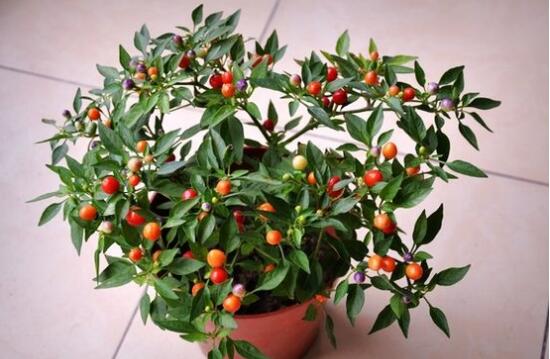
The beauty of winter cherry should leave a deep impression on anyone who has seen it, which is also why so many people grow it at home. But if winter cherry gets pests, its ornamental value will be seriously affected, so once insects are spotted, pesticide should be sprayed immediately for control. For this, the first step is to determine which pest or disease it is, so let us now take a look at pest and disease control for winter cherry.
II. Pest and Disease Control for Winter Cherry
1. Aphids
Once winter cherry gets pests, it can basically be confirmed to be aphids. These insects are very small, usually black or green, and they reproduce rapidly. Once they latch onto a plant, they will seriously harm the plant's health.
Symptoms: Aphids mainly feed on the tender leaves of winter cherry, sucking out the nutrients and causing nutritional deficiency in the plant. If aphids feed on the roots of winter cherry, it can even lead to the death of the plant in severe cases.
Manual control: In spring, if aphids are found, they can be brushed off clean with a writing brush dipped in water; in winter, promptly clean up dead branches and fallen leaves to reduce overwintering eggs; in addition, you can combine this with pruning by gathering the damaged branch tips and spent flowers and burning them to reduce sources of infection. As for how to prune, you can refer to the pruning methods for winter cherry.
Chemical control: In addition to manual removal, ordinary insecticides for plants can generally be used when aphids appear. You can spray with 40% omethoate emulsifiable concentrate at 2000 times dilution or 50% dichlorvos emulsifiable concentrate at 1500-2000 times dilution.
2. Anthracnose
Causes: Anthracnose is caused by fungal infection. In June-July, which is the rainy season of the year, the humidity in the air is very high and the temperature is also relatively high, and this kind of environment is very suitable for bacterial growth! Therefore, in the hot summer season, winter cherry is very prone to anthracnose.
Symptoms: This disease mainly damages the leaves of winter cherry. In the early stage of the disease, round lesions appear on the diseased leaves, then turn from round reddish-brown to grayish-white, and then to dark brown with black dots arranged in concentric rings; in severe cases, the leaves wither, turn black, and die.
Control methods: Once winter cherry is affected by anthracnose, you should immediately cut off the infected branches and leaves and destroy them together to avoid re-infection; at the same time, spray the diseased winter cherry with chemicals such as 50% carbendazim wettable powder at 700-800 times dilution or 75% chlorothalonil at 500 times dilution.
That is all the editor has to share about pest and disease control for winter cherry. I believe everyone now knows what to do when winter cherry gets pests or diseases! Overall, winter cherry is not difficult to grow; you just need to care for it according to the cultivation methods for winter cherry. Only by doing so will pests not come knocking. Finally, may everyone's winter cherry grow beautifully~
What to Do When Broadleaf Lady Palm Gets Pests, Pest and Disease Control for Broadleaf Lady Palm / 2 Pests 2 Diseases
In the process of growing broadleaf lady palm (Rhapis excelsa), the last thing we want to encounter is problems like pests and diseases. Such problems are extremely harmful to it, not only affecting its ornamental value but also causing it to wither and die in severe cases. So, what should you do when broadleaf lady palm gets pests? And how should pest and disease control for broadleaf lady palm be done? Below, the editor will walk you through it.
I. What to Do When Broadleaf Lady Palm Gets Pests, Find the Cause
To know what to do when broadleaf lady palm gets pests, we first need to understand what kind of pest it is, so that we can deal with it in a targeted way, because the control methods for each pest and disease are different. The specific details are introduced below. Let us take a look.
II. Pest and Disease Control for Broadleaf Lady Palm (Pests)
1. Aphids
Aphids are one of the more common pests and diseases of broadleaf lady palm, and also a pest that exists on many plants. They are a phytophagous insect that mainly harms the leaves and stems of broadleaf lady palm, gradually absorbing the sap within, causing the plant to lose a large amount of nutrients, and over time causing the plant to gradually wither and die.
Control methods: If the number of these pests is relatively small, we can prune off the damaged branch tips and then disinfect the plant. If the number is relatively large, we can directly spray with 50% pirimicarb wettable powder at 3000 times dilution to kill them.
2. Scale insects
Scale insects are a pest that appears during the growth process of many plants, and broadleaf lady palm is no exception. These pests mainly feed on the sap in the leaves and stems of broadleaf lady palm, gradually sucking out the sap, causing the plant to gradually lose nutrients and finally shrivel.
Control methods: For this pest and disease of broadleaf lady palm, we can spray with 50% malathion at 1500 times dilution to kill them.
III. Pest and Disease Control for Broadleaf Lady Palm (Diseases)
1. Bud rot
This disease mainly threatens the young buds and tender leaves of broadleaf lady palm. When it first develops, the unopened leaves wither first, turning brown, then droop. The pathogen spreads from the base of the tender leaves to the young tissues of the buds, causing the young buds to wither and rot, the plant to stop growing, and in severe cases the entire plant to die.
Control methods: When dealing with this pest and disease of broadleaf lady palm, we can spray the diseased plant with 80% mancozeb wettable powder at 500 times dilution. Generally, spraying once every 10 days, 3-4 times will lead to recovery.
2. Anthracnose
This disease mainly threatens the leaves of broadleaf lady palm. When it develops, many semicircular lesions appear at the leaf tips or leaf margins, appearing yellowish-brown or grayish-brown. When the air is too humid, vermilion needle-sized droplets appear on the leaves, and over time the plant gradually withers and dies.
Control methods: For this pest and disease of broadleaf lady palm, we can spray with Guoguang Yintai wettable powder at 600-800 times dilution. Generally, spraying once every 7-10 days, 2-3 times will lead to recovery.
What to Do When Banks' Rose Gets Pests, Pest and Disease Control for Banks' Rose / 2 Pests 2 Diseases
In the growth process of Banks' rose (Rosa banksiae), the last thing we want to encounter is problems like pests and diseases. Such problems are extremely harmful to the plant, not only affecting its appearance but also causing the plant to wither and die in severe cases. So, what should you do when Banks' rose gets pests? And how should pest and disease control for Banks' rose be done? Below, the editor will walk you through it.
I. What to Do When Banks' Rose Gets Pests, Find the Cause
To know what to do when Banks' rose gets pests, we first need to find the cause, that is, what kind of pest it is, so that we can deal with it in a targeted way, because the control methods for each pest and disease are different. The specific details are introduced below. Interested friends can take a look.
II. Pest and Disease Control for Banks' Rose (Pests)
1. Scarab beetles
Scarab beetles are invertebrates that mainly harm the root system, leaves, and flower buds of Banks' rose, thereby affecting the yield and quality of its flowering, and in severe cases even causing the plant not to bloom.
Control methods: When dealing with this pest and disease of Banks' rose, we can spray with 2.5% deltamethrin at 2000-3000 times dilution to kill them, or we can trap and kill them under light.
2. Aphids
Aphids are one of the most destructive pests on Earth. Many plants may develop this pest during their growth process, and Banks' rose is no exception. These pests mainly suck the sap from the plant, causing it to lose a large amount of nutrients and wither.
Control methods: For this pest and disease of Banks' rose, we can spray with 50% pirimicarb wettable powder at 3000 times dilution to kill them.
III. Pest and Disease Control for Banks' Rose (Diseases)
1. Powdery mildew
Powdery mildew mainly threatens the leaves, petioles, tender shoots, and flower buds of Banks' rose. When it develops, many irregular white powdery mildew spots appear on the leaves, and over time they gradually spread, eventually causing the plant to shrivel and die, losing its ornamental value.
Control methods: When dealing with this pest and disease of Banks' rose, we can spray with 50% carbendazim wettable powder at 800 times dilution. Generally, spraying once every 5-7 days, 3-4 times will lead to recovery.
2. Black spot
Black spot is a disease caused by fungi. It mainly harms the leaves, petioles, and tender shoots of Banks' rose. When it develops, many purplish-brown lesions appear on the affected parts, and over time the lesions gradually expand, the color slowly changes, and eventually the plant gradually withers.
Control methods: For this pest and disease of Banks' rose, we can spray the diseased plant with thiophanate-methyl or carbendazim. Generally, once every 7-10 days, 2-3 times will lead to recovery.