How to propagate nasturtium: nasturtium seed propagation method / nasturtium cutting propagation
Nasturtium generally, after being grown for 2-3 years, will grow lush branches and leaves that cover the support and flower pot. At this time, flower lovers need to consider its propagation issue. As a plant of the subclass Rosidae, order Geraniales, how is nasturtium propagated? The answer is cuttings and sowing. Below we will learn in detail about the nasturtium sowing method and the nasturtium cutting method.
How to propagate nasturtium
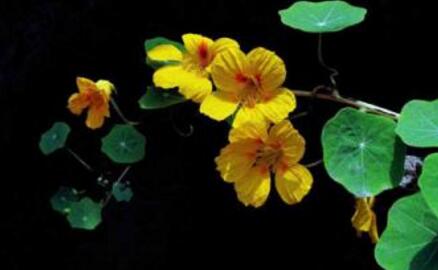
From the planting experience of flower lovers, it can be seen that the propagation methods of nasturtium mainly include cuttings and sowing. Among them, cuttings mainly use tender stems as cuttings, while sowing requires choosing the right time and seeds. What are the specific operations of the two methods? Let's take a look.
Nasturtium seed propagation
1. When to sow nasturtium
There are generally two stages for sowing nasturtium: spring sowing from March to June, and autumn sowing from August to September. If the temperature can be controlled between 18-20 degrees, then it can be sown at any time. But for most flower lovers, it is best to choose spring sowing or autumn sowing.
2. Nasturtium sowing method
(1) How is nasturtium propagated when sowing? First, you need to select good seeds. Generally, relatively plump and healthy seeds are suitable. At the same time, you should choose seeds according to the variety you want to grow, because there are many varieties of nasturtium, and the ornamental value of each is slightly different.
(2) Sow the selected seeds in a sand bed by dibbling, then cover with soil at a thickness of about 1 cm. After that, water thoroughly and ensure the temperature is between 18-20 degrees, which is conducive to rapid germination and rooting.
(3) In subsequent care, pay attention to keeping the soil moist, then ensure a certain amount of light. Generally, it can germinate in about 1 week. When it grows 2-3 true leaves, remove the top tender buds and then pot it. Finally, care for it correctly according to the nasturtium cultivation method. If the environment is suitable, nasturtium generally takes 4-5 months from sowing to flowering.
Nasturtium cutting propagation
1. Cutting time
Cuttings are a relatively commonly used method among nasturtium propagation methods, and it is also the method chosen most by many flower lovers. However, compared with sowing, the timing must be chosen more strictly. Generally, cuttings need to be started from April to June; the climate at other times is not suitable for rooting.
2. Cutting method
(1) Select tender stems from healthy nasturtium plants, remove the lower leaves, then place them in a cool place and wait for the cut to dry naturally. The selection of cuttings affects the survival rate after cutting, so flower lovers must choose carefully.
(2) Insert the cuttings evenly into the prepared soil, then place them in a semi-shaded environment for management and keep the soil moist. If the soil is too dry, water can be absorbed from the bottom of the pot. Generally, they can root in 2-3 weeks, which has a lot to do with the temperature in the location where the flower lovers are.
(3) When cutting, be sure to note that the humidity cannot be too high or too low. What is most feared is a stuffy, hot environment or excessive moisture. Therefore, ensure good ventilation in the environment and keep the temperature between 20-25 degrees. If you want faster rooting, you can apply some rooting powder to the cut end of the cutting, which can let nasturtium root in about a week.
How to propagate nasturtium, nasturtium propagation methods
Nasturtium usually blooms in summer and autumn. Because the middle and lower leaves of old perennial plants age and turn yellow layer by layer each year but do not fall off and do not affect the appearance, they are mostly grown as annual or biennial herbaceous flowers. Greenhouse cultivation can bloom all year round, but can you avoid buying from a nursery and directly propagate by cuttings? Everyone is asking this kind of question. Today the editor will introduce to you how to propagate nasturtium and nasturtium propagation methods, hoping to help everyone.
Nasturtium propagation uses sowing or cutting. Sowing is carried out in a greenhouse from August to October. Before sowing, soak the seeds in warm water at 40-45°C for 24 hours. After sowing, maintain 18-20°C, and seedlings will emerge in 7-10 days. Plant them in pots in May of the following year. (If they are difficult to germinate, it is better to soak them in water. Sow after the seeds show white, as this makes rot less likely. Note that the water should only be half as high as the seeds.)
Cuttings are carried out from April to June. Select tender stems as cuttings, remove the lower leaves, shade after cutting, and maintain humidity. They can root in 2-3 weeks. As the stems and vines grow, bamboo strips should be used in time to set up a support and tie the branches and vines. Apply fertilizer once every 10-15 days. Throughout the growth period, sufficient [nutrients] and relatively high air humidity should be maintained. Stem vines that have rooted at creeping nodes can be cut off and planted.
For pot cultivation, move them into a moderately warm greenhouse in winter and into a shade shed in midsummer. Under a sparse shed, they can grow and bloom normally. For pot cultivation, mostly set up supports and tie the stems and vines in order into fan shapes, umbrella shapes, spherical shapes, etc. Do not water excessively, and prevent water accumulation in the rainy season. Applying too much nitrogen fertilizer will cause excessive growth of branches and stems. Normal growth can be maintained with soil of medium fertility.
Pot cultivation requires loose, fertile, and highly permeable culture soil. It likes moisture and fears waterlogging. Usually seed propagation is used, and softwood cuttings can also be used. For annual field planting, sow in a cold frame in early spring. After seedlings emerge, divide and transplant 1 week later. When the seedlings are 10 cm tall, they can be planted in the open field in loose, fertile soil with slight shade. They bloom abundantly from June to September until frost. For pot cultivation that needs to bloom in April to May, sow in a greenhouse in December of the previous year. Use No. 2 tube pots filled with ordinary culture soil, dibble one or two seeds per pot, water thoroughly after sowing, and place at the front opening of the greenhouse at above 20°C. Seedlings emerge in about 10 days. Keep sufficient light. When the plant height is 10 cm, use fertilized culture soil, place 50 grams of crushed hoof pieces underneath as base fertilizer, and repot into two-gang pots for care. For those that need to bloom at New Year's Day and Spring Festival, cut 10 cm long tender branches for cuttings in August, use shallow pots filled with plain sandy soil, and place in a cool, ventilated, and humid environment. They survive after 15 days. Use ordinary culture soil and put them into No. 1 tube pots. In October, move indoors and switch to two-gang pots, placing them at the front opening of the greenhouse. The room temperature should preferably be about 15°C during the day and about 10°C at night. Light should be sufficient, and the temperature must not be too high to prevent excessive growth. Water thoroughly once when changing pots, then replenish water at appropriate times when loosening the soil, keeping the pot soil moist but not waterlogged for a long time. Every 10 days, alternately apply chemical fertilizer solution and organic fertilizer water once. For potted nasturtium that needs to bloom in autumn from September to October, sow in early June. During the hot midsummer period, it must be placed in a sparse, shaded, ventilated, and cool environment. When autumn cools, it will grow vigorously with abundant flowers and leaves.
Key points for nasturtium cutting propagation
Artificial propagation of nasturtium can choose sowing and cutting methods. In fact, artificial cutting of nasturtium is nothing special. Nasturtium has relatively strong adaptability, so the cutting survival rate will be higher than that of other flowers and plants.
Nasturtium
1. Selection of container and medium
For the cutting container, you can choose a smaller one, as this makes it easier to control the humidity of the medium and less likely to cause root rot. It is recommended to use a disposable plastic cup. As for the medium, it is relatively flexible: peat, vermiculite, and perlite are basically the general configuration.
2. Time for nasturtium cuttings
For successful cuttings, the choice of time is very important. According to a survey of successful cuttings by flower lovers, it was found that the success rates of cuttings in May, October, November, and December are all very high. Other months have not been tried, but based on feedback from flower lovers, as long as the temperature is above 18°C, the success rate is very high.
3. Selection of branches: cut about 5-7 cm of terminal bud branches for cuttings. Generally, the rooting time is about 1 week. After cutting, place in scattered light and keep the soil moist, but do not let water accumulate. A thousand words are not as good as one picture. Below is a process picture of nasturtium cuttings. Flower lovers can imitate the cutting, it is very easy.