How to propagate Calathea makoyana? Detailed explanation of cutting and division methods
Calathea makoyana, a plant whose leaves bear a pattern like a peacock spreading its tail, has high ornamental value and is grown in pots at home by many flower lovers. For experienced flower lovers, besides knowing how to grow Calathea makoyana, they also learn how to propagate it. So how do you propagate Calathea makoyana? Below are two propagation methods for Calathea makoyana; both cuttings and division work, so let's take a look together.
1. How to propagate Calathea makoyana: cuttings / division
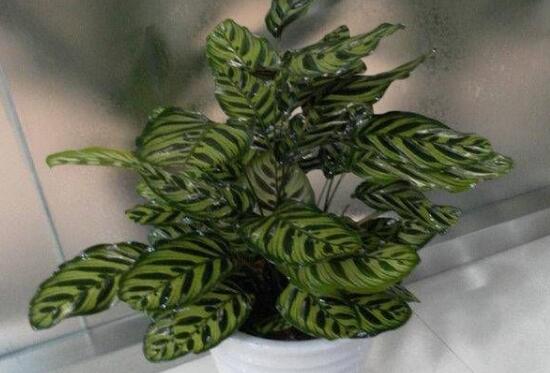
As a common indoor potted plant, Calathea makoyana is fairly easy to grow; with care, its leaves will look beautiful. However, propagating Calathea makoyana yourself is not so easy. According to research, Calathea makoyana has two main propagation methods: cuttings and division of the tubers. Let's take a look at the specific operations below.
1. Two propagation methods for Calathea makoyana
(1) Cutting method for Calathea makoyana
As for how to propagate Calathea makoyana, it is actually the same as with most indoor potted plants: it is suitable for propagation by cuttings. The specific operations are as follows:
1. Cutting time
Calathea makoyana likes high temperature and high humidity, so its cutting propagation is best done in summer, which can increase the success rate of propagation.
2. Selection of cuttings
Take the base from a well-grown Calathea makoyana, preferably with 3 leaves on the base, and use it as a cutting.
3. Cutting medium
The cutting method for Calathea makoyana naturally requires a cutting medium. Flower lovers can use peat soil and river sand, mixing them evenly.
4. Starting the cuttings
Once the above preparations are done, cutting propagation can officially begin. Insert the prepared cuttings into the medium, keep the soil moist, and after one month they will take root and sprout.
5. After-cutting management
After Calathea makoyana has taken root, it can be divided and potted up. When potting, first place about 3 cm of coarse sand at the bottom of the pot to help drainage, then place it in a warm spot for normal care. Finally, during propagation, frequently spray water on the leaves to prevent the leaves of Calathea makoyana from turning yellow.
(2) Division method for Calathea makoyana
Besides cuttings, Calathea makoyana can also be propagated by division, and the survival rate is very high. Method: also in summer, use a small knife to cut off several rhizomes of Calathea makoyana, sprinkle on a little charcoal powder to prevent the wounds from rotting, then find a fresh batch of soil and plant them. After division, place them in a shady spot to grow, keep the soil moist, and wait for the rhizomes to take root and sprout, after which normal cultivation can continue.
In general, when propagating Calathea makoyana, whether by cuttings or division, it can survive. Of course, methods are fixed, but people are flexible; everyone can choose a method to propagate according to the actual situation. That is all for the propagation methods of Calathea makoyana; I hope it helps everyone.
How to propagate Calathea makoyana: cutting and division propagation methods
How to propagate Calathea makoyana: it can be propagated by cuttings and division, and the steps for propagating Calathea makoyana are not difficult. Below is a summary of the division and cutting propagation methods for Calathea makoyana.
How to propagate Calathea makoyana 1. Cutting propagation methodCalathea makoyana cuttings can be taken in summer. First select young shoots with 2 to 3 leaves at the base as cuttings, or use some types of creeping stems for cuttings. Use a half-and-half mixture of peat soil and river sand, or use vermiculite and perlite as the medium, keep it moist, and roots will form in about 5 weeks; then divide and pot up.
2. Division propagation methodDivision propagation can be done every year in summer (when the temperature is around 20 degrees) or in spring from March to April.
For division propagation, simply dig out a densely grown old plant, split it along the underground rhizome, keeping 2-3 buds per section. After splitting, pot up immediately, place in a shady spot for one week, then gradually move to a spot with ample light. In the early stage after division planting, Calathea makoyana should have its water controlled; only after new roots emerge should it be watered thoroughly.
Calathea makoyana Calathea makoyana illustrated guide: how to grow Calathea makoyana / how to propagate Calathea makoyana
Calathea makoyana profileCalathea makoyana
Calathea makoyana cultivation methods and precautions; introduction to Calathea makoyana
Calathea makoyana is native to tropical America and the islands of the Indian Ocean. It is a perennial herb, up to 60 cm tall, with rhizomes; long, narrow, spear-shaped leaves grow directly from the roots, and the plant forms clumps; the leaves have green markings in different shades, and the undersides are mostly brownish red. The leaves of this species are silvery green, with dark green spots radiating from the midrib, and the back has brownish red spots of the same shape. The formaldehyde-removal effect of Calathea makoyana is half that of spider plant, but it is still much higher than ordinary plants. In addition, it is also excellent at removing ammonia pollution from the air (within 10 sq m it can remove 0.86 mg of formaldehyde and 2.19 mg of ammonia).
Morphological characteristics of Calathea makoyana
Perennial evergreen herb. 30-60 cm tall, leaves 15-20 cm long and 5-10 cm wide, ovate-elliptic, thin, leathery, with purple-red petioles. The green leaf surface faintly shows a metallic luster and is bright and gorgeous; along both sides of the midrib are feather-like, dark green, long-elliptic velvety patches arranged alternately left and right. The leaf underside is purple-red.
The base has tubers, and the plant is 30-50 cm tall. Leaves are ovate-elliptic, basal, entire, 20-30 cm long and about 10 cm wide, deep purple, with white down; because dense thread-like markings on both sides of the main vein on the leaf surface extend from the central vein to the leaf margin in a feather-like arrangement, and between the lateral veins there are obvious small veins resembling peacock tail feathers, it is named Calathea makoyana; the ornamental markings on the leaf underside are light purple, and the petiole is deep purple.
Calathea makoyana plants are densely clumping and upright. The plant is 20-60 cm tall, the petiole is purple-red and grows from the rhizome, and the leaf blade is thin and leathery, ovate-elliptic, 10-20 cm long and 5-10 cm wide, yellow-green. On the green surface of the leaf there is a faint metallic luster, and it is bright and gorgeous; on both sides of the main vein are alternately arranged feather-like dark green long-elliptic velvety markings, and the leaf back opposite the markings is purple, arranged alternately left and right, shaped like beautiful peacock tail feathers, hence the name Calathea makoyana. The leaves have a "sleep movement," that is, at night the leaves fold upward from the leaf sheath to the blade, clasping the stem, and reopen the next morning after sunlight shines on them, which is very interesting.
Ecological habits of Calathea makoyana
It likes semi-shade, cannot tolerate direct sunlight, and adapts to growing in a warm, humid environment.
It likes a warm, humid, and semi-shady environment and cannot tolerate cold. The suitable growth temperature is 18°C to 25°C; above 35°C is unfavorable for its growth. Although it is in a semi-dormant state in winter, the room temperature must not be lower than 13°C to 16°C; in other seasons, maintaining normal room temperature is fine.
It requires relatively high air humidity, preferably 70% to 80%; it dislikes dry air and dry potting soil, but also dislikes water accumulating in the pot, otherwise it very easily causes root rot. During indoor care, frequently spraying the leaves with cool boiled water works well.
Calathea makoyana originally grows under tropical rainforests. Like other plants in the same family Marantaceae, it has a common feature: at the junction of the leaf blade and petiole there is an obviously swollen joint, commonly called the pulvinus. Inside the pulvinus are water-storage cells, which have the function of adjusting leaf orientation. When the temperature is suitable and humidity is high, the pulvinus is full of water, the leaves stand clearly upright, and the plant shows vigorous vitality. If the temperature is high but humidity is low, or if it is exposed to sunlight, the pulvinus loses water and the plant appears wilted and weak; conversely, if the temperature is low but humidity is high, it can cause leaf rot and root rot. Therefore, high temperature and high humidity are most favorable for growth. When the temperature drops, humidity should be reduced accordingly.
Cultivation techniques of Calathea makoyana; growing techniques
Production standard: 14 cm pot, height 35-40 cm, crown width 25-30 cm, 1-2 plants/pot.
Medium preparation: Use a loose, well-drained, and well-aerated medium as the cultivation medium (imported peat of specification 5-40 can be used). Before transplanting, stir the medium with 1000x chlorothalonil solution and mix the medium with the medicated water evenly (standard for adding water: after adding water and mixing evenly, when you tightly squeeze a handful of peat, water seeps out between your fingers). Then wait to pot and plant.
Seedling screening requirements: Choose high-quality professionally produced seedlings, 7-8 cm tall (with bottom medium), 4-5 leaves, free of pests and diseases, and without dead or yellow leaves.
Potting: For reused old pots, they must be soaked in 1000x potassium permanganate solution for more than half an hour, then rinsed with clean water and dried for later use; new pots can be used directly. Generally, first use a smaller flower pot (9 cm plastic pot) for planting. When planting, first place an appropriate amount of medium at the bottom of the cup, then move the screened seedlings into the cup. Small seedlings can be planted somewhat deeper, preferably with the base of the plant level or slightly above. 1-2 plants/pot; the medium should be moderately firm, filled to 9/10 of the cup, gently shake the pot soil, and water half-thoroughly or just the surface water for the settling water.
Cultivation of Calathea makoyana
(1) Temperature and environment: Calathea makoyana is native to Brazil and likes a warm, humid, semi-shady environment. It fears low temperatures and dry winds, has relatively poor resistance to low temperatures, and dislikes exposure to sunlight. In summer it should be cultivated under a shade frame. When the temperature is above 30°C, leaf margins scorch, new buds sprout less, and leaves turn yellow; water should be sprayed frequently to maintain humidity and lower temperature. In winter, it should be given ample sunlight.
(2) Soil: Calathea makoyana likes well-drained, fertile, loose, slightly acidic leaf mold or culture soil. For the cultivation soil, a small amount of fully rotted base fertilizer can be added, and leaf mold, peat soil, and river sand mixed in equal amounts to make culture soil.
(3) Water and fertilizer: Calathea makoyana likes a humid environment and should be given ample water during the growing season. If it enters low-temperature dormancy in winter, watering should be controlled, just keeping the potting soil from drying out; after new leaves emerge the following spring, gradually resume normal watering. During the growing season, apply liquid fertilizer once a month to supplement the nutrients needed for the replacement of old and new leaves, and to promote sturdy plants and vivid leaf color. When fertilizer is lacking, the plant clearly becomes shorter, the leaf color turns pale yellow, and the metallic luster is dull. Fertilizer should mainly be phosphorus and potassium fertilizer, and nitrogen fertilizer must not be excessive. Generally, use 0.2% liquid fertilizer sprayed directly on the leaf surface, then rinse with a small amount of water to prevent fertilizer burn; phosphorus and potassium fertilizer are also extremely beneficial for new bud sprouting and growth. Fertilization should stop in winter.
(4) Pest and disease control: Calathea makoyana has relatively few pests and diseases, but under conditions of dry air and poor ventilation, it is prone to scale insects, whiteflies, and the like, which can be killed by spraying with 25% phosmet emulsifiable concentrate at 1000x or 40% omethoate at 1500x.
Cultivation management (Part 1)
For potted Calathea makoyana, use a loose, fertile, well-drained, humus-rich, slightly acidic loam. Generally, mix 3 parts leaf mold, 1 part peat or sawdust, and 1 part sand, and add a small amount of soybean cake as base fertilizer. Do not use heavy garden soil. When potting, first place 3 cm of coarse sand at the bottom of the pot as a drainage layer to facilitate drainage.
During the growing period, give ample water. Especially in summer and autumn, besides always keeping the potting soil moist, also frequently spray water on the leaves to lower temperature and maintain humidity; it requires relatively high air humidity, preferably 70% to 80%; it dislikes dry air and dry potting soil, but must not have standing water. After late autumn, water should be controlled to help it resist cold and survive winter. In winter, maintain a dry environment; if too wet, the basal leaves turn yellow and scorch, affecting its ornamental value.
From May to September, during the growing season, place it in shade or semi-shade, maintaining 40%-60% light transmittance, avoiding direct scorching sun. Too strong light or dry air easily causes scorched leaf margins and tips and dull, lusterless leaf markings; however, light should not be too weak either. If placed in a dark room for a long time, with low temperature and insufficient light, growth will also weaken, which is unfavorable for leaf color formation, and it will lose the unique metallic luster of the leaf surface. In winter it can receive direct sunlight through glass.
Cultivation management (Part 2)
For soilless cultivation of Calathea makoyana, either a plastic pot or an antique-style ceramic flower pot can be used. The medium can be perlite:vermiculite at 1:1 or perlite:peat:slag at 1:1:1:1 mixed medium. When potting, spread a layer of ceramic granules at the bottom of the pot as a drainage layer, then set the seedling upright, add the prepared medium until the flower pot is 80% full, press firm with your hand, and finally add another layer of ceramic granules on top of the pot to prevent algae growth after sun exposure and to prevent the medium from being washed away or the seedlings from being knocked over. For the nutrient solution, the aforementioned foliage plant nutrient solution or compound flower fertilizer can be used. The first time you water with nutrient solution, dilute it 3-5 times and water thoroughly at one time until seepage appears in the saucer under the pot. For regular supplementation, add liquid 1-2 times per week, 100 ml each time; for regular water supplementation, keep the medium moist. Do not add water on liquid-supplement days, and do not let water remain in the saucer under the pot for a long time, so as to facilitate aeration and prevent root rot.
Calathea makoyana plants most fear direct sunlight; after direct light exposure they develop curled leaves and dry edges. Therefore, they must be placed indoors in bright scattered light all year round. In northern regions, before winter heating starts and for a period after heating stops, pay attention to cold protection and warmth; room temperature must not be lower than 13°C, otherwise they are prone to cold damage, root rot, and yellow leaves. You can put a plastic bag over the flower pot to protect the plant, which also increases air humidity.
Calathea makoyana fears dryness. In dry seasons and during summer high temperatures, frequently spray water on the leaf surface; during winter heating, do not place it near a stove, radiator, or air conditioner. If necessary, cover it with a plastic bag, and frequently open it to spray water for humidity and ventilation. In the low-temperature stage of winter, reduce the frequency of liquid supplementation and watering; water again only after the surface medium dries, so as to avoid root rot and leaf rot.
Hydroponic method
For hydroponic Calathea makoyana, either a plastic pot or an antique-style ceramic flower pot can be used. The medium can be perlite:vermiculite at 1:1 or perlite:peat:slag at 1:1:1:1 mixed medium. When potting, spread a layer of ceramic granules at the bottom of the pot as a drainage layer, then set the seedling upright, add the prepared medium until the flower pot is 80% full, press firm with your hand, and finally add another layer of ceramic granules on top of the pot to prevent algae growth after sun exposure and to prevent the medium from being washed away or the seedlings from being knocked over.
For hydroponics, select a healthy small soil-grown plant and use the root-washing method for hydroponic cultivation, adding clean water up to 1/2-2/3 of the root system. Alternatively, in spring and autumn, while dividing, select a clump with 5-9 leaves, carefully wash off the soil, remove dead leaves and rotten roots, soak in 0.05%-0.1% potassium permanganate solution for about 10 minutes, then rinse clean with clear water, and then plant it in a container, adding clean water and leaving 1/3-1/2 of the root system exposed above the water.
At the initial stage of hydroponics, the leaves may curl. It should be placed in a ventilated, shaded spot, and the leaves should be sprayed with water appropriately, changing the clean water once every 1-2 days. The leaves will soon return to normal, and after about 10 days new roots will grow. When the plant has fully adapted to the hydroponic environment, add foliage plant nutrient solution for care, replace the nutrient solution once every 3-4 weeks, and at ordinary times only replenish the water that is lost.
For the nutrient solution, the aforementioned foliage plant nutrient solution or compound flower fertilizer can be used. The first time you water with nutrient solution, dilute it 3-5 times and water thoroughly at one time until seepage appears in the saucer under the pot. For regular supplementation, add liquid 1-2 times per week, 100 ml each time; for regular water supplementation, keep the medium moist. Do not add water on liquid-supplement days, and do not let water remain in the saucer under the pot for a long time, so as to facilitate aeration and prevent root rot.
Fertilization matters
When Calathea makoyana lacks fertilizer, the plant is clearly shorter, the leaf color is dull, and the golden luster is not vivid. During the growing season, apply dilute liquid fertilizer once every 20 days; the nitrogen-phosphorus-potassium ratio should be 2:1:1, which can make the leaf color glossy and vivid. Be sure to avoid too high a nitrogen ratio. If at ordinary times you use 0.2% liquid fertilizer sprayed directly on the leaf surface every 10 days, it is extremely beneficial for budding and growth. Stop fertilization in winter and summer.
Precautions
Calathea makoyana likes high temperature and humidity. The suitable growth temperature is 18°C-25°C, and it likes humid air. It grows fastest from May to October when the temperature is above 20°C. From October each year to April of the following year, during the low-temperature season, in northern regions it should be moved into a greenhouse to overwinter. The overwintering temperature in winter should not be lower than 15°C, otherwise the leaf color darkens, the leaves curl, and the leaf tips turn yellow. If the cold damage is slight, after promptly changing the environmental conditions, it can still produce new leaves the following spring. If the cold damage is severe, the leaves will die successively and even the whole plant may die. If the indoor temperature difference between day and night is large, cover the pot with plastic film or use a glass box to maintain warmth and humidity, and wash the leaf surface once a month with warm water to maintain the leaf color. Each spring, after the temperature steadily rises to 20°C, repot once. When repotting, add new culture soil, cut off residual roots and dead leaves, and replant to facilitate growth.
What to do if Calathea makoyana leaves shrink?
Sometimes home-grown Calathea makoyana develops shrunken, curled leaves that no longer spread freely. This is caused by unsuitable environmental temperature and humidity for cultivating Calathea makoyana. A high-temperature, high-humidity environment is favorable for the growth of Calathea makoyana. If for a period the indoor temperature is below 18°C and humidity is below 60%, the above situation will occur. If measures are still not taken, over time the leaves and roots will rot, and it may even wither and die.
Besides strengthening daily water and fertilizer management, the following measures should also be taken:
1. Spraying: except on overcast and rainy days, spray the plant and surrounding environment 3 times a day;
2. Bagging: if the leaves are especially severely shrunken, you can cover the whole plant with a plastic bag and poke some small holes about 5 mm above the pot rim, which can maintain a certain humidity and also allow proper ventilation, helping recovery.
The cause of Calathea makoyana leaves curling, accompanied by partial death and lower leaves turning yellow and withered, is too little watering and too low humidity. Potted Calathea should always keep the potting soil moist; do not wait until the potting soil dries before watering. Calathea makoyana is native to the tropical rainforests of South America and requires a very humid special environment. Besides keeping the potting soil moist without waterlogging and root rot, it should also maintain relatively high air humidity in the surrounding environment. For this reason, in summer it should be placed in a semi-shady location, spray water on the leaves 2 to 3 times a day, and sprinkle water on the surrounding ground to increase humidity and lower temperature and promote healthy plant growth.
In addition, absolutely avoid water accumulating in the pot, and do not apply raw fertilizer, concentrated fertilizer, or heavy fertilizer, otherwise the nutrient fibrous roots will rot, which will likewise cause its leaves to curl and turn yellow.
How to carry out soilless cultivation of Calathea makoyana?
Calathea makoyana is mainly propagated by division and tissue culture. Division propagation is best in late spring and early summer. When dividing, each daughter plant should retain at least 5 leaves and a relatively large root system, otherwise it will affect survival and growth and development after survival. When raising seedlings in large quantities, tissue culture is better for propagation.
For soilless cultivation of Calathea makoyana, either a plastic pot or an antique-style ceramic flower pot can be used. The medium can be perlite:vermiculite at 1:1 or perlite:peat:slag at 1:1:1:1 mixed medium. When potting, spread a layer of ceramic granules at the bottom of the pot as a drainage layer, then set the seedling upright, add the prepared medium until the flower pot is 80% full, press firm with your hand, and finally add another layer of ceramic granules on top of the pot to prevent algae growth after sun exposure and to prevent the medium from being washed away or the seedlings from being knocked over. For the nutrient solution, the aforementioned foliage plant nutrient solution or compound flower fertilizer can be used. The first time you water with nutrient solution, dilute it 3-5 times and water thoroughly at one time until seepage appears in the saucer under the pot. For regular supplementation, add liquid 1-2 times per week, 100 ml each time; for regular water supplementation, keep the medium moist. Do not add water on liquid-supplement days, and do not let water remain in the saucer under the pot for a long time, so as to facilitate aeration and prevent root rot.
Calathea makoyana plants most fear direct sunlight; after direct light exposure they develop curled leaves and dry edges. Therefore, they must be placed indoors in bright scattered light all year round. In northern regions, before winter heating starts and for a period after heating stops, pay attention to cold protection and warmth; room temperature must not be lower than 13°C, otherwise they are prone to cold damage, root rot, and yellow leaves. You can put a plastic bag over the flower pot to protect the plant, which also increases air humidity.
Calathea makoyana fears dryness. In dry seasons and during summer high temperatures, frequently spray water on the leaf surface; during winter heating, do not place it near a stove, radiator, or air conditioner. If necessary, cover it with a plastic bag, and frequently open it to spray water for humidity and ventilation. In the low-temperature stage of winter, reduce the frequency of liquid supplementation and watering; water again only after the surface medium dries, so as to avoid root rot and leaf rot.
Why do Calathea makoyana leaves curl at the edges?
The optimal growth temperature for Calathea makoyana is around 22°C. If the summer temperature is above 35°C, not only will plant growth stagnate, but the leaf color will turn yellow and lose ornamental value. If the winter temperature is below 15°C, the plant grows slowly; below 10°C the leaves easily curl; below 5°C it is prone to cold damage, and in severe cases it can cause the whole plant to die. Therefore, in winter be sure to protect against cold and keep warm, and room temperature should be kept above 13°C.
What to do if Calathea makoyana leaves turn yellow?
Calathea makoyana likes semi-shade, cannot tolerate direct sunlight, and adapts to growing in a warm, humid environment. Too much or too little water, too strong or too weak sunlight, and too much or too little fertilizer can all cause leaves to turn yellow, but the yellowing situations differ. Observe carefully and analyze the cause, then correct it. Water-yellow: young leaves are dark yellow and lusterless, old leaves show no obvious change, stems are thin and yellow-green, and new shoots shrink and do not grow, indicating excessive watering. Take the plant out of the pot, place it in a ventilated, shady spot to let the soil ball dry naturally, then put it back in the pot.
Drought-yellow: the yellowing from lack of water is different from the yellowing from too much water. The yellowing from lack of water shows withered, dry leaf tips or margins, and old leaves turn yellow from the bottom upward and fall off, but new leaves grow relatively normally. Just be careful to water thoroughly and sufficiently.
Sunburn-yellow: strong direct sunlight shining on some shade-loving flowers (such as spider plant, Calathea makoyana, hosta, etc.) easily causes the leaf tips and margins to wither and yellow spots to appear on the sun-facing part of the leaves. Moving them to a shady spot is enough.
Light-deficiency-yellow: if placed in a shaded environment for a long time, the leaves cannot get enough sunlight and cannot form chlorophyll, so the whole plant's leaves turn yellow and then fall off. Supplementing light can avoid this problem.
Fertilizer-yellow: yellowing of flowers caused by excessive fertilization or too high concentration is shown by dry brown tips on new leaves; generally the leaf surface is thick and lusterless, uneven and not smooth, and old leaves scorch yellow and fall off. Fertilization should be stopped immediately; in severe cases, use a large amount of clean water to wash out part of the fertilizer.
Fertilizer-deficiency-yellow: shown by young leaves becoming lighter in color, yellow or pale green, while old leaves are relatively normal or gradually turn from green to yellow. Check the potting soil; if there is caking, change the soil. At ordinary times, apply thin fertilizer frequently and water with some alum water at the right time ("Calathea makoyana" is a foliage plant and should be given fertilizer mainly based on nitrogen fertilizer).
How to make Calathea makoyana leaf color more beautiful?
Calathea makoyana is a perennial evergreen herbaceous plant of the genus Calathea in the family Marantaceae. The leaf surface has feather-like markings alternating dark green with white or pale yellow, and has a unique metallic luster, like peacock tail feathers, hence the name Calathea makoyana. The leaf underside is gray-green, the markings are dark green, and the leaf back is purple with the same outstanding pattern. It is suitable for pot cultivation and indoor display, and is very unique and exquisite.
Calathea makoyana is native to South America and likes high temperature, high humidity, and a semi-shady environment; it cannot tolerate cold. It should be placed in a brighter spot, avoiding direct light, with high humidity. The optimal growth temperature is 18-25°C, and the overwintering temperature is 13-16°C. In winter place it in a spot with ample sunlight and pay attention to cold protection. Calathea makoyana has relatively high humidity requirements and should normally be kept at 70%-80% humidity, so in the home, humidity becomes the key to cultivating Calathea makoyana. In spring and summer, besides timely watering, spray and wash once every 3-5 days. If conditions permit, use a humidifier to raise indoor humidity. To make the leaf color glossy and gorgeous, besides applying dilute liquid fertilizer once every 3-4 weeks during the growing period, also water with nutrient solution 1-2 times a month. Let Calathea makoyana see a bit more sunlight; if kept in a dim place for a long time, the leaves will lose their unique gorgeous luster. Also frequently wipe the leaves gently with clean water. Only by doing the above aspects can the leaf color of Calathea makoyana remain beautiful.
Propagation methods of Calathea makoyana
Calathea makoyana can be propagated by division, cuttings, tissue culture, and other methods. Among them, conventional propagation often uses division. Division propagation can be carried out in both spring and autumn, but spring combined with repotting is better. Each divided daughter plant must retain 5 leaves. After splitting, immediately place the pot in a shady spot, and move it to a brighter spot after one week. In the early stage, watering should be controlled; after new roots emerge, water thoroughly. When Calathea makoyana is propagated by rhizome cuttings, cut the rhizome from the stem node with a sharp knife, keeping 1-2 nodes per section. After splitting, immediately place the pot in a shady spot, and new roots can form in 1-2 weeks.
Calathea makoyana is propagated by division. Generally it is done in late spring and early summer when the temperature is around 20°C, combined with repotting and soil changing. When the temperature is too low, division easily damages the roots, affecting survival or weakening growth. When dividing, tip the mother plant out of the pot, remove the old soil, and use a sharp knife to split the densely grown plant along the direction of underground rhizome growth, so that each clump has 2-3 buds and strong roots; after splitting, immediately pot up and water thoroughly, place in a shady spot, and after one week gradually move to a brighter spot. In the early stage, water should be controlled; only after new roots emerge should it be watered thoroughly.
Calathea makoyana is mainly propagated by division and tissue culture. Division propagation is best in late spring and early summer. When dividing, each daughter plant should retain at least 5 leaves and a relatively large root system, otherwise it will affect survival and growth and development after survival. When raising seedlings in large quantities, tissue culture is better for propagation.
During cultivation, a certain degree of shading should be given, and the temperature should be kept at around 12-29°C. In winter the temperature should preferably be maintained at 16-18°C. In spring and summer, growth is vigorous and higher air humidity is needed, so misting can be done; the soil requirements are not very strict, but it should be kept moderately moist. During the growing season, fertilize about once every 2 weeks, while in winter the soil can be slightly dry and cool, and the frequency of fertilization should be reduced; propagation mostly uses the root division method, carried out in early summer, and cutting can also be used; the main pests include mealybugs, red spiders, aphids, scale insects, and so on.
Pest and disease control of Calathea makoyana
Calathea makoyana has relatively few pests and diseases, but if ventilation is poor and the air is dry, scale insects can also occur, and spraying with imidacloprid-series pesticides should be used for control.
Leaf spot disease spots are yellow-brown. In the early stage of the disease, small yellow granules form near the leaf margin or in the center of the leaf, and gradually expand, deepen in color, and turn yellow-brown. The outer edge of the lesion has a relatively obvious halo. As the lesion expands, the leaf gradually dries, shrinks, and finally falls off and dies. The pathogen is the fungus Drechslera of the Deuteromycetes. The causes of the disease are high temperature and high humidity, poor air circulation, plants placed too densely, many weeds and rotten leaves in the cultivation environment, excessive nitrogen fertilizer application, and leggy plant growth. Tissues that are young and tender are more susceptible to the disease.
Control methods
Strengthen fertilizer and water management, appropriately increase phosphorus and potassium fertilizer, apply less nitrogen fertilizer, and promote full plant growth and enhance its own resistance. Promptly remove diseased and residual leaves as well as weeds to reduce sources of infection. Plants should not be placed too densely; provide proper ventilation and light transmission and reduce environmental humidity, which can reduce disease occurrence. When the disease occurs, spray chemicals for protection.
Chemicals include
50% carbendazim at 600x to 800x; or 75% chlorothalonil at 600x to 800x; 50% mancozeb at 500x to 600x, once every 7 to 10 days. Various chemicals should be used alternately to prevent the pathogen from developing resistance.
Calathea makoyana has relatively few pests and diseases, but if ventilation is poor and the air is dry, scale insects can also occur, and spraying with 1500x dimethoate should be used for control.
Distribution area of Calathea makoyana
Calathea makoyana is native to Brazil, and plants of this genus are distributed in tropical America from South America to Central America.
Landscape uses of Calathea makoyana
Calathea makoyana has beautiful and moving leaves, grows densely, and has shade tolerance, making it an ideal indoor greening plant. It can be enjoyed as a single plant, or planted in rows as a groundcover to appreciate its mass beauty, taking care to provide a good background to set it off. Use small and medium potted plants for ornamental display, mainly to decorate and arrange studies, bedrooms, living rooms, and so on.
The formaldehyde-removal effect of Calathea makoyana is half that of spider plant, but it is still much higher than ordinary plants. In addition, it is also excellent at removing ammonia pollution from the air (within 10 sq m it can remove 0.86 mg of formaldehyde and 2.19 mg of ammonia). This plant is highly ornamental and can also purify the air.
The plant shape is neat, and the leaf surface is rich with wonderful and exquisite markings and a unique metallic luster. The brown patches are like a peacock spreading its tail, and its colors are fresh, gorgeous, and soft. Therefore, it is increasingly favored by people and has become a treasure among indoor foliage plants. It has strong adaptability and can be cultivated for a relatively long time in weak indoor light environments. It is often planted in small and medium pots and used for decorative arrangement in home studies, bedrooms, living rooms, and other places.
Calathea makoyana has an elegant, graceful, and unrestrained plant form. Its leaf markings are gorgeous, colorful, strange, and varied, like colored patterns carefully drawn by a painter, and also like a vivid peacock spreading its tail, with a unique style. At first glance, it is often mistaken for an artificial flower. It is one of the most beautiful and charming species among the many varieties of the same family and genus, and is also a representative indoor foliage flower that is popular worldwide today, very lovable! It has strong applicability and can be placed for a long time in weak indoor light. It is often used as a small to medium potted plant, suitable for arranging living rooms, meeting rooms, studies, and desks, and is also a precious material for flower arrangement foliage.
Calathea makoyana pictures