How to Propagate Campanula: Complete Sowing in 5 Steps and Pay Attention to Keeping Warm
There are more than 200 species of Campanula, most of which are perennial herbaceous plants. Its roots are slender and creep horizontally, so the suitable propagation methods differ from those of other plants. So how do you propagate Campanula? Join us to learn the propagation methods for Campanula.
How to Propagate Campanula
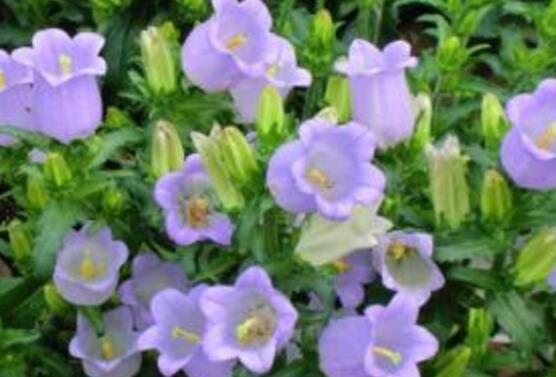
Generally, Campanula is propagated by sowing. In addition, it can also be propagated by cuttings, division, and so on, but sowing is the most commonly used method. It is easy to care for and is more conducive to the growth and flowering of Campanula. Below we introduce the sowing method for Campanula in detail.
Propagation Methods for Campanula
1. Sowing Time
The sowing time is determined by the local climate and the desired flowering time. For example, in Guangdong, if flowers are wanted for the Spring Festival, sowing needs to be done in July-August, because it generally takes 6 months from sowing to flowering. When growing in pots, the sowing time is generally chosen in spring.
2. Sowing Method
1. Choose Seeds
Campanula seeds are quite small, but you should try to choose relatively plump seeds. This can increase the germination rate after sowing and make propagation easier to succeed.
2. Prepare the Substrate
The substrate should preferably be relatively fertile, loose sandy soil. It is best to disinfect the soil. There are generally two methods: one is to place the soil in the sun to dry for 1-2 days; the other is to water it with carbendazim, which can protect Campanula from pests and diseases.
3. Sowing
Sprinkle the seeds evenly over the soil, then cover with soil, but note that the soil should not be too thick. After that, water thoroughly, but do not let water accumulate in the soil. Just keep the soil slightly moist.
4. Care and Management
Keep the temperature at around 20 degrees so Campanula can germinate smoothly. Make sure it receives sufficient light during the seedling emergence period but avoid direct sunlight, and also keep the soil moist. It generally germinates after 2-3 weeks.
5. Raising Seedlings or Transplanting
When the seedlings are small, they do not need much fertilizer or water. You can raise seedlings by division or cuttings, then plant them in their final position. When planting in the final position, be sure to water enough to settle the roots. After the leaves grow out, they can be transplanted. After transplanting, carry out normal management according to Campanula care methods.
Key Points for Propagating Campanula
Campanula has a fresh, elegant color and is very popular in Europe. It is also a common herbaceous flower in small courtyards in late spring and early summer, and it is very beautiful. Campanula is not difficult to cultivate. Artificial propagation can use sowing, cuttings, and division.
Campanula
Campanula is mainly grown by sowing, and can also be propagated by division or cuttings. After flowering, it forms capsules, and each capsule contains many seeds. The seeds are extremely small and can be dried and stored. In spring or late winter to early spring, sow in a plastic tunnel while keeping warm, so that the flowering period avoids the high heat of summer. According to the requirements for small seeds, prepare the ground carefully, deep-plow and break up the soil more than 2 times, scrape the ground level, water thoroughly, and then scatter the seeds evenly.
After sowing, do not cover with soil again, or cover thinly with sieved fine soil. During the seedling stage, spray water with a sprayer, and thin or fill in seedlings according to seedling growth. Seeds can also be sown in sand trays while keeping warm, and compound fertilizer should be applied once seedlings emerge. When the seedlings are about 10 cm tall, transplant them to the nursery field or pot them in their final position. For field planting, a spacing of 20 cm x 40 cm is more suitable. After transplanting, water thoroughly to settle the roots, and then manage as usual. Autumn sowing is also possible. Generally, seedlings sown in autumn of the same year need to be grown until spring-summer of the following year before they can bloom. Division is mostly carried out in autumn. After growing through one winter, they can bloom the following year.
For cuttings, mostly in spring, take new shoots sprouting from the base, insert them into a wet sand bed, mist frequently to keep moist, and transplant after rooting.
Propagation Techniques for Clustered Campanula
Clustered Campanula is mainly propagated by sowing, and can also be propagated by division or cuttings. After flowering, it forms capsules, and each capsule contains many seeds. The seeds are extremely small and can be dried and stored. In spring or late winter to early spring, sow in a plastic tunnel while keeping warm, so that the flowering period avoids the high heat of summer.According to the requirements for small seeds, prepare the ground carefully, deep-plow and break up the soil more than 2 times, scrape the ground level, water thoroughly, and then scatter the seeds evenly.
After sowing, do not cover with soil again, or cover thinly with sieved fine soil. During the seedling stage, spray water with a sprayer, and thin or fill in seedlings according to seedling growth. Seeds can also be sown in sand trays while keeping warm, and compound fertilizer should be applied once seedlings emerge.
When the seedlings are about 10 cm tall, transplant them to the nursery field or pot them in their final position. For field planting, a spacing of 20 cm x 40 cm is more suitable. After transplanting, water thoroughly to settle the roots, and then manage as usual.
Autumn sowing is also possible. Generally, seedlings sown in autumn of the same year need to be grown until spring-summer of the following year before they can bloom. Division is mostly carried out in autumn. After growing through one winter, they can bloom the following year.
For cuttings, mostly in spring, take new shoots sprouting from the base, insert them into a wet sand bed, mist frequently to keep moist, and transplant after rooting.