Propagation methods for Dieffenbachia: tissue culture can also succeed
Dieffenbachia has broad, beautiful leaves and is easy to keep alive. It is often used to accent living rooms, studies and other places, and is one of the most popular indoor potted plants. In daily life, many people keep a Dieffenbachia at home; some buy ready-made potted plants, while others propagate them themselves. So how do you propagate Dieffenbachia? Below are four propagation methods for Dieffenbachia; let's take a look.
1. Division / cuttings / sowing / tissue culture
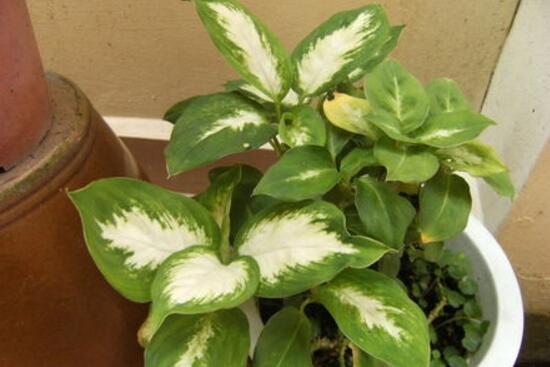
As a common indoor potted plant, Dieffenbachia is quite easy to grow, but propagating it yourself is not so easy. Every plant has propagation methods suited to it, and Dieffenbachia generally has four: division, cuttings, sowing and tissue culture. Next, let's look at the specific steps.
(1) Division propagation of Dieffenbachia
1. Time for division
When it comes to propagating Dieffenbachia, division is the method most often used. This method is generally carried out in spring, together with repotting.
2. Division method
Take the Dieffenbachia out of the pot, cut apart the rhizome at the base of the stem, and coat it with plant ash to prevent rot. Then place it in a cool, ventilated spot. Once the cut surface is dry, pot it up and water thoroughly. After planting, do not water too much; growth should resume in about 10 days.
(2) Cutting propagation of Dieffenbachia, soil cuttings / water cuttings
1. Soil cutting propagation
① Time
Dieffenbachia likes high temperatures, so its cuttings are generally taken in July-August. Cuttings taken at this time will have a very high survival rate.
② Cuttings
From a healthy Dieffenbachia, cut off the top 7 to 10 cm of the stem as the cutting. Then remove the leaves from the rest of the section to reduce water loss through photosynthesis, and be sure to coat the cut with plant ash for disinfection.
③ Inserting the cuttings
Insert the treated cuttings into a sand bed and place them in a semi-shaded spot with high air humidity, keeping them in diffused light (light intensity about 50%-60%), with the room temperature controlled at 24-30°C. About 15-25 days after insertion, they will root. Wait until new shoots sprout from the stem sections, then transplant them into pots.
2. Water cutting propagation
① Time for water culture
For water propagation of Dieffenbachia, it is best to choose spring and autumn, because early spring and late autumn do not reach the temperature required for rooting, cuttings in the high-temperature summer season are prone to rot from microbial infection, and in winter they are easily damaged by cold.
② Water cuttings
After choosing the time, select a strong branch about 1 cm in diameter from a 1-2 year old Dieffenbachia. Be sure to keep the aerial roots on the stem nodes. Preparing the water cuttings: after selecting the branch, disinfect the cut with potassium permanganate, then place it in a cool spot to dry.
③ Starting water cutting
Insert the Dieffenbachia water cuttings into a prepared clear glass bottle and add an appropriate amount of water, to a depth of about 2/3 of the container. Keep the room at about 25°C and maintain high air humidity; roots will form after 20 days.
④ Care: change the water frequently
During the rooting period of water cuttings, Dieffenbachia respires vigorously, so it needs plenty of oxygen. For this reason, growers should change the water frequently to keep the water clean and meet the cuttings' oxygen needs. Note: when changing the water, rinse the cuttings and container clean, especially the cut end, and once roots have formed, switch to normal water-culture care.
(3) Tissue culture and sowing of Dieffenbachia
How do you propagate Dieffenbachia? Besides division and cuttings, there are also tissue culture and sowing, but these are rarely used now. Only large-scale growing operations choose these methods, and they take a relatively long time.
Overall, when propagating Dieffenbachia, whether by division, cuttings, sowing or tissue culture, all can survive, but the most suitable for home propagation are still division and cuttings. Of course, methods are fixed but people are flexible; everyone can choose a method according to their actual situation. That is all on Dieffenbachia propagation methods; we hope it helps.
Is Dieffenbachia poisonous? Propagation methods for Dieffenbachia
Dieffenbachia is a very good green plant for purifying the air. Do you know whether Dieffenbachia is poisonous? Let's take a look at the propagation methods for Dieffenbachia.
Propagation methods for Dieffenbachia:
1. Division propagation of Dieffenbachia
You can use the suckers at the base for division propagation, generally carried out in spring together with repotting. During the operation, lift the plant out of the pot, cut apart the rhizome at the base of the stem, and coat it with plant ash to prevent rot, or leave it for half a day. Once the cut surface is dry, pot it up and water thoroughly; after planting, do not water too much. Growth should resume in about 10 days.
2. Cutting propagation of Dieffenbachia
Cuttings are best taken during the high-temperature period of July-August. Cut off the top 7-10 cm of the stem, remove some leaves to reduce water evaporation, coat the cut with plant ash or sulfur powder, and insert it into a sand bed or wrap the cut with sphagnum moss. Maintain high air humidity and place in a semi-shaded spot with about 50%-60% sunlight. At a room temperature of 24-30°C, roots form 15-25 days after insertion; once new shoots sprout from the stem section, transplant into a pot. You can also cut an old base section into stem segments with 3 nodes, insert them vertically into the soil by 1/3, or bury them horizontally in the soil to induce rooting and budding.
3. Sowing propagation of Dieffenbachia
Sowing propagation is also one of the propagation methods used for Dieffenbachia, but it is rarely used now. Only large-scale growing operations choose this method, and it takes a relatively long time.
4. Tissue culture propagation of Dieffenbachia
Dieffenbachia can also be propagated by tissue culture, but this method is only chosen for large-scale propagation. For ordinary home propagation, cutting propagation and division propagation are used more often.
Is Dieffenbachia poisonous?
We often see Dieffenbachia at home and in the office. Dieffenbachia can absorb indoor toxic gases and waste gases and release oxygen, thereby purifying the air. The higher the concentration of pollutants in the air, the more it can exert its purifying ability, which is very beneficial for children and the elderly with weaker immunity.
However, the sap of Dieffenbachia is poisonous, and the tissue fluid in the stem is generally the most toxic. If the mucus gets on your hands or skin, it can cause an allergic reaction, producing patches or a very itchy feeling, and scratching without thinking will make it itch more. Too much contact can cause hair loss, and if accidentally ingested, it can even be life-threatening. If it accidentally gets into the eyes, it may cause temporary blindness. Once you come into contact with the sap of Dieffenbachia, rinse it off immediately with clean water.
After accidentally eating the branches and leaves of Dieffenbachia, it will cause swelling and pain in the mouth, throat, esophagus, and gastrointestinal tract, and may even damage the vocal cords, making a person mute; it may also cause burns to the epidermis of the lips and tongue, edema, excessive salivation, and affect swallowing and breathing. Symptoms can last for several days or more than a week. In severe cases, swelling of the mouth and tongue can cause suffocation. Sometimes nausea, vomiting and diarrhea occur, so attention should be paid.
Particular attention is needed especially when there are children at home; during cutting operations, do not let the sap touch the skin, and be especially careful not to get it into the mouth, otherwise it will make the skin itchy and painful or cause other poisoning symptoms. After the operation, wash your hands with soap.
Dieffenbachia Dieffenbachia picta (Lodd.) Schott Dieffenbachia illustrated guide: how to grow Dieffenbachia / how to propagate Dieffenbachia
Dieffenbachia profileDieffenbachia Dieffenbachia picta (Lodd.) Schott
How to grow Dieffenbachia and precautions; introduction to Dieffenbachia
Dieffenbachia, also known as dumb cane, is a plant in the genus Dieffenbachia of the family Araceae. This genus has about 30 native species, mainly distributed in tropical America. It was introduced to the UK in the 1860s and quickly spread throughout Europe, the Americas and Oceania. It is widely cultivated around the world, and its many cultivars have entered countless homes.
Dieffenbachia has deep green leaves with clear, glossy markings, solemn yet elegant; it is relatively shade-tolerant and easy to care for, and can survive long-term under ordinary conditions, making it an ideal foliage plant for indoor greening and decoration.
Dieffenbachia is an evergreen plant of the family Araceae, mainly grown for its foliage. Zebra plant is named because the markings on its leaves resemble the stripes on a zebra; it is also called silver vein aphelandra, and is an evergreen shrub or perennial herb in the genus Aphelandra of the family Acanthaceae. The sap of the leaves is highly toxic and can make a person mute, so attention should be paid.
Propagation: division, cuttings
Flowering period: April to June
Sunlight: partial sun
Temperature: optimum growing temperature 20°C-28°C
Soil: not particular about soil
Water: likes moisture
Morphological characteristics of Dieffenbachia
The stem of Dieffenbachia is 1 m tall, 1.5-2.5 cm thick, with internodes 2-4 cm long; the lower petioles have long sheaths, the middle petioles are sheathed to the middle, the upper petioles are long with sheaths almost reaching the tip, and have broad grooves; the leaves are oblong, oblong-elliptic or oblong-lanceolate, 15-30 cm long and 7-12 cm wide, with a rounded or acute base and a slightly narrowed apex with an acute tip, dark green and shiny on both sides, with many oblong or linear-oblong patches of different sizes between the veins, the patches white or yellow-green, irregular; there are 15-20 pairs of primary lateral veins, ascending, and the secondary lateral veins are finer, raised on the underside.
The peduncle is short. The spathe is oblong-lanceolate, narrow and long, abruptly pointed. Spadix: the lower female inflorescence reaches the middle; the sterile neutral inflorescence accounts for 1/3 of the total length, with flowers scattered; the ovary has 2 or 3 carpels, and the stigmas are nearly separate.
The berry is orange-yellow-green, with 2-3 chambers.
Ecological habits of Dieffenbachia
Dieffenbachia likes a semi-shaded, warm, humid, well-ventilated environment. It is not cold-tolerant, fears drought, and avoids strong direct sunlight. Dieffenbachia can tolerate 14 days in darkness, and can be stored and transported at 15°C and 90% relative humidity.
Dieffenbachia avoids direct sunlight and waterlogging. It can be grown in ordinary garden soil, but sandy loam rich in humus and loose, well-drained soil is best.
Cultivation techniques for Dieffenbachia: daily cultivation
1. Temperature
The optimum growing temperature for Dieffenbachia is 25-30°C, with good results at 30°C during the day and 25°C at night. The possible growth range is 18-30°C from February to September, and 13-18°C from September to February of the following year. Because it is very intolerant of cold, it must be moved into a greenhouse in mid-October. If the winter temperature is below 10°C, the leaves are prone to cold damage. Especially when the winter temperature is below 10°C, if watered too much, it can also cause leaf drop and rot at the stem tip. If low temperatures cause the plant to drop leaves but the stem has not rotted, then after the temperature rises again, it can still grow new leaves.
2. Water
Dieffenbachia likes moisture and fears dryness, and the potting soil should be kept moist. During the growing season, water thoroughly and spray water around the Dieffenbachia and mist the plant. If it is not sprayed for a long time, the leaf surface becomes rough and loses its luster. In summer, maintain air humidity at 60%-70%, and in winter at about 40%. Soil moisture is best kept alternating between dry and wet; water more in summer, and control watering in winter, otherwise if the potting soil is too wet, the roots rot easily and the leaves turn yellow and wither. For plants displayed indoors, often wipe the leaf surface with a soft cloth to keep the leaves clean and make them shine brightly.
3. Light
Dieffenbachia is shade-tolerant and fears sun. If the light is too strong, the leaf surface becomes rough, the leaf margins and tips are prone to scorching, and even large areas may be burned. If the light is too weak, the yellow-white patches will turn green or fade. It grows best under bright diffused light, and the leaf color is brighter and more beautiful. About 40%-60% sunlight is ideal for growth. In spring and autumn, besides sunlight in the morning and evening, shade is needed around midday and throughout summer. Varieties with more green leaves are more shade-tolerant and cold-tolerant, so varieties with more milky-white markings lack chlorophyll and should be given especially bright light, with special attention to keeping warm at low temperatures.
4. Growing medium
The growing soil for Dieffenbachia is best as fertile, loose, well-drained loam rich in organic matter. For potting soil, use a mix of leaf mold and coarse sand, for example 2 parts leaf mold, 1 part sawdust or peat, and 1 part sand. Pots of 15-20 cm are commonly used. After potted plants have grown for 1-2 years, there are more suckers at the base, and division propagation can be carried out together with repotting. If the plant grows tall, you can leave 2-3 nodes at the base and cut off the above-ground part; the remaining stem nodes can still sprout and branch, maintaining a good plant shape.
5. Fertilizing
June to September is the vigorous growth period for Dieffenbachia. Apply cake fertilizer water once every 10 days, and after early autumn, apply phosphorus and potassium fertilizer 2 more times. From spring to autumn, applying nitrogen fertilizer once every 1-2 months can promote a more glossy leaf color. If the room temperature is below 15°C, stop fertilizing.
6. Pest and disease control
The main problems are bacterial leaf spot, brown spot and anthracnose, which can be sprayed with 50% carbendazim wettable powder at 500 times dilution. Sometimes root rot and stem rot occur; besides paying attention to ventilation and reducing humidity, spray with 75% chlorothalonil wettable powder at 800 times dilution for control.
Cultivation points
It likes a hot, humid, semi-shaded environment and avoids strong sunlight. The optimum growing temperature is 18-25°C; in winter the growing temperature should be above 15°C, and if below 10°C the leaves turn yellow and fall off. It requires loose, fertile, well-drained soil. Dieffenbachia leaves are relatively broad, with different spots, markings or patches on them; the colors are bright and strong, the tones distinct, and it is green in all four seasons, elegant and beautiful. It is a refined indoor foliage plant and one of the indoor foliage plants currently highly praised. Using it to accent living rooms, studies and bedrooms gives a feeling of tranquility and ease; it can also be combined with colorful foliage plants such as bromeliads and peacock arrowroot to decorate windowsills, giving a sense of competing beauty; if combined with simple and lively furniture, it is even more complementary. Small potted plants can be placed on desks, coffee tables and bedroom surfaces; larger plants are suitable for decorating living rooms, meeting rooms, offices and so on. In darker rooms it can be enjoyed for more than 4-6 weeks; in places near windowsills with relatively strong light, it can be enjoyed year-round.
Winter management
1. Timely repotting. Generally, repotting is needed once in October. When repotting, remove aged rhizomes and persistent dead leaves, and plant in a mix of 2 parts leaf mold, 1 part peat, and 1 part sand. After watering thoroughly, place in a shaded spot for a few days, then move into a greenhouse or indoors.
2. Scientific watering. Dieffenbachia likes a high-humidity environment. For potted plants overwintering indoors in winter, the potting soil should alternate between dry and wet, and must not be too dry. If the potting soil is too dry, the leaf tips will turn yellow and scorched, die, and even the whole plant may wither. The main reason is that the roots cannot absorb water. Therefore, in winter, keep the air moist and the potting soil damp. Generally, watering once a week is suitable, and the leaves should also be washed once with warm water to keep the leaf color bright.
3. Suitable temperature and light. Dieffenbachia likes high temperatures and fears cold, so it must be moved indoors for overwintering in October. The temperature should be kept at about 15°C. It requires sufficient light and good ventilation. Temperatures below 10°C or excessive moisture often cause leaf drop, and even rot at the stem tip; too weak light can cause leaf fading. Usually wipe the leaf surface with a soft cloth to remove dust and increase ornamental value.
Light: tolerant of partial shade, avoid overly strong sunlight, but too dark light can also cause leaf fading.
Water: likes moisture; during the growing period from March to August, water more. In summer, sprinkle water frequently to increase environmental humidity.
Temperature: likes high temperatures, not cold-tolerant; optimum growing temperature 20-30°C. The minimum overwintering temperature is above 12°C. Once frozen, the leaves turn yellow and wilt and the terminal bud dies.
Fertilizer: during the growing period of Dieffenbachia, apply nitrogen fertilizer monthly to promote rapid growth, and from March to August apply fertilizer water once every two weeks. Reduce fertilization after autumn.
Soil: requires loose, fertile, well-drained soil
4. Pest and disease control. To grow Dieffenbachia well in winter, pest and disease control must also be done well. Its main diseases are leaf spot and anthracnose. Besides paying attention to ventilation and light and ensuring the potting soil is not too wet, it can be sprayed with 0.5 to 1% Bordeaux mixture or 70% thiophanate at 1500 times dilution for control; the main pest is the brown soft scale, which can be controlled by scraping or spraying with 40% omethoate emulsifiable concentrate at 1000 times dilution.
Cold protection measures
When the winter temperature is below 5°C, Dieffenbachia is very prone to cold damage, and if not treated promptly it can die.
Slight cold damage: the leaf surface loses its proper luster, and the leaves droop as if dehydrated. At this time, move the Dieffenbachia to a warmer place so it gradually returns to normal. Note that the temperature must not rise suddenly after the damage, to avoid leaf wilting.
Mild cold damage: besides drooping, the leaves develop cold-damage patches like scalding by boiling water. When dealing with this, cut off the cold patches on the leaves and move the plant to a warm place.
Moderate cold damage: most of the leaves show cold patches, and the petioles show water-soaked patches and lose green color. At this time, cut off the leaves together with the petioles, coat the wounds with plant ash or coal ash, then place in a warm spot, control watering appropriately, and let it slowly return to normal.
Severe cold damage: the tender branches and new leaves lose green color and show water-soaked patches, and the underground root system is frozen and rots. The plant should be dug up promptly, the underground part cut off, and the damaged branches and stems cut away. After coating the wounds with plant ash, store in moist plain sand, and take cuttings in early spring. If severe cold damage occurs and disease spots appear on the whole plant, the hope of saving it is very slim, and replacing the plant should be considered.
How to grow Dieffenbachia
Dieffenbachia is native to the tropical and subtropical regions of South America. It likes a warm, humid, semi-shaded environment, is not cold-tolerant, fears drought, and although it likes sufficient sunlight, it also fears strong direct sunlight, so it can be grown in a place with bright light but no direct sunlight.
The optimum growing temperature is 18°C to 25°C. Because the leaf area is large, water evaporation is also high. During the growing season, besides watering heavily, also spray water on the leaves frequently to increase air humidity and prevent the leaf margins from scorching. Apply decomposed dilute liquid fertilizer or compound fertilizer once about every 10 days. In winter, place it indoors in bright light, reduce watering appropriately, and keep the room temperature above 10°C. If there is heating in the room, spray the plant with water close to room temperature to avoid dry air affecting plant growth.
Because this species rarely grows side branches on its own, during cultivation you can pinch or prune it to control plant height, keep the plant shape attractive, and encourage side buds, so as to achieve more flowering. After the flowers fade, cut off the spent flowers promptly to avoid consuming too many nutrients and affecting plant growth. After the flowering period, the plant has a dormant period of 4 to 6 weeks; watering should be restricted and fertilizing stopped. At the end of the dormant period, repot once. The potting soil should be rich in humus and have good air permeability. You can use leaf mold or peat soil mixed with 1/3 vermiculite or perlite. After repotting, place the plant in a warm, semi-shaded spot, keep the soil and air moist, and wait for new branches to sprout.
Propagation of Dieffenbachia can be done by taking stem sections with leaves for cuttings in early summer, or by using root buds or buds on the roots for cuttings in winter and spring. After insertion, keep the soil moist and the air humidity high; at 25°C, rooting is very easy.
Propagation methods of Dieffenbachia
Conventional propagation of Dieffenbachia commonly uses division and cuttings, but cuttings are the main method. Sometimes sowing propagation can be used, and large-scale propagation often uses tissue culture.
Division propagation
You can use the suckers at the base for division propagation, generally carried out in spring together with repotting. During the operation, lift the plant out of the pot, cut apart the rhizome at the base of the stem, and coat it with plant ash to prevent rot, or leave it for half a day. Once the cut surface is dry, pot it up and water thoroughly; after planting, do not water too much. Growth should resume in about 10 days.
Cutting propagation
Cuttings are best taken during the high-temperature period of July-August. Cut off the top 7-10 cm of the stem, remove some leaves to reduce water evaporation, coat the cut with plant ash or sulfur powder, and insert it into a sand bed or wrap the cut with sphagnum moss. Maintain high air humidity and place in a semi-shaded spot with about 50%-60% sunlight. At a room temperature of 24-30°C, roots form 15-25 days after insertion; once new shoots sprout from the stem section, transplant into a pot. You can also cut an old base section into stem segments with 3 nodes, insert them vertically into the soil by 1/3, or bury them horizontally in the soil to induce rooting and budding.
The sap of Dieffenbachia is poisonous. Its English name DUMB CANES means dumb cane, referring to its poisonous stem; accidental ingestion causes severe pain in the tongue and makes it impossible to speak, so attention should be paid. During cutting operations, do not let the sap touch the skin, and be especially careful not to get it into the mouth, otherwise it will make the skin itchy and painful or cause other poisoning symptoms. After the operation, wash your hands with soap.
Disease control of Dieffenbachia
Dieffenbachia mainly suffers from bacterial leaf spot, brown spot and anthracnose, which can be sprayed with 50% carbendazim wettable powder at 500 times dilution.
Sometimes root rot and stem rot occur; besides paying attention to ventilation and reducing humidity, spray with 75% chlorothalonil wettable powder at 800 times dilution for control.
Variety classification of Dieffenbachia: common varieties
1. Dieffenbachia amoena
The leaf surface has milky-white stripes and patches along the lateral veins.
2. Dieffenbachia 'Camille'
The center of the dark green leaf surface is milky yellow-green, the leaf margins and main veins are dark green, and there are milky-white stripes and patches along the lateral veins.
3. Dieffenbachia 'Compacta'
The central part of the leaf is entirely milky white, and only the leaf margins and veins are irregularly silver.
Distribution area of Dieffenbachia
Dieffenbachia is native to Brazil in South America. It is widely cultivated in tropical cities in Guangdong and Fujian, China, and some plants have become naturalized.
Dieffenbachia is mainly distributed in South America and in Guangdong and Fujian, China.
The role and uses of Dieffenbachia: potted plant uses
Dieffenbachia has mottled, lovely leaf colors, with patterns like the stripes on a zebra, and unusual flowers with bright, brilliant colors. It is an excellent indoor potted flower that can be enjoyed both for its foliage and its flowers. It is suitable as a medium or small potted plant, placed on desks, stands, windowsills, balconies, and other places in a room.
Decorative applications
Young small potted plants can be placed on a desk or windowsill for viewing. Medium potted plants can be placed in a living room corner or beside a sofa as decoration, filling the room with natural vitality. Dieffenbachia has broad, yellow-green leaves with dense, irregular white or yellowish-white spots, and some are golden yellow with green edges. The colors are bright and strong, elegant and refined, with high ornamental value. It is one of the highly praised indoor foliage plants today, suitable for potted viewing, and it is very comfortable and elegant when used to accent a living room or study. When used in public places with lower light, Dieffenbachia still grows normally, with lush green leaves and abundant foliage, full of vitality, and it is especially suitable for placement in modern buildings.
The dietary therapy or medicinal value of Dieffenbachia
The medical information and healthy dietary therapy information on Huahu.com is for reference only and cannot be used as a basis for diagnosis or medical treatment. For any health problem, consult professional medical staff, and for the treatment of any disease, please follow a doctor's advice.
Ultimate flower care mission: to love yourself, start from reality and strictly follow a doctor's advice. Toward illness, do not be careless, do not delay, do not give up hope; face it bravely, warm the silent world with love, and care for the flower field in your heart with your heart.
Medicinal value
[Medicinal name]: Dieffenbachia
[Source] The whole plant of Dieffenbachia, a dicotyledonous medicinal plant in the Araceae family.
[Efficacy] Clearing heat and detoxifying.
[Main indications] Used for traumatic injuries, tendon rupture and fractures, incised wounds, sprains and contusions, boils, erysipelas, carbuncles, and other conditions.
[Nature, flavor, and meridian entry] Bitter, cold. Enters the heart meridian.
[Usage and dosage] Internal use: decocted in water, 3-10 grams. External use: an appropriate amount pounded and applied to the affected area, fresh material being especially suitable.
[Textual research]: First recorded in "Flora of Guangzhou."
Toxic components
This species is a toxic plant included in the Chinese Plant Atlas Database. Its toxicity is that the whole plant is toxic, with the stem being the most toxic, followed by the petiole and leaves. This plant is the most toxic plant in the Araceae family. When its sap contacts the skin, it causes itching and dermatitis; swallowing a small piece of the stem causes extreme stinging in the mouth and throat,
and leads to vocal cord paralysis, hence the name "dumb cane"; there are also burns and edema of the epithelium of the lips and tongue, profuse salivation, and effects on swallowing and breathing. Symptoms can last for several days or more than a week. In severe cases, swelling of the mouth and tongue can cause suffocation. Sometimes nausea, vomiting, and diarrhea occur. The oral LD50 of Dieffenbachia in guinea pigs is respectively: stem juice 600-900 mg/kg, petiole juice greater than 1440 mg/kg; the intraperitoneal injection LD50 of stem juice is 1000 mg/kg, while it is non-toxic when administered by gavage.
The symptoms of poisoning in animals are similar to those in humans. Oral administration of its juice or extract causes salivation, tearing, swelling of the tongue, and slow pulse, and due to swelling of the glottis, breathing difficulty and suffocation occur. Occasionally there are tonic spasms, and finally death. Dropping the juice into rabbit eyes causes conjunctivitis and keratitis; when dropped into the oral cavity of rats and causing poisoning, histological observation of the tongue shows edema, vascular congestion, basement membrane degeneration, and inflammatory reactions, which may be related to histamine release. The leaves of this plant, when roasted wilted over fire or made into an ointment with the juice and applied externally, can reduce water retention and swelling. Freshly pressed Dieffenbachia sap can cause infertility, but has no special effect on the sexual organs.
Landscape uses of Dieffenbachia
Dieffenbachia has many horticultural varieties, and different varieties have different patterns on the leaves.
Dieffenbachia is an evergreen shrub-like herb with thick, fleshy stems, and the plant height can reach 1.5 m. The leaves are large and glossy, borne on the upper part of the stem, elliptic-ovate or broadly lanceolate, with acuminate tips and entire margins, 20-50 cm long and 5-15 cm wide; the broad leaves are dark green on both surfaces, inlaid with dense, irregular spots, markings, or patches in varying colors such as white, milky white, and pale yellow; the leaf sheath has a petiole below near the middle. The peduncle emerges from the leaf axil and is shorter than the petiole. The flowers are unisexual, in a spadix inflorescence, with an elliptic spathe and a tubular lower part.
Cultural background of Dieffenbachia: origin of the name
The leaves of zebra leaf Dieffenbachia are oblong-elliptic, with irregular white or goose-yellow spots and stripes scattered on both sides of the green main vein, appearing especially beautiful and elegant, like the markings on a zebra, hence the name zebra leaf Dieffenbachia.
The flower language of Dieffenbachia
The flower language of Dieffenbachia: a passionate and cheerful lover.
Bright leaf color, vigorous vitality, and a bright, lively personality. It can endow its owner with the decisiveness and ability to act to change things.
Dieffenbachia pictures