Boston ivy pest and disease control methods: 3 diseases and 1 pest, prevention starts with daily care
Although Boston ivy is very easy to grow and highly adaptable to its environment, it can sometimes be troubled by pests and diseases. Once prevention and treatment are not done well, it can easily cause the plant to wither and die, and the efforts of many years of cultivation will be wasted. So how can this be avoided? Let us look together at the pest and disease control methods for Boston ivy.
Boston ivy pest and disease control methods
1. Powdery mildew
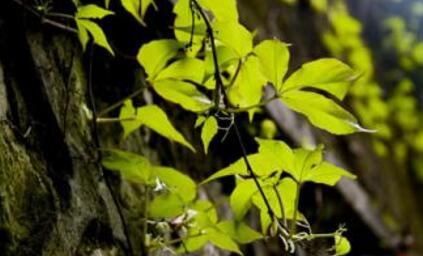
Powdery mildew can occur during cutting propagation or the seedling growth stage. It harms the stems and leaves of Boston ivy, causing small yellow spots on the leaves, then growing a white powdery mold layer, which later joins into large mold patches, hindering photosynthesis in the leaves and causing premature leaf decline.
Control methods: Do not water too much, try to water from the edge of the pot, reduce the number of times the stems and leaves are splashed with water, apply more phosphorus and potassium fertilizer and less nitrogen fertilizer, strengthen ventilation around the flower stems and reduce humidity. In the early stage, spray with 15% triadimefon 1000x dilution; in the later stage, spray with 10% polyoxin 1000 to 1500x dilution.
2. Leaf spot
The main cause of the disease is that the branches and leaves on the plant are too dense, the environmental humidity is too high, and ventilation is poor. The symptoms are round disease spots appearing on the leaves of Boston ivy, which then become irregular in shape; brown spots appear on the stems and petioles, and finally the leaves wither and curl.
Control methods: Remove diseased leaves, reduce spraying and watering of the plant, and thin and prune the branches and leaves to increase light penetration and good ventilation. When the disease occurs, spray with 50% thiophanate 1000x dilution or 80% mancozeb 400-600x dilution.
3. Anthracnose
Anthracnose is the most harmful in Boston ivy pest and disease control. It causes brown disease spots at the leaf tips and leaf margins, and also affects the growth of its tendrils, leading to poor growth. Small black spots also appear on the disease spots. One of the causes is excessively high temperature.
Control methods: Usually pay attention to applying more phosphorus and potassium fertilizer to improve the disease resistance of Boston ivy. In the early stage of the disease, spray with 50% carbendazim wettable powder 800x dilution; 75% chlorothalonil 1000x dilution can also be used for spraying. When the temperature is too high, appropriate shading can be provided.
4. Aphids
Aphids use their mouthparts to pierce into Boston ivy leaves and suck its sap, causing the damaged leaves to turn yellow, fall early, and so on. While sucking, they also secrete a kind of honeydew. Although it is not easy to notice, it attracts ants, snails, and so on, causing greater damage to the plant.
Control methods: Aphid control is mainly preventive. The method is to strengthen daily care and management according to Boston ivy cultivation methods, keep the environment clean, with moderate humidity and not too shady. The treatment method is to spray with 50% malathion emulsion 1000-1500x dilution.
How to manage variegated Boston ivy? Cutting propagation techniques for variegated Boston ivy
Variegated Boston ivy likes light and is slightly shade-tolerant, cold-resistant, heat-tolerant, and highly adaptable to soil and climate. It grows better in fertile sandy loam. At present, it can be planted on house walls, enclosing walls, courtyard entrances, and so on. It is an excellent colorful climbing plant. Let us look below at the cutting propagation techniques for variegated Boston ivy.
'Variegated' Boston ivy is distributed in Zhejiang, Fujian, Jiangxi, Hubei, Hunan, Guangdong, Guangxi, Yunnan, Guizhou, and other places. It mostly grows in evergreen broad-leaved forests or forest margins on acidic yellow soil and yellow-brown soil, with a vertical distribution altitude of 700 to 3500 m. It likes shady and humid environments and grows vigorously under evergreen broad-leaved trees. It likes light, is also relatively shade-tolerant, relatively cold-resistant, and can endure a low temperature of -10°C. It likes acidic soil, and can also adapt to neutral soil and slightly alkaline soil. Its root system is well developed, with strong wind resistance, strong pollution resistance, and strong adaptability. In 2007, Zhejiang Senhe Seed Industry Co., Ltd. introduced seedlings from Japan, using different plant rooting agents, different concentrations, different substrate formulas, and cutting methods, as well as safety, adaptability, and feasibility tests. In recent years, it has produced more than 500,000 plants of net bag seedlings, plug seedlings, seedbed seedlings, container seedlings, and hedge walls, mainly used for slope protection and embankment protection, and planted in courtyards, parks, riversides, seasides, and slopes. It is a colorful-leaf climbing plant with good ornamental value and good market prospects.
Cutting orchard
Site selection: Choose land with loose soil texture, fertility, and slight acidity as the cutting orchard, carry out soil improvement, apply fully decomposed organic fertilizer in winter at 3000 kg per mu, plow, crush, open trenches, and make beds. Open deep trenches around the field. The seedbed surface width is 120 cm, the path width is 40 cm and the depth is 25 cm. Both ends of the path are lower and the middle is slightly higher, so drainage is smooth.
Transplanting: From early November to March of the following year, transplant high-quality container seedlings at a plant spacing of 40 cm and row spacing of 40 cm, planting 3000 plants per mu. Dig holes at fixed points, cut off overly long lateral roots, and keep the transplanting depth consistent with the original plant depth. Pile fine soil at the roots and press firmly, water thoroughly with settling water in time, and spread straw on the bed surface to retain moisture and prevent weed growth.
Management and protection: Water in time. If there is continuous rain, net bag seedlings, seedbed seedlings, and rooted seedlings should be drained in time. Provide full-light conditions to promote lignification of the cuttings. Starting 15 days after transplanting, from April to August, broadcast 1 application of urea or compound fertilizer every half month, 15 kg per mu each time. Stop applying quick-acting fertilizer after September; from November to December, apply 1 application of decomposed organic fertilizer, 1500 kg per mu, spread on the ground surface. In winter it can provide insulation, and by March of the following year, it is turned into the soil when loosening the soil between rows. When broadcasting urea or compound fertilizer, combine it with loosening the soil and weeding, apply it between rows, and make sure not to damage the seedling stems, branches, and leaves. Immediately after harvesting cuttings, apply 1 application of quick-acting fertilizer, urea or compound fertilizer, 20 kg per mu, and loosen the soil and weed in time to prevent soil compaction.
Cutting propagation
Cutting collection: According to the climate conditions in the Hangzhou area, cuttings are collected twice a year: the first time in early, middle, and late June, and the second time in mid-September. Cut current-year semi-lignified branches, with a cutting length of 4 cm, retaining 1 compound leaf at the upper end (with 1 bud).
Materials: Plug tray specifications: 72 holes, width 27 cm, length 54 cm, depth 5.5 cm; net bag specifications: mouth diameter 6 cm, depth 8 cm. Prepare the seedbed and fill the substrate. Substrate formula: domestic peat : vermiculite : perlite = 5 : 4 : 1 (volume ratio), dry bulk density 0.20, total porosity 87.05%, porosity 26.05%, small porosity 61.00%, maximum water holding capacity 4.15. pH value 6.87, EC value 0.85 mS/cm, total nitrogen 0.90%, total phosphorus 526.24 mg/kg, total potassium 5632.47 mg/kg, calcium 1845.25 mg/kg, magnesium 2456.25 mg/kg. Add a certain amount of water, keep moist, and stir evenly. Disinfection: For the greenhouse elevated seedbed, width 168 cm, lay ground cloth on the bed surface, and place 3 plug trays or pallets horizontally (for placing net bags). The bed surface, plug trays, and substrate should be disinfected 1 day in advance with potassium permanganate 800x dilution.
Plant rooting agent: Use "Sensheng No. 1" (naphthaleneacetic acid : indoleacetic acid : ABT rooting powder No. 6 = 6 : 2 : 2 by weight), concentration 200 ppm, quick dip for 2 seconds.
Cutting: The cutting depth is about 3 cm. After cutting, water thoroughly immediately. When the leaf surface is dry, spray 1 application of carbendazim 1000x dilution to prevent disease. Then cover with plastic film and use bamboo strips to make a small arch shed. Seal the film around the edges so that the air humidity inside the shed is above 95%.
Maintenance: There is a shade net on top of the greenhouse. Set up a second shade net 2 m above the seedbed. At the same time, take necessary cooling measures. When the air temperature inside the plastic film is above 38°C, spray to cool below the second shade net. Especially during high temperatures on sunny days, from 10 a.m. to 4 p.m., spray once every half hour. Usually pay attention to substrate moisture; it must not be too wet or too dry. Check every day. When the reverse side of the film is covered with small water droplets and the relative air humidity in the small arch shed is above 95%, water once every 7 to 10 days.
Cultivation: About 50 days after cutting, about 85% of the cuttings have rooted. Gradually remove the film: first open both ends for ventilation for 2 days, then completely remove it in the evening or on cloudy days. After removal, cover the small arch shed with 1 layer of shade net. After two days, full-light management can be carried out. Ten days after removing the film, begin the first application of foliar fertilizer. After that, every 7 to 10 days, after watering, spray 1 application of foliar fertilizer, using Greenfenwei 1000x dilution, or 0.2% urea spray or watering. Combined with disease prevention, spray with mancozeb 1000x dilution. After 1 year of careful cultivation, plug seedlings, net bag seedlings, or seedbed seedlings are produced.
Plug seedlings: Insert cuttings into a 72-hole plug tray with width 27 cm, length 54 cm, and depth 5.5 cm, with 1 cutting inserted per hole. After 8 months of careful cultivation, plug seedlings are formed: new shoots longer than 5 cm, well-developed root system, robust plants, no pests or diseases, and a finished product rate above 85%.
Net bag seedlings: Insert cuttings into net bags with mouth diameter 6 cm and depth 8 cm, with 1 cutting inserted per net bag. After 8 months of careful cultivation, net bag seedlings are formed: shoot length above 5 cm, well-developed root system, robust plants, no pests or diseases, and a finished product rate above 85%.
Seedbed seedlings: Lay ground cloth and substrate on the seedbed, with substrate thickness 8 cm. Insert cuttings directly into the seedbed substrate at a plant spacing of 6 cm and row spacing of 8 cm. After 8 months of careful cultivation, seedbed seedlings are formed: new shoots longer than 5 cm, well-developed root system, robust plants, no pests or diseases, and a finished product rate above 85%.
Container seedlings: Transplant plug seedlings, net bag seedlings, or seedbed seedlings into containers with mouth diameter 12 cm and depth 10 cm. After 12 months of careful cultivation, container seedlings are formed: vine length above 30 cm, well-developed root system, robust plants, no pests or diseases, and a finished product rate above 95%.
Hedge wall: Move 6 container seedlings into a planting trough (width 25 cm, length 90 cm, depth 20 cm), with plant spacing 12 cm; set up a hard mesh panel above the planting trough (width 90 cm, height 120 cm, square mesh side length 10 cm). After 24 months of careful cultivation, a hedge wall is formed. Seedling specifications: wall height 120 cm, wall width 90 cm, well-developed root system, robust plants, full vines, branches, and leaves, no pests or diseases, and a finished product rate above 95%.
Care and management of Hall crabapple, common pests of Hall crabapple
Different plants have different methods and ways when being cultivated. Whether in daily care or care during special periods such as the flowering season and overwintering, they are all different. This is a property unique to each plant. So next, let us look together at the care and management of Hall crabapple, as well as related common pests.
Care and management of Hall crabapple
(1) Cultivation soil: The culture soil can be mixed with 4 parts garden soil, 1 part organic fertilizer, 1 part river sand, and 4 parts leaf mold. During the growing season of Hall crabapple, the soil should be loosened once a month, which helps the root system of Hall crabapple absorb nutrients.
(2) For routine management of Hall crabapple, it is suitable to live in an environment with sufficient light and air circulation. The suitable growth temperature is between 15 and 28°C. Ground-planted plants can withstand a low temperature of minus 150°C in winter, and potted plants can withstand a low temperature of minus 5°C. In summer, potted plants should be properly shaded, and at the same time water should be sprayed to increase humidity and lower temperature.
In winter, generally there is no need to put Hall crabapple indoors; just bury the pot in soil. During the growing season, there must be sufficient water supply, but not water accumulation. In spring and summer, water more. During high temperatures in summer, water once in the morning and once in the evening; during the plum rain period and during long periods of rain without clearing, pay attention to drainage to prevent root rot from water accumulation in the pot; in autumn, reduce the amount of watering to inhibit growth, which is beneficial for overwintering.
(3) During the growing season, potted plants should be topdressed once a month with thin cake fertilizer water. When flower buds appear, topdress once with quick-acting phosphorus fertilizer; during flower bud differentiation, continuously topdress 2 to 3 times with quick-acting phosphorus fertilizer, such as a mixed solution of 0.1% urea plus 0.2% potassium dihydrogen phosphate, which can promote the completion of flower bud differentiation in Hall crabapple; after leaf fall in autumn and before sprouting in spring, stop topdressing.
Pruning should preferably be done after flowering or during the dormant period. Shorten overly long branches to promote side branches, increase flower bud formation, and promote the plant to form a good plant shape. It is suitable to repot in early spring and late autumn. When repotting, the root system can be tidied and branches pruned, and decomposed cake fertilizer or manure can be placed at the bottom of the pot as base fertilizer. Potted plants can be made to bloom earlier by measures to increase temperature in winter.
Common pests of Hall crabapple
Common pests of Hall crabapple include horned wax scale, apple aphid, red spider mite, and so on. The main disease is rust disease.
1. Horned wax scale
The nymphs and adults of horned wax scale specifically gather on leaves and branches to suck the sap of the flowers, causing tree vigor to weaken, affecting photosynthesis of the flowers and trees, and increasing the degree of damage.
Solutions: ① During the aphid damage period, spray 50% parathion emulsifiable concentrate 2000x dilution or 50% carbaryl wettable powder 800x dilution for control. ② Before the plant sprouts, spray with Baume 5 degree lime sulfur mixture to kill overwintering eggs.
2. Rust disease
Commonly used agents include sulfur preparations such as ferrous sulfate, colloidal sulfur, and systemic agents such as triadimefon.
3. Wax scale
For spraying, choose 10% imidacloprid wettable powder 1000-1500x dilution, 40% methidathion emulsion 1500x dilution, and so on. For trunk injection, 30% acephate 3x dilution can be used.
4. Peach red-necked longhorn beetle
It is prone to occur at the base of the main trunk from May to October, and in severe cases can hollow out the xylem of the entire main trunk. Once insect frass is found, insert a poison stick into the insect hole to kill it. It can also be controlled by mixing 40% dimethoate emulsifiable concentrate with white latex and applying it to the insect hole.
5. Apple aphid
Apple aphids gather on the underside of Hall crabapple leaves and tender shoots to cause damage. In the early stage, the leaf edges curl downward, and later they bend and curl horizontally from the leaf tip toward the petiole, affecting new shoot growth and flower bud differentiation.
Solutions to reduce the degree of damage: ① During the nymph stage, spray 25% phosmet emulsifiable concentrate 1000x dilution, 49% omethoate emulsifiable concentrate 1000x dilution, or 80% dichlorvos emulsifiable concentrate 1000x dilution for control, once every 7 days. ② Combined with pruning, cut off insect-infested branches and burn them centrally to reduce the overwintering population. ③ Scrape off or wipe off the insects with bamboo strips or burlap.
6. Red spider mite
Red spider mite is also called leaf mite. It often sucks on both the front and back of leaves, causing leaves to dry and fall off, affecting the growth of the whole plant. Control methods: The common diseases of Hall crabapple are the same as those of Chaenomeles speciosa.
Solutions: ① In winter, carefully find weeds, diseased plants, and diseased leaves, and burn them. ② Spray with a 300x dilution of a wettable powder made by mixing 6% tetradifon and 6% dicofol.
Summary: The above is the care and management of Hall crabapple, as well as an introduction to some common pests of Hall crabapple during cultivation. Do you all understand now? Whether in daily care or care at key times for Hall crabapple, you must be careful. Plants are all fragile.
More information
|What does a white rose represent|What plants protect against computer radiation|Geranium|Cultivation methods and precautions for azalea|Chlorophytum comosum 'Golden Heart'|
|Lavender flowering period|Indoor foliage plants|Boston ivy|How to fold a lily|Effects and functions of mint|Cultivation methods for Mimosa pudica|
|How to grow succulents|Osmanthus|Effects and functions of Gynostemma pentaphyllum|Handmade roses|Effects and functions of honeysuckle|Kumquat|