How to propagate Rosa banksiae (Lady Banks' rose) from cuttings? Good substrate drainage is key
Among the propagation methods for Rosa banksiae, there are five: seed sowing, cuttings, division, layering and grafting, among which propagation by cuttings is a relatively common method and also has a fairly high survival rate. So how do you take cuttings of Rosa banksiae? What is the cutting method for Rosa banksiae? Below, the editor will walk you through it.
I. How to take cuttings of Rosa banksiae
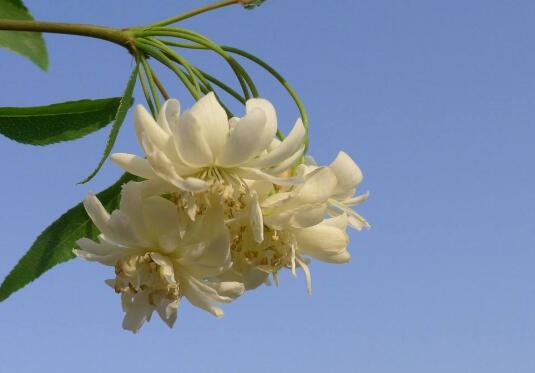
The propagation of Rosa banksiae is generally based mainly on cuttings, and there are many points to note about how to take cuttings of Rosa banksiae, such as the timing of the cuttings and the choice of substrate and cuttings, all of which people need to pay attention to. The specific details are introduced below, so let's take a look.
II. The cutting method for Rosa banksiae
1. Cutting time: spring and autumn are best
Rosa banksiae is a plant with strong environmental adaptability, and as long as the temperature is properly controlled, cuttings can be taken in all four seasons. Relatively speaking, however, taking cuttings in spring and autumn gives a relatively higher survival rate, because the climate in these two seasons is more suitable for its growth.
2. Substrate selection: drainage should be good
Before propagating Rosa banksiae by cuttings, we first need to choose a substrate, and choosing a substrate suited to its growth can raise the survival rate. Generally, we should preferably choose relatively loose and fertile humus soil as the substrate, because this kind of soil has good drainage and air permeability, allowing it to absorb nutrients better and making water accumulation less likely.
3. Substrate disinfection: high-temperature sterilization
After choosing the soil, we also need to disinfect it, to avoid bacteria in it infecting the plant. When disinfecting, we can break it up and spread it flat in the sun to bake. In addition, it can also be put into a pot over high heat and stir-fried, so that even if it contains bacteria, they will be eliminated by the high temperature.
4. Cutting selection: choose vigorously growing branches
The choice of cuttings also has a great influence on the survival rate of Rosa banksiae cuttings, and it is generally best to choose relatively vigorous branches free of pests and diseases as cuttings. If the branches we choose look very slender, then it can basically be judged that the cutting will fail, so choosing the cuttings is a very important step.
5. Cutting method: roots form in about a month and a half
The cutting method for Rosa banksiae is fairly simple to carry out. First, we can use chopsticks to poke a hole in the potting soil, then insert the cutting into it and water it. When watering, be careful to water thoroughly in one go, and after about a month and a half roots will form. This operation can prevent the cutting from being damaged and is very practical.
How to take cuttings of Rosa banksiae
I. The timing of cuttings
The timing of cuttings is generally chosen in early December, selecting the best-developed thick hard branches, but for new branches it is generally done in June or July. However, if the temperature can be controlled well artificially, cuttings can be taken in all four seasons.
II. The cutting method
Selecting branches
Select new branches or mature, healthy old branches, and from the middle part of the branch cut a length of 12 cm to 15 cm. The branch should retain three or four buds as well as 2 leaves, and all the other leaves can be removed.
Disinfection
The cut end of the selected branch must first be disinfected, then dipped in some plant ash to prevent rot. After treatment, it needs to be inserted immediately to prevent the branch from wilting.
Temperature control
Insert the branch to be rooted into the soil to two-thirds of its depth, and place it in a cool place. The temperature needs to be controlled between 20°C and 25°C, which is favorable for rooting. If the temperature is too low, rooting will be very slow, and if the temperature is too high, the cut end of the cutting will rot, so the temperature generally needs to be controlled artificially.
Moisture retention
After cuttings are taken, you also need to make sure the growing medium stays moist, spraying water once or twice a day, neither too dry nor too wet. In addition, note that the ventilation of the environment must be good. Under normal conditions, in a month and a half, roots and shoots will form, and it can then be transplanted for planting.
III. Care after cuttings
Rosa banksiae especially likes a warm climate, and its environment must have ample sunlight and humid air. It can withstand severe cold and semi-shaded climate conditions relatively well, but it cannot be flooded. It has low requirements for soil, but grows fastest and best in deep, fertile soil with good drainage.
How to propagate Rosa banksiae, propagation methods for Rosa banksiae / sowing / cuttings / division / layering
Rosa banksiae is a fairly common flowering plant in people's lives, and it is grown in many regions of our country. However, as more people grow Rosa banksiae, questions about its propagation have also become a concern. How do you propagate Rosa banksiae? What are the propagation methods for Rosa banksiae? Below, the editor will walk you through it.
I. How to propagate Rosa banksiae: five propagation methods
Speaking of how to propagate Rosa banksiae, there are actually quite a few methods, mainly divided into five: seed sowing, cuttings, division, layering and grafting. As long as they are carried out properly, the survival rate of these propagation methods is very high. Their specific operation methods are introduced below, so let's take a look.
II. Propagation methods for Rosa banksiae: sowing / cuttings / division / layering / grafting
1. Propagation by sowing
The seeds of Rosa banksiae can be used for raising seedlings, but its seeds are relatively difficult to grow and survive, so this method is generally not recommended. Among the propagation methods for Rosa banksiae, propagation by cuttings is a relatively common method with a fairly high survival rate, and you can refer to this method.
2. Propagation by cuttings
Propagation by cuttings is a relatively common propagation method. First, we need to choose relatively vigorous Rosa banksiae branches as cuttings, and after selecting them we should treat them promptly and insert them immediately, so as to avoid wilting that affects survival. After the cuttings are done, we should keep the temperature at 20-25°C, which can speed up their rooting time.
3. Propagation by division
Division propagation of Rosa banksiae can generally be done together with repotting, mainly by cutting off the point where the small offshoots growing from the base of the plant connect to the mother plant, then planting them separately, and that is all. This method is relatively simple to carry out and has a fairly high survival rate, so you can give it a try.
4. Propagation by layering
Layering is a method of pressing the branches and vines of a plant into moist soil, and once they have rooted, separating them from the mother plant to form new plants. This method also has a fairly high survival rate. However, its propagation coefficient is relatively small, and it is generally used more when other propagation methods are difficult, or when larger new plants are to be propagated.
5. Propagation by grafting
Among the propagation methods for Rosa banksiae, grafting is considered a relatively rarely used method, but this does not mean its survival rate is low. As long as it is carried out properly, the survival rate is likewise very high. With grafting propagation, it can generally bloom in the same year, and this propagation method is quite suitable for use on potted Rosa banksiae.