How Does Boston Ivy Reproduce? A Complete Guide to Cuttings, Sowing, and Layering
Gardeners who have grown Boston ivy know that its planting method is very simple, but one aspect is easily overlooked and not well understood by some gardeners, and that is propagation. When we want to grow a few more pots, how does Boston ivy reproduce? Below, let us learn together about the complete guide to Boston ivy propagation methods.
How Does Boston Ivy Reproduce
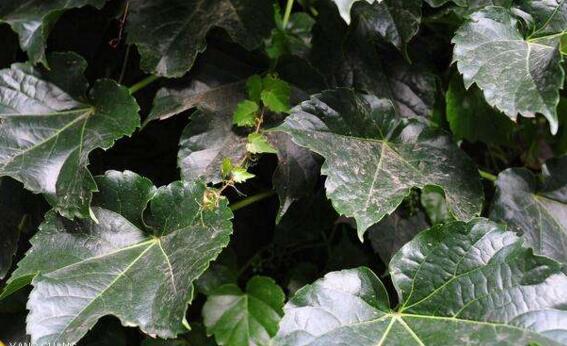
Boston ivy has three relatively commonly used propagation methods: sowing, cuttings, and layering. In terms of difficulty, cuttings are the easiest, but sowing and layering each have their own advantages. If you are a gardener who has just started growing plants, cuttings are recommended, while gardeners with more experience can choose layering or sowing.
Complete Guide to Boston Ivy Propagation Methods
I. Boston Ivy Propagation by Sowing
1. When to Sow Boston Ivy
According to gardeners' experience, the best time to sow Boston ivy is in spring, specifically in March, but because climates vary from place to place, sowing anytime from March to April is suitable. Avoid sowing in autumn, otherwise rooting will be slower.
2. Sowing Method
(1) Seed selection. The fruiting period of Boston ivy is from September to October. When the fruit changes from green to purple, it means the fruit is ripe and ready to harvest. Remove the flesh, rinse, and dry in the shade, then soak in a 0.05% carbendazim solution for disinfection, and store in wet sand.
(2) Germination. In March of the following year, take the seeds out of the wet sand, then soak them in 45°C warm water for two days. During this process, be careful to change the water twice a day, then mix and stir the wet sand with the seeds at a ratio of 2;1. After that, place the seeds in a sunny spot, cover with grass, and spray water frequently to maintain humidity. After 20 days, the seeds showing white means germination has succeeded.
(3) Sowing. Soften and disinfect the soil, place it in a container, water the soil thoroughly, then scatter the seeds over the soil, lightly cover with a little sandy soil, and cover with plastic film to keep warm and retain moisture.
(4) Care. After the cotyledons emerge, you can uncover the film during the day and cover it again at night to raise the soil temperature, which allows seedlings to emerge more uniformly. Then spray water frequently to keep the soil moist. After a period of time, true leaves will grow, and afterward, you can choose to transplant as needed.
II. Boston Ivy Propagation by Cuttings
1. Time: Among the complete guide to Boston ivy propagation methods, cuttings are the simplest, but the timing must be chosen well. It is best to do it in summer, specifically in June to July. Higher temperatures favor rooting after cutting, though of course rainy days should be avoided.
2. Method: From the Boston ivy plant, select 2-3 year old branches, preferably from the middle part rather than only the tip branches. Cut them into lengths of about 10 cm, then soak in rooting powder for about 1 hour.
Insert the treated branches into the soil, water thoroughly, then keep the soil moist. With attention to shading, new shoots will quickly grow. If softwood cuttings are used, the success rate is also very high, but later care is crucial. For example, the temperature is best kept at around 30°C, which favors rooting.
III. Boston Ivy Propagation by Layering
Layering is a form of asexual propagation. It means that, without separating the branch from the mother plant, the branch is buried in a wavy shape. After a period of time, it will grow new roots, branches, and leaves. After that, it is cut off from the mother plant and replanted.
Boston Ivy Growing Methods and Propagation Methods
Boston ivy commonly climbs on walls and rocks, and of course it can also often be seen in landscaping. So how do you grow Boston ivy? What propagation methods are there? Next, let us learn about Boston ivy together.
I. Boston Ivy Growing Methods
1. Soil: Boston ivy is not strict about soil requirements. It can grow vigorously in both damp, shady environments and sunny spots, but it grows best in damp, shady, and fertile soil.
2. Light: Boston ivy is highly adaptable and prefers damp, shady environments, but it is not afraid of strong light and can be exposed to sunlight year-round.
3. Temperature: Boston ivy is cold-resistant, drought-resistant, and tolerant of poor soil, with wide climatic adaptability. South of the warm temperate zone, it can remain semi-evergreen or evergreen in winter. A temperature of 15-28°C is most suitable.
4. Humidity: Boston ivy is afraid of waterlogging, so be careful to prevent soil from becoming waterlogged. In early spring, cut 20-30 cm of stem and insert it into an open seedbed, water it, and keep it moist; it will quickly send out vines and survive. You can also use softwood cuttings with leaves in summer or autumn, shade them, water them, and care for them, and they will also quickly send out new shoots. The cutting survival rate is relatively high.
5. Fertilizing: During the growing period, Boston ivy can be given liquid fertilizer 2-3 times. Also frequently weed and loosen the soil around it to prevent it from being overwhelmed by weeds and to promote healthy growth.
6. Pruning: Boston ivy is tolerant of pruning. During growth, you can prune and tidy the branches and vines around doors and windows as appropriate to keep them neat, attractive, and convenient.
II. Boston Ivy Propagation Methods
1. Sowing method: After harvesting, rub off the fruit skin and flesh from the seeds, wash them clean, dry them in the sun, and then store them in wet sand at low temperature for one winter. Keeping them warm and moist helps germination. In early spring of the next year, in early to mid-March, they can be sown in the open field and covered with film. Seedlings can emerge in early May, and after 1-2 years of cultivation, they can leave the nursery.
2. Cutting method: In early spring, cut 20-30 cm of stem and insert it into an open seedbed, water it, and keep it moist; it will quickly send out vines and survive. You can also use softwood cuttings with leaves in summer or autumn, shade them, water them, and care for them, and they will also quickly send out new shoots. The cutting survival rate is relatively high, and this method is widely used. Hardwood cuttings are done from March to April. Cut hardwood branches into 10-15 cm sections and insert them into the soil, water thoroughly, and keep moist. Softwood cuttings use new shoots of the current year and are done in summer.
3. Layering method: A wavy layering method can be used, carried out during the rainy season in damp, shady, cloudless weather. The survival rate is high. By autumn, they can be separated and transplanted, and in the following year, they can be planted in their final position.
The above isBoston Ivy Growing Methodsand propagation methods. Friends who like Boston ivy may want to take a look and learn about it. If you want to learn more about Boston ivy, keep following us.
How to Plant Boston Ivy: How to Plant Boston Ivy, Boston Ivy Planting Methods
Boston ivy is actually a plant with extremely strong vitality. In daily life, it is mostly seen on walls and rocks, very dense and lush. If you choose to plant Boston ivy, then you must have the spirit of managing it to the end, because Boston ivy's extremely strong vitality makes it easy for it to survive in cracks in corroded walls. As Boston ivy keeps reproducing and growing, it can easily damage the wall or even cause it to collapse, so when planting Boston ivy, you must do a good job of cultivation and management. There are still certain points to pay attention to in Boston ivy planting methods. If you want to know how to plant Boston ivy, then you should take a good look at this article.
[Morphological Characteristics]
Boston ivy actually looks quite similar to grape vines. It is a large deciduous woody climbing plant that blooms in summer. Do we usually rarely see Boston ivy flowers? That is because Boston ivy flowers are relatively small and are blocked by dense branches and leaves, so they are hard to spot from a distance. Boston ivy's vines are very long and keep spreading as they grow. The branches are thick and grayish-brown, with tendrils on the branches. When we were young, we thought those were Boston ivy's feet, and that only with those feet could it climb up step by step. Thinking about it now is really quite amusing. But comparing the tendrils to Boston ivy's feet is not entirely without basis, because the surface of the tendrils has very sticky suckers. The reason Boston ivy can attach to walls and rocks is largely thanks to its feet.
[Growth Habits]
We have already mentioned that Boston ivy has tenacious vitality, so you can completely imagine its habits. Boston ivy likes relatively damp, shady environments and has the characteristics of being cold-resistant, drought-resistant, and tolerant of poor soil. It is also very broad in climatic adaptability. Boston ivy, which can grow vigorously in damp, shady environments, is also tolerant of pruning. Of course, if it grows in damp, shady but fertile soil, then Boston ivy's growth rate is extraordinary. However, one point in particular should be noted: even though Boston ivy is not very picky about its growing environment, it still has a considerable weakness, and that is that it is afraid of waterlogging. Severe waterlogging can cause Boston ivy's roots to rot.
[Planting Methods]
Friends who want to plant Boston ivy can start planting after understanding Boston ivy's characteristics and growth habits. So how do you plant Boston ivy? What are the Boston ivy planting methods? Based on Boston ivy's characteristic of tenacious vitality, I have summarized three Boston ivy planting methods here. Let us take a look.
·Sowing Method
The first thing to introduce, of course, is the simplest and easiest method: sowing. Remove the fruit skin and flesh from the collected Boston ivy seeds, wash them clean, and place them in wet sand for low-temperature storage for one winter, but be sure to pay attention to warmth and moisture at all times. In early spring of the following year, you can open the soil and sow, cover with film, and after two months, seedlings will emerge.
·Cutting Method
In early spring, take about 20 cm of Boston ivy stem and insert it into an open seedbed, water it to keep it moist, and you will soon see the stem send out new buds and keep growing. You can also use softwood cuttings with leaves in summer or autumn, shade them, water them, and care for them, and they will also quickly send out new shoots. The cutting survival rate is relatively high, and this method is widely used.
·Layering Method
The layering method needs to be carried out in rainy weather, so that the survival rate can be much higher. The layering method mainly uses wavy layering, pressing Boston ivy branches into the soil. By autumn, they can be separated and transplanted, and in the following year, they can be planted in their final position.
[Precautions]
When cultivating Boston ivy, pay attention to diseases and pests, and carry out regular fertilizing and management. Boston ivy is afraid of waterlogging, so be careful to prevent soil from becoming waterlogged. If you do not want Boston ivy to grow too fast, then proper pruning should be done. Boston ivy is very tolerant of pruning. During growth, you can prune and tidy the branches and vines around doors and windows as appropriate to keep them neat, attractive, and convenient.
Conclusion: Now you know how to plant Boston ivy. If you are still not clear about how to plant Boston ivy, you can look up more related information. Boston ivy's easy-to-survive characteristics also save a lot of worry during cultivation. Alright, this article on how to plant Boston ivy and Boston ivy planting methods is introduced here. We hope it is helpful to everyone.