How to Propagate Bird's Nest Fern? Detailed Guide to Division and Spore Propagation Methods
Bird's Nest Fern is also called Shan Su Hua. Because of its strong shade tolerance and its large, glossy fronds, it is a very popular foliage plant. Many plant enthusiasts rate it as one of the easiest plants to grow, so is it difficult to propagate? How do you propagate Bird's Nest Fern? Let's take a look at the propagation methods for Bird's Nest Fern.
How to Propagate Bird's Nest Fern
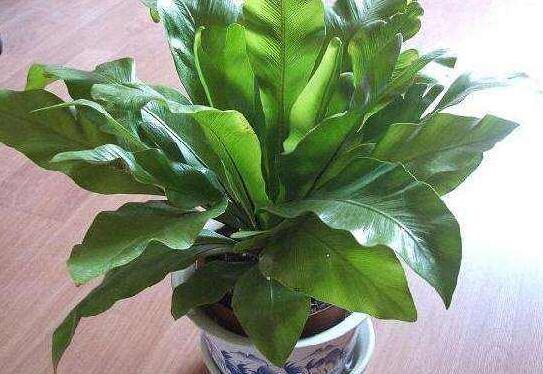
Bird's Nest Fern belongs to the ferns. It does not bloom or set fruit, so sowing seed cannot be used among the propagation methods for Bird's Nest Fern. It generally uses three methods: spore propagation, division propagation, and tissue culture. Of these, the first two are more commonly used. Below is a detailed introduction to the specific operational techniques.
Propagation Methods for Bird's Nest Fern
I. How to Propagate Bird's Nest Fern from Spores
1. Timing
It is best to choose spring, because the climate is more suitable, and after propagation it takes a period of time to grow true leaves. If autumn is chosen, then winter will adversely affect the success rate of propagation, so plant enthusiasts had best carry out spore propagation of Bird's Nest Fern in March to April.
2. Method
(1) Prepare the substrate: Mix leaf mold and fine sand to make the substrate. Before use, first sterilize it at high temperature, for example by placing it in sunlight for 1-2 days, then stir it evenly. Before propagation, first place the substrate into the soil.
(2) Sow the spores: Once the substrate is chosen, how do you propagate Bird's Nest Fern? Press the substrate flat, then select already mature spores from the plant and evenly scatter them into the substrate. Be careful not to let the spores concentrate in only one spot.
(3) Soaking with water: Draw water from the bottom of the pot, using the permeability of the soil to let water enter the soil from the bottom of the pot, so that the soil can become moistened quite thoroughly. Then cover it with a glass pane to retain moisture. If the soil later becomes somewhat dry, you can soak it with water again in the same way.
(4) Care: Place the flowerpot in a cool place without direct sunlight. After 7-10 days the spores begin to germinate, and at about 1 month they grow green prothalli. After that, another 3 months are needed before true leaves grow. After that they can be transplanted into pots, and then cared for normally according to the cultivation methods for Bird's Nest Fern.
II. Division Propagation of Bird's Nest Fern
1. Timing
Division is generally started in mid-to-late April. The prothalli are similar to spore propagation, and it can be carried out together with repotting and pruning. If the local temperature is relatively low, it can be appropriately postponed. Avoid carrying out division in a low-temperature environment.
2. Method
Select a relatively robust plant, cut its rhizome together with fronds and root clusters into several pieces for later use; you can also take the small plantlets growing at the side, cut off half of their fronds, and then pot them separately. When potting, the soil should be mainly leaf mold.
Place the divided daughter plants in an environment of about 25 degrees, keeping the environment ventilated and the soil moist. Generally after 3-4 weeks they will root and resume growth. During care, note that the soil must not be too wet, otherwise it easily causes root rot.
How to Propagate Bird's Nest Fern, Propagation Techniques for Bird's Nest Fern
Bird's Nest Fern is a relatively large shade-loving foliage plant. Hanging it indoors also has a distinctive tropical mood; planted under tropical garden trees or on rockeries and rocks, then how do you propagate Bird's Nest Fern? Below let's look at the propagation techniques for Bird's Nest Fern.
Propagation Techniques for Bird's Nest Fern:
Bird's Nest Fern can be propagated by division and by spores.
Division Propagation
When the plant grows relatively large, small branches often appear. In late spring and early summer, before new buds emerge, use a sharp knife to slowly cut away the part of the plant that needs to be divided, and then plant them separately.
Bird's Nest Fern produces relatively few branches, so the common method of separating daughter plants is seldom used for division. Usually, in late spring, cut a robustly growing plant from the base into 2-4 pieces, and shorten the fronds by 1/3-1/2, so that each piece has some fronds and rhizome, then pot them individually to become new plants;
After potting, place them in a spot with a temperature above 20 degrees, semi-shade, and relatively high air humidity for care, so that the wounds heal as quickly as possible. The growing medium in the pot should be slightly moist, not too wet, otherwise it easily rots. After new leaves grow, they can gradually restore their original shape.
Spore Propagation
1. Sowing spores:
In spring, first mix fine sand and humus soil evenly, sterilize at high temperature, put it into a sowing pot and press it flat, evenly scatter mature spores on the pot soil, then immerse the whole pot in shallow water, using osmosis to make the pot soil fully moist. Cover with glass to retain moisture, and place it in a warm, moist, cool place. After 7 to 10 days the spores can germinate. After about 1 month, green prothalli will grow. After 3 months, when several true leaves have grown, they can be potted for cultivation.
2. Division:
Generally carried out in mid-to-late April. Select robustly growing plants, cut their rhizomes together with fronds and root clusters into several pieces, or pull off the small plantlets growing at the side, cut off 1/2 of the fronds, and pot them separately, covering with a small amount of leaf mold, creating for them a small environment that is moist, ventilated, and well drained. Keep the environmental temperature at about 25°C; the survival rate is relatively high. Note that the pot soil must not be too wet, so as to avoid causing root rot. Division is the most effective propagation method for flower enthusiasts.
3. Tissue culture:
For productive mass propagation, its terminal short stems, young leaves, or spores can be used as explants for rapid tissue culture propagation, which can cultivate a large number of commercial seedlings of uniform specification in a short time.
Bird's Nest Fern Asplenium nidus Bird's Nest Fern Illustrated Guide: How to Grow Bird's Nest Fern / How to Propagate Bird's Nest Fern
Bird's Nest Fern ProfileBird's Nest Fern Asplenium nidus
Cultivation Methods and Precautions for Bird's Nest Fern Introduction to Bird's Nest Fern
Bird's Nest Fern is an epiphytic fern, native to Southeast Asia, eastern Australia, Indonesia, India, and eastern Africa. Also called Nest Fern, Shan Su Hua, and Crown Fern, it belongs to the Aspleniaceae family and is a perennial shade-loving herbaceous foliage plant.
The phyllotaxy is clustered (tufted). The leaf tip is acuminate and the overall shape is broadly lanceolate. Among the veins, only the midrib is clearly prominent on the back of the leaf. The leaf color is emerald green on the front side. The petiole is short and fleshy, black, with the base covered in dark brown linear scales. The petiole is short, and the blade is lanceolate, with an entire margin that is slightly wavy and has small notches, with a total length of about 70 cm and a width of 10 cm.
Bird's Nest Fern often grows epiphytically on tree trunks in rainforests or monsoon forests, or on rocks under the forest. The bird's-nest-like clusters can catch large amounts of dead branches and fallen leaves, bird droppings, and rainwater. These materials transform into humus, which can serve as its own nutrients, and at the same time can also provide conditions for other tropical epiphytes, such as orchids and other tropical epiphytic ferns, to settle. Its ecological habit is to prefer high temperature and humidity, and it is not tolerant of strong light.
Morphological Characteristics of Bird's Nest Fern
The plant is 80-100 cm tall. The rhizome is erect, thick and short, woody, about 2 cm thick, dark brown, with the apex densely covered in scales; the scales are broadly lanceolate, about 1 cm long, acuminate at the apex, entire, membranous, dark brown, slightly glossy. The fronds are clustered; the stipe is 2-7 cm long, about 7 mm thick, straw-colored or dark brown, woody, after drying semicircular and raised beneath, with a broad longitudinal groove above, the surface smooth and not wrinkled, with narrow wings on both sides, the base covered in broadly lanceolate dark brown scales, smooth upward; the blade is broadly lanceolate, 75-98 cm long, acuminate at the apex, with the widest part in the middle being 6.5-8.5 cm, gradually narrowing downward and long-decurrent, the leaf margin entire and with a narrow cartilaginous edge, slightly revolute after drying. The midrib is raised on both sides, with a broad longitudinal groove on the upper lower part, the surface smooth and not wrinkled, dark brown, smooth; the veinlets are slightly raised on both sides, spreading obliquely, forked or simple, parallel, about 1 mm apart. The leaf is leathery, brownish green or light brown after drying, hairless on both sides. The sori are linear, 3-4 cm long, borne on the upper side of the veinlets, running outward from above the base of the veinlets to not far from the leaf margin, separated from one another by wide intervals, the lower part of the blade usually sterile; the indusium is linear, light brown or grayish brown, thickly membranous, entire, persistent.
Bird's Nest Fern is a medium-sized epiphytic fern, with a funnel-shaped or bird's-nest-shaped plant form, and a plant height of 60-120 cm. The rhizome is short and erect, and the stipe is thick and densely covered with large clumps of spongy fibrous roots that can absorb large amounts of water. The fronds are clustered, arranged radially at the top of the rhizome, hollow like a nest structure, and can collect fallen leaves and bird droppings; the leathery fronds are broadly lanceolate, about 100 cm long, 9-15 cm wide in the middle, smooth on both sides, with the veins slightly raised on both sides. The sori are elongated, borne on the upper side of the lateral veins on the back of the leaf and reaching 1/2 of the leaf blade.
Native species, commonly found in primary forests at low to medium elevations throughout various parts of Taiwan, China, a fern epiphytic on tree trunks and rock walls, with its base often accumulating many fallen leaves of other tree species and thus resembling a bird's nest, hence the name. Perennial evergreen herbaceous fern. The rhizome is short and thick, and the fronds grow in clusters from the underground stem, spreading from the center in all directions to form a nest shape. The petiole is short, and the blade is lanceolate, with an entire margin that is slightly wavy and has small notches, with a total length of about 70 cm and a width of 10 cm. The sori are linear, located between the midrib and the leaf margin, borne along the lateral veins extending from the midrib. Growth is slow in winter and rapid in summer and autumn. It prefers a temperature between 20 and 30 degrees; if below 15 degrees, there will be yellowing, necrosis, and other chilling injury phenomena. For planting, there are board mounting, pot cultivation, and epiphytic display, etc.
Stem
The rhizome is short and thick, and the fronds grow in clusters from the underground stem, spreading from the center in all directions to form a nest shape.
Leaf
The phyllotaxy is clustered (tufted). The leaf tip is acuminate and the overall shape is broadly lanceolate. Among the veins, only the midrib is clearly prominent on the back of the leaf. The leaf color is emerald green on the front side. The petiole is short and fleshy, black, with the base covered in dark brown linear scales. The petiole is short, and the blade is lanceolate, with an entire margin that is slightly wavy and has small notches, with a total length of about 70 cm and a width of 10 cm.
Flower
Ferns have no flowers
Fruit
The sori are linear, located between the midrib and the leaf margin, borne along the lateral veins extending from the midrib.
Ecological Habits of Bird's Nest Fern
Bird's Nest Fern often grows epiphytically on tree trunks in rainforests or monsoon forests, or on rocks under the forest. The bird's-nest-like clusters can catch large amounts of dead branches and fallen leaves, bird droppings, and rainwater. These materials transform into humus, which can serve as its own nutrients, and at the same time can also provide conditions for other tropical epiphytes, such as orchids and other tropical epiphytic ferns, to settle. Its ecological habit is to prefer high temperature and humidity, and it is not tolerant of strong light.
Cultivation Techniques for Bird's Nest Fern Planting and Cultivation
1. Planting
For potted Bird's Nest Fern, the best soil is peat soil or leaf mold. For Bird's Nest Fern grown for 2-3 years, the plant form opens up, and the roots fill the pot frame. It can be taken out of the pot, part of the residual roots and the withered sporophylls at the base removed, the daughter plants taken out, and each replanted into pots. When repotting in spring, add leaf mold and moss to the pot, and add a small amount of crushed stone.
2. Temperature and Light
The suitable growth temperature for Bird's Nest Fern is 22-27°C. In summer, shade it, or place it in a lightly shaded spot under a large tree, avoiding direct strong sunlight. This is beneficial for growth and makes the fronds more glossy. Indoors, place it in a bright spot, and do not keep it in a dark place for a long time. In winter, move it into a greenhouse, keeping the temperature above 16°C so that it continues to grow, but the lowest temperature must not be below 5°C.
3. Watering and Fertilizing
Under conditions of high temperature and high humidity in summer, new leaves grow vigorously and need more water spraying, fully spraying the leaf surface to maintain relatively high air temperature, which is favorable for spore germination. As the fronds enlarge, they often cover all the growing medium in the pot, so when watering, be sure to water thoroughly through the pot, so as to avoid the plant's fronds drying up and curling due to lack of water.
Planting Preparation
1. Use loose imported peat with good drainage and aeration in the 5-40 mm specification. Crush the peat, add water, and mix evenly (standard for adding water: after adding water and mixing evenly, when you tightly squeeze a handful of peat, water seeps out from between your fingers). Then wait to pot it for planting. A 9 cm pot uses about 250 ml of peat per pot. One 300-liter bag of imported peat can fill about 1,200 cups.[5]
2. Seedling selection: Choose high-quality seedlings from professional production, with a seedling height of 5-9 cm, a crown width of 9-12 cm, free of pests and diseases, and free of dead leaves and yellow leaves.
3. Potting: Small potted plants are generally planted in pots with a caliber of 9 cm. When planting, first place about 2 cm of substrate at the bottom of the cup, then move the screened seedlings into the cup. Small seedlings should not be planted too deep; it is best to keep them level with the base of the plant. The substrate should be moderately firm and filled to 9/10 of the cup, 1 plant/pot.
Propagation and Cultivation
Bird's Nest Fern can be propagated by spore sowing and division. Spore propagation has been widely applied as commercial batch production. Generally, division propagation can be used. When the plant grows relatively large, small branches often appear. In late spring and early summer, before new buds emerge, use a sharp knife to slowly cut away the part of the plant that needs to be divided, and then plant them separately. Bird's Nest Fern produces relatively few branches, so the common method of separating daughter plants is seldom used for division. Usually, in late spring, cut a robustly growing plant from the base into 2-4 pieces, and shorten the fronds by 1/3-1/2, so that each piece has some fronds and rhizome, then pot them individually to become new plants; after potting, place them in a spot with a temperature above 20, semi-shade, and relatively high air humidity for care, so that the wounds heal as quickly as possible. The growing medium in the pot should be slightly moist, not too wet, otherwise it easily rots. After new leaves grow, they can gradually restore their original shape.
Key Management Points
1. Temperature: Its suitable growth temperature is 16°C to 27°C, of which March to October is 22°C to 27°C, and October to the following March is 16°C to 22°C. In summer, when the temperature exceeds 30°C, measures such as building shade frames and spraying water around the environment to lower temperature and increase humidity should be taken, to create for it a relatively cool and moist environment, so that it can continue to maintain vigorous growth. Whether for household potting or productive cultivation, in winter it is best to maintain a greenhouse temperature above 15°C so that it can continue to grow. When conditions do not allow, at least maintain a greenhouse temperature of not less than 5°C. If the temperature is too low, it easily causes its leaf margins to turn brown, and may even cause plant death due to chilling injury.
2. Light: The native environment of Bird's Nest Fern is in moist jungles, mostly as an epiphyte, and it can grow normally with only a small amount of scattered light. Therefore, potted plants can be kept year-round in a bright indoor spot for care. If placed outdoors for a short period in spring and autumn under tree shade or in a greenhouse, it is even more favorable for its growth and can increase the gloss of the fronds. Potted Bird's Nest Fern must never be exposed to scorching sun, otherwise the plant will show abnormal phenomena such as deteriorated and yellowing leaf color, scorched leaf surface, and withered and scorched leaf margins, reducing its ornamental value. In summer, it should be placed under a shade shed with more than 70% shading, which is relatively beneficial for its growth. In winter, inside the greenhouse, appropriately provide light, and in overly dark places provide supplemental artificial light.
3. Moisture: Potted Bird's Nest Fern not only requires moist pot soil, but also requires relatively high relative air humidity. During the growing season, water sufficiently. Especially in summer, in addition to frequently watering the growing medium thoroughly, you must also rinse the leaf surface 2 to 3 times a day, and at the same time sprinkle water on the surrounding ground to increase humidity, maintaining relatively high air humidity in the local environment. This can both increase the gloss of the fronds and is very favorable for the germination of sporophylls. If the pot soil lacks water or the air is relatively dry, it easily causes the leaf margins to dry up and curl. When the temperature is relatively low in winter, it is better to keep the pot soil moist, and you can spray more water and water less, so as to avoid root rot caused by excessive water in the pot soil under low-temperature conditions. Because its fronds are leathery, they can prevent water evaporation, so it can also tolerate short periods of dry environment. Precisely because of this, it is relatively suitable for indoor cultivation and display. During indoor display of Bird's Nest Fern, never touch the young leaves, and frequently spray water on the leaf surface.
4. Soil: The potting substrate can be mainly leaf mold or peat soil, vermiculite, etc., mixed with a small amount of river sand. It can also be made by evenly mixing fern roots, crushed bark, moss, or crushed brick particles with a small amount of humus soil. Where conditions permit, it is best to use a porous flowerpot or a porous plastic basket as the container, place 1/3 crushed brick particles at the bottom of the pot, add fern roots, bark chunks, moss, leaf mold, etc. on top, and then plant the roots of Bird's Nest Fern into it. In this way, the growth will be even more vigorous. For potted Bird's Nest Fern, repot once every 2 years. Take it out of the flowerpot, shake off the old soil, cut off some residual roots and withered yellow fronds, plant the separated daughter plants separately, and after replacing the growing medium, plant the old plant in a slightly larger pot. In addition, every spring you can add a small amount of crushed lime to the pot, which is beneficial to the growth and development of its side daughter plants.
5. Fertilizer: The special form and structure of Bird's Nest Fern are favorable for its absorption of water and nutrients. Its rhizome is short and densely covered with scales, and produces large clumps of spongy fibrous roots that can absorb relatively more water. The fronds are radially borne at the top of the rhizome, forming a bird's-nest shape or a hollow funnel shape. In its native environment, it can collect fallen leaves, bird droppings, and rainwater in its nest. These materials transform into humus, which can serve as an important part of its own nutrient source. For potted Bird's Nest Fern, during its vigorous growth season, it is appropriate to apply a thin fertilizer with balanced nitrogen, phosphorus, and potassium once every half month, which can promote the continuous growth of large numbers of new leaves. If the plant lacks fertilizer, the leaf margins will also turn brown. When the summer temperature is above 32°C, or the winter greenhouse temperature is below 15°C, all forms of topdressing should be stopped.
Care Methods
Bird's Nest Fern prefers a warm, humid, shaded environment. It can grow well with only a small amount of light, and can be kept year-round in a bright indoor spot for cultivation. When cultivating Bird's Nest Fern, never expose it to scorching sun, otherwise the leaf color deteriorates and the ornamental value is affected. In spring and autumn, it can be placed for a short period outdoors under the shade of a large tree, which is beneficial for its growth and makes the fronds more glossy. During the growing season, water sufficiently. When the indoor temperature is low in winter, keep the pot soil slightly moist. In summer, in addition to watering heavily, it is also necessary to spray the leaf surface 2-3 times a day to prevent the leaf margins from drying up and curling. During the peak growth period, generally apply a thin fertilizer mixed with nitrogen and potassium once every 2-3 weeks to promote the growth of new leaves. If the winter temperature can be maintained at 15°C - in a sand pot, Bird's Nest Fern can continue to grow. Bird's Nest Fern needs repotting once every 1 year. The pot soil can be mainly leaf mold or peat soil and vermiculite, mixed with a small amount of river sand, plus a small amount of bone meal mixed evenly. The flowerpot should preferably be a porous clay pot or a porous plastic basket as the container. First put about 1/3 crushed tile pieces at the bottom of the pot, then add fern roots, bark shavings, and moss on top, and then plant the roots of Bird's Nest Fern in the pot. In this way, the growth will be even more vigorous.
Disease and Pest Control of Bird's Nest Fern
1. Disease - anthracnose: In an environment of high temperature and high humidity with poor ventilation, the fronds are easily infected by anthracnose, whose lesions are brown, with obvious concentric rings in the later stage. Control method: In the early stage of the disease, evenly spray 75% chlorothalonil wettable powder at 600 times dilution, or 70% thiophanate-methyl wettable powder at 1000 times dilution, or 10% difenoconazole water-dispersible granules at 2500 times dilution, once every 10 days, for 3 to 4 consecutive times. In addition, attention should also be paid to preventing sunscald and chilling injury.
2. Pest - nematodes: Nematodes harm Bird's Nest Fern and can cause brown net-like spots to appear on the fronds.
Control method: Carbofuran or fosthiazate granules can be broadcast on the surface of the pot soil, with a relatively good insecticidal effect. In addition, timely control should also be carried out against short-horned grasshoppers and snails, which gnaw on the fronds.
Propagation Methods of Bird's Nest Fern Propagation and Cultivation
Bird's Nest Fern can be propagated by spore sowing and division. Spore propagation has been widely applied as commercial batch production. Generally, division propagation can be used. When the plant grows relatively large, small branches often appear. In late spring and early summer, before new buds emerge, use a sharp knife to slowly cut away the part of the plant that needs to be divided, and then plant them separately. Bird's Nest Fern produces relatively few branches, so the common method of separating daughter plants is seldom used for division. Usually, in late spring, cut a robustly growing plant from the base into 2-4 pieces, and shorten the fronds by 1/3-1/2, so that each piece has some fronds and rhizome, then pot them individually to become new plants; after potting, place them in a spot with a temperature above 20, semi-shade, and relatively high air humidity for care, so that the wounds heal as quickly as possible. The growing medium in the pot should be slightly moist, not too wet, otherwise it easily rots. After new leaves grow, they can gradually restore their original shape.
Propagation Techniques
1. Sowing spores: In spring, first mix fine sand and humus soil evenly, sterilize at high temperature, put it into a sowing pot and press it flat, evenly scatter mature spores on the pot soil, then immerse the whole pot in shallow water, using osmosis to make the pot soil fully moist. Cover with glass to retain moisture, and place it in a warm, moist, cool place. After 7 to 10 days the spores can germinate. After about 1 month, green prothalli will grow. After 3 months, when several true leaves have grown, they can be potted for cultivation.
2. Division: Generally carried out in mid-to-late April. Select robustly growing plants, cut their rhizomes together with fronds and root clusters into several pieces, or pull off the small plantlets growing at the side, cut off 1/2 of the fronds, and pot them separately, covering with a small amount of leaf mold, creating for them a small environment that is moist, ventilated, and well drained. Keep the environmental temperature at about 25°C; the survival rate is relatively high. Note that the pot soil must not be too wet, so as to avoid causing root rot. Division is the most effective propagation method for flower enthusiasts.
3. Tissue culture: For productive mass propagation, its terminal short stems, young leaves, or spores can be used as explants for rapid tissue culture propagation, which can cultivate a large number of commercial seedlings of uniform specification in a short time.
Distribution Range of Bird's Nest Fern
Tropical East Africa: Tanzania [including Pemba Island, Zanzibar]
Western Indian Ocean: Madagascar
Asia: Japan - (Honshu, Shikoku, Kyushu, Ryukyu), South Korea (Jeju Island), Ryukyu Islands, Taiwan, China, Guangdong, Guangxi, Hainan (Wuzhishan, Jianfengling), and Yunnan (Jinping) in China, Indochina, Thailand, India, Sri Lanka
North Indian Ocean: Maldives, Indonesia - Java, Sumatra, Malaysia, Papua New Guinea, Philippines
Oceania: Australia
Place of Origin
From Africa to Polynesia, Australia, tropical Asia, and Southeast Asia.
Distribution
Green Island, Lanyu, and within the territory of Taiwan, China below 2,500 meters. In Taiwan, China it is widely found in mountain forests at low to medium elevations across the island, mainly epiphytic, occasionally lithophytic, and very numerous.
Variety Classification of Bird's Nest Fern
Taiwan Shan Su Hua
The fronds are relatively narrow and long, with relatively prominent leaf tips, wavy leaf margins, and linear sori on the back of the leaf, located at the center of both sides of the upper half of the leaf, with a relatively thick midrib. When produced as a vegetable, the yield is relatively high.
Round-leaf Shan Su Hua
The leaf shape is relatively broad, oblong-elliptical, with relatively flat margins. When produced as a vegetable, the yield is somewhat lower, but when cooking, because there is more green leaf area, the color is relatively attractive.
Large-wave Shan Su Hua
The leaf margins have even larger wave-like undulations, appearing as waves of varying depth, and it is seldom produced as a vegetable.
Lobed-leaf Shan Su Hua
The fronds are large and wavy, with the tips split, forming different elongated forms, and it is seldom produced as a vegetable.
Landscape Uses of Bird's Nest Fern
Bird's Nest Fern is a relatively large shade-loving foliage plant. It has a full plant form, verdant and glossy leaf color, is elegant and generous, and has a strong wild flavor, and is deeply favored by people. Hanging it indoors also has a distinctive tropical mood; planted under tropical garden trees or on rockeries and rocks, it can add wild interest; small potted plants used to decorate bright living rooms, meeting rooms, studies, and bedrooms also appear small and exquisite, dignified and beautiful.
Internationally, it is popular to use it to make large hanging or wall-mounted potted plants, used for hanging decoration in spacious halls, or to fix single clumps of Bird's Nest Fern epiphytically at different heights on a section of tree trunk, forming the appearance of a thick ancient tree. Placed in a hall or corridor, it is like a row of ancient trees. Indoors decorated with Bird's Nest Fern have a uniquely distinctive tropical scenery and mood, and can add a touch of vivid natural wild interest.
Because Bird's Nest Fern is an epiphytic fern, ordinary growing soil generally cannot be used during cultivation. Instead, fern roots, bark chunks, moss, crushed brick pieces mixed with sawdust, coconut coir, etc. should be used as the potting substrate, and a cultivation container with relatively good air permeability should be used, with larger granular materials such as crushed brick pieces filled at the bottom of the container to facilitate ventilation and drainage. Bird's Nest Fern can also be planted directly on a fake tree or a wood section, but it must be sprayed with water frequently to maintain relatively high air humidity. Bird's Nest Fern prefers warm, moist, semi-shaded conditions with relatively strong scattered light. Under conditions of high temperature and high humidity, it can grow year-round, and its optimum growth temperature is 20-22°C. It is not cold-tolerant, and the overwintering temperature in winter is 5°C. During the peak growth periods of spring and summer, it needs more watering, and the leaf surface should be sprayed frequently to keep it glossy. Generally, maintaining air humidity at 70%-80 is relatively suitable. But when watering, also note that water must not accumulate in the pot, otherwise it easily rots the roots and causes death. During the growing season, apply decomposed liquid fertilizer once every two weeks to ensure plant growth and dark green leaf color.
Functions and Uses of Bird's Nest Fern
1. Pot cultivation, epiphytic display, etc. Its fronds are an excellent cut flower material. Mountain compatriots take the odd buds, mash them, and apply them to wounds, and the curled tender leaves can be stir-fried or boiled, and can also be used to cook porridge and make pickles.
2. Medicinal: Nature and flavor: slightly bitter, cool. Effects: whole plant: clearing heat and detoxifying.
Cultural Background of Bird's Nest Fern Media Reports
Asia's Largest "Bird's Nest Fern" Opens to Visitors Asia's largest single-plant "Bird's Nest Fern" and pitcher plants that can catch mosquitoes. Tongzhou District held its first Flower Festival, with the main venue being Asia's largest fern flower plantation. As of mid-October, visitors could visit for free. According to the introduction, the "Bird's Nest Fern" unveiled to visitors for the first time had already been determined as the main plant for the Olympic Games opening ceremony venue.
This Tongzhou Flower Festival will last 20 days. Flower enthusiasts can visit for free more than 200 kinds of flowers introduced from the Netherlands, Belgium, Taiwan, China, and other places, including ferns, bromeliads, arrowroots, and Phalaenopsis. "This kind of Bird's Nest Fern is native to the Netherlands and is named because it resembles a 'bird's nest.'" Yesterday morning, at the main venue of the Flower Festival located in Huoxian Town, Tongzhou District, the person in charge of the plantation pointed to a pot of green fern that was more than half a person tall with fronds more than 20 cm in diameter and introduced that this kind of "Bird's Nest Fern," after 3 years of cultivation, had been determined as the main plant for arranging the venue of the 2008 Olympic Games opening ceremony. At the same time, another 300,000-400,000 pots of fern flowers from this plantation will be used to decorate Olympic venues and hotels.
Bird's Nest Fern Pictures