How to propagate Oncidium? Both division and tissue culture methods work
Oncidium is known as one of the five great beauties of the floral arrangement world, because its flowers are small and lovely with bright colors. So after we have grown it for a while, which method of propagating Oncidium is more reliable? This requires choosing a reasonable method based on its morphological characteristics. And what are the propagation methods of Oncidium? Let me tell you the answer.
How to propagate Oncidium
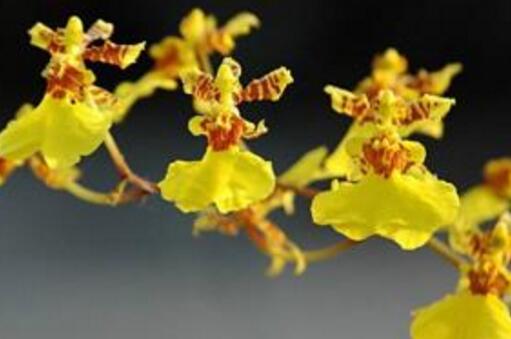
Because Oncidium has pseudobulbs, it usually relies mainly on two propagation methods, namely division and tissue culture, and rarely uses cuttings or sowing. Division is similar to the propagation method of Freesia, but the later care and management will differ slightly.
Propagation methods of Oncidium
I. Oncidium division propagation
1. Timing. In order not to affect the flowering of Oncidium, division is usually carried out after the flowering period, specifically in spring or autumn. Gardeners in the north are advised to do it in spring, while those in the south can choose the division time according to the climate environment.
2. Method. Using division, how is Oncidium propagated? After Oncidium has matured, its roots will have offsets, and the offsets will also grow pseudobulbs. Cut off the pseudobulbs bearing 2 or more buds, then plant them into a new pot and substrate, keep the environment moist and the temperature suitable, and new roots can grow in 2-3 weeks.
II. Oncidium tissue culture
1. Selecting explants. Choose tender shoots from the base of a robust Oncidium as explants. Before tissue culture, the surface needs to be sterilized with 70% alcohol to eliminate bacteria on the tender shoots, then rinsed clean with sterile water, and cut into slices 1.5 mm thick.
2. Inoculation. Inoculate the slices onto the prepared culture medium, then keep the temperature at around 26 degrees, with 500 lux light intensity for 16 hours per day. It generally takes about 45 days to form protocorms, then the protocorms are cultured on solid medium, and after more than 20 days shoots can form.
3. Forming seedlings. After tender shoots appear at the tip of the protocorm, differentiated roots will appear at the base of the shoots. At this point patient cultivation is still needed. After about 100 days, the differentiated plants will grow true leaves, and then they are complete seedlings, which can be transplanted and managed according to Oncidium cultivation methods.
Introduction to the propagation methods of Oncidium
Oncidium is a sympodial type of tropical orchid, and mature plants will grow offsets, so it is very suitable for propagation by division. In addition, Oncidium can also be propagated by tissue culture. Let me briefly introduce these two propagation methods of Oncidium, and those who like it can learn about them together.
Oncidium
I. Division propagation
It can be done in both spring and autumn, and it is best to divide in spring before new shoots sprout, combined with repotting. Cut off the pseudobulbs bearing 2 buds and plant them directly into a pot of sphagnum moss, maintain relatively high air humidity, and they will quickly recover and sprout new shoots and grow new roots.
II. Tissue culture propagation
Select tender shoots sprouting from the base of Oncidium as explants, sterilize the surface with 70% alcohol, rinse with sterile water after sterilization, cut into stem tip slices 1-1.5 mm thick, inoculate them onto the prepared culture medium, keep the temperature at (26±2)°C, light intensity 500 lux, illumination time 16 hours. On MS medium supplemented with 1 mg/L 6-benzylaminopurine, protocorm formation is fastest, requiring only 45 days. Continue to culture the formed protocorms on proliferation medium using solid culture, and after more than 20 days shoots form at the tip of the protocorms, and roots differentiate at the base of the shoots. After about 100 days, the differentiated plants grow 2-3 leaves and become complete seedlings.
Overview of tissue culture and breeding of Guangdong tropical orchids
1. PhalaenopsisPhalaenopsis tissue culture seedling production mainly uses two methods, namely aseptic sowing and vegetative propagation.
Phalaenopsis easily obtains seeds through artificial pollination, but its seeds are as fine as dust and have no endosperm, so they are not easy to germinate under natural conditions. Through aseptic sowing by tissue culture, one seed pod can yield thousands upon thousands of seedlings. Aseptic sowing of Phalaenopsis generally has three stages: first inducing protocorm formation, then protocorms germinate into shoots, and then rooting and strengthening the seedlings. From pollination to sowing, Phalaenopsis needs about 4 months, and from sowing to removing from the flask about 5-6 months, so from pollination to seedling emergence Phalaenopsis needs about 10 months. At present, most commercially produced Phalaenopsis seedlings are sown seedlings. Because Phalaenopsis is highly heterozygous, the sown seedlings of selfed or hybrid offspring show some variation in plant vigor, leaf color and flower color, and their flowering uniformity is inferior to cloned seedlings.
Vegetative propagation of Phalaenopsis, namely clonal propagation, can use stem tips, root tips, lateral buds of flower stalks, leaves and other explants to induce adventitious buds. Proliferation is carried out through buds growing buds or inducing protocorm formation. At present, vegetative propagation mainly uses lateral buds of flower stalks. As early as 1989, the Floriculture Research Institute of the Guangdong Academy of Agricultural Sciences established vegetative propagation technology for Phalaenopsis using lateral buds of flower stalks. After the paper was published in Acta Horticulturae Sinica, scholars from more than a dozen countries and regions wrote to request the paper for exchange.
2. Cymbidium
Tissue culture propagation of Cymbidium mainly uses the stem tip growing point of new shoots as explants, induces protocorm formation, and carries out mass proliferation through protocorms. The Floriculture Research Institute of the Guangdong Academy of Agricultural Sciences was the first in China to establish virus-free rapid propagation technology for Cymbidium, and the virus-free seedlings performed well after planting and flowering. The Shenzhen Agricultural Science Center has done a lot of work in the large-scale production and flowering forcing of Cymbidium tissue culture seedlings and accumulated certain experience. The Guangzhou Institute of Landscape Gardening used high mountain climate conditions to achieve Spring Festival flowering for a few Cymbidium varieties, but most were small-flowered varieties, and the varieties were relatively backward.
3. Oncidium
Oncidium is a tropical orchid variety that is relatively easy to cultivate in Guangdong Province, and the required cultivation conditions are relatively simple. The varieties are mainly introduced from Thailand, with the main varieties being the large-flowered type grower ramsey, the small-flowered type golden shower, honey Oncidium and fragrant Oncidium. The first two have been introduced and cultivated in China for more than ten years, mainly for cut flower cultivation. The latter two were introduced in recent years for potted use and are relatively popular. Tissue culture rapid propagation of Oncidium also uses the stem tip growing point of new shoots as explants, with proliferation by the protocorm method. The Floriculture Research Institute of the Guangdong Academy of Agricultural Sciences once established virus-free rapid propagation technology for the first 2 Oncidium varieties, also a first in China.
4. Cattleya
Tissue culture rapid propagation of Cattleya, like Cymbidium and Oncidium, uses the stem tip growing point of new shoots as explants, with proliferation by the protocorm method. However, Cattleya explants tend to turn brown after inoculation, with low survival rate and also very low induction rate. Therefore, tissue culture rapid propagation of Cattleya is relatively difficult. Cattleya easily obtains seeds through artificial pollination. Its seed pods are large and the seed quantity is large. Aseptic sowing can be used to propagate seedlings in large quantities, and it can also be used for breeding new varieties. Because the flowering period of Cattleya is generally from March to May or September to November, and most varieties cannot naturally flower in time for the Spring Festival; tissue culture seedlings take a long cycle to flower after planting, generally 3-5 years; flower period control is relatively difficult, and the strains are relatively complex, so it has never formed an industry. Cattleya tissue culture seedlings have not been produced in large quantities in Guangdong. The Shenzhen Agricultural Science Center carried out the introduction and tissue culture rapid propagation of miniature Cattleya, mainly studying the propagation technology of mericlone seedlings.
5. Dendrobium
Dendrobium is divided into types such as spring Dendrobium (node-flowering type) and autumn Dendrobium (butterfly-flowered type). The varieties introduced and cultivated early in Guangdong were mainly autumn Dendrobium. The main issue in cultivating autumn Dendrobium in our province is overwintering; it easily sheds leaves in winter, leading to poor plant shape and variety degeneration, so the cultivation area is not large, and its propagation is mainly by division. For tissue culture rapid propagation of Dendrobium, the South China Botanical Garden has carried out a great deal of research work.
In the past 5 years, some spring Dendrobium has been introduced from Japan and sold at Spring Festival flower markets at high prices. The Shenzhen Agricultural Science Center and the Guangzhou Flower Center have carried out the introduction and tissue culture rapid propagation of spring Dendrobium. However, because the cultivation techniques and flowering period regulation techniques of spring Dendrobium are still at the research and development stage, the seedling production of spring Dendrobium is subject to certain limitations.