How Does the Mallow Flower Reproduce? A Detailed Guide to Seed Propagation Methods
The mallow flower is a highly ornamental flowering plant, and many people in China grow it. However, as more people grow it, questions about its reproduction have also become a concern. So how does the mallow flower reproduce? What propagation methods are there for the mallow flower? Below, the editor will walk you through it.
I. How Does the Mallow Flower Reproduce? Mainly by Sowing
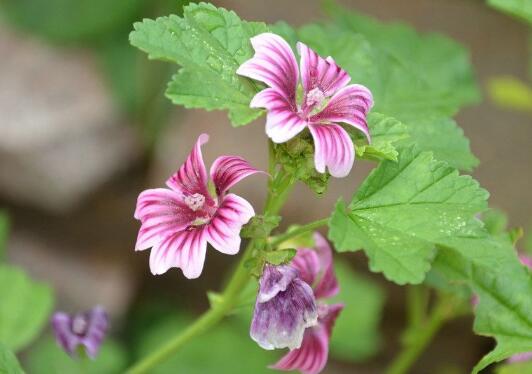
As for how the mallow flower reproduces, it is mainly done by seed propagation. This method, having been tested countless times, still has a relatively high survival rate. However, to succeed in planting, there are many points to pay attention to. Let's take a look at its specific sowing method below.
II. Propagation Methods of the Mallow Flower (Seed Propagation)
1. Sowing Time: Late Autumn or Early Spring
When we propagate the mallow flower by sowing, choosing a suitable time is very important. Generally, sowing in late autumn or early spring is best. In spring, you can choose March to April, and in autumn, sowing around September will do.
2. Substrate Selection: Good Drainage Required
Before sowing and propagating the mallow flower, we first need to choose the soil. Generally, it is best to choose relatively loose and fertile sandy soil. This kind of soil has good aeration and drainage, allowing the mallow flower to absorb nutrients better and thus grow more vigorously.
3. Seed Treatment: Soak in Warm Water to Germinate
Before sowing, we also need to germinate the mallow flower seeds. First, soak the seeds in warm water for 1-2 days. When the seeds begin to absorb water and swell, take them out and sow them. This can promote germination and allow them to sprout faster.
4. Sowing Method: Avoid Waterlogging
The sowing method for the mallow flower is fairly simple. First, we can evenly scatter the seeds in the potting soil, then cover them with about 1-2 cm of soil, and then water. Be careful to keep the soil moist, but do not let it become waterlogged. After about half a month, they will sprout.
5. Follow-up Management: Pay Attention to Care
After sowing, we cannot immediately place them in the sunlight to grow. They need to be placed in a shaded area for about a week. After the seeds sprout, they can be moved into the sunlight to grow. There are also many points to pay attention to during cultivation. If you don't know how to grow them, you can refer to the article on mallow flower cultivation methods, which has detailed instructions.
Seed Propagation Methods for Mallow
Seed Propagation Methods for Mallow
There are two propagation methods for mallow: division and sowing. Among them, seed propagation is the main method.
Sowing Time
Mallow propagation is usually carried out in early spring or late autumn. Mallow is generally sown in autumn (early September) or early spring (around late March to late April). Seed propagation is usually used to sow mallow, and while sowing, the growing soil must be kept moist and well-ventilated.
Sowing Method
Roast the seeds over a fire until the outer shells crack, allowing moisture to penetrate into the seeds so the young shoots can emerge. After sowing the seeds, cover them with 1 cm of soil and keep the soil moist. If you want mallow to bloom continuously, it needs sufficient nutrients. Apply a phosphorus-based fertilizer 1-2 times a month. At any time, prune away diseased branches, weak branches, dead branches, overly dense branches and spent flowers and stems. To prevent it from producing too many side branches, single-flowered types should also have leggy and long branches cut back. This will likewise make mallow bloom more.
Sowing Precautions for Mallow
Soil Conditions
The mallow flower is cold-resistant, drought-resistant, highly adaptable and not picky about soil. It can be planted in all kinds of soil (sandy soil is the most suitable). When planting, it needs a sunny, ventilated and well-lit environment.
After-Sowing Care
In winter, mallow should be placed in a warm spot with plenty of light.
In addition, attention should be paid to ventilation, and the indoor temperature should preferably be kept at 3-5°C.
Watering should not be too frequent. The potting soil should be kept on the dry side rather than wet, otherwise it will cause root rot.
An Introduction to Mallow Propagation and Cultivation Techniques!
Because the mallow flower has a relatively large plant and blooms unevenly with inconsistent plant shapes, it is not suitable for flowerbed landscaping. Therefore, it is mostly used for flower border landscaping, planted in courtyard corners and other places for ornamental purposes. Besides its ornamental value, the mallow flower also has certain medicinal value and can be used to make fragrant tea. Adding lemon to the blue tea can turn it pink, which is why it is favored by people. Today, we will briefly introduce mallow propagation and cultivation techniques.
Mallow Propagation and Cultivation Techniques - Propagation Methods:
Mallow is mainly propagated by sowing, and can also be divided, both carried out in late autumn or early spring. Its seeds need to be roasted over a fire to crack the outer shells, so that moisture can penetrate into the seeds and the young shoots will emerge. When sowing, try not to choose soil that is too acidic. Secondly, because the plant is relatively large, attention needs to be paid to fertilizer and water management.
Mallow sowing can also be done in two ways: seedling raising in pots and seedling raising in open ground. For open-ground seedling raising, the substrate should be watered thoroughly, then the seeds evenly scattered on the substrate, and then covered with about 1 cm of soil. Be careful to keep the soil moist, but do not let it become waterlogged. Spring sowing is generally planted out in May and can bloom in June; autumn sowing is generally planted out in early November.
Cultivation Techniques:
Mallow is best planted before Qingming, using nutrient soil or leaf mold with a pH of 5.5—6.5. After potting, place it in a spot that gets half a day of sunlight so that the leaves stay green and the flowers bloom profusely; otherwise it will be very difficult for it to bloom. Because mallow blooms many times, it needs sufficient nutrients. From May it enters the growing period, so apply a fertilizer combining nitrogen and phosphorus 1—2 times. From June it blooms successively until October, and each month a phosphorus-based fertilizer should be applied as a top dressing 1—2 times to keep the flowers blooming continuously.
In the peak heat of midsummer, the potting soil should be on the dry side rather than wet to prevent root rot. Sometimes it will drop leaves, and new leaves will grow again the following spring. At any time, prune away dead branches, diseased branches, weak branches, overly dense branches and spent flowers and stems to improve ventilation and light penetration. Single-flowered types should also have leggy and long branches cut back so they produce more side branches and more flowers. After winter arrives, it should be moved indoors promptly and placed in a sunny, warm spot, keeping the indoor temperature at 3—5°C so it can overwinter. The potting soil should be on the dry side rather than wet to prevent root rot.
Mallow harvesting is best done in summer and autumn, and after harvesting it needs to be dried. During care, mallow may develop some diseases, mainly sooty mold, which can be treated by spraying with a chemical agent, and attention should be paid to ventilation to avoid disease. During care, mallow may sometimes also encounter pests, mainly aphids and scale insects. When mallow is affected by these pests, a 2000-fold dilution of 10% omethoate can be sprayed for control.