When planting climbing roses, loose and breathable soil and ample sunlight are what make the flowers cover the trellis
Climbing roses are a fairly common flowering plant in people's daily lives, with high ornamental value, and many people across the regions of our country grow them. However, to grow them well, there are many points to pay attention to. How should climbing roses be planted so the flowers cover the trellis? Let's take a look below.
How to plant climbing roses so the flowers cover the trellis
1. Substrate selection: loose and breathable
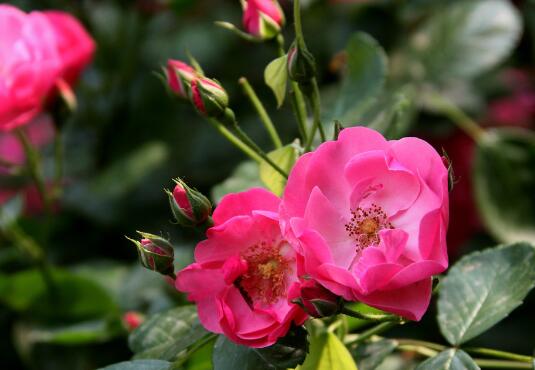
Before planting climbing roses, we first need to choose the substrate; this is the step that lays the foundation. Generally, it is best to choose a slightly acidic soil rich in organic matter, fertile and loose as the substrate. This kind of soil has good drainage and breathability and is rich in nutrients, allowing climbing roses to grow better. The ideal mix is leaf mold, peat and an appropriate amount of coconut coir brick soil blended together.
2. Substrate disinfection: high-temperature sterilization
After choosing the substrate, we cannot use it right away. It is best to disinfect it first, to avoid bacteria in it infecting the climbing roses. When disinfecting, we can break it up and then expose it to the sun to disinfect it. We can also put it in an iron wok and stir-fry it over high heat, so that even if there are bacteria, they will be killed.
3. Fertilization requirements: avoid concentrated fertilizer
This plant, the climbing rose, blooms in a relatively large amount every year, so its demand for fertilizer is also very large. Besides applying a sufficient amount of base fertilizer when repotting, it is best to regularly apply water-soluble fertilizer before the flowering period to promote flowering. However, when fertilizing, there is one thing we must remember: the fertilizer must first be diluted with water, to avoid burning the plant due to too high a concentration.
4. Watering requirements: water frequently
Compared with ordinary rose varieties, climbing roses have more branches and green leaves, so their demand for water is also relatively greater. Therefore, we should pay attention to watering in time to prevent the appearance of withered leaves. Generally, in spring and autumn, water once every other day; in summer, when temperatures are high, water once each morning and evening every day.
5. Light requirements: avoid strong light
After planting climbing roses, we must place them in a place with ample sunlight, such as an open ground planting spot or an outdoor terrace, because only sufficient sunlight can give climbing roses the basic conditions for good growth. However, in summer, when the sunlight is relatively strong, we still need to pay attention to shading them, to avoid scorching the plant.
6. Regular repotting: once a year
The climbing rose is a plant that grows relatively fast and gets much bigger every year, so we should decide whether to repot according to the size of the seedling that year. Following the principle of small pots for small seedlings and large pots for large seedlings, repot gradually step by step. Note that repotting is best done each year at the turn of winter and spring.
7. Pest and disease treatment: suit the remedy to the case
This plant, the climbing rose, relatively often suffers from pests and diseases, so for common pests and diseases, pest removal has become one of the indispensable parts. We should especially pay attention to the pests and diseases brought by the moldy rainy season, and apply pesticides in a targeted way to remove pests, so as to ensure the normal growth of climbing roses. For specific treatment methods, you can refer to the article on pest and disease control for climbing roses, which has detailed introductions.
When do roses bloom? Which months are the rose flowering period
Rose flowers are grand and gorgeous, and come in many colors. Many people like roses very much and will buy some potted roses to grow at home, but after growing them for a while, the roses still have not bloomed, so they want to ask everyone when roses bloom, which months are the rose flowering period, and how to care for roses so the flowers bloom beautifully. Below, we explain when roses bloom and care techniques. Let's take a look.When do roses bloom? Which months are the rose flowering period?
Climbing roses have branch-like vine stems, and the flowers are relatively large. Floribunda roses have medium-sized, dense flowers, and the flowering period lasts from mid-May all the way to October. Miniature roses have a low, dwarf plant shape, and the flowers are also small; they bloom year-round and are suitable for indoor potting.
How to grow roses?
1. Choose a good pot: use a purple clay pot. It is not hard to understand that this relates to the breathability mentioned above.
2. Use good soil: choose loose soil with good breathability. Absolutely do not use sticky soil. Next, the soil must be rich in organic matter.
3. Plant at the right time: it is best to plant in spring. If you want to plant in autumn, it is best to plant with soil, and it is best to place the seedlings in a place with suitable sunlight brightness and good ventilation. After the seedlings survive, you can prune them slightly according to the look you want in the future, so that they branch reasonably and have a beautiful shape.
4. Water sensibly: before roses sprout, try to keep the potting soil moist, and do not water if the soil is not dry. After sprouting, the number of waterings should gradually increase, generally about twice a day: water once before 10 a.m., and in the afternoon water appropriately according to whether the potting soil is dry or wet. In summer, it is best to water once each in the morning and evening, and generally do not water at night.
5. Fertilize regularly: roses like fertilizer. Generally, during the two peak growing seasons of spring and autumn, fertilize once every 10-15 days. For fertilizer, both organic fertilizer and compound fertilizer are fine. Fertilization should be stopped in the high temperatures of summer and the low temperatures of winter.
How to care for roses so they bloom more? 2. During the rose growing season, they should fully receive sunlight, with 8 hours of light per day being appropriate. If used as an indoor ornamental, they should be moved in before 11 a.m. and moved out before 4 p.m., so they receive the soft light around midday, which helps prolong the flowering time.3. Roses enter a semi-dormant state above 33°C, and growth is most favorable at an average temperature of 20-25°C. Therefore, in summer, appropriate shading and frequent spraying with water should be carried out. To lower the temperature and add humidity, during the growing season it is best to spray water once each in the morning and afternoon, creating a humid environment and promoting the growth of flowers and leaves.
4. After roses bloom, they should be cut below the third compound leaf under the flower, to promote the growth of robust new branches and early budding and flowering. The key points of pruning technique are: prune weak and short branches first, and prune high; prune robust branches later, and prune short, so as to promote the weak and suppress the strong, and promote neat flowering. The pruning length of long branches should not exceed 1/2, to avoid delayed germination of axillary buds. In addition, it is not appropriate to keep too many flowers per flush; for potted roses, 3-5 flowers are appropriate, and for ground-planted roses, it depends on the strength of the plant. Keeping too many flowers disperses nutrients too much, making flowers small and affecting the next flush of flowers.
The flower language of roses:
Red roses represent pure love, passionate love or admirable enthusiasm, chastity, and so on. People mostly use them as a token of love and a synonym for love. They are the first choice flower for Valentine's Day. The buds of red roses also represent loveliness.
White roses signify respect and nobility. In Japan, white roses (roses) symbolize fatherly love and are the main flower used for Father's Day.
Pink roses represent first love; black roses represent individuality and creativity.
Blue-purple roses represent preciousness and rarity.
Orange-yellow roses represent a breath of youth and beauty.
Yellow roses represent apology (but in the eyes of French people, they mean jealousy or disloyalty).
Green-white roses represent purity, frugality or a pure heart.
Two-colored roses represent contradiction or many interests.
Three-colored roses represent great learning and deep affection.
16 extremely beautiful climbing plants
16 extremely beautiful climbing plants
I believe every flower grower dreams of having a wall of flowers, a flower corridor, or a pavilion with a top covered in flowers and plants. Then, in the scorching summer, sitting under the flower wall or pavilion, nibbling on melon while enjoying the flowers, just thinking about it is so pleasant!
To satisfy everyone's wish, today Huahua has painstakingly compiled 16 kinds of climbing plants suitable for making flower walls or pavilions, each one so beautiful it is unreal. Friends, come and take a look!
1. Climbing Fig
Perennial trailing herbaceous vine Flowering period: summer
Climbing Fig, also called "One Curtain of Sweet Dreams" or "Wealth Curtain", can grow reddish-brown metallic-glossy aerial roots from the nodes of the stem. Hundreds or thousands of them hang down from the trellis, like the boudoir of an ancient princess. The appearance is extremely elegant and the temperament outstanding.
Care methods
1. Climbing Fig is a sun-loving plant, drought-tolerant and high-temperature-tolerant, with a very strong spreading ability, so it should be trained in time.
2. In summer, Climbing Fig grows too fast and should be pruned in time to avoid poor ventilation. At the same time, water once every 1-2 days.
2. Climbing Rose
Rosoideae climbing shrub, flowering period May-November
How many girls fantasize about having a rose garden! Red Leonardo da Vinci, pink Pink Dragon Sand Gem, yellow Georgia... blooming all over the garden. Pick a few branches in the early morning, place them on the dining table, admire the roses, listen to the birds, and enjoy a beautiful breakfast.
Care methods
1. Climbing roses are basically propagated by cuttings, which can be done above 10 degrees; pay attention to maintaining humidity. To learn cutting techniques, click me.
2. Climbing roses do not tolerate waterlogging, so pay attention to choosing loose, fertile soil. Summers are hot, so watering should be done in the evening.
3. Climbing roses like an environment with ample sunlight, but in summer when the sunlight is too strong, appropriate shading is needed.
3. Coral Vine
Semi-deciduous vine Flowering period: April-August
Although Coral Vine's flowers are not large, it has a delicate, slender, pitiable feel, and after blooming it has a faint delicate fragrance. It is praised as the "queen of vines" and is very suitable for girls who follow a fresh and lovely style.
Care methods:
1. Coral Vine likes a sunny, warm and humid environment. The suitable temperature is generally around 22-30 degrees.
2. If Coral Vine is to grow into a shrub shape, it should be pinched back frequently.
3. In the high-temperature period of summer, spray water on the leaves frequently, and provide appropriate shading when the sun is too strong.
4. Garlic Vine
Evergreen vine-like shrub Flowering period: 9-10, late summer and early autumn
Garlic Vine: its flowers and leaves have a strong garlic smell, but the flowers are colorful and gorgeous, covering the entire wall and fence. The flower color starts out pink-purple, gradually turns pink, and finally turns white.
Care methods:
1. Garlic Vine likes a warm and humid climate and a sunny environment.
2. It likes loose, fertile, slightly acidic sandy loam.
3. Water once a day in summer, and once every 3-4 days in winter.
5. Bougainvillea
Perennial vine-like shrub Flowering period March-July.
If Bougainvillea is properly cared for, it will be full of flowers, gorgeous all over the branches, and flowers of multiple colors can be grafted onto one plant, with red, pink, white and orange flowers blooming on one plant. It is very beautiful, and it can also climb on walls or racks.
Care methods:
1. The main propagation method of Bougainvillea is cuttings. In May-June, cut mature woody branches (about 20CM long), insert them into a sand pot, keep moist, and they will root in 20-30 days.
2. If you want Bougainvillea to bloom well, it must be fertilized. In the peak growing season from April to July, apply organic fertilizer once every 7-10 days (such as bean cake fertilizer, manure water, etc.).
3. Bougainvillea is afraid of waterlogging and does not tolerate waterlogging, so be sure to choose loose, breathable nutrient soil with good drainage.
6. Passionflower
Perennial woody vine plant Flowering period May-July
Passionflower has showy bell-shaped flowers with a bit of fragrance. Passionflower not only has beautiful flowers, but can also bear sweet fruit. Flower-loving foodies should not miss it!
Care methods:
1. Passionflower likes light, sunny and warm climate environments. It has strong adaptability and is not strict about soil requirements.
2. Passionflower is generally propagated by cuttings, using robust, mature one-year-old vines as cutting material.
7. Star Jasmine (Confederate Jasmine)
Perennial woody vine plant Flowering period: May-July
Star Jasmine looks like little windmills one by one, so it is also called windmill jasmine. The flowers are as white as snow, with an alluring delicate fragrance. However, this plant is toxic, so it is best not to plant it indoors.
Care tips:
1. Star Jasmine is not strict about soil. It likes light, tolerates slight shade and drought, has strong tolerance to flooding, and is not very cold-hardy.
2. Star Jasmine is easy to cultivate and is generally propagated by cuttings, rooting extremely easily.
8. Clematis
Deciduous or evergreen herbaceous vine Flowering period June-September
Clematis has diverse varieties and flower colors. In recent years, many gardening experts have used it to decorate their gardens. Its beauty and climbing properties make it an indispensable new element for courtyard and balcony decoration. Moreover, it is a perfect match with roses.
Care methods:
1. The upper part of Clematis likes sun, while the root system needs shade.
2. It likes breathable, water-retaining, fertilizer-retaining, clean soil.
3. Clematis has fleshy roots and likes fertile, well-drained soil, slightly alkaline, and avoids waterlogging.
9. Blue Plumbago
Perennial upright herb, flowering period July-September
Blue Plumbago can, like hydrangea, bloom clusters of blue flowers, fresh and elegant. Keeping one pot at home can bring a lot of coolness to the hot summer!
Care methods:
1. The most commonly used propagation methods for Blue Plumbago are: cuttings and division. Cuttings can be done in spring, early summer and late summer, and they can root at around 20°C-25°C.
2. Blue Plumbago likes water, so keep the potting soil moist frequently. Usually, spray water around it more to keep it moist. In summer, when it is dry and evaporates quickly, increase watering to 2 times a day.
3. Blue Plumbago likes fertilizer. Apply sufficient base fertilizer when planting, and usually apply slow-release fertilizer or fermented organic fertilizer once a month. After flowering, prune the branches; about 20 days after the branches are cut, it can bloom again.
10. Dipped-in-Fragrance Vine
Perennial evergreen vine Flowering period May-October
Dipped-in-Fragrance Vine is a new type of vine plant. The flowers are large and dense. When a breeze comes, waves of refreshing fragrance make people feel relaxed and clear-headed.
Care methods:
1. Dipped-in-Fragrance Vine likes a sunny, warm and humid environment. Insufficient light will affect flowering.
2. The most suitable growth temperature is 20-31°C, the highest temperature should not exceed 35°C, and the lowest temperature is 14°C.
11. Morning Glory
Annual twining herb Flowering period: summer
"Little morning glory, blooming all over the bamboo fence, one after another, blowing little trumpets..." Morning glory flowers look like trumpets, so they are also called trumpet flowers. In childhood, this flower was everywhere in fields, gardens and by ponds. There are blue, pink, red, purple, and so on. They open every early morning facing the morning dew, and close again in the evening.
Care methods
1. Morning glory is easy to grow; in fields it reproduces by self-seeding. Friends can collect some seeds when out in the wild and take them home to sow. To get a sowing tutorial, click me.
2. If you want morning glory to be lush with many side branches, pinch it back frequently. When each side branch grows to 4 leaves, pinch it back once.
3. When morning glory grows to a certain height, you can make supports of various shapes according to your own preferences, and let the morning glory climb along the shape.
12. Wisteria
Deciduous twining vine plant Flowering period: April-May
When wisteria is trained into a pergola or a walkway, it is simply too beautiful for words: cascades of purple blossoms hanging down, giving off wisps of delicate fragrance. Standing beneath them feels like Alice in Wonderland. Who could resist being enchanted?
Care methods:
1. Wisteria can be propagated by all the basic methods, but the most commonly used is cutting propagation, carried out in mid-to-late March.
2. Wisteria has very deep roots and strong cold resistance. It likes soil that is deep and well-drained, and it should not be given too much water.
3. To keep wisteria blooming abundantly and growing lush foliage, it needs proper pruning during the dormant period.
13. Chinese trumpet creeper
Climbing vine Blooming period: May-August
Chinese trumpet creeper can be called the main melody of summer. Right now the trumpet creepers on rooftops and walls are all in bloom, a large expanse of orange-red, passionate and bold, and just looking at them feels utterly satisfying.
Care methods:
1. Chinese trumpet creeper cuttings can be taken in spring and summer, and it is best to choose branches with aerial roots.
2. Chinese trumpet creeper likes a warm environment with plenty of light. Without enough light, the branches grow thin and long and it does not bloom.
3. Chinese trumpet creeper likes fertilizer and moisture. During the spring and summer growing season, keep the potting soil moist.
14. Wax flower
Apocynaceae, genus Hoya Blooming period: April-June
Wax flower produces little, adorable flower balls, like tiny hydrangeas, very cute.
Care methods:
1. Wax flower likes high temperatures, high humidity and a semi-shaded environment. In summer and autumn, avoid direct sunlight and maintain relatively high humidity.
2. Wax flower does not like heavy, sticky soil. It likes soil that is fertile, airy and well-drained.
3. Wax flower likes a moist environment. Keep the potting soil moist regularly, watering when dry and letting it dry out between waterings, but do not let water accumulate.
15. Cypress vine
Annual delicate twining herb Blooming period: April-November
Cypress vine, like morning glory, can twine and climb around a support, producing countless small five-pointed-star-shaped flowers in vivid deep red, with some deep red and some white. Very charming and cute.
Care methods:
1. It likes light and a warm, humid, sunny environment. It is not cold-tolerant and can self-seed.
2. Cypress vine is propagated by seed. Seeds can be harvested in early November each year and sown in April the following spring. They sprout after a week, and the seedlings are planted out when they have 3 to 4 leaves.
3. To make cypress vine grow well, it needs proper thinning of vines and leaves. After the flowers fade, remove the spent blooms promptly to encourage new branches and extend the blooming period.
16. Banks rose
Evergreen climbing plant Blooming period: late spring, April-May
The pale yellow Banks rose, when in bloom, can be called a tapestry of flowers, white as snow and yellow as brocade. From a distance, some look like a "soaring dragon," and some resemble a "waterfall." Golden yellow, with fragrance spreading all around.
Care methods:
1. Banks rose likes a sunny environment, but it also tolerates partial shade and cold, and in most of the north it can overwinter outdoors.
2. In early spring and summer, appropriately increase watering. Do not splash water on the leaves and flowers.
3. Banks rose likes fertilizer, and liquid fertilizer can be applied once every half month.