How to Propagate Rangoon Creeper? Four Methods: Seed Sowing, Stem Cuttings, Division, and Layering
Rangoon creeper (Combretum indicum) is a highly ornamental flowering plant that can be seen in many parts of China, and many people in various regions cultivate it. However, as more people grow it, questions about its propagation have become a concern. How do you propagate Rangoon creeper? What are the propagation methods for Rangoon creeper? Let's take a look below.
I. How to Propagate Rangoon Creeper: Seed Sowing / Stem Cuttings / Division / Layering
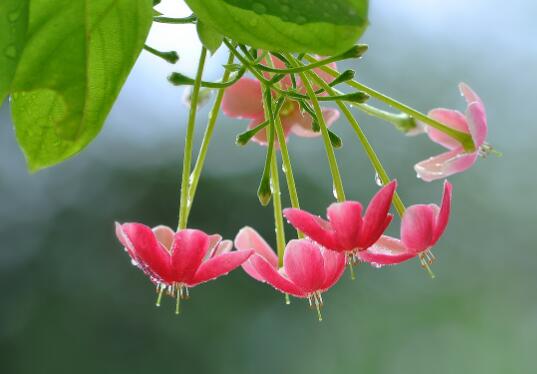
When it comes to how to propagate Rangoon creeper, it mainly falls into four methods: seed sowing, cuttings, division, and layering. As long as we master the correct operating techniques, the survival rate of all four propagation methods is quite high. The specific details are described in detail below, and interested friends can take a look.
II. Propagation Methods for Rangoon Creeper
Seed Sowing Propagation
1. Seed Germination Stimulation
Before sowing Rangoon creeper seeds, we first need to stimulate the seeds to germinate. We can soak the seeds in warm water for 1-2 days. When the seeds begin to absorb water and swell, take them out of the water and sow them. This allows the seeds to sprout more quickly.
2. Sowing Method
Among the propagation methods for Rangoon creeper, seed sowing is a relatively common one. First, scatter the seeds evenly on the soil surface, then cover with 1-2cm of soil and water. Be sure to water thoroughly in one go, then wait quietly for them to sprout. When the seedlings reach about 30cm in height, they can be transplanted to their permanent location.
Cutting Propagation
1. Stem Cutting Method
Among the cutting methods for Rangoon creeper, there are two approaches: stem cuttings and root cuttings. The stem cutting method is best done in spring and autumn each year. We can select healthy branches that have grown for about 1-2 years as cuttings, generally about 20-25cm in length, then insert them into the potting soil, water thoroughly, and wait for them to take root.
2. Root Cutting Method
When performing the root cutting method, we can choose to do it from December to February of the following year. First, cut and dig out the lateral roots beyond 30cm from the main root, then select those with a diameter of more than 1cm and cut them into cuttings about 20cm long. After inserting them into the potting soil, they can be transplanted after 1 year.
Division Propagation
Among the propagation methods for Rangoon creeper, division is considered a relatively simple one. This method can be done together with repotting, and we can choose to do it in spring. When dividing, we should lift the overcrowded parent plant out of the potting soil, then divide it into several clumps and pot them separately. Plant them as soon as they are divided, and they will easily survive. Generally, after potting, each is a complete flowering plant.
Layering Propagation
When layering Rangoon creeper, we should select healthy long branches, then bend and bury them in the soil, or use serpentine layering. After they take root, separate them from the parent plant. This method is generally best done only in spring, because the climate is more suitable for its growth, which results in a higher survival rate.
Propagation Methods of Rangoon Creeper and Its Medicinal Benefits
Rangoon creeper is a relatively well-known plant with small flowers. The flowers are white when they first open and then turn red, which is truly beautiful, so people who like it will plant it in their homes and other places. Let's take a look at the propagation methods and medicinal benefits of Rangoon creeper.
Propagation Methods of Rangoon Creeper
There are quite a few propagation methods for Rangoon creeper. It can be propagated by seed sowing, cuttings, division, or air layering. Both spring and autumn are suitable times for sowing. The cutting method easily develops roots and is the most commonly used propagation method.
1. Cutting Propagation
There are stem cuttings and root cuttings. For stem cuttings, in February-March or September-October, cut 1-2 year old healthy branches as cuttings, 20-25 cm long, and insert them diagonally into the seedbed, then transplant the following year. For root cuttings, from December to January-February of the following year, cut and dig out the lateral roots beyond 30 cm from the main root, select those with a diameter of more than 1 cm and cut them into cuttings about 20 cm long, insert them into the seedbed, and transplant after 1 year.
2. Layering Propagation
In February-March, select healthy long branches, bend and bury them in the soil, or use serpentine layering. After they take root, cut them off and transplant. Seedlings propagated by the above methods should be planted in mid-to-late February or during the rainy season. Row spacing is 3.3m x 2.3m. Apply barnyard manure in the holes, mix well with soil, plant 1 seedling per hole, and water after planting to settle the roots.
Medicinal Benefits of Rangoon Creeper
1. The dried mature fruit of Rangoon creeper is used as medicine. It is sweet in taste, warm in nature, non-toxic, and enters the spleen and stomach meridians. It is mainly produced in Fujian, Hunan, Yunnan, Guangdong, Guangxi, Jiangxi, Guizhou and other places. In traditional Chinese medicine, it is classified as an anthelmintic and spleen-strengthening medicine. The Chinese medicine name is Shi Jun Zi (Rangoon Creeper Fruit), first recorded in the "Kaibao Bencao." It can kill parasites, reduce food stagnation, and strengthen the spleen. It has effects such as deworming and resisting skin fungi. It mainly treats parasitic abdominal pain, abdominal distension, diarrhea and dysentery, infantile malnutrition, and milk-food stagnation. In modern clinical application, it is used to expel roundworms, pinworms, and tapeworms, and externally for various skin fungal infections, Trichomonas vaginalis, etc.
2. The leaves of Rangoon creeper are used as medicine. They are pungent in taste, neutral in nature, and enter the spleen and stomach meridians. In traditional Chinese medicine, they are classified as anthelmintic medicine. The Chinese medicine name is Shi Jun Zi Ye (Rangoon Creeper Leaf). It has effects such as killing parasites and detoxifying, regulating qi and strengthening the spleen. It mainly treats infantile jaundice-like accumulation, childhood accumulation, abdominal distension, and sores, boils, and ulcers.
3. The root of Rangoon creeper is used as medicine. It is pungent and bitter in taste, neutral in nature, and enters the spleen and lung meridians. In traditional Chinese medicine, it is classified as a spleen-strengthening medicine and a lung-diffusing medicine. The Chinese medicine name is Shi Jun Zi Gen (Rangoon Creeper Root). It has effects such as descending rebellious qi and stopping cough, killing parasites, and strengthening the spleen. It mainly treats cough, dysentery, parasitic accumulation, etc.
Propagation Methods of Rangoon Creeper
Cutting Propagation of Rangoon Creeper
Rangoon creeper can be propagated by cuttings. Cuttings easily develop roots, so cutting propagation is the most commonly used method for Rangoon creeper. For cutting propagation of Rangoon creeper, you can use stem cuttings or root cuttings.
For stem cuttings, you can do it in spring or autumn. Cut 1-2 year old healthy branches of Rangoon creeper as cuttings, about 20cm in length, and insert the cuttings diagonally into a sand bed. They can be transplanted the following year.
For root cuttings, do it from December to January of the following year each year. Dig out the lateral roots of Rangoon creeper that are farther from the main root, cut them into 20cm long cuttings with a thickness of about 1cm, insert them into the seedbed, and transplant after one year.
Layering Propagation of Rangoon Creeper
In early spring, select healthy long branches of Rangoon creeper, bend them and bury them in the soil, and wait for them to take root. After rooting, remove them for transplanting. Rangoon creeper layering can be transplanted and planted in mid-to-late February or during the rainy season. After planting, water thoroughly.
Seed Sowing Propagation of Rangoon Creeper
For seed sowing propagation of Rangoon creeper, both spring sowing and autumn sowing are possible, with autumn sowing being preferable. Seeds can be sown as soon as they are collected, or they can be stored and sown the following spring.
Seed sowing propagation of Rangoon creeper requires a very long growth cycle. When sowing, place the pointed end of the Rangoon creeper seed
facing down, insert it diagonally into the soil, cover with soil, and keep the soil moist. It will sprout in about one month. When the Rangoon creeper seedlings grow to about 10cm, they can be transplanted with the soil.
Division Propagation of Rangoon Creeper
In addition to cuttings, sowing, and layering, Rangoon creeper can also be propagated by division. In winter and spring, divide the plant at the roots and transplant. Generally, it will bear fruit after about 3 to 5 years.