How to propagate the Chinese lantern flower? Three propagation methods, spring cuttings root the fastest
The Chinese lantern flower, also called the lantern flower, has a peculiar flower shape, looking like a lantern, and also like an upside-down bell, and it looks extremely beautiful! Not only that, the Chinese lantern flower has many varieties and bright flower colors, so it is very popular, and it is therefore propagated in large quantities. So how do you propagate the Chinese lantern flower? For this, the editor found 3 common propagation methods for the Chinese lantern flower, let's go learn and take a look.
1. How to propagate the Chinese lantern flower: cuttings/layering/sowing
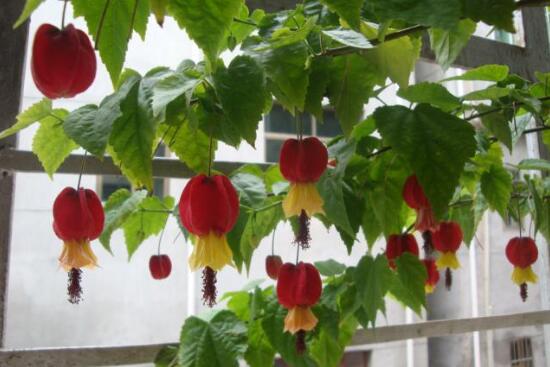
For beginners, mastering the cultivation method of the Chinese lantern flower is enough; but for veterans, just being able to grow it is not enough, you also need to know how to propagate the lantern flower, because this can not only turn one pot of Chinese lantern flower into many pots, but also add to the fun of growing it. As for how to propagate the Chinese lantern flower, there are three propagation methods suitable for flower lovers to carry out: cuttings, layering and sowing. For the specific operations, let's continue reading below.
2. Three propagation methods for the Chinese lantern flower
(1) The cutting propagation method for the Chinese lantern flower
When it comes to how to propagate the Chinese lantern flower, the first thing everyone thinks of is naturally cuttings. It is the most commonly used and most convenient propagation method for indoor potted plants, and it also applies to the Chinese lantern flower. Below, the editor will take you step by step through propagating the Chinese lantern flower from aspects such as timing, cuttings and substrate.
1. Cutting time
Generally speaking, the Chinese lantern flower can be propagated by cuttings in all three seasons except summer. But according to the operating experience of expert growers: cuttings of the Chinese lantern flower root fastest in spring, followed by autumn. In many places the winter temperature is relatively low, so it is best to choose spring and autumn.
2. Cutting selection
For cutting the Chinese lantern flower, the most important part is selecting the cutting; its quality will directly determine the survival rate of the entire propagation. From the potted Chinese lantern flower, you can pick a section of 1-2 year old, robustly growing branch free of pests and diseases (not lignified and with a tender tip), cut it into cuttings of 6-10 cm each, keep 2-3 leaves on the upper part, and cut off all the lower leaves.
Cutting treatment: after the cutting is selected, in order to increase the survival rate, it is best to soak its base in a potassium permanganate solution for 30 minutes, then take it out and insert it into the substrate.
3. Cutting substrate
To cut the Chinese lantern flower, soil is naturally needed. Generally, the cutting substrate for the Chinese lantern flower is best made by mixing garden soil and river sand in a 1:1 ratio; it causes the least irritation to tender roots and is beneficial for the survival of the tender roots after cutting.
4. Starting the cuttings
After doing the above work, the cutting propagation of the Chinese lantern flower can officially begin: insert the cutting into the substrate to a depth of 1/3 or 1/2 of the cutting. After inserting, water thoroughly, then place it in a bright place for management, spray water 1-2 times a day, and generally after 20-3 days it can take root.
(2) The layering propagation method for the Chinese lantern flower
How to propagate the Chinese lantern flower? Flower lovers can also use the layering method. Specific operation: in spring and autumn, select a robust branch on the potted Chinese lantern flower, and from about 15-30 cm below the top shoot, peel off a ring of bark (about 1 cm wide, with the depth just enough to peel off the outer skin).
Next, use a piece of film 10-20 cm long and 5-8 cm wide (with some moist garden soil placed on it), wrap the wound, tie the upper and lower ends of the film tightly, and let the middle bulge. After 4-6 weeks it can take root, then cut off the branch together with the root system, and it becomes a new plant.
(3) The sowing propagation method for the Chinese lantern flower
After the Chinese lantern flower blooms, seeds remain, so the Chinese lantern flower can also be propagated by sowing, but this method takes effect slowly and is more suitable for large-scale propagation, so flower lovers only need to understand it. Specific operation: scatter the Chinese lantern flower seeds directly on the soil, control the temperature at 20-25°C, keep the soil moist, and grow them in a cool place; after one month the seeds will take root and sprout.
Overall, when propagating the Chinese lantern flower, whether by cuttings, layering or sowing, all can take root and survive, and the survival rates are all very good. But methods are fixed while people are flexible, so flower lovers can choose a method to propagate according to the actual situation. As for the propagation methods of the Chinese lantern flower, the editor has introduced them here, hoping to bring everyone help.
How to propagate the money tree: three propagation methods for the money tree / cuttings have the highest survival rate
Among indoor potted plants, because it grows beautifully and also symbolizes wealth, the money tree has become the first choice of many people. As more and more people grow it, it is therefore propagated in large quantities. So how do you propagate the money tree? For this, based on the experience of expert growers, the editor summarized 4 common propagation methods for the money tree, among which cuttings have the highest survival rate. Let's go learn and take a look.
1. How to propagate the money tree: cuttings/sowing/grafting
For beginners, mastering the cultivation method of the money tree is enough; but for veterans, just being able to grow it is not enough, you also need to know how to propagate the lantern flower, because this can not only turn one pot of money tree into many pots, but also add to the fun of growing it. As for how to propagate the money tree, there are three propagation methods suitable for flower lovers to carry out: cuttings, sowing and grafting. For the specific operations, let's continue reading below.
2. Three propagation methods for the money tree
(1) Cutting propagation of the money tree
① Cutting time
The money tree has strong adaptability. As for the cutting time, it can basically be done all year round. However, if you want a high survival rate for money tree cutting propagation, it is best to choose May-August each year, when its activity is highest.
② Cutting selection
For cutting propagation, the most important thing is of course the cutting; its quality will directly determine the survival rate of the entire propagation. To select a cutting for the money tree, it is best to do it on a cloudy day or a windless morning: on the potted money tree, choose a section of healthy lignified branch, cut it to a length of 6 or 7 cm as the cutting, and each cutting is best kept with one to two leaves.
Cutting treatment: after the cutting is cut, remember to let it dry for a while so the wound heals properly, then you can begin cutting. If conditions allow, you can dip it in rooting powder or rooting liquid and the like. In addition, cut the lower incision of the cutting at a 45-degree slant, and keep the upper incision smooth; this is beneficial for the formation of callus tissue.
③ Cutting substrate
In the cutting propagation of the money tree, the choice of substrate is also very important. Choosing according to the habits of the money tree, the editor suggests using coarse sand, vermiculite, or a mixed medium containing perlite is also fine.
④ Starting the cuttings
After doing the above preparatory work, the cuttings of the money tree can officially begin: insert the cutting into the substrate to a depth of 15 cm. Note that when cutting, first use a wooden stick to make a hole, then put the money tree in, and press firmly with your hand. After that, keep the pot soil moist, but do not let it become waterlogged, and shade 50%. Then cultivate it in a ventilated and cool place for 2-3 months and it will be able to take root.
(2) Sowing propagation of the money tree
After the money tree blooms it will bear fruit, so naturally seeds remain, and with seeds you can use sowing propagation (money tree seeds are best sown as soon as they are collected). Method: broadcast the money tree seeds on the surface of the pot soil, then cover with 3-4 cm of thin soil, water thoroughly, and keep the pot soil moist; generally after one week they will sprout.
(3) Grafting propagation of the money tree
Besides cuttings and sowing, the money tree can also be propagated by grafting. This method is very practical and also ensures the excellent characteristics of the money tree variety. But before grafting the money tree, we first need to prepare three things:
① Time: money tree grafting is often carried out in August-September; ② Rootstock: choose a 2-year-old money tree seedling; ③ Scion: use a robust 1-year-old branch that has already bloomed, cut off all the leaves on the branch, keep 2 buds, and make one cut on each side of the lower end of the buds.
Grafting method: cut the rootstock off at a point 40 cm from the ground, and make a vertical downward slit in the center of the cut surface, then insert the scion into the slit of the rootstock. Next, put a plastic film bag over the scion area to prevent rain, and usually after one month new buds can grow.
Overall, the money tree has strong vitality, and all three propagation methods are easy to survive, but when it comes to convenience and survival rate, cuttings are still the best. Of course, methods are fixed while people are flexible, and everyone can choose a method to propagate according to the actual situation. As for the propagation methods of the money tree, the editor has introduced them here, hoping to bring everyone help.
How to grow the Chinese lantern flower: cultivation and propagation methods for the Chinese lantern flower
The environment the Chinese lantern flower likes is sandy soil with relatively good drainage, and it likes a cool and moist environment, so in summer you must pay attention to shading, while in winter you must ensure sufficient sunlight. If in summer the temperature exceeds 38 degrees, the metabolism of the Chinese lantern flower will slow down, and its growth will also be in a stagnant state; at this time leaf drop, root rot and the like will appear. If it is not cared for in time, it will cause the entire plant to die. Before planting, there must also be enough organic fertilizer. For water needs, in winter or on rainy days the interval is 2 to 3 days; in autumn or on sunny days, water every day; while in summer the Chinese lantern flower is in a semi-dormant period, so water must be controlled, thereby preventing phenomena such as leaf drop and root rot.
Chinese lantern flower care points 1. The temperature requirements of the Chinese lantern flowerIn winter it requires warmth and moisture, sufficient sunlight, and air circulation; in summer it requires dry, cool and semi-shaded conditions. It avoids severe summer heat and stuffiness as well as rain and sun exposure. The suitable growth temperature for the Chinese lantern flower is 10-25°C. In winter the temperature should not be lower than 5°C. When the summer temperature reaches 30°C, growth is extremely slow, and at 35°C a large number wither and die.
2. Watering and fertilizing the Chinese lantern flowerWhen watering the Chinese lantern flower in spring and autumn, master the principle of watering when dry and stopping when wet, and it is appropriate to keep the pot soil moist. In midsummer the pot soil should be on the dry side, and by spraying water make the relative air humidity reach above 60%. In winter it must be slightly moist to promote new shoot growth. In spring and autumn apply 1 diluted liquid fertilizer every 10 to 15 days, and during the bud stage apply once a week. For new plants cultivated in the first year and that spring, continue normal fertilizing in summer so as to keep blooming; for perennial old plants, because they are in the dormant period, stop fertilizing.
3. Key care points for the Chinese lantern flowerFirst, place the Chinese lantern flower plant in a shaded, ventilated, cool and rain-sheltered spot; spray water on the leaf surface multiple times a day, sprinkle water on the ground, lower the temperature, and increase air humidity. Second, for perennial old plants, restrict water and stop fertilizing so they smoothly pass through the dormant period. The plant should be moved indoors before Frost's Descent and moved outdoors after Qingming, and the room temperature should be kept above 5°C. When encountering cold waves and windy and snowy weather, when freezing occurs outdoors, it is best to move it back indoors.
4. Repotting and changing soil for the Chinese lantern flower; the Chinese lantern flower grows fastIt requires sufficient nutrients, so the pot soil should be humus-rich sandy loam. It should also be added with 20%-30% fully decomposed livestock manure. When entering the vigorous growth season of plant development, liquid fertilizer should also be applied as a top dressing; in the first 3 years, repot and change the soil every spring to supplement nutrients. After planting, with good management it can bloom the next year. Because the branches and leaves are lush, you should top it in time to maintain an appropriate plant height and shape; since it blooms hanging down, the branches should be spaced appropriately.
5. Pest controlHow to grow the Chinese lantern flower: pest and disease control is very important. When cultivated indoors, if ventilation is poor, the tender stems and leaves are easily harmed by aphids and whiteflies. When this occurs, a 200-fold dilution of omethoate can be used for spraying control.
Chinese lantern flower cultivation points: escaping the heat and shadingEntering summer, if the temperature exceeds 30°C, avoid strong direct sunlight; during the day you can move the potted plant to a cool and ventilated place below the balcony, and after sunset move it back onto the balcony (best placed under a shade shed or in tree shade). Move the potted plant in advance from the south-facing balcony to the north-facing balcony to avoid sunlight. Place the potted plant in a larger bamboo basket or cardboard box, and bank soft pot soil around it to prevent the flower pot from being directly scorched by sunlight.
Increasing and lowering temperaturePut half a brick or a whole brick into a container, pour clean water into the container (the water should be higher than the brick surface), then place the potted plant on the brick, which can lower the temperature for a long time. Move the potted plant to a ventilated and light-avoiding place downstairs, dig a small soil pit in the ground, bury the potted plant in the soil, and wait until autumn to place the potted plant indoors. Once the potted plant has been heated by the burning sun, before it has dissipated the heat, never water the leaves or inside the flower pot, to prevent uneven cold and heat causing accidental damage. During the period of preventing heat and lowering temperature, because light is reduced, watering must be controlled, and it must never be too much or too frequent; just keep the pot soil moist often.
Preventing rain exposureSummer is a rainy season. Before it rains, place the potted plant in a rain-sheltered place. If a thunderstorm comes and there is no time to move the flower pot, promptly pour out the accumulated water in the pot. If the pot is still too wet at this time, you can sprinkle crushed burned charcoal on the surface of the pot soil to evaporate part of the excess water. If the water in the pot soil cannot evaporate for a long time and the pot soil is too wet, it can also easily lead to leaf drop and root rot, causing the entire plant to die.
Propagation methods for the Chinese lantern flower 1. The cutting method for the Chinese lantern flowerIt can be done throughout the year except during the summer dormant period, and spring cuttings are best, with a high and fast rooting survival rate. How to grow the Chinese lantern flower: choose a robust tender top branch as the cutting, 7-8 cm long, with 2-3 nodes, cut off the basal leaves, insert it into a sand bed, spray frequently to keep it moist, and after about 10 days it can take root; after 1 month it can be potted.
2. The sowing method for the Chinese lantern flowerIt can be done in spring and autumn. In autumn at a temperature of 15-20°C, it can sprout in 15 days. How to grow the Chinese lantern flower: seedlings sown in spring can only bloom the next year.