Spring cutting method for Daphne odora 'Aureomarginata': choose healthy branches and a well-draining substrate
Daphne odora 'Aureomarginata' is a highly ornamental flowering plant. It can be seen in many regions of our country, and many people grow it in various places. However, as more people grow it, questions about its propagation have also drawn attention. The main propagation method for Daphne odora 'Aureomarginata' is cutting. As for what the cutting method of Daphne odora 'Aureomarginata' is like? Below, the editor will walk everyone through it.
Cutting method for Daphne odora 'Aureomarginata'
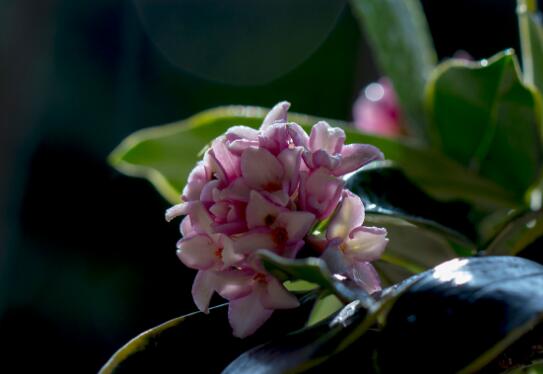
Among the propagation methods for Daphne odora 'Aureomarginata', we mainly use cutting propagation. This method is simple and easy to learn, relatively labor-saving and effort-saving to carry out, and most importantly, it also has a high survival rate. Therefore, cutting propagation is also the main propagation method for Daphne odora 'Aureomarginata'.
1. Cutting time, March to April
When preparing to carry out cutting propagation of Daphne odora 'Aureomarginata', choosing the right time period is very important. Generally, carrying out cuttings from late March to early April is best, because the climate in these two seasons is more suitable for its growth, and the success rate of cuttings will also be greatly improved.
2. Substrate selection, loose, fertile and well-draining
Before carrying out cutting propagation of Daphne odora 'Aureomarginata', we first need to choose a substrate. Generally, it is best to choose fertile, loose, humus-rich, acidic leaf mold soil. This kind of soil has relatively good drainage and air permeability, can be more conducive to its growth, and soil with good drainage is also less likely to cause waterlogging.
3. Cutting selection, vigorously growing branches
In selecting cuttings, we should preferably choose branches that grow vigorously, develop well and are free of pests and diseases as cuttings, so the survival rate will be very high. If the branches everyone chooses look very thin and weak, then it can basically be declared a cutting failure, and the survival rate will not be very high.
4. Cutting method, water thoroughly
Speaking of the cutting method for Daphne odora 'Aureomarginata', it is actually very simple. First, we need to apply an appropriate amount of base fertilizer into the soil. After fertilizing, use chopsticks to poke a hole in the soil, then trim off the leaves at the bottom of the cutting and insert it into the soil. Generally, we insert two-thirds and then water. Be careful to water thoroughly, and remember not to let water accumulate.
5. Follow-up management, temperature control
After cutting, we should often keep the soil moist. The ambient temperature is best kept between 20-25°C. At the same time, pay attention to shading, and remember not to expose it to the sun. Generally, with management like this for about 30-35 days, Daphne odora 'Aureomarginata' can take root.
Daphne odora "Aureomarginata" Daphne odora 'Aureomarginata' illustrated guide: how to grow Daphne odora 'Aureomarginata' / how to propagate Daphne odora 'Aureomarginata'
Daphne odora 'Aureomarginata' profileDaphne odora "Aureomarginata"
Cultivation methods and precautions for Daphne odora 'Aureomarginata' Introduction to Daphne odora 'Aureomarginata'
Daphne odora 'Aureomarginata' is a traditional famous flower of our country and also a famous flower of the world. In modern horticultural history, together with Changchun monk's Clivia and Japan's five-needle pine, it was revered as one of the three treasures of horticulture. Daphne odora 'Aureomarginata' is famous worldwide for its four excellences of "color, fragrance, posture and charm", leaving behind the verse "The peony is the national beauty and heavenly fragrance, while among daphne flowers the golden-edged one is best."
Morphological characteristics of Daphne odora 'Aureomarginata'
Daphne odora 'Aureomarginata' is a variety of Daphne odora, an evergreen small shrub of the genus Daphne in the family Thymelaeaceae. It has a fleshy root system. The leaves are densely whorled, elliptical, about 5-6 cm long and 2-3 cm wide. The leaf surface is smooth and thick, leathery, hairless on both sides, dark green on the surface and light green on the underside, with golden-yellow leaf margins and short thick petioles. It produces terminal head-like inflorescences. The perianth is tubular, with four lobes at the upper end about 1.5 cm across. Each flower is composed of dozens of small florets, opening from the outside inward. The flowering period lasts more than two months, with the peak blooming period during the Spring Festival. The flower color is bright purplish-red and the fragrance is rich.
Ecological habits of Daphne odora 'Aureomarginata'
For potted Daphne odora 'Aureomarginata', the potting soil should preferably be fertile, loose, humus-rich and acidic leaf mold soil, mixed with an appropriate amount of river sand and decomposed cake fertilizer. The roots of Daphne odora 'Aureomarginata' are fleshy, so during usual care and management special attention should be paid to controlling watering. If watered too much and the potting soil remains overly wet for a long time, root rot is likely to occur. After rain, the accumulated water in the pot must be poured out promptly.
Although Daphne odora 'Aureomarginata' likes semi-shade, in winter and spring it should be placed in an environment with sunlight. During the growing period, if light is sufficient and fertilizer effects are appropriate, it can make the branches plump and the leaves dark green, with bright flowers and strong fragrance. In summer it should be placed in a well-ventilated cool place, and during hot weather water should be sprayed to lower the temperature. Daphne odora 'Aureomarginata' relatively likes fertilizer. During the growing season, a dilute liquid fertilizer should be applied about once every 10 days. Before and after flowering, a dilute cake fertilizer solution should be applied once each. After Frost's Descent, move it indoors to a sunny place, keep the room temperature at about 5°C, and control watering; the soil moisture content in the pot should be controlled at about 45% so it can safely overwinter. In addition, the branches and trunk of Daphne odora 'Aureomarginata' grow in clusters, have strong sprouting ability, and tolerate pruning, so pruning must be carried out after flowering.
Distribution area of Daphne odora 'Aureomarginata'
Daphne odora 'Aureomarginata' originates from the Yangtze River basin and grows in shaded, humid areas of low mountains and hills. According to the Song Dynasty work Qing Yi Lu, an old monk on Mount Lu sat on a stone bench behind the temple in meditation. In a dream he smelled an unusually intense fragrance, rose joyfully, and searched among the fragrant grass around him. He found a plant with thick leaves and fragrant flowers, transplanted it into a pot, and offered it before the Buddha, naming it "Shui Xiang" (Sleeping Fragrance). Soon the Spring Festival arrived, and the floral fragrance had not diminished. More and more people came to worship the Buddha, and people from all around found it wondrous, all saying it was a gift from the old Buddha and an auspicious sign for the year, so the name was changed to Ruixiang (Auspicious Fragrance). After this, more and more people collected and planted it. Through long ages of artificial cultivation and domestication, and from the parent varieties of Daphne odora that produced bud mutations, the golden-edged Daphne odora 'Aureomarginata' was selected out.
"Daphne odora 'Aureomarginata'" is produced in Dayu County, Ganzhou, Jiangxi. In March 1996, Dayu County was named by the China Specialty Economy Professional Committee and other relevant departments as the country's only "China's Hometown of Daphne".
Cultivation techniques for Daphne odora 'Aureomarginata'
Daphne odora 'Aureomarginata' is the first-choice variety for potted flowers because of its pure flowers and rich fragrance. The propagation method for Daphne odora 'Aureomarginata' mainly uses old-branch and tender-branch cuttings. This method has the characteristics of a high survival rate, being simple and easy to learn, and saving labor and effort. It is briefly introduced as follows:
1. Collection of cuttings
Old-branch cuttings are taken before the plants sprout in spring, generally from late March to early April, choosing robust 1-year-old thick branches that grow vigorously, develop well, are free of pests and diseases, and have plump buds. Tender-branch cuttings are taken from June to July using robust branches of the current year.
2. Cutting trimming and treatment
Daphne odora 'Aureomarginata' is generally cut according to the upper, middle and lower parts of the mother stem, with middle and upper branches being best and shoot tips the worst. Old-branch cuttings require a thickness of more than 1 cm and are cut to a length of 15 cm. Tender-branch cuttings are generally cut to a length of 10-12 cm, retaining only 2-3 leaves at the top of the branch and cutting off all the rest. If the retained leaves are too large, in order to reduce transpiration, 1/3-1/2 should also be cut off each retained leaf. After cutting the cuttings, place them in a 0.5%-5% sugar solution and soak for 10-12 days, then take them out for cutting.
3. Cutting technique
Choose a cutting substrate with good permeability and a pH value of about 5, generally using water-retaining fine sandy soil or vermiculite. Before cutting, use a sharp small knife to split the base of the cutting from the middle to a length of 1.5-2 cm, then immediately insert a small stone in the middle so it does not close, increasing the contact area between the base of the cutting and the substrate and helping the cutting take root. Insert 1/3-1/2 of the cutting into the substrate and press the substrate firm.
4. Management after cutting
After cutting, often keep the cutting soil moist and promptly supply the water needed for the cuttings to take root, keeping the temperature at 20-25°C. At the beginning of the seedling stage, frequently water with a small amount of clean water, just enough to penetrate the substrate. Never use muddy water or heavy flooding irrigation, to prevent young leaves from getting muddy and suffering scorch damage. At the same time, pay attention to shading and avoid direct sunlight. The root system of Daphne odora 'Aureomarginata' has a fragrance, so ants and earthworms should be prevented from eating it. Generally, cuttings can take root in 30-35 days.
Disease control of Daphne odora 'Aureomarginata': control of stem rot
Daphne odora 'Aureomarginata' is a precious flower and tree loved by the public, but it is delicate and difficult to grow. The main reason is stem rot.
Symptoms: This disease is not easy to notice in the early stage. The first part to show symptoms is the root crown. The phloem of the diseased part turns black and rots, gradually developing toward the roots. However, the xylem appears normal, the leaves remain green and normal, and do not fall off until death, with no disease symptoms found on the surface.
2. Disease characteristics: The onset period of this disease is from June to October, with July to September as the peak period. At this time it is exactly the period of high temperature and strong light. Observation shows that the disease incidence rate for plants placed in sunlight all day was 37.5%, while for those shaded from sunlight from 9:00 a.m. to 4:00 p.m., it was only 5%.
Diseased plants are mainly 1-year-old to 5-year-old plants that grow rapidly in spring and have abundant leaves, and the disease is highly contagious.
Regarding the growing soil, the disease incidence rate for potting soil that dries easily was significantly higher than for soil with better water retention. The disease incidence rate of soil with 80% leaf mold content and 20% river sand was significantly lower than that of soil with equal amounts of leaf mold and river sand. Soil with 100% burnt manure soil had a lower disease incidence rate than soil with a high sand content.
Control methods: Based on the disease characteristics of Daphne odora 'Aureomarginata' and three years of practice, the control of stem rot can begin from five aspects:
1. Selection of growing soil: Choose humus-rich soil with both good drainage and water retention. This kind of soil can be obtained by directly digging surface leaf mold from mountain forest areas and then mixing in a small amount of river sand and decomposed cake fertilizer, or by choosing garden soil and adding some leaf mold and a small amount of river sand.
Daphne odora 'Aureomarginata' cultivated in a shed
Decomposed cake fertilizer is also acceptable.
2. Selection of the placement environment for potted flowers: Daphne odora 'Aureomarginata' is a plant that likes a cool, ventilated environment. From June to October, from 9 a.m. to 4 p.m., potted flowers should be placed in a cool place. Or a shade frame can be used to solve this.
3. Timely pruning: For plants that grow vigorously in spring and have abundant branches and leaves, carry out pinching and leaf removal, and thin out excessive new shoots, so as to control overly rapid water evaporation.
4. Water management: In summer and autumn, the soil must be kept moist, better wet than dry, to ensure the plant's water supply.
5. Handling of diseased plants: Once a plant becomes diseased, the diseased plant together with the pot soil should immediately be disposed of, and the flower pot should be rinsed and disinfected. Other unaffected plants should be watered and washed for disinfection with 500 times carbendazim to prevent the disease from spreading.
In short, for stem rot, comprehensive control should be carried out, with prevention as the main approach. For 1-year-old to 5-year-old plants, on the basis of choosing good growing soil and doing good summer and autumn shading work, stem rot can generally be controlled relatively well. [5]
Control of leaf spot disease
Symptoms: At the beginning of the disease, small chlorotic round spots appear on the leaf surface, which later expand into relatively large nearly circular lesions. The lesion size is variable and there is black mold. The onset time is from April to September. The lower leaves of the plant are affected first, gradually developing to the middle and upper leaves, and in severe cases the leaves all fall off, growth weakens, and the entire plant dies.
Control methods: Water reasonably, prevent waterlogging, strengthen ventilation, apply more decomposed liquid fertilizer rich in phosphorus and potassium, promptly clean up diseased plant fallen leaves and burn them in a centralized manner. You can also spray 1% Bordeaux mixture in early spring for prevention. During the onset period, use mancozeb, carbendazim, or thiophanate-methyl at 500-800 times and spray alternately on the leaf surface every 7-10 days, for 3-4 consecutive rounds.
Control of wilt disease
Symptoms: At the beginning of the disease, old leaves turn yellow, then brown and dry, gradually spreading upward to the older leaves above. The onset time is mostly when spring temperatures rise. The pathogen invades from root wounds, and the disease is especially severe in hot, rainy seasons. Generally, from onset to death, the disease course is usually 15-45 days, and the harmfulness is extremely great.
Control methods: Cultivate reasonably. When disease is found, promptly clean up diseased leaves and branches and destroy them. Before potting, disinfect the soil with formalin solution or quintozene. In the early stage of the disease, irrigate the roots with carbendazim or benlate at 800-**** times solution, once a week, for 5-6 consecutive irrigations, with obvious effect.
Medicinal or dietary therapeutic value of Daphne odora 'Aureomarginata'
The medical information and healthy dietary therapy information on Hudhua.com is for reference only and cannot be used as a basis for diagnosis or medical treatment. Any health problems should be consulted with professional medical personnel, and treatment of any disease should follow medical advice.
Ultimate flower-protecting mission: To love yourself, start from reality and strictly follow medical advice. For illness, do not be careless, do not delay, do not give up hope, face it bravely, warm the silent world with love, and care for the flower field in your heart with your heart.
Medicinal value
Daphne odora 'Aureomarginata' contains daphnin. Its roots, stems, leaves and flowers can all be used as medicine. It is sweet in nature and non-toxic, and has the effects of clearing heat and detoxifying, reducing inflammation and relieving pain, promoting blood circulation and removing blood stasis, and dispersing nodules. It has been included in the compilation of the Dictionary of Traditional Chinese Medicine.
Dayu County, the hometown of Chinese daphne, has a long history of cultivating Daphne odora 'Aureomarginata' and is the main production base of Daphne odora 'Aureomarginata' in our country. The Daphne odora 'Aureomarginata' produced by this county is good in quality and large in quantity. Every year it supplies Daphne odora 'Aureomarginata' seedlings to all parts of the country and sells hundreds of thousands of potted flowering plants annually, and is also exported to Southeast Asia.
The economic and social benefits are both very good. Many farmers have escaped poverty and become rich by growing Daphne odora 'Aureomarginata', and many laid-off workers have found a way to re-employment by growing flowers, with economic income greatly increased compared with when they were employed. Because the development of the flower industry has also driven the prosperity of related industries, it has thus promoted the overall economic development of Dayu County.
According to the compilation of the "Dictionary of Traditional Chinese Medicine", the roots, stems, leaves and flowers can all be used as medicine. It is sweet in nature and non-toxic, and has the functions of clearing heat and detoxifying, reducing inflammation and swelling, and promoting blood circulation and removing blood stasis.
In folk usage, fresh leaves are often pounded and used to treat sore throat, toothache, blood boils and hot furuncles, and are used to soak flowers in wine for applying to unnamed swellings and toxins and various skin diseases.
The main medicinal component of Daphne odora 'Aureomarginata' is "daphnin".
Its flowers, leaves, bark and roots can all be used as medicine. It is sweet, cold and non-toxic. It has the effects of reducing inflammation and detoxifying, promoting blood circulation and promoting urination, reducing swelling and relieving pain, and dispersing blood and invigorating stasis. It can treat unnamed swellings and toxins, boils, mastitis, ulcers, toothache and sore throat, stomach problems, etc.
The methods are as follows:
1. Pick several leaves of Daphne odora 'Aureomarginata', pound them, and apply them to the affected area. They can treat blood disorders, ulcers, unnamed swellings and toxins, mastitis, etc. Several applications can produce results.
2. Daphne odora 'Aureomarginata' is a deciduous evergreen shrub. In spring, after new leaves grow out, the old leaves naturally fall off. Wash the naturally fallen leaves, dry them in the sun, and soak them in white liquor for later use. If there is unnamed swelling and pain, poisonous mosquito or insect bites, boils, etc., apply it to the affected area several times a day. If there is toothache, use a cotton ball dipped in the medicinal liquor and bite it with the painful tooth to relieve pain.
3. After the petals of Daphne odora 'Aureomarginata' naturally fall off, pick them up, dry them in the sun, and soak them in sesame oil or tea oil. Apart from toothache, the usage is as above.
Uses and purposes of Daphne odora 'Aureomarginata': ornamental value
Daphne odora 'Aureomarginata' blooms during the Spring Festival, with a flowering period of 60 days. Its posture is graceful and unrestrained, naturally curved and extended, with neat green leaves edged in gold, yellow like gold and green like jade. Its jade leaves with golden edges remain luxuriant all year round.
The flowering period coincides with the celebration of the New Spring Festival. The fragrance of the flowers accompanies the fragrance of wine. Its flowers bloom all over the branches in clusters and bunches, flourishing like brocade, with a rich, clear fragrance, adding an auspicious sign to the New Spring.
Daphne odora 'Aureomarginata' is a traditional famous flower of our country and also a famous flower of the world. In modern horticultural history, together with Changchun monk's Clivia and Japan's five-needle pine, it was revered as one of the three treasures of horticulture.
First, it has a beautiful tree posture, vigorous branches, natural curves and extension, graceful fullness, elegant charm, inner spirit, and a free and easy beautiful posture full of vitality.
Second, golden pieces and jade leaves, with leaf margins edged in gold, neat and bright, verdant and deep green, luxuriant all year round, and enjoyable in all four seasons.
Third, it blooms at the right time. Its peak flowering period is right at the beginning of the New Spring. With an auspicious sign, it adds joy to people celebrating the New Spring and welcoming and seeing off guests. The fragrance of the flowers accompanies the fragrance of wine, making it even more full of joyful atmosphere.
Fourth, it has a long flowering period. From bud formation, it changes from green to purplish-red. It opens tube by tube from the outside inward, flourishing like brocade, with a flowering period of more than two months.
Fifth, its fragrance is rich, overflowing in all directions, filling the hall with fragrance and refreshing the heart. It has the momentum of gathering the essence of all flowers and the spirit of all fragrances. It is indeed a precious flower with excellent posture, color, fragrance and charm, a superior New Year flower, and is deeply favored by the vast number of flower lovers; more and more people buy golden-edged Daphne odora 'Aureomarginata' for the New Year, and it has become a new fashion.
Cultural background of Daphne odora 'Aureomarginata': origin of the flower name
There is also a legend about the origin of the flower name "Daphne odora 'Aureomarginata'": In early years, a monk traveled to Dayu. Feeling tired, he rested leaning on a stone. In his sleep he smelled waves of floral fragrance, very rich. After waking, the floral fragrance was indeed still there, so he went to look for it and indeed found it, and then named the flower "Shui Xiang" (Sleeping Fragrance). Later, some people thought the character "shui" meaning sleep was inelegant both when spoken and heard, so they changed the character "shui" to "rui".
The flower language of Daphne odora 'Aureomarginata'
Daphne odora 'Aureomarginata' is famous worldwide for its four excellences of "color, fragrance, posture and charm". It opens around the Spring Festival, with branches full of clusters and bunches, flourishing like brocade, with a rich, clear fragrance, adding an auspicious sign to the New Spring, and thus becoming an object that adds auspiciousness and good fortune to ordinary households during the Spring Festival. Therefore, the flower language of Daphne odora 'Aureomarginata' is: auspiciousness and good fortune.
Pictures of Daphne odora 'Aureomarginata'
Production guide for potted Daphne odora 'Aureomarginata'
Daphne odora 'Aureomarginata' is a small shrub of the genus Daphne in the family Thymelaeaceae. The leaves are alternate, lanceolate, leathery, dark green and glossy, with yellow leaf margins, hence the name Daphne odora 'Aureomarginata'. It blooms at the top of the branches, forming head-like inflorescences, with more than ten flowers per branch. The perianth is tubular, the flower buds are heart-shaped, and the flower end is four-lobed. When the whole branch opens it looks like a “hydrangea”. The fragrance is very rich and aromatic. It blooms during the Spring Festival, and the flowering period can reach 30 to 40 days.
Propagation methods
Daphne odora 'Aureomarginata' does not set seed after flowering. Propagation mainly uses the cutting method, which can produce large quantities of high-quality seedlings with a high survival rate and fast rooting. As long as the branches are robust, the buds are plump, and there are no pests or diseases, they can all be used as cuttings.
Cutting time: Cuttings can be taken from March to November, among which May to June is the best cutting time.
The soil should be loose and have good heat preservation, moisture retention and air permeability.
For the mother trees for cuttings, 1-year-old to 3-year-old seedlings are best. Cuttings should be selected from current-year branches that have already become semi-lignified. Choose thick, plump-axillary-bud, pest- and disease-free cuttings, cut them to about 6 cm long, and retain 4 to 8 leaves. Cut branches should be treated immediately and should not be left for too long, to avoid water loss and affecting the survival rate.
Cutting treatment: Dip rooting solution directly onto the base of the trimmed cutting. After the solution dries, insert it immediately into the substrate. After cutting, water thoroughly and set up a shading net. Within a few days after cutting, keep the substrate moist. Too wet easily rots the cortex, and too dry easily causes the cuttings to lose water and wither. About 20 days after cutting, callus tissue forms, and rooting begins after about one month. When the root hairs have grown to more than 85% and new leaves have sprouted, they can be potted and transplanted.
Potting and planting
Flower pot The selection of specifications and types should be determined according to the plant's diameter at breast height, plant height and crown width. The principle is small pots for small seedlings and large pots for large seedlings, and repotting in a timely manner as the plant grows.
Potting soil Daphne odora 'Aureomarginata' is suitable for growing in fertile, moist, well-draining acidic soil. It fears rain, dreads waterlogging, and avoids saline-alkaline conditions. Soil has a fundamental relationship with the growth of Daphne odora 'Aureomarginata', because it needs various nutrients and very good air permeability and must not have bacteria. Daphne odora 'Aureomarginata' is a fleshy-rooted aromatic plant, and the harm from bacteria is quite serious. If one is not careful, the roots rot or stem rot occurs, so the requirements for soil are very strict. The potting soil should mainly be neutral, slightly acidic sandy soil, and can be mixed with 40% leaf mold, pine needle soil, peat soil, rice husk ash and the like. The pH value should be between 6 and 7. If it is greater than 7, acetic acid or ferrous sulfate can be used to adjust it and make it weakly acidic.
Potting Spring and autumn are the most suitable periods for transplanting and potting. The root system of Daphne odora 'Aureomarginata' tastes sweet and is prone to pest damage, so 0.5 g of carbofuran should be placed at the bottom of the pot when transplanting and potting. Take it out from the cutting bed, trying not to damage the roots; if the root hairs are too long, a small amount can be trimmed off. When transplanting, first cover the drainage hole at the bottom of the pot with a piece of plastic window screen, and cover it with a small amount of stones to facilitate drainage and air permeability. Fill in half of the substrate, then place the seedling in the center of the pot so that the seedling stands upright. Finally, fill the substrate around the inside of the pot and press it firm. After filling the substrate, leave two or three centimeters at the rim of the pot to facilitate watering.
Daily management
Cultivation site Daphne odora 'Aureomarginata' is a plant that likes a cool, ventilated environment. The cultivation site should preferably be chosen in a place with light, a relatively good water source, good ventilation conditions, no waterlogging, no water quality pollution, and convenient transportation, and single-span greenhouses or multi-span greenhouses should be set up, plus a shading net with a shading rate of 65%.
Watering Daphne odora 'Aureomarginata' likes to grow in a moist soil environment without waterlogging. The suitable soil moisture is about 75%. A soil moisture of 20% easily causes root death; if the potting soil is moist for a long time or waterlogged, the soil aeration conditions are poor, and a soil moisture of 90% will cause root rot and disease.
At the turn of spring and summer there is a lot of rainy weather and high air humidity, so attention should be paid to drainage and preventing long-term rain exposure. In summer, temperatures are high, evaporation is large, and the potting soil dries easily, so water in the morning and evening. In spring and autumn, water in the morning or afternoon, and in winter it is better to water at noon. Maintaining suitable soil moisture for watering is the key to the normal growth and development of Daphne odora 'Aureomarginata'.
Watering should follow the principle of watering when dry and stopping when wet. Especially in summer, when temperatures are high and the air is dry, Daphne odora 'Aureomarginata' is in a semi-dormant state, so the potting soil should be kept slightly dry. However, the relative air humidity needs to be slightly higher, so the leaves need to be misted with water 1 to 2 times a day, and water should be sprinkled around to increase humidity. At Mid-Autumn, water less to stop summer shoots from growing and promote flower bud differentiation.
Fertilizer In the care of Daphne odora 'Aureomarginata', phosphorus and potassium fertilizers should be applied, and nitrogen-based fertilizers such as urea should be avoided, so as to prevent the golden edges from degrading. Fertilizing potted Daphne odora 'Aureomarginata' should be “light fertilizer applied frequently, small meals more often”, and should mainly use liquid fertilizer. At the seedling stage, fertilizer should be light and applied frequently. At the medium seedling stage, apply more nitrogen and potassium fertilizer in early spring, once every 10 to 15 days; from late May to the end of June, mainly apply phosphorus and potassium fertilizer; in the high-temperature season from July to August, apply as little as possible or no fertilizer; from late August to the end of October, apply nitrogen-phosphorus-potassium compound fertilizer; in December when the flower buds swell, apply phosphorus and potassium fertilizer 1 to 2 times, which can make the flowers large, good in color, rich in fragrance and long in flowering period; fertilizing should be stopped during the flowering period. Generally speaking, the fertilizer concentration at the medium seedling stage should be 10% to 15%. At the large seedling stage, it is enough to apply fertilizer several times respectively in early spring, early summer and late autumn.
Daphne odora 'Aureomarginata' is not tolerant of concentrated fertilizer. When planting, use decomposed cake fertilizer plus superphosphate as base fertilizer, which can basically meet the requirements of the growth stage. Fertilizing during the dormant period is not easily absorbed by the plant and easily causes the phenomena of not flowering and not producing new shoots in the same year.
After buds are visible, spray 1000-times diluted potassium dihydrogen phosphate liquid fertilizer 2 to 3 times a month, adhere to the principle of light fertilizer applied frequently, never apply undecomposed organic fertilizer, and apply less urea. All fertilizing times should be chosen in the morning and evening or in cool weather.
Light Daphne odora 'Aureomarginata' is a semi-shade plant and avoids strong sunlight exposure. In light treatment, different measures need to be taken for different seedlings.
When small seedlings are potted, it is exactly the hot weather stage. After potting, they need to be immediately shaded and cooled with an 80% shading net. The shading time is from 9 a.m. to 5 p.m. every day. On cloudy and rainy days and at night, shading is not needed. After the weather becomes cool in late October, shading is not needed.
Mother plants used for cuttings are the same as small seedlings. From mid-May when the weather becomes hot until mid-October when the weather becomes cool, they need to be shaded and cooled with a shading net from 9 a.m. to 5 p.m. every day. On cloudy and rainy days and at night, shading is not needed.
For commercial seedlings used for sale, from mid-May they need all-weather shading with a 90% shading net, in order to control them to stop vegetative growth and enter the reproductive growth stage, and at the same time it can also play a role in cooling and controlling flowering. The shading time is from mid-May until about one week before year-end market sale. Note that it is necessary to ensure the leaves do not wilt, turn yellow or fall off due to excessive shading. If cloudy and rainy days occur in between, the shading net can also be appropriately opened.
Temperature The optimum temperature for Daphne odora 'Aureomarginata' is 15°C to 25°C. It both likes warmth and is not tolerant of high temperatures, muggy heat, and long drought and harsh environments. Therefore, special attention should be paid to daily care and management. In summer, when the temperature exceeds 35°C, measures such as appropriate shading and water spraying and ventilation should be taken. In winter, the ambient temperature should be maintained not lower than 3°C, otherwise it is prone to freezing and leaf drop. Daphne odora 'Aureomarginata' needs a temperature above 12°C to bloom. To extend the flowering period, the shading net in the greenhouse should be opened in time before the cold wave arrives in early winter to maintain a relatively high ambient temperature.
Pruning From small seedlings to large seedlings, through measures such as pinching, bud removal, branch thinning, tying and branch pulling, make them sprout early, grow more branches, and form early a tree shape with a large crown, reasonable branch arrangement, luxuriant branches and leaves, many and large flowers, and relatively high ornamental value.
Shaping of small seedlings Mainly pinching and bud removal, cultivating 2 to 3 branches and 6 to 9 secondary branches.
Shaping of medium seedlings Through pinching and bud removal, cultivate more sturdy branch tips and expand the branch crown, so that more flowers bloom during the Spring Festival.
Pest and disease control
Anthracnose At the beginning, yellow-brown spots appear on the leaves. Gradually the leaves turn yellow and dry up, causing the leaves to gradually fall off. In severe cases it causes the plant to dry up and die. You can choose 800-times diluted thiophanate-methyl for spraying treatment. Generally, spray once every 3 days, and it can recover after 3 consecutive times.
Stem rot This disease is caused by the stem shrinking and drying up, blocking the transport of water and nutrients and causing the leaves to shrink and dry up. You can use 800-times diluted avermectin for spraying treatment, spraying once every 3 days, and 3 to 4 consecutive times is enough.
Root rot At first, the leaves of the affected plant turn yellow and gradually shrink and dry up, mainly caused by root rot. You can use carbendazim or 800-times diluted thiophanate-methyl for spraying treatment, usually spraying once every 3 days, and it can recover after two consecutive times. For other plants with more serious conditions, promptly remove them from the greenhouse to avoid infecting other plants.
Aphids This is one of the main pests harming Daphne odora 'Aureomarginata'. It occurs from March to November each year, and is more serious in spring and autumn when the plant sprouts and sends out new branches. Aphids can transmit viral diseases, so attention should be paid to the cleanliness and hygiene of the cultivation site, and weeds should be removed promptly so that they do not become a habitat for overwintering aphids; once live insects cause serious damage, pesticide should be sprayed promptly to kill them. Menazon 40% EC or 10% imidacloprid-thiamethoxam 1500x solution, or 25% buprofezin 1000x solution, can all kill them.
Scale insects There are many kinds of scale insects. The one harming Daphne odora 'Aureomarginata' is a brown soft scale, which mostly occurs from May to October and is a pest difficult to catch and kill. Therefore, the ventilation and light penetration of the plants should be improved, potted plants should not be placed too densely, a reasonable spacing between plants and rows should be ensured, and observation and inspection of the seedlings should be strengthened. When scale insect damage is found on individual branches and leaves, immediately spray with 2.5% scale insect killer emulsifiable oil 1000x solution to kill them.
Bud-boring worms These are pests harming the leaf bud cores of Daphne odora 'Aureomarginata'. They mostly occur during the sprouting of new buds in spring and autumn, with serious damage in spring. Therefore, before the leaf buds sprout in spring and autumn, start spraying with 2.5% deltamethrin 2000x solution, once every 7 to 10 days, continuously until the new branches mature, to prevent the harm of this pest. After finding branches that bud-boring worms have bored into, they should be cut off promptly, so that the plant can sprout new buds again and grow new branches.
Nematodes The root system of Daphne odora is sweet in taste and is prone to nematode damage, causing poor plant growth, yellowing leaves, reduced leaf quantity, and ultimately plant death. When transplanting seedlings into pots, place 0.5 g of carbofuran at the bottom of the pot to reduce the occurrence of nematodes. During the plant's growing period, fenamiphos or carbofuran can also be used to drench the roots to kill nematodes.
Production scene of Daphne odora 'Aureomarginata' (The author's affiliation is Jiangsu Dongtai Sancang Modern Agriculture Industrial Park)