How to propagate anthurium? Explanation of seed sowing, cutting and division methods
Anthurium is a fairly common flowering plant in people's lives, with high ornamental value, and it is grown in many regions of our country. However, as more people grow anthurium, questions about its propagation have also drawn concern, so how do you propagate anthurium? What are the propagation methods for anthurium? Below, the editor will walk everyone through it.
1. How to propagate anthurium: sowing/cutting/division
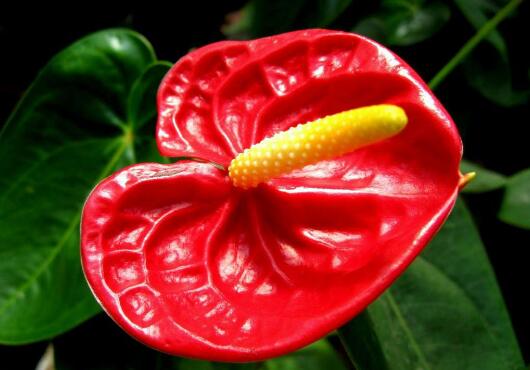
Speaking of how to propagate anthurium, there are actually quite a few methods: seed sowing propagation, cutting propagation and division propagation, three methods in total. As long as we master the correct operational details, the survival rates of all three propagation methods are very high. Below are detailed introductions to the three methods; let's take a look.
2. Propagation methods for anthurium
Seed sowing propagation
1. Seed germination stimulation
Among the propagation methods for anthurium, seed sowing propagation is a relatively commonly used one. Before sowing, we need to first stimulate the seeds to germinate. We can soak the anthurium seeds in warm water for 1-2 days, and when the seeds begin to absorb water and swell, take them out and plant them.
2. Sowing method
When sowing anthurium, it is best to choose spring, because the climate is more suitable, which will also raise the survival rate considerably. First, we can evenly scatter the anthurium seeds on the surface of the soil, then cover them with 1-2cm of soil and water them; be careful to water thoroughly in one go. Anthurium propagated this way generally needs 3-4 years of cultivation before it blooms.
Cutting propagation
1. Selection of cuttings
Before carrying out cutting propagation, we need to select the cuttings, which is a very important step and has a great influence on the survival rate of the cuttings. Generally, it is best to choose anthurium branches that are relatively robust and free of pests and diseases as cuttings, so the survival rate will be very high. If we choose branches that already look rather slender, then it is very difficult for them to survive.
2. Cutting method
Among the propagation methods for anthurium, cutting propagation is relatively simple. When cutting, we can first use a chopstick to poke a hole in the potting soil, then insert the cutting into it, and afterwards water thoroughly and quietly wait for it to take root; this operation can avoid damage to the cutting and is very practical.
Division propagation
For anthurium division propagation, we can generally combine it with repotting, and it is best to choose spring for the timing. First, we can select a daughter plant with more than 3 leaves, then cut it off from the mother plant together with stem and roots, wrap it with sphagnum moss, and transplant it into a pot. After about 3-4 weeks, once it has taken root and survived, replant it. Anthurium propagated this way can produce flowers after 1 year of cultivation.
How to propagate anthurium: seed sowing, cutting and division propagation methods
How to propagate anthurium: there are actually many propagation methods for anthurium, and it can be propagated by seed sowing, cutting, division, air layering, tissue culture and other propagation methods. Flower lovers who want to turn one pot into many pots can propagate using the following methods to increase the number of anthuriums.
Anthurium propagation method 1: seed sowing propagation methodAnthurium has poor natural pollination and must be pollinated by hand. For seed propagation, pollination must be done around noon on a sunny day. The seeds mature in about 9 months; the berry is pale red, the size of a mung bean, and each fruit contains 2-4 seeds. After the seeds mature, they should be sown immediately after collection. The sowing medium is usually finely cut sphagnum.
2. Cutting propagation methodIt can be applied to plants whose leaves are no longer lush. Remove all the leaves from the old stem, being careful not to damage the buds, and insert it vertically into sandy soil, basically covering it entirely. Keep the bottom temperature at 25-35°C, and after a few months new roots and leaves will emerge.
3. Division propagation methodIt can be carried out in combination with repotting. It can be done in all four seasons. Division propagation is mostly done when repotting. During the operation, carefully separate the suckering plants and pot them separately. However, because it has few suckers, each plant produces only 1-2 sucker seedlings after 2-3 years of planting, so the propagation coefficient is low.
4. Air layering propagation methodMake a wound at an appropriate spot on a side branch of an old perennial plant, wrap it with moist moss, tie plastic sheeting on the outside, and regularly inject water to keep the inside moist. After a certain period, it can be opened to observe the rooting situation. After the root system has developed well, cut it off from the mother plant and plant it for cultivation. Keep the room temperature at around 25°C; within a week the seeds sprout, and within a month the seedlings emerge and spread leaves. When the seedlings are about 5 cm tall, they can be potted. When potting, do not press the soil too firmly, so as not to hinder air circulation. The cultivation substrate should have good water permeability. The seedlings grow slowly. During the cultivation process, especially avoid high temperatures; in summer in particular, place them in a ventilated and shaded spot, and frequently spray the leaf surfaces with clean water.
5. Tissue culture propagation methodIt is currently widely used at home and abroad. The advantages of this method are a large propagation coefficient, high seedling quality, and relatively uniform and consistent growth.
How to propagate anthurium
Division propagation
Division propagation is also the most commonly used way to propagate anthurium. It is generally done in spring. Select daughter plants, requiring each plant to have at least 3 leaves. Then, cut off the rhizomes, wrap them in sphagnum moss, and plant them in a new flower pot. In about 3 to 4 weeks, new roots will grow, at which point they can be planted in place, and they can bloom in about 1 year.
Cutting propagation
Cutting propagation is generally mostly used for varieties with relatively upright stems. Similarly, first place them in sphagnum moss and tie them in small bundles, but you must wait until the cuttings have grown new roots before moving them into flower pots for planting.
Seed sowing propagation
The best time for seed sowing propagation is from May to September, which is also the season when anthurium grows most vigorously. Select plump and intact seeds and first place them in river sand, with the river sand about 0.6 cm deep. The soil must always be kept at a certain level of moisture, which is especially beneficial for the sprouting of young buds; in about half a month, young buds will emerge. When the young buds gradually grow into seedlings and each has grown 5 to 6 small leaves, they can be transplanted into flower pots to complete the planting in place.
If grown in the open ground, flowering generally starts in summer. At this time, if its growing environment is well managed, it can achieve the effect of blooming year-round.
After learning these methods, flower lovers will surely be much more confident when cultivating this flower, so go and try it yourself!