What to Do When Cineraria Leaves Turn Yellow: 4 Causes and Solutions / Improper Water and Fertilizer Are Key
Cineraria, also known as florist's cineraria, has full flower heads and rich colors, making it a highly ornamental flower. In daily life, many people keep a pot of cineraria at home, just waiting for it to bloom. But as they care for it, many flower lovers find that their cineraria leaves have turned yellow, which ruins the ornamental appeal of the whole plant. So what should you do when cineraria leaves turn yellow? Today, the editor will help you solve this problem.
1. What to Do When Cineraria Leaves Turn Yellow: Find the Cause
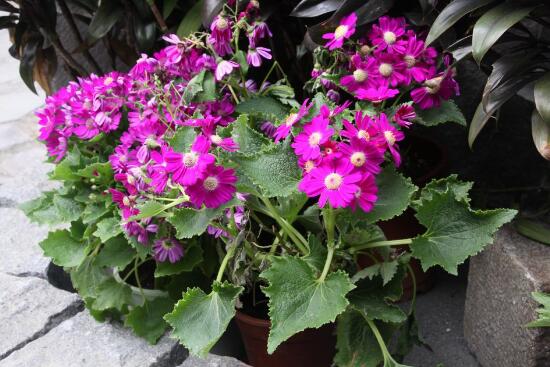
As an ornamental flower, cineraria is not difficult to grow, and with a little care it can be kept very well. But beginners say they did not follow the care methods at all, and as a result the leaves turned yellow. As for what to do when cineraria leaves turn yellow, you should first calmly find the cause of the yellowing, then address it accordingly. For this, the editor has summarized 5 points and attached solutions. Let's read on.
2. Causes of Yellowing Cineraria Leaves and Solutions
1. Sudden Environmental Change
There are actually many causes of yellowing cineraria leaves, but the first thing to consider should be environmental factors. Nowadays, when keeping cineraria, everyone likes to buy directly online, but this can easily lead to a large regional difference, and the plant cannot adapt for a time and shows symptoms of yellow leaves.
Solution: If it is a new plant showing yellow leaf symptoms, it is basically caused by environmental maladjustment. For this, flower lovers need not worry. According to the growth habits of cineraria, keep it in an environment it likes, and after a period of care suited to its habits, it will recover.
2. Improper Watering
Overwatering: Cineraria likes a moist environment, but once it is watered too much, causing waterlogging in the pot soil and poor soil aeration, some of its fibrous roots will rot, and the symptom shown is dull yellow leaves without luster. Solution: Stop watering, then let the pot soil dry out, or more simply, directly change the pot soil. After a period of time, the plant will recover.
Underwatering: In addition to overwatering, long-term lack of water or too little watering can also cause cineraria leaves to turn yellow. The symptoms are: although the new leaves have normal color, the lower leaves gradually dry, turn yellow, fall off, and age from the bottom upward. Solution: At this point we only need to increase the frequency of watering. But note that the amount of water each time should not be too much, to avoid waterlogging and harming the roots of the cineraria.
3. Improper Fertilization
Having discussed watering, let's talk about fertilization, which is also one of the causes of yellowing cineraria leaves. It is understood that cineraria likes fertilizer, and proper fertilization can make it grow better. However, once fertilization is improper and causes a deficiency of some elements, it will also cause yellow leaves. The specific symptoms and solutions are as follows:
① Boron deficiency: When fertilizing cineraria, if boron is lacking, the internodes at the top of the plant will shorten, becoming fragile and easy to break, and the leaves that grow will turn yellow. Solution: Reduce it in time, and spray some borax aqueous solution once a week for 2-3 consecutive times to improve it.
② Calcium deficiency: If the cineraria plant lacks calcium, the leaf edges will also turn yellow, and at noon they will curl outward, only recovering by evening. Solution: When you find symptoms of calcium deficiency in cineraria, you should apply some organic fertilizer, water immediately after fertilizing, and spray calcium chloride solution once every 10 days, 2 sprays in total.
③ Potassium deficiency: If the leaf edges of cineraria change from brown to scorched yellow, it may be caused by potassium deficiency. Solution: Apply an appropriate amount of potassium sulfate at the roots in time, and spray some monopotassium phosphate solution on the plant leaves, which can help it recover and grow normally.
④ Magnesium deficiency: In addition to the above element deficiencies, a lack of magnesium will also cause cineraria leaves to turn yellow. Solution: Spray some magnesium sulfate solution 2-3 times, which can restore growth.
4. Pests and Diseases
Indoor cultivation is not the same as outdoors. During the growth of cineraria, it will inevitably be troubled by pests and diseases, such as infection with leaf blight or scale insects, which is also one of the causes of yellowing cineraria leaves. Solution: Refer to cineraria pest and disease control, and spray relevant agents for prevention and treatment.
What to Do When Cineraria Leaves Turn Yellow
Yellowing Cineraria Leaves - Boron Deficiency
Boron deficiency can cause cineraria leaves to turn yellow. If cineraria lacks boron, the internodes at the top of the plant will shorten, becoming fragile and easy to break, and new leaves will grow slowly and turn yellow. This is mostly because the soil is relatively dry, affecting the roots' absorption of boron. When this phenomenon generally occurs, you should water in time, and afterward keep the pot soil alternating between dry and moist. You can also spray some borax aqueous solution once a week for 2 or 3 consecutive times to improve it.
Yellowing Cineraria Leaves - Calcium Deficiency
Calcium deficiency sometimes also causes cineraria leaves to turn yellow, generally showing as yellowing leaf edges, with the leaf blades curling outward, and at noon the leaves curl inward and recover by evening. Cineraria calcium deficiency is generally due to a low content of organic fertilizer. At this time, you can apply some organic fertilizer, water immediately after fertilizing, and spray calcium chloride solution once every 10 days, 2 sprays in total.
Yellowing Cineraria Leaves - Potassium Deficiency
When cineraria lacks potassium, the leaf edges change from brown to scorched yellow and continuously expand inward. Generally, applying an appropriate amount of potassium sulfate at the roots and spraying some monopotassium phosphate solution on the cineraria leaves can help it recover and grow normally.
Yellowing Cineraria Leaves - Magnesium Deficiency
A lack of magnesium will also have an adverse effect on cineraria growth, causing its leaf mesophyll to turn yellow and continuously worsening the damage. Spraying some magnesium sulfate solution 2-3 times can restore growth.
Yellowing Cineraria Leaves - Dry Winter Air
When keeping cineraria in winter, it is best to maintain suitable humidity and not let it become too dry. Too much dryness will cause cineraria to wilt, easily turn scorched yellow, and also be prone to disease. Therefore, in winter you must water reasonably.
Causes and Solutions for Dry, Wilted Cineraria Leaves: What Causes Yellowing Cineraria Leaves
Cineraria flowers are very beautiful, colorful, bright, small and delicate, making it a very beautiful ornamental plant. Many flower lovers like to grow potted cineraria to decorate balconies, rooms, or courtyards, but some flower lovers' cineraria shows dry leaves. How can this be solved?
Causes and Solutions for Dry, Wilted Cineraria Leaves
1. Water problem: Cineraria likes moisture and has relatively high humidity requirements. If the pot soil is too dry during cultivation, it will cause the leaves to wilt, and even make the leaves turn yellow and lead to pest problems.
Solution: Therefore, control the amount of watering well, and do not let the pot soil become too dry or waterlogged, so as to avoid affecting normal leaf growth.
2. Temperature problem: Cineraria is suitable for a growing temperature of 15-20°C. If the temperature is too high, branches and leaves will grow excessively and affect flowering. If the temperature is too low, growth will stop and frost damage will occur.
Solution: Be sure to control the temperature well. In spring, summer, and autumn, place it in a cool, ventilated place for care, and pay attention to shading in summer.
3. Light problem: Cineraria is a short-day, light-loving flower. If there is insufficient light, the flowers of cineraria will grow poorly, the stems will become thin and long, and the flower color will be pale and incorrect. If the light is too intense, it will also cause the cineraria leaves to wilt and gradually turn scorched yellow.
Solution: It is best to have 8 hours of sunlight per day, and place it in a well-ventilated place with scattered light for care. In winter, with more rainy and snowy days, even more attention should be paid to preventing insufficient light.
4. Fertilizer problem: Improper control of the amount of fertilizer applied, especially under poor ventilation, can also cause wilted leaves and even death.
Solution: Adjust the amount of fertilizer. Usually, apply a thin fertilizer once every two weeks, mainly phosphorus and potassium fertilizer, with a small amount of nitrogen fertilizer.
What Causes Yellowing Cineraria Leaves
1. Boron and Calcium Deficiency
Boron and calcium deficiency can cause cineraria leaves to turn yellow. If cineraria lacks boron and calcium, the internodes at the top of the plant will shorten, becoming fragile and easy to break, and new leaves will grow slowly and turn yellow. This is mostly because the soil is relatively dry, affecting the roots' absorption of boron. When this phenomenon generally occurs, you should water in time, and afterward keep the pot soil alternating between dry and moist. You can also spray some borax aqueous solution once a week for 2 or 3 consecutive times to improve it.
2. Potassium Deficiency
When cineraria lacks potassium, the leaf edges change from brown to scorched yellow and continuously expand inward. Generally, applying an appropriate amount of potassium sulfate at the roots and spraying some monopotassium phosphate solution on the cineraria leaves can help it recover and grow normally.
3. Dry Winter Air
When keeping cineraria in winter, it is best to maintain suitable humidity and not let it become too dry. Too much dryness will cause cineraria to wilt, easily turn scorched yellow, and also be prone to disease. Therefore, in winter you must water reasonably.
Cineraria Growth Habits
Cineraria likes a warm, moist, and well-ventilated environment. It is not tolerant of high temperatures and fears frost. It is generally cultivated in a warm greenhouse, with the temperature at the leaf tips not lower than 5°C. If the room temperature is too high, it easily grows excessively, causing internodes to elongate and losing commercial value. If the temperature is too low, it affects plant growth and the flowers develop small.
Cineraria is a light-loving plant. With sufficient sunlight, the leaves are thick and dark in color, and the flowers are brightly colored, but excessively strong sunlight will also cause the leaves to curl. Cineraria needs to maintain sufficient moisture, but it must not be too wet; it is best if the leaves are not wilted.
Main Value
Cineraria is one of the main ornamental plants in winter and spring. Its flowers are bright and can be planted in flower beds or arranged in pots in corridors and passageways, giving people a fresh and pleasant feeling.
1. Decorative Application
Cineraria is a greenhouse flower. Potted plants used as indoor displays have an early flowering period, and blooming in the cold winter is especially precious. The flower colors are rich and bright, especially the blue flowers, which shimmer with a velvety luster, elegant and moving.
Cineraria blooms neatly and has full flower shapes. It can be displayed on low indoor stands, or multiple pots can be arranged in rows to form patterns to decorate hotel inner courtyards, meeting venues, or theater forecourts, creating a rich profusion of flowers and a joyful atmosphere. Usually, a single pot can be enjoyed for more than 40 days.
2. Ornamental Value
Cineraria has abundantly bright flower colors; the main cultivated varieties include Europe's “red flower”, Africa's “pink flower”, and the Mediterranean's “red with spots”, etc. Cineraria is one of the main ornamental potted flowers during New Year's Day and the Spring Festival. Cineraria is cross-pollinated, so there are many horticultural varieties.
As mentioned above, if you want the flowers to be beautiful and eye-catching, you need to put in a little more effort, discover problems and deal with them early, and not wait until they are beyond saving to start handling them. If the cineraria you grow is beautiful and elegant, it can not only decorate the room, but also make your mood beautiful!