How to water gloxinia? Water when the soil is dry and let it dry out between waterings, and keep water off the leaves when watering
Gloxinia, a common and beautiful flowering plant, gives an overall impression of being petite and delicate; its emerald green leaves and colorful flowers both present a stunning sight. But this beauty requires careful care from us, especially when it comes to watering, where you cannot make mistakes! So, how do you water gloxinia? Below are the watering methods for gloxinia, let's take a look together!
1. How to water gloxinia grown at home, the method matters
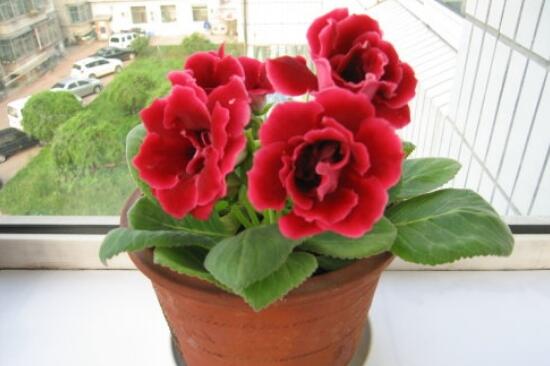
When growing gloxinia, what flower lovers love to do most is water it, but watering is a skill, and neither too much nor too little will do. Water too little and the gloxinia wilts; water too much and the gloxinia's leaves turn yellow, and the leaf surface of gloxinia must not get wet. So how to water gloxinia must follow a method; let's continue reading for the specific requirements.
2. Watering methods for gloxinia
(1) Watering principles
Although the cultivation method for gloxinia is simple, you cannot be careless when it comes to watering. Based on gloxinia's characteristic of liking moisture but fearing waterlogging, watering it should follow the principle of "don't water until dry, and water thoroughly when you do," that is, wait until the potting soil is dry before watering, and water thoroughly. As for how to judge when gloxinia needs watering, there are the following two tricks:
1. Tap the pot: lightly tap the pot of the gloxinia with your finger at the 1/3 point; a relatively crisp sound means there is plenty of moisture in the flower soil, while a dull sound means the pot is dry, and at this point it needs watering.
2. Probe the soil: flower lovers can insert a finger into the potting soil at the 1/3 point to feel it. If it's moist, don't water; if it's dry, or you can't even push your finger in, it's time to water!
(2) Can you water the leaves of gloxinia? No
Unlike other flowers, gloxinia's leaves have fine hairs; once they get droplets of water on them, they rot very easily, so can you water the leaves of gloxinia? Obviously not.
(2) Watering method
Gloxinia likes a moist environment, but it also fears waterlogging, and at the same time its leaves must not get wet. So when watering gloxinia, you must not spray water on the plant's flowers or leaves. The best watering methods are the following two:
1. Water along the edge of the pot
With one hand gently pushing aside the gloxinia's flowers and leaves, use the other hand to slowly and evenly pour water along the rim of the pot toward the inside. To avoid overwatering, after watering you should also dig down 2 cm into the soil to check the soil condition; keeping this spot moist is enough.
2. Water using the soaking method
To prevent water from splashing onto the leaves when watering, it is best to use the soaking method: place the flower pot into a large shallow basin filled with water, and through the soil's suction, water is drawn in from the drainage holes into the pot, and then absorbed by the plant. This has many benefits: it not only prevents overwatering, but also avoids getting the leaves wet, and better meets the plant's water needs.
Overall, gloxinia is not hard to grow, but not hard does not mean it can be grown casually, especially when it comes to watering and fertilizing, where you must not be careless. So, in order for gloxinia to produce beautiful flowers, everyone should master the watering methods for gloxinia, as well as the fertilizing methods for gloxinia, and combine them, and you will get a stunningly beautiful flowering plant.
How to grow gloxinia: cultivation methods and precautions for gloxinia
Because gloxinia seeds are very small, many flower lovers repeatedly fail at sowing. How do you grow gloxinia? Let's take a look together below at the cultivation methods and precautions for gloxinia.
Cultivation methods for gloxinia:
1. Soil: the potting soil can be an equal-parts mix of leaf mold, garden soil, and barnyard manure; or a mix of 3 parts peat soil, 1 part perlite, 1 part river sand and a small amount of base fertilizer; or a mix made from leaf mold, coarse sand and vermiculite.
2. Watering: normally water in moderation; too much can very easily cause the tuber to rot, the leaves to turn yellow and wither, and even the whole plant to die. During the high-temperature period in summer, water 1-2 times a day. Watering should be even, not too dry or too wet, and avoid sudden changes from cold to hot. During the flowering period, rain must be avoided. In winter the potting soil should be a bit drier.
3. Light: gloxinia is a semi-sun plant and likes a semi-shaded environment. Therefore during the growth period, take care to avoid strong direct sunlight; the environment should not be too dry either. In summer, place it under a shade shed in a spot with scattered light and good ventilation for care, otherwise the leaves can very easily wither.
4. Temperature: the suitable growing temperature for gloxinia is 10-25°C. Different seasons have different requirements: from January to October it is 18-25°C; from October to January of the following year it is 10-12°C. A suitable temperature can make the leaves grow lush and emerald green, and the flowers large and vivid.
5. Fertilizing: gloxinia is fond of fertilizer; from leaf unfolding to before flowering, apply a once-a-week diluted, fully rotted organic liquid fertilizer, and after the flower buds form, apply extra phosphorus fertilizer. When fertilizing, never let it soil the leaf surface. After each fertilizing, spray clean water once to keep the leaf surface clean.
6. Pests: gloxinia is prone to leaf mite pests, which make the leaves turn yellow, fall off, and in severe cases cause death. When you find red spider mites on the leaves, you can spray a 1000-fold dilution of 5% hexythiazox emulsifiable concentrate, which gives very good control. Generally spray once every 1 week, for 2-3 times in a row.
Precautions for growing gloxinia:
During the flowering period, take care to avoid rain, and the temperature should not be too high; this can extend the viewing period of the flowers. Pay attention when watering normally: gloxinia's flowers and leaves have fine hairs, and water droplets should not remain on the leaves for a long time, otherwise they will cause the leaves to rot, so never spray water on the flowers or leaves. When fertilizing, also take care not to soil the leaf surface, otherwise it can easily cause the leaves to rot.
During the winter dormant period, the potting soil should be kept a bit drier; if the temperature is below 8°C and the air humidity is high, it will cause the tuber to rot. High temperature and high humidity are unfavorable for plant growth; you need to shade appropriately, and place it under a shade shed in a spot with scattered light and good ventilation for care, otherwise the leaves can very easily wither.
More informationHow to grow gloxinia: cultivation methods and precautions for gloxinia
Gloxinia has a poetic name - Falling Snow Mud; it is very beautiful, as if it came out of a painting. So, do you know how to grow gloxinia? Friends who don't know can follow the editor to learn about the cultivation methods and precautions for gloxinia.
Before planting gloxinia, let's first learn about its morphological characteristics:
Perennial herb, with a flattened spherical tuber, an extremely short above-ground stem, plant height 15-25 cm, the whole plant densely covered with white fine hairs. Leaves opposite, thick and large, gloxinia leaves ovate or long elliptical, with serrated edges; the leaf veins are raised, and flower stalks grow from between the leaves. Flowers are terminal or axillary, the corolla bell-shaped, with a rounded tip, 5-6 shallow lobes, rich in color, including pink, red, purple-blue, white, and multi-colored, large and beautiful. Capsule fruit, seeds mature 1 month after flowering; seeds brown, small and numerous.
Cultivation methods for gloxinia:
1. Soil: the potting soil can be an equal-parts mix of leaf mold, garden soil, and barnyard manure; or a mix of 3 parts peat soil, 1 part perlite, 1 part river sand and a small amount of base fertilizer; or a mix made from leaf mold, coarse sand and vermiculite.
2. Watering: gloxinia's flowers and leaves have fine hairs; once they get droplets of water on them, they rot very easily, so never spray water on the flowers or leaves. It is best to use the soaking method to water. Normally water in moderation; too much can very easily cause the tuber to rot, the leaves to turn yellow and wither, and even the whole plant to die. During the high-temperature period in summer, water 1-2 times a day. When the air is dry, frequently spray water around the plant to increase the humidity of the environment. Watering should be even, not too dry or too wet, and avoid sudden changes from cold to hot. During the flowering period, rain must be avoided. In winter the potting soil should be a bit drier.
3. Sunlight: gloxinia is a semi-sun plant; normally give it appropriate shade and avoid strong direct light. In winter during the seedling stage it should have plenty of sunlight to promote strong seedling growth; in summer it must be placed in a well-ventilated shade shed with scattered light for careful care. During the growth period the light must not be too strong, otherwise it will inhibit growth. When flowering, appropriately extend the shading time, which helps prolong the flowering period.
4. Temperature: the suitable growing temperature for gloxinia is 10-25°C. Different seasons have different requirements: from January to October it is 18-25°C; from October to January of the following year it is 10-12°C. A suitable temperature can make the leaves grow lush and emerald green, and the flowers large and vivid.
5. Fertilizing: gloxinia is fond of fertilizer; from leaf unfolding to before flowering, apply a once-a-week diluted, fully rotted organic liquid fertilizer, and after the flower buds form, apply extra phosphorus fertilizer. When fertilizing, never let it soil the leaf surface. After each fertilizing, spray clean water once to keep the leaf surface clean. Water droplets should not remain on the leaves for a long time, otherwise they will cause the leaves to rot.
6. Pests: gloxinia is prone to leaf mite pests, which make the leaves turn yellow, fall off, and in severe cases cause death. When you find red spider mites on the leaves, you can spray a 1000-fold dilution of 5% hexythiazox emulsifiable concentrate, which gives very good control. Generally spray once every 1 week, for 2-3 times in a row.
Precautions for growing gloxinia: when watering, use a fine-spout watering can to pour slowly along the rim of the pot, and try not to let water droplets get on the gloxinia's leaves and buds. If there are water droplets, promptly blot them dry with toilet paper. This is because water on the leaves can easily cause the leaves to rot.
The gloxinia plant is small, with many large, brightly colored flowers; it is quite effective for decorating a home study or a balcony tea room, and is a fairly ideal potted flower. The cultivation methods for gloxinia are introduced here, and I hope they are helpful for everyone growing gloxinia!