How to grow water hyacinth? Growing methods and notes on environmental ventilation
Water hyacinth is a flowering plant native to Brazil, later introduced to China, and today it can be seen in many parts of China. However, there are many things to pay attention to if you want to grow it well. How do you grow water hyacinth? What are the growing methods and notes for water hyacinth? Let's take a look below.
1. How to grow water hyacinth - understand its habits
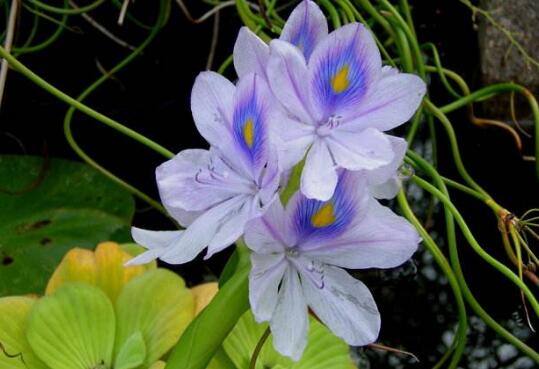
If you want to know how to grow water hyacinth, you first need to understand its growth habits. This plant likes to grow in an environment with plenty of sunlight, so during cultivation we should keep it in sufficient light. In addition, daily water and fertilizer management is also something we need to pay attention to. The specific growing methods are described in detail below, so let's take a look.
2. Growing methods and notes for water hyacinth
1. Temperature, 18℃—23℃
When growing water hyacinth, we should keep it in a suitable environment. This plant prefers warm water temperatures, with an ideal range of 18℃—23℃, though it can still grow normally even at a water temperature of 35℃. However, if the temperature falls below 10℃, it will stop growing.
2. Ventilation, keep the environment well ventilated
When growing water hyacinth, we must never place it in a dark, enclosed environment, as this is bad for its growth. If it is kept enclosed for a long time, in serious cases it can even cause the plant to wither and die. This plant prefers an environment with good air circulation, so during cultivation we must keep the environment well ventilated so that it can grow better.
3. Water, change the water once every two months
Water is a very important nutrient for water hyacinth, because this plant itself grows in water. When growing it, we generally need to change the water once every two months, and everyone should make sure the water temperature does not differ too much. After summer arrives, because the weather is relatively dry, we should also frequently spray water on its leaves to increase the air humidity.
4. Light, sunlight must be sufficient
Water hyacinth is a light-loving plant with a very high demand for light. It must receive at least 4-5 hours of light each day, and the longer the light exposure, the longer it can carry out photosynthesis, so the plant will grow better.
5. Pests and diseases, prevent and control them promptly
When growing water hyacinth, if we are not careful enough, pests and diseases can easily take advantage of the situation. These problems are very harmful to the plant, so when we discover them we must deal with them immediately. For specific treatment methods, you can refer to the article on pest and disease control for water hyacinth, which describes them in detail.
Growing methods and notes for water hyacinth
Growing methods for water hyacinth
Temperature
Water hyacinth prefers a warm environment. The suitable growing water temperature is 18℃—23℃; it can also grow above 35℃, but below 10℃ it will stop growing. It has a certain degree of cold tolerance.
Light
Water hyacinth has a very high demand for light. The longer the light exposure, the more vigorous the photosynthesis.
Therefore, 4—5 hours of light must be maintained every day, especially in spring. If it is placed in too shady a spot, water hyacinth cannot receive or let through light, and its roots will rot and it will die.
Watering
Maintain relatively stable air humidity, preferably between 70%—80%. In spring, as temperatures gradually rise, water evaporates faster, so water hyacinth should be sprayed frequently to increase air humidity.
Generally, change the water once every two months, and the water temperature difference should not be too great.
Notes on growing water hyacinth
Pay attention to controlling room temperature
During the cultivation of water hyacinth, a suitable temperature should be maintained. The day-night temperature difference should not exceed 2℃. At 4℃—5℃, water hyacinth can survive, but it must not go below 0℃. Generally, the water temperature is required to be above 5℃.
Ventilate frequently
Insist on ventilation and air exchange every day to keep indoor air fresh. By late April, all doors and windows can be opened during the day and closed again in the afternoon.
Pay attention to fertilizing during the seed preservation period
In addition to applying enough base fertilizer before seed preservation, fertilizer should also be applied frequently during the seed preservation period. It is best to use decomposed human manure and urine, diluted to a concentration of 1:20. When topdressing, it must not be sprinkled directly on the seedlings.
External factors affecting the growth of water hyacinth, growing methods for water hyacinth and their notes
Water hyacinth is called "the lavender flower crown that beautifies the world," a plant whose center looks strikingly like an eye. So, would you like to know what cultivation techniques water hyacinth has? Do you want to grow water hyacinth well? Today, next we will get to know this plant, water hyacinth.
Growing methods for water hyacinth
Temperature
Water hyacinth prefers a warm environment. The suitable growing water temperature is 18℃—23℃; it can also grow above 35℃, but below 10℃ it will stop growing. It has a certain degree of cold tolerance.
Light
Water hyacinth has a very high demand for light. The longer the light exposure, the more vigorous the photosynthesis.
Therefore, 4—5 hours of light must be maintained every day, especially in spring. If it is placed in too shady a spot, water hyacinth cannot receive or let through light, and its roots will rot and it will die.
Watering
Maintain relatively stable air humidity, preferably between 70%—80%. In spring, as temperatures gradually rise, water evaporates faster, so water hyacinth should be sprayed frequently to increase air humidity.
Generally, change the water once every two months, and the water temperature difference should not be too great.
Notes on growing water hyacinth
Pay attention to controlling room temperature
During the cultivation of water hyacinth, a suitable temperature should be maintained. The day-night temperature difference should not exceed 2℃. At 4℃—5℃, water hyacinth can survive, but it must not go below 0℃. Generally, the water temperature is required to be above 5℃.
Ventilate frequently
Insist on ventilation and air exchange every day to keep indoor air fresh. By late April, all doors and windows can be opened during the day and closed again in the afternoon.
Pay attention to fertilizing during the seed preservation period
In addition to applying enough base fertilizer before seed preservation, fertilizer should also be applied frequently during the seed preservation period. It is best to use decomposed human manure and urine, diluted to a concentration of 1:20. When topdressing, it must not be sprinkled directly on the seedlings.
That is all I have learned about aquatic plants today. I hope flower lovers will find this article helpful after reading it. For more knowledge about bulbous flowers, please continue to follow our Succulent Garden, and we will provide you with more related content as soon as possible!