How often should you water cineraria? In summer, water twice a day, morning and evening
Gardeners are probably familiar with cineraria (Pericallis x hybrida). It is a member of the Asteraceae family, with beautiful flower shapes and rich flower colors. In daily care, cineraria is not difficult to manage, but when it comes to the simplest task of watering, many gardeners easily make mistakes. So how should you water cineraria grown at home? How often should you water cineraria? Today, the editor will help everyone solve this problem.
1. How to water cineraria grown at home: timing and method
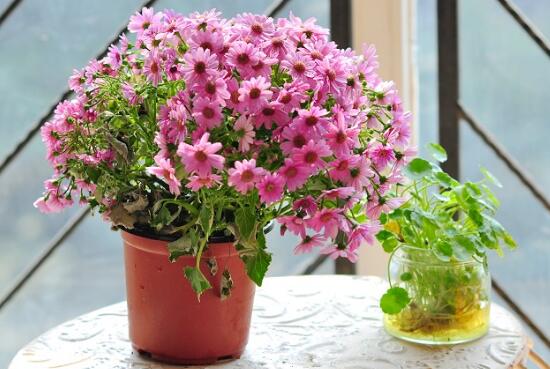
As a common ornamental flower, cineraria is not difficult to grow, but everyone must pay attention to watering, because neither too much nor too little will do. Too little water affects plant growth; too much water causes cineraria leaves to turn yellow. So for how to water cineraria grown at home, gardeners must strictly control the timing, frequency, and amount.
2. Watering methods for cineraria
(1) Watering principles
Cineraria, as its name suggests, has leaves that look like the leaves of cucurbit plants: both thick and tender, which also creates a high demand for water. However, cineraria dislikes waterlogging, so when watering cineraria, follow the principle of "do not water until dry, and when you water, water thoroughly." Watering this way keeps cineraria leaves looking fresh and tender rather than wilted.
(2) Watering methods
1. Water quality and water temperature
① Water quality: The water used to water cineraria must first be clean and pollution-free, which can avoid bacterial infection; second, it is best to use river water, pond water, or stored rainwater with few minerals. If conditions do not allow, use tap water that has been left to sit for 2-3 days.
② Water temperature: As for the water temperature for watering cineraria, it is best between 20-25°C. In winter, water at noon when the water is warm; in summer, water in the morning or evening. This prevents the water temperature from mismatching the soil temperature and causing damage to the root system.
2. How often to water cineraria: different in each season
① Watering in spring and autumn: once every 2-3 days
Spring and autumn are the growing seasons for cineraria. At this time, watering should be adjusted according to the moisture of the soil in the flowerpot; water when it is dry. As for how often to water cineraria, keep it to once every 2-3 days at this time.
② Watering in summer: twice a day
Cineraria needs a great deal of water. In summer, water evaporates very quickly, so the water demand is even greater. At this time, it is best to water twice a day, specifically once in the morning and once in the evening.
③ Watering in winter: once every 30 days
In winter, water evaporates slowly, so watering cineraria should be reduced. Water about once a month.
(3) What to do if cineraria is overwatered
Cineraria can be watered by pouring or spraying, but no matter how you water, remember not to overwater. Otherwise, once the potting soil becomes severely waterlogged, the root system will mold and rot, affecting later growth! As for what to do if cineraria is overwatered, the best method is to remove it from the pot, inspect the roots, cut off the rotted parts, replace with fresh potting soil, and replant.
Watering is a technical skill, especially when watering cineraria. You must pay attention to watering time, intervals, and so on. Only in this way can you grow beautiful cineraria. That is all for the editor's introduction to cineraria watering methods. I hope it can help everyone.
How should cineraria be cared for in summer?
To care for cineraria well in summer, you need to do the following:
1. Light
Cineraria likes an environment with ample light. It should be placed at least 4 hours a day in a bright spot by an east-, west-, or south-facing window to keep the flower colors vivid and the plant robust. But direct scorching sun will cause leaves to wilt and curl, so be sure to frequently turn the direction of the flowerpot.
2. Water
Because cineraria has very large leaves, its transpiration is also very high, making it a plant quite sensitive to water demand. Generally, watering once a day is enough. If it is not watered in time or not watered thoroughly, you will find the leaves wilting and quickly drooping; water promptly at that point and it can recover. At the same time, if there is too much water and waterlogging occurs, it can also cause the roots and stems to rot. So be sure to carefully grasp the scale of watering.
3. Temperature
It dislikes heat. The most suitable temperature for cineraria growth is 10-20°C. During the flowering period, the temperature can be lowered a bit more to extend the flowering period. Therefore, in hot summer, appropriate shading should be provided.
4. Fertilizing
Apply thin fertilizer during the growing period, and be careful not to let fertilizer splash onto the leaf surface; if it splashes onto the leaf surface, rinse it off promptly. During the flowering period, stop fertilizing. Spraying flower-strengthening agent during the bud stage can promote strong buds, larger petals, vivid flower colors, and a longer flowering period.
If you do the above four points well, then cineraria is properly cared for in summer and can grow splendidly. Splendidly growing cineraria can repay people with a breathtaking array of colors: pink, blue, white, and purple. So, how many varieties does such cineraria actually include?
These 15 flowers are cool and beautiful, must-haves for summer
1. Bowl lotus
The first to mention is naturally the bowl lotus, which is loved by many in summer. Because growing lotus at home requires too much space, the tiny bowl lotus is a must-have choice for the home.
(Author: Chongge Earphones Source: Bowl Lotus Bar)
Bowl lotus likes light and cannot tolerate shade. It should be kept in full sun. If the leaves turn yellow, apply a nitrogen-phosphorus-potassium compound fertilizer, applying thin fertilizer frequently.
2. Mosquito repellent plant
Next to introduce is the mosquito repellent plant that every household needs. Summer mosquitoes are always endlessly annoying. At this time, you need a pot of mosquito repellent plant to solve the big trouble.
(Author: yelanmingzj Source: Mosquito Repellent Plant Bar)
Spring and autumn are the vigorous growing periods for mosquito repellent plant. You can use water-soluble compound fertilizer once every 15 days, or apply a small amount of cake fertilizer water and rice-washing water. In high-temperature summer weather, water less and do not fertilize, which can help the root system develop and improve disease resistance.
3. Mint
Huahua has strongly recommended mint to everyone before. Mint can not only be used to make tea, but also used in cooking, and its scent is refreshing. It is a must-have flower in summer.
Mint likes sunlight; the stronger the sunlight, the richer the fragrance. It is not afraid of drought or waterlogging, and it is fine to keep it on the balcony and water it every day. Fertilize about once every 20-30 days; fertilizer can be decomposed bone residue, Chinese medicine residue, and so on.
4. Verbena
Verbena has rich flower colors and vivid hues. When it blooms, it forms an umbrella shape. Placing it on a balcony or windowsill is really more suitable than anything.
(Author: Ye Zai Ci 12138 Source: Verbena Bar)
Verbena likes light and tends to grow leggy in a semi-shaded environment. In summer, when temperatures are high, pay attention to watering, about once every 7-10 days. During the growing period, apply bean cake fertilizer water 3-4 times, and pinch off the tips to promote branching.
5. Cypress vine
The flowers of cypress vine open like five-pointed stars, so it is also called five-star flower. It can twine and grow along a support.
(Author: Ren Hao and Zhou Ying Source: Cypress Vine Bar)
In spring and autumn, water cypress vine once every 3-5 days. In summer, when temperatures are high, water once every 2-3 days. Fertilizing is mainly with nitrogen-phosphorus-potassium compound fertilizer or granular fertilizer, with additional fertilizing about once every 20-30 days.
6. Milan
Milan opens small yellow flowers. When blooming, it is fragrant and elegant, with a scent like orchids. Its branches and leaves are dense and the leaves are glossy, making it very suitable for placing at home in summer.
Fertilize Milan about once a month, mainly with compound fertilizer and phosphorus-potassium fertilizer. In spring and winter, water about once every 3-5 days. In summer, when temperatures are high, water about once every 2-3 days. In summer, spray water toward the leaves frequently, preferably until water droplets drip down, to maintain air humidity.
7. Cineraria
Cineraria has vivid colors and easily fills the pot. Grown on a balcony, it is very beautiful.
Cineraria likes light and has strong phototropism, so the flowerpot needs to be turned once a week. During the growing period, apply decomposed thin liquid fertilizer about once every 10 days. After the buds show color, spray the leaf surface once a week with a 0.2% potassium dihydrogen phosphate solution to promote flower bud differentiation.
8. Gazania
Gazania is also called African sun flower. It has diverse flower colors and vivid hues. Placing a pot at home can even make your mood better.
Gazania likes sunlight; the stronger the light, the more vivid the blooms. It is quite sensitive to water, and the pot must not become waterlogged. Just water after the soil turns white.
9. Peace lily
White palm is also called peace lily. Because it is given a beautiful meaning, many people like to keep a pot at home.
Peace lily tolerates semi-shade, so it is best to place it in a bright living room or similar place for care. It has very high water requirements, and in summer it needs frequent spraying toward the leaves. It can be grown hydroponically.
10. Million bells
Million bells is a type of small-flowered petunia, and it is the first choice of many gardeners when choosing plants that fill a pot.
Million bells likes light; the more sun, the more it blooms. For the soil mix, you can use worm castings: soil (3:1) as base fertilizer. Wait until the potting soil turns white before watering.
11. Coral bells
If you do not like flowering plants, you can absolutely choose coral bells. Coral bells has colorful foliage. With proper care, it can even look more than ten times better than flowers!
(Author: SDIvPp Source: Coral Bells Bar)
For coral bells, ventilation is most important. In summer, when temperatures are high, water twice a week; in spring and autumn, water once a week. If water splashes onto the leaves, wipe it dry promptly, otherwise it easily scorches the leaves.
12. Monstera
Monstera has upright and elegant plants, giving a feeling of elegance and purity, and attracting the attention of many gardeners. Placing it at home in the hot summer can also lower the temperature, truly achieving two things at once!
(Author: lkjiop3 Source: Monstera Bar)
Monstera cannot be exposed to direct sunlight and can be placed in a bright living room. In summer, when temperatures are high, water once every 1-2 days, and also spray water toward the leaves and the air around the flowerpot. Fertilize about once every 15 days; fertilizer can be diluted cake fertilizer water or fermented animal manure water.
13. Pennywort
Seeing the round, large leaves of pennywort makes people feel a wave of coolness, not to mention that pennywort easily fills a pot. If you are not careful, your home will be overrun with it!
As long as pennywort is given enough light and water, it easily fills a pot. Normally, place pennywort on a balcony with ample light. In high-temperature summer weather, water more, and it can also be grown hydroponically.
Today Huahua will introduce this much first,
Until next time,
Huahua will continue to introduce more to everyone!