How to grow Peperomia tetraphylla? Detailed guide to cultivation and care
Peperomia tetraphylla, also known as pepper grass, belongs botanically to the genus Peperomia in the family Piperaceae, and is a perennial herbaceous species. It is native to the West Indies in the Western Hemisphere and northern South America. It naturally prefers a warm, humid, semi-shaded environment. The optimal temperature for growth is around 25°C
Watering and fertilizing: Peperomia tetraphylla likes moisture. The growing season is from May to September each year, and it should be watered generously. In hot weather, the leaves should also be misted to maintain a certain air humidity, thereby promoting clear leaf patterns and lush green foliage. It is best to fertilize once a month until overwintering.
Requirements for potting soil: It requires loose, fertile, well-drained soil. It can also be made by mixing peat moss, river sand, and leaf mold.
Temperature control: It likes warmth. The optimal temperature for growth is around 25°C, and the overwintering temperature should preferably not drop below 10°C.
Light requirements: Avoid direct sunlight; it is best grown in semi-shade.
Propagation methods: Generally done by division and leaf cuttings. Division is carried out in spring and autumn each year. Leaf cuttings can also be done between May and June each year, using whole-leaf cuttings with about 1 cm of petiole attached, inserted to about 1/3 of the leaf length. River sand or similar is used as the substrate. It roots fairly easily, rooting in 15 days, but care should be taken to keep the substrate moist and maintain a certain level of environmental humidity.
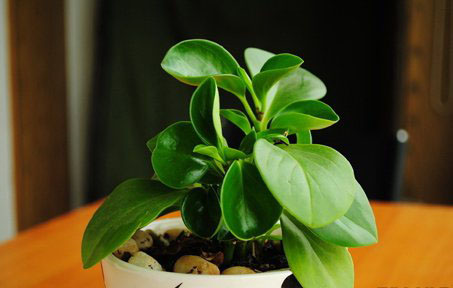
Peperomia tetraphylla Peperomia tetraphylla illustrated guide: How to grow Peperomia tetraphylla / How to propagate Peperomia tetraphylla
Peperomia tetraphylla profilePeperomia tetraphylla Peperomia tetraphylla
Aliases: pepper grass, pepper grass, Peperomia tetraphylla pepper grass, yizhuxiang, yandouban, doudancao, doudan ruyi, sibanjinchai, zhijiacao, doudan dabu si
Classification: perennial herbaceous flowering plant
Family and genus: Plantae, Angiosperms, Dicotyledons, Poales, Piperaceae, Peperomia
Peak flowering period: spring
Peperomia tetraphylla, also known as pepper grass, belongs botanically to the genus Peperomia in the family Piperaceae, and is a perennial herbaceous species. Peperomia tetraphylla is native to the West Indies in the Western Hemisphere and northern South America, and naturally prefers a warm, humid, semi-shaded environment. The optimal temperature for growth is around 25°C, and it must not drop below 10°C. It does not tolerate high temperatures but requires relatively high air humidity, and prefers loose, fertile, well-drained soil.
Cultivation methods and precautions for Peperomia tetraphylla Introduction to Peperomia tetraphylla
Peperomia tetraphylla, also known as pepper grass, belongs botanically to the genus Peperomia in the family Piperaceae, and is a perennial herbaceous species.
Peperomia tetraphylla is native to the West Indies in the Western Hemisphere and northern South America, and naturally prefers a warm, humid, semi-shaded environment. The optimal temperature for growth is around 25°C, and it must not drop below 10°C. It does not tolerate high temperatures but requires relatively high air humidity, and prefers loose, fertile, well-drained soil.
Morphological characteristics of Peperomia tetraphylla
Peperomia tetraphylla is a perennial herb with a plant height of 15-20 cm. It has no main stem. The leaves are clustered, somewhat fleshy and rather thick, obovate, grayish-green mixed with dark green vein patterns. The spike inflorescence is grayish-white. Among cultivated types there is a variegated-leaf type whose fleshy leaves have a reddish blush; a mosaic-leaf type whose leaves are green in the middle with a broad golden-yellow margin; a glossy-leaf type with heart-shaped leaves that have a metallic sheen. The crinkled-leaf type has deeply sunken veins, forming a highly wrinkled leaf surface, which is extremely interesting.
Peperomia tetraphylla rarely blooms, generally flowering in May.
Ecological habits of Peperomia tetraphylla
Peperomia tetraphylla prefers a warm, humid, semi-shaded environment. The optimal growth temperature is around 25°C, and it must not drop below 10°C. It does not tolerate high temperatures, requires relatively high air humidity, and avoids direct sunlight; it prefers loose, fertile, well-drained, moist soil.
Cultivation techniques and planting methods for Peperomia tetraphylla
Substrate preparation
For Peperomia tetraphylla, use imported peat of 5-40 mm grade that is loose and has good drainage and aeration. Break up the peat, add water and mix well (standard for adding water: after mixing, when you tightly squeeze a handful of peat, water seeps out between your fingers), then pot it up for planting. A 9 cm pot uses about 200 ml of peat per pot, and one 300-liter bag of imported peat can fill about 1,500 cups.
Potting up
For reused old pots, they must be soaked in a 1000-fold potassium permanganate solution for more than half an hour, then rinsed with clean water and left to dry before use. New pots can be used directly. Generally, smaller pots (9 cm plastic pots) are used first for planting. When planting, first place an appropriate amount of substrate at the bottom of the cup, then transplant the screened seedlings into the cup. Small seedlings can be planted somewhat deeper, with the base of the plant slightly above level being suitable, 1 clump per pot; the substrate should be moderately firm, filling the cup to 9/10 full, then gently shake the pot soil, and water with half-soaked or surface water to settle the roots.
Cultivation management
Peperomia tetraphylla is suited to potting soil with relatively high humus content. The potting soil can be made by mixing 4 parts peat soil or leaf mold, 2 parts sawdust, 1 part perlite or river sand, and 3 parts garden soil. During the growing season, sufficient air humidity must be maintained. In hot seasons, potted plants should be placed in a ventilated, shady spot, avoiding direct sunlight. At the same time, care should be taken to water more, and the leaves can be misted to keep them lush green. Peperomia has a fairly strong drought tolerance; overwatering easily causes root rot, so each watering should be on the lighter side rather than too much, but the potting soil should be kept moist regularly.
In winter, water even less, and avoid using overly cold water; it is best to bring the water temperature close to room temperature. From May to September, fertilizer can be applied once every 2-3 weeks. In spring and summer, potted plants should be placed in semi-shade; in winter they can be placed in a sunny spot, but continuous direct sunlight should still be avoided. The overwintering temperature should not be lower than 10°C. To keep the leaves lush green, generally repot or renew the plant every 2-3 years. When the plant is about 10 cm tall, it can be pinched back appropriately to encourage side branches to sprout and keep the plant full and shapely.
Soilless cultivation
For soilless cultivation of Peperomia tetraphylla, the substrate can be vermiculite:peat:slag at 1:1:1 or perlite:peat:river sand at 1:1:1. The nutrient solution used can be a foliage plant nutrient solution or a compound flower fertilizer. When potting, first add a layer of ceramic gravel or coarse sand to the bottom of the pot, place the seedling in the center and hold it upright, then add substrate until the pot is 8/10 full. The first application of nutrient solution should be thorough, until seepage flows out into the saucer under the pot. After that, replenish solution and water as usual; for small and medium pots, replenish solution once a week, 50-100 ml each time. On ordinary days, replenish water to keep the substrate moist, and the pH can be maintained at around 6.5. During the growing period, it is best to spray clean water on the stems and leaves 1-2 times a day to help keep the leaves green, which is especially important in dry climates and hot summer seasons. Peperomia is fairly shade-tolerant and can be kept year-round indoors in a spot with bright, indirect light; in winter it can be given a bit more sunlight. In winter, take care to protect it from cold and keep it warm, maintaining room temperature above 15°C, and reduce the frequency of solution and water replenishment to avoid root and leaf rot.
Hydroponics
Peperomia tetraphylla is an excellent example of a plant that thrives in hydroponics. With 4-5 leaves per plant, it adapts very easily to an aquatic environment and will not rot [1]. It is easy to grow.
It prefers a warm, humid, semi-shaded environment, does not tolerate high temperatures, and avoids direct sunlight; it is drought-tolerant, so watering should not be excessive, especially in autumn and winter when watering should be reduced. If the air is dry, mist the leaves more. Avoid frost.
Soil cultivation
The cultivation substrate for Peperomia tetraphylla requires good aeration and good water retention, such as an organic substrate of peat soil plus perlite or vermiculite, at a ratio of about 6:1. Avoid excessive moisture in the cultivation substrate; generally maintain a water content of 40-60% in the substrate.
It is usually placed indoors in a bright spot or outdoors in shade. The optimal temperature is 20-26°C, and the winter temperature should be above 5°C. Mist the leaves regularly to maintain relatively high air humidity. It can also be pruned appropriately after a period of care or transplanted into a courtyard for ornamental viewing.
Cultivation methods and key points for Peperomia tetraphylla
Watering and fertilizing
Peperomia tetraphylla likes moisture. The growing season is from May to September each year, and it should be watered generously. In hot weather, the leaves should also be misted to maintain a certain air humidity, thereby promoting clear leaf patterns and lush green foliage. It is best to fertilize once a month until overwintering.
Peperomia tetraphylla likes moisture. During the growing season from May to September, water more; in hot weather, mist or sprinkle the leaves to maintain relatively high air humidity and keep the leaf patterns clear and the foliage lush green. Fertilize once a month until overwintering.
Potting soil
Peperomia tetraphylla requires loose, fertile, well-drained soil. It can also be made by mixing peat moss, river sand, and leaf mold.
Temperature control
Peperomia tetraphylla likes warmth. The optimal temperature for growth is around 25°C, and the overwintering temperature should preferably not drop below 10°C.
Light requirements
Peperomia tetraphylla avoids direct sunlight and is best grown in semi-shade.
Propagation methods for Peperomia tetraphylla
Peperomia tetraphylla is generally propagated by division and leaf cuttings.
Divide in spring and autumn; take leaf cuttings between May and June, using whole-leaf cuttings with about 1 cm of petiole attached, inserted to about 1/3 of the leaf length. River sand or similar is used as the substrate. Under conditions of 20-25°C, roots can form in 15 days. Take care to keep the substrate moist and maintain a certain level of air humidity, keeping the cultivation substrate moist and the environmental humidity at a certain level.
Peperomia tetraphylla can also be propagated by leaf cuttings. Use a knife to cut off a leaf with its petiole, let it dry slightly, then insert it obliquely into a sand bed; it roots in 10-15 days. In a greenhouse with temperature control equipment, it can be done year-round. Division: mainly used for propagating variegated-leaf varieties. The potting soil can be made of leaf mold, peat soil plus some perlite or sand, with an appropriate amount of base fertilizer added. During the growing season, apply a top dressing once every half month. For watering, water that has been left standing in a reservoir for 1-2 days is best. In winter, restrict watering. Temperature changes directly affect leaf color; the optimal winter temperature for variegated-leaf types is 18-20°C, and for green-leaf types about 15°C. It fears heat in midsummer, so it can be placed under a shade shed and misted to cool down, but note that excessive heat and moisture can both cause stems and leaves to turn black and rot. In winter, place it in a spot with ample light; in summer, avoid direct sunlight. Repot once every 2-3 years.
Pest and disease control for Peperomia tetraphylla
Peperomia tetraphylla has relatively few pests and diseases. When the soil is too wet, leaf spot and stem rot often occur. Occasionally there are scale insects and slugs, which should be controlled promptly.
Variety classification of Peperomia tetraphylla
There are two types of Peperomia tetraphylla pepper grass: one is upright, branching from the base of the plant; the other is clump-forming, that is, with basal leaves and no obvious base, with leaves clustered from the base of the plant. Most Peperomia species belong to this latter category.
Common cultivated species
Watermelon Peperomia
Also known as watermelon rind. Native to Brazil. It has basal leaves and a plant height of 20-30 cm. The leaves are nearly basal, obovate; leaf length 3-4 cm, width 2-4 cm; thick and glossy, semi-leathery; the upper leaf surface is green and the underside is red, with distinctive silvery-white bands between the main veins on the green upper surface, resembling the pattern of watermelon rind, hence the name. The flowers are small and white.
Ripple Peperomia
Also known as four-angled Peperomia. The stem is extremely short, and the plant height is about 20 cm. It forms a small clump. The leaves are heart-shaped and much wrinkled, with leaf length 3-5 cm and width 2-2.5 cm; the upper leaf surface is dark brownish-green with a velvety sheen, and the underside is grayish-green. The spadix is white-green and slender.
Mosaic Peperomia
Also known as mosaic Peperomia and cream-striped Peperomia. Native to Brazil. It is a trailing herbaceous plant. The stem is tea-brown and fleshy. The leaves are broadly ovate, 5-12 cm long and 3-5 cm wide; the leaves are green with yellow variegation.
Peperomia clusiaefolia
Native to the West Indies. Upright plant type, 20-30 cm tall. Slow-growing. The leaves are long obovate, thick, fleshy and stiff, with entire or irregularly shallow-lobed margins. The leaf color is deep green and glossy, with red margins.
Watermelon Peperomia (Peperomia sandersii)
Native to Brazil. Clump-forming plant, with watermelon-rind-like peltate leaves clustered on short stems. Plant height 20 cm. Leaves ovate, 3-5 cm long and 2-4 cm wide. The petiole is reddish-brown, 10-15 cm long. The veins radiate from the center outward; there are 11 main veins, deep green, with silver-gray between the veins, just like a watermelon rind.
Round-leaf Peperomia (Peperomia obtusifolia)
Native to Venezuela. Upright plant, about 30 cm tall. Single leaves alternate, leaves elliptical or obovate. The leaf tip is bluntly rounded, and the leaf base tapers to wedge-shaped. The leaf surface is smooth and glossy, thick and stiff, and both the stem and petiole are fleshy, thick and round. Leaves 5-6 cm long and 4-5 cm wide; the petiole is relatively short, only 1 cm, but roots easily. The internodes are relatively short, and roots also form very easily at the nodes.
Green Gold Peperomia (Peperomia obtusifolia cv. "Green Gold")
Similar to round-leaf Peperomia, differing only in leaf color. Its leaves are deep green but scattered with irregular light green to cream-yellow patches of varying sizes; or the mainly yellow-green leaves are scattered with deep green patches or spots
Distribution range of Peperomia tetraphylla
Peperomia tetraphylla is native to the West Indies, Panama, and northern South America.
Uses and decorative applications of Peperomia tetraphylla
Peperomia tetraphylla is generally used as a potted ornamental plant, widely welcomed for its bright gloss and natural green color.
Peperomia tetraphylla is often grown in white plastic pots or white porcelain pots and placed on coffee tables, display cabinets, curio shelves, or office desks, where it looks very beautiful. Or its branches can be allowed to trail down, hung indoors by a window or in a bathroom, which is also very fresh and pleasing to the eye. Functional applications: it has a certain purifying effect on formaldehyde, xylene, and secondhand smoke.
Landscape uses of Peperomia tetraphylla
Landscape uses: flower borders, flower beds, flower strips.
Peperomia tetraphylla pictures
Cymbidium care techniques
Overview: Cymbidium, also known as tiger-head orchid, Cymbidium hybridum, and cicada orchid, is a plant in the genus Cymbidium of the family Orchidaceae. Cymbidium has long, lush green leaves and bold, majestic, magnificent flowers. It is a world-famous "new star of orchids." It has the delicate fragrance and elegance of Chinese orchids as well as the rich variety of tropical orchids, is very popular in the international flower market, and is deeply loved by flower enthusiasts. The Japanese call it "East Asian orchid," while Europeans and Americans also call it "new beauty orchid." In short, Cymbidium is very appealing. After the first hybrid was bred in Britain in 1889, large numbers of interspecific and intervarietal hybrids were also selected and bred in Europe and America in the 1940s. To date, there are already thousands of cultivated varieties of Cymbidium, making it very sought-after in domestic and international markets and a standout among orchids.Cymbidium is mainly produced in Thailand, Singapore, Malaysia, and Taiwan, China. The main sales country is Japan. In 1993, Japan consumed 4.1 million pots of Cymbidium, with sales of 105 million USD. In Europe, it is mainly produced in the Netherlands, with sales of 80 million USD. Therefore, Cymbidium still occupies a certain share of the international flower market, and its status is no less than that of other tropical orchids.
Although China is the place of origin of Cymbidium and possesses quite rich germplasm resources, these are only native species and lack improvement. Their wild traits are relatively strong, the flower colors are dull and not bright, the flowers are sparse and not full, and the flower stems are long and curved, not upright enough or drooping. To develop and utilize them, improvement must be accelerated. Beginning in the 1990s, Guangdong, Yunnan, and other places introduced excellent varieties from abroad and carried out small-batch production. Due to the high selling price, it has not yet been fully promoted, but the market is still relatively strong. If the price drops, the prospects for Cymbidium are good.
Morphological characteristics and varieties: Cymbidium is a perennial epiphytic herb. The pseudobulb is elliptical and thick. The leaves are broad and long, drooping, light green, and glossy. The flower scape is slanted and slightly curved, bearing 6-12 flowers. The flowers are large, light yellow-green, with a slight fragrance. Common cultivated varieties include the carmine Annabelle and Heathery, the blood-cyan Barcelona, Forest King, Levis Duke, and Vanguard, the red Carmen and Red Beauty, the creamy white Cascade and Madrigal, the yellow Golden Fleece and Troubadour, the silver-gray Molly, and the white The Bride.
Common ornamental species in the same genus include C. dayanum, with white flowers bearing purple stripes. C. lowlanum, with yellow-green flowers and a purplish-red lip. C. iridioides, with light yellow flowers and a yellow lip. C. eburneum, with pure white flowers and small purplish-red dots on the lip. C. wilsonii, with pale green flowers and a yellow-white lip with reddish-brown stripes and spots.
Biological characteristics: Cymbidium is native to southwestern China. It often grows wild in semi-shaded environments along streams and under forests. It likes warm winters and cool summers. The optimal growth temperature is 10-25°C. A nighttime temperature of around 10°C is relatively good. The leaves are green, flower buds grow and develop normally, the flower stems elongate normally, and it blooms in February-March. If the temperature is below 5°C, the leaves turn yellow, the flower buds do not grow, the flowering period is delayed to April-May, and the flower stems do not elongate, affecting flower quality. If the temperature is around 15°C, the flower buds suddenly elongate and it blooms in January-February, but the flower stems are soft and cannot stand upright. If the nighttime temperature reaches as high as 20°C, the leaf clump grows luxuriantly, affecting flowering, and formed buds will also wither and yellow. In short, for Cymbidium bud formation, flower stem emergence, and flowering, a large temperature difference between day and night is required.
Cymbidium has relatively high water quality requirements. It likes slightly acidic water and is relatively sensitive to calcium and magnesium ions in water. Rainwater is ideal for irrigation. During the growing period, relatively high air humidity is needed. If the humidity is too low, the plant grows and develops poorly, the root system grows slowly and becomes thin and small, the leaves become thicker and narrower, and the leaf color tends toward yellow. Overall, Cymbidium fears dryness rather than moisture.
Light is an important factor affecting the growth and flowering of Cymbidium. Among orchids, Cymbidium belongs to the light-loving category; sufficient light is beneficial for leaf production and for forming flower stems and blooming. With too much shading, the leaves become slender and thin, cannot stand upright, the pseudobulbs become smaller, it is prone to disease, and flowering is affected. In midsummer, shade 50%-60%; in autumn, more sunlight is beneficial for flower bud formation and differentiation. In winter, on rainy and snowy days, adding supplementary light is extremely beneficial for flowering.
Cultivation methods: commonly propagated by division, sowing, and tissue culture.
Propagation by division: After the plant blooms and before the new shoots have grown large, it is in a brief dormant period. Before division, let the substrate dry appropriately so that the roots of the Cymbidium turn slightly white and slightly soft, so that the roots are less likely to break during operation. Divide the mother plant into clumps of 2-3 pseudobulbs for potting. During operation, hold the pseudobulbs and do not bruise the new shoots. Cut off yellow leaves and rotten old roots.
Propagation by sowing: mainly used for large-scale propagation of native species and hybrid breeding. The seeds are tiny and germinate very easily under sterile conditions, with a germination rate above 90%.
Propagation by tissue culture: Select young shoots emerging from the base of a robust mother plant as explants. Cut the shoot sections into stem tips 0.5 mm in diameter and inoculate them onto prepared culture medium. Using MS medium supplemented with 0.5 mg/L 6-benzylaminopurine, protocorm-like bodies form in 52 days. Remove the protocorm-like bodies from the medium, cut them into small pieces, and inoculate them into MS medium supplemented with 2 mg/L 6-benzylaminopurine and 0.2 mg/L naphthaleneacetic acid to proliferate the protocorm-like bodies. Continue culturing the protocorm-like bodies in the proliferation medium; in about 20 days, shoots form at the tips of the protocorm-like bodies, and roots differentiate at the base of the shoots. In about 90 days, the differentiated plants grow into complete small seedlings with 3-4 leaves.
Cultivation management: Potted Cymbidium commonly uses 15-20 cm tall pots, with 2-4 seedlings per pot. The potting substrate is a mixture of fern roots, moss, and bark pieces. During the growing period, fertilize once every half month, or use a compound fertilizer with a concentration below 0.1% and an N-P-K ratio of 1:1:1, sprayed once a week. This makes the pseudobulbs plump and large, which can promote flower bud differentiation and more blooming. However, for varieties with strong sprouting ability, leaf bud growth must be controlled so that nutrients are not consumed excessively; therefore, bud removal must be carried out so that each pseudobulb bears one leaf bud.
Cymbidium likes a large day-night temperature difference. A daytime growth temperature of 25-28°C and a nighttime temperature of 10-15°C is favorable for flower bud growth. If the flower buds have already formed and the temperature reaches above 28°C, it will cause withering or bud drop.
It likes a warm climate, and the optimal growing temperature is 15-25°C. Water thoroughly. Water once every 4-5 days, and do not let the flowers get wet when watering. In dry seasons, spray to cool down and increase humidity. Follow the principle of applying light fertilizer frequently; fertilizing on sunny days at 15-30°C is most suitable, and do not fertilize on cloudy and rainy days. Cut off dead leaves and diseased leaves at any time. After flower buds emerge, if there are too many, remove the weak buds and keep the strong ones.
Pest and disease control: The main diseases are black spot and ring spot necrosis, which harm the leaves. They can be sprayed with 800-fold 70% thiophanate-methyl wettable powder. Pests include scale insects, red spider mites, and snails, which harm new shoots and flower stems. Scale insects and red spider mites can be killed by spraying with 1000-fold 80% dichlorvos emulsifiable concentrate. If there are snails, spray trichlorfon on the benches and flower pots or use trichlorfon poison bait to trap and kill them. Post-production handling: Potted Cymbidium has large, robust plants, upright or drooping flower stems, and graceful flowers. It is suitable for placement on indoor flower stands, balconies, and windowsills, appearing even more elegant and luxurious, with relatively high taste and charm. For example, large potted plants with 10-20 seedlings per pot are suitable for decorating hotel lobbies, shopping malls, stations, and airport halls, with extraordinary grandeur and eye-catching appeal.