What to do when the leaves of dwarf asparagus fern turn yellow? 6 causes including improper watering and fertilizing, and their solutions
As an ornamental plant, the dwarf asparagus fern is undoubtedly very beautiful; whether it is its graceful plant shape or its bright green short branches and fine leaves, it is impressive. But during cultivation, many flower lovers find their leaves showing signs of yellowing, which is extremely frustrating. So what should be done when the leaves of dwarf asparagus fern turn yellow? Today the editor will help everyone solve this problem.
I. What to do when the leaves of dwarf asparagus fern turn yellow
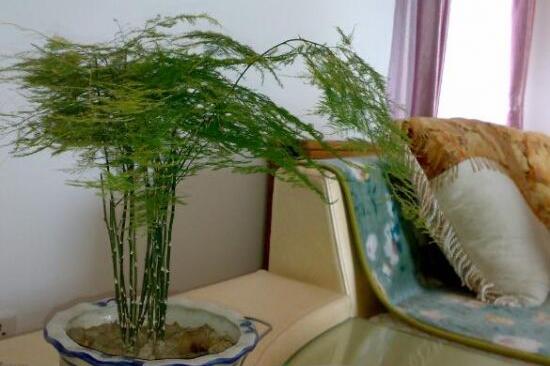
There are mainly six reasons for the leaves of dwarf asparagus fern turning yellow: if it is a newly potted plant, it may be short-term yellowing before it adapts, and careful care is all that is needed; if caused by too strong light, move it to a semi-shaded place to recover; if it is a watering and fertilizing problem, then reasonable watering and fertilizing are needed, and the potting soil should be changed and replanted at the right time; if it is frostbitten in winter, raise the temperature for care; if it has been poisoned, change the pot promptly.
II. Causes of dwarf asparagus fern leaves turning yellow and solutions
1. Sudden environmental change
As for the reasons why dwarf asparagus fern leaves turn yellow, if it is a newly potted plant, it may be caused by not yet adapting to the environment. Nowadays, many of the potted plants of flower lovers are bought online, which may lead to a large regional difference; because the growing environment of the dwarf asparagus fern changes greatly, it may not adapt for a while and its leaves turn yellow.
Solution: If it is a newly bought dwarf asparagus fern potted plant, yellow leaves are actually very normal; everyone only needs to care for it according to the cultivation methods for dwarf asparagus fern, and after a period of time the plant will recover.
2. Too strong light
The dwarf asparagus fern likes a semi-shaded environment and avoids strong light. When caring for it in summer, pay attention to shading it in time, otherwise once it is exposed to direct strong light, its branches and leaves will wither and turn yellow.
Solution: When strong light is found, promptly move the potted plant to a cool indoor place, and after it recovers, water and mist it at the right time to increase air humidity.
3. Overwatering
The dwarf asparagus fern likes a moist environment, but it avoids waterlogging. When watering, follow the principle of “do not water if not dry, water thoroughly when watering.” Once watered too much and the potting soil becomes waterlogged, root rot easily occurs. And if the roots have rotted, it is not surprising that the leaves of the dwarf asparagus fern turn yellow.
Solution: If discovered in time and the root rot is mild, change the potting soil, cut off the rotten roots, and then replant; if not discovered in time and the root rot is severe, then there is no way; just throw the plant away, or choose still-living branches as cuttings for propagation.
4. Improper fertilizing
Overfertilizing: The dwarf asparagus fern likes fertilizer, and sufficient nutrients can make it grow with luxuriant branches and leaves. However, when fertilizing the dwarf asparagus fern, do not apply too much or too concentrated fertilizer each time, otherwise it will cause poor plant growth, yellow leaves of the dwarf asparagus fern, and even death. Solution: Irrigate with water to dilute the fertilizer; or change the potting soil, cut off the rotten roots, and then replant.
Insufficient fertilizing: On the contrary, if the potting soil of the dwarf asparagus fern is poor and flower lovers do not fertilize in time, its leaves will turn yellow due to lack of nutrients. Solution: Fertilize at the right time, but when fertilizing the dwarf asparagus fern, apply thin fertilizer frequently.
5. Temperature too low
The dwarf asparagus fern likes a warm environment and is not cold-tolerant. In winter, if the temperature is too low, it will be frostbitten, thus showing symptoms of withered and yellow leaves.
Solution: In winter, promptly move the dwarf asparagus fern potted plant indoors for care, keep the room temperature above 12°C, and place it near a south window, appropriately controlling watering.
6. Plant poisoning
If the above points can be ruled out, then the yellowing leaves of the dwarf asparagus fern may mean it has been poisoned! It is understood that the dwarf asparagus fern is afraid of smoke and dust. If everyone places the potted plant in the kitchen, where it is surrounded by smoke and dust, over time its branches and leaves easily turn yellow.
Solution: Promptly move the potted plant to a ventilated place, water it at the right time, give it sufficient scattered light, and after a period of time it will recover. In fact, when the plant is too large, the flowerpot is too small, or it is diseased or has pests, the dwarf asparagus fern also easily has yellow leaves, so everyone must not be careless.
What to do when asparagus fern leaves turn yellow: solutions for yellowing asparagus fern leaves
When cultivating potted asparagus fern, improper care and other reasons may cause the leaves of the potted asparagus fern to turn yellow, seriously affecting its ornamental value. Why do the leaves turn yellow when cultivating asparagus fern? What are the reasons? How should it be solved? Below, we explain the causes and solutions for yellowing asparagus fern leaves, hoping to help everyone.
I. Causes of asparagus fern leaves turning yellow
1. Strong light exposure. Asparagus fern cultivation prefers semi-shade, and in summer it should not be exposed to strong direct sunlight, otherwise the branches and leaves will wither and turn yellow. The solution is to move the flowerpot to a cool place and mist the branches and leaves more to increase humidity.
2. Improper watering. Although asparagus fern likes moisture, it can also suffer from waterlogging if too wet, so during cultivation it is best to keep the potting soil alternating between dry and wet; generally, do not water if not dry, and water thoroughly when watering, but when watering do not let too much water accumulate on the pot surface. If overwatering occurs, you can temporarily stop watering and instead only mist the leaf surface to keep the asparagus fern moist.
3. Improper fertilizing. Applying fertilizer that is too concentrated or using unrotted fertilizer will both cause asparagus fern leaves to turn yellow and fall off. And if the nutrients in the planting soil are too poor, it will likewise cause asparagus fern leaves to turn yellow. So when fertilizing, pay attention to applying thin fertilizer, which can be done more times with a smaller amount, and use rotted fertilizer. For situations that have already occurred, changing the potting soil can solve it. It is worth noting that fertilizing is not suitable during the low-temperature period in winter and the high-temperature period in summer.
4. Gas poisoning. Asparagus fern is very afraid of smoke and dust. If it is often exposed to harmful gases such as smoke and dust, the asparagus fern will show poisoning symptoms of yellowing branches and leaves. When this happens, promptly move the flowerpot away from its original position and increase misting on the leaf surface to remove dust.
5. Pests. Scale insects are the most common pest in asparagus fern cultivation. When scale insects are found, promptly wipe them off with a wet cloth strip; if severe, buy treatment from a pharmacy, and promptly change the potting soil. When changing the potting soil, old and residual roots can be cut off to reduce nutrient consumption.
6. Inadequate winter management. Asparagus fern cultivation requires keeping it at a certain temperature, especially in winter when it should be placed in a sunny position. If the asparagus fern is kept for a long time in a place lacking light, poorly ventilated, and cold, its leaves easily wither and turn yellow and dry. In winter, the cultivation temperature for asparagus fern generally must not be lower than 12°C, and it should be placed in a place with good light, with watering appropriately reduced.
II. Care methods for asparagus fern
1. Sufficient nutrients, avoiding loss of nutritional components. Sometimes it is caused by hard potting soil, poor aeration, and decreased root vitality, which affects the normal growth of the plant. In addition to changing the pot in spring with culture soil rich in organic matter, also often loosen the surface of the potting soil and pay attention to strengthening fertilizing.
2. Water more and keep it moist. The potting soil should often be kept moist, and water should often be sprayed on the plant. The water temperature is best the same as room temperature, and the asparagus fern should be placed in a place with high air humidity. During the growing season, mixed fertilizer should be appropriately applied to promote vigorous growth of the plant and enhance its resistance.
3. The amount of water should be appropriate; too much is also not good. It should be moved to a shaded place or beside a window with curtains to avoid direct strong light, and at the same time pay attention not to water too much.
4. Pay attention to weather changes. When a typhoon comes, the asparagus fern should be moved indoors. Its rotting is mainly caused by being hit by strong winds in the hot summer season, or by long-term water accumulation in the flowerpot. Therefore, in summer special attention should be paid to guarding against thunderstorms or typhoons.
III. What to do when asparagus fern leaves turn yellow
1. Place it properly. Asparagus fern likes a semi-shaded, semi-sunny, slightly moist environment. First, avoid exposure to the sun, but it should be in a place where it can see sunlight; second, it should be able to feel air circulation; third, keep it away from stoves and televisions; fourth, keep it warm, and the lowest room temperature must not be lower than 5°C. If the room temperature is 0-4°C, use a plastic cover to protect it from the cold.
2. Regulate fertilizer and water. During the growth period of asparagus fern, fertilizing does not need to be too frequent; generally, topdressing is only suitable in spring and autumn, applying a thin rotted manure or urine or a low-concentration compound fertilizer solution once every 10-15 days, or applying rice-washing water or soybean juice water. Fertilizing is not suitable during high temperatures in summer and low temperatures in winter. Fertilizing should be controlled so as not to be excessive or mistimed. Watering should follow the principle of not watering if not dry, and when dry, water thoroughly once, leaving no water accumulation on the pot surface. Dust on the leaf surface should be regularly removed by misting with water.
3. Prune in time. Asparagus fern tends to grow in clusters. First, when changing the pot and adding soil, prune old and residual fibrous roots and thin out excess stems and leaves to avoid excessive nutrient consumption and to nourish the roots and protect the leaves; second, cut off locally yellowed leaves; third, for stems and leaves that are withered and yellow at the same time, cut them off together.
IV. How to prevent asparagus fern leaves from turning yellow
During the growth period of asparagus fern, fertilizing does not need to be too frequent; generally, topdressing is only suitable in spring and autumn, applying a thin compound fertilizer solution once every 10 to 15 days. Fertilizing is not suitable during high temperatures in summer and low temperatures in winter. Fertilizing should be controlled so as not to be excessive or mistimed. Watering should follow the principle of not watering if not dry, and when dry, water thoroughly once, leaving no water accumulation on the pot surface. Dust on the leaf surface should be regularly removed by misting with water. Asparagus fern likes a semi-shaded, semi-sunny, slightly moist environment, and the lowest room temperature must not be lower than 5°C. If the room temperature is 0°C to 4°C, use a plastic cover to protect it from the cold. Asparagus fern tends to grow in clusters. In spring, when changing the pot and adding soil, prune old and residual fibrous roots and thin out excess stems and leaves to avoid excessive nutrient consumption and to nourish the roots and protect the leaves. Cut off locally yellowed leaves, and for stems and leaves that are withered and yellow at the same time, cut them off together.
The above is the explanation of the causes and solutions for yellowing asparagus fern leaves. Is everyone clear now? For more home decoration knowledge, please pay attention.
What to do when asparagus fern leaves turn yellow: 6 methods to solve the awkwardness of yellowing leaves
Asparagus fern is also called cloud pine, thorn asparagus, and cloud bamboo. It is a perennial evergreen vine ornamental stem plant. Asparagus fern gives people a delicate and elegant feeling, and many people like to cultivate it. So when cultivating it, what should be done when asparagus fern leaves turn yellow? Let us take a look.
I. What to do when asparagus fern leaves turn yellow?
During the cultivation of asparagus fern, people often complain that it turns yellow, but they cannot find the reason. In fact, many reasons can cause yellowing.
1. The first and foremost is certainly strong light exposure, because asparagus fern is a semi-shade plant. If it is often exposed to sunlight, especially strong summer sunlight, then it will turn yellow and chlorophyll will gradually decrease. To solve this, place it in a cool place, then supplement water regularly.
2. Random watering or irregular watering can also cause this situation. Because too much watering causes water accumulation, and too little watering means very little water, it will also gradually wither and die. So the general watering rule is: when the sandy soil is dry, then water; when the soil is wet, that is enough.
3. Improper fertilizing can also cause this situation, because many people think that applying more fertilizer will make it grow faster. In fact, it is found later that it all becomes leggy growth. For fertilizer, generally choose nitrogen fertilizer, which must not be excessive, but it must not be omitted either.
4. Asparagus fern is relatively sensitive to smoke and dust. As long as it is placed somewhere with harmful gases, it will show poisoning-like symptoms, and the leaves will gradually turn yellow. Generally, keep it away from these places, then sprinkle water, which can effectively avoid dust.
5. If there are pests, then the asparagus fern will definitely turn yellow. Especially scale insects, which require certain medicinal assistance.
6. Winter is the time when asparagus fern most easily turns yellow, so in winter when there is sunlight, be sure to put it out to sunbathe, but ensure the temperature is above 5°C.
II. Pruning methods for asparagus fern
The branches of the plant grow relatively quickly, so placing it in a room makes it look unattractive because it is not compact enough. Then it can be beautified through appropriate pruning.
Pruning method 1: You can choose the size of the pot. A smaller potted plant pot can control root growth, so its size will not be very tall.
Pruning method 2: Pinching the top is a relatively good method. After new buds grow out, the fast-growing terminal buds can be appropriately pinched off, then growth can be controlled.
Pruning method 3: When it has grown to a certain extent, you can use scissors to appropriately prune branches and leaves to keep the overall growth unchanged.
Pruning method 4: During growth, you can block the light so that one side faces the light and the other three sides have no light, then it will grow toward the light and will only grow horizontally rather than vertically.
The pruning styles are respectively tower style, double-cluster style, natural style, etc. Generally, pinching off growth points is the main method, and you can DIY it yourself.
III. Precautions for cultivating asparagus fern
The cultivation of asparagus fern is actually relatively rigorous, and some things need attention when planting.
1. The soil for asparagus fern needs to be handled relatively cleanly, and when caring for it, the added soil must not contain dirty things. Regularly changing the soil and adding fertilizer is a very good guarantee for the growth of asparagus fern.
2. Watering asparagus fern should adhere to one principle: do not water if not dry; water less in spring and autumn, more in summer, and preferably not at all in winter.
3. When applying fertilizer to asparagus fern, pay attention to applying thin fertilizer more often, with the appropriate amount being best, and nitrogen fertilizer is best. Especially after the plant is established, fertilizer should be appropriately controlled and leggy growth must not be caused.
4. While providing light, remember that asparagus fern is semi-shade grown and is not suitable for long exposure; as long as it is not taken outside in summer, that is fine.
5. Asparagus fern will bloom. When it blooms, it is not suitable to be exposed to wind, as this will make the flowering period very short, and it is also not suitable to be rained on, as this will also shorten the flowering period and it will not bear fruit. When potted, it should be cared for well during the flowering period.
6. Generally, if asparagus fern is grown from seeds, the sowing season is around April. Normally it can become a normal plant within 3 years, and in the fourth year it can be divided, and generally in the fourth year it can bloom and bear fruit.