How do you grow dwarf asparagus fern so it stays short and sturdy? Fertilize less, prune more, and choose a good variety or use dwarfing chemicals
Dwarf asparagus fern, as the name suggests, is a variety of asparagus fern with a small plant size. It has short branches and fine leaves, a bright green color, and stays evergreen all year round, making it very popular among plant lovers. In daily life, a short and sturdy asparagus fern is very appealing, but growing it that way is not easy. So how do you grow dwarf asparagus fern so it stays short and sturdy? Today the editor will help you solve this problem.
I. How to grow dwarf asparagus fern so it stays short and sturdy
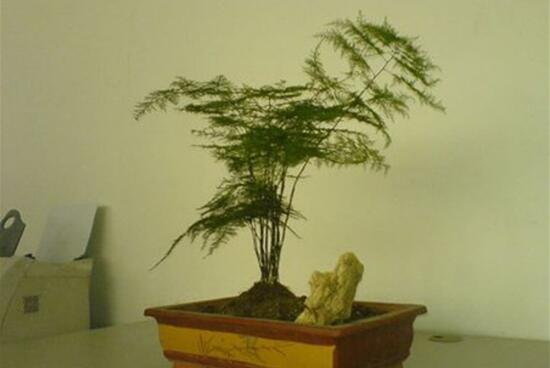
To grow dwarf asparagus fern short and sturdy, you can fertilize less during the seedling stage and stop fertilizing once it has taken shape. In addition, prune frequently to keep the plant in a shorter form. Besides that, choosing a good dwarf variety is key. Of course, the best method is chemical dwarfing: use chemicals for dwarfing once during its seedling stage and once during its formed stage.
II. Methods for growing dwarf asparagus fern short and sturdy
1. Fertilize less
Young plants: During the peak growing season, people generally apply a moderate amount of fertilizer to make plants grow quickly. So if you want dwarf asparagus fern to be short and sturdy, you must fertilize less during the spring and summer growing period. Generally, fertilizing once a month is enough, and the amount must not be too much; it is best to apply a light fertilizer.
Older plants: If it is a dwarf asparagus fern that has already taken shape, in order to keep it from continuing to grow, it is best not to fertilize. If you do fertilize, you can wait until you repot it and add some fresh potting soil to the pot. After fertilizing this way, whether it is a young plant or an old plant, it can maintain stable growth momentum.
2. Prune more
How do you grow dwarf asparagus fern so it stays short and sturdy? Pruning is an extremely key step. It is understood that dwarf asparagus fern grows relatively fast. In order to maintain its growth pattern and appearance, you should thin out old branches and dead stems at any time. At the same time, promptly cut off trailing branches. After pruning this way, you can not only slow the growth rate of dwarf asparagus fern, but also make it sturdier and more beautiful.
3. Dwarf and sturdy varieties
As for how to grow dwarf asparagus fern so it stays short and sturdy, there is actually a simplest method: choose a dwarf and sturdy variety of asparagus fern. Because this kind of asparagus fern has no stem and cannot climb, it can always stay small and compact. So plant lovers who find pruning troublesome can choose this trick, but when buying dwarf and sturdy asparagus fern varieties, it is best not to be fooled by sellers.
4. Chemical dwarfing
If you want dwarf asparagus fern to grow short and sturdy, and you still find it troublesome, then you can use chemicals for dwarfing. But every medicine has some toxicity; this is true for people and also for plants, so everyone needs to use it cautiously. The specific operations are as follows:
① When the new dwarf asparagus fern seedlings grow to 10 cm, you can use a 1000-fold diluted solution of paclobutrazol and spray it on the leaf surface, which can slow its growth rate.
② After the dwarf asparagus fern grows up, if you are afraid it will keep growing, you can also spray a certain amount of chlormequat on its leaves. After doing this, you can not only effectively control the growth height of dwarf asparagus fern, but also increase its ornamental value and viewing time.
How to grow dwarf asparagus fern so it stays short and sturdy
A short and sturdy dwarf asparagus fern looks fuller in form and also grows more healthily. So, how do you grow dwarf asparagus fern so it stays short and sturdy? The methods below can be divided into several aspects:
(1) Fertilizing. If it is a young dwarf asparagus fern plant, do not fertilize too much or too strongly in spring and summer; just keep a frequency of once a month. For plants that have been growing for a longer time, fertilize less or not at all in this suitable growing season. If repotting is needed, then simply add new soil for the old plant.
(2) Pruning. Normally, dwarf asparagus fern should be pruned periodically so that their growth trend and shape can be maintained. But do not prune excessively. Usually, cut off some unhealthy or already withered branches and leaves, and keep its form at a relatively low position, so that it can become short and sturdy.
(3) Chemical dwarfing. When the dwarf asparagus fern seedlings have grown to about 10 cm, you can use a 1000-fold diluted solution of paclobutrazol to spray on the leaf surface of the plant, which can slow down its height growth rate. If it is a mature dwarf asparagus fern, then a certain amount of chlormequat can be sprayed on the plant surface.
How to dwarf asparagus fern and make it beautiful; how to grow asparagus fern so it looks good
Asparagus fern, also called cloud bamboo, is actually not bamboo, but a perennial vine plant in the genus Asparagus of the lily family. Because its leaves are soft, it stays green all year round, and its branches and stems have nodes like bamboo, and its posture is elegant and unrestrained, it is called asparagus fern. Asparagus fern is native to South Africa, and now it is cultivated in gardens in many countries around the world. It is a famous foliage flower. Its branches and leaves are not only used as filler leaf material for cut flowers and flower arrangements, but can also be used medicinally, with the effect of relieving cough and moistening the lungs.
The root system of asparagus fern is relatively deep and fleshy, the stems are clustered, and the leaves are slender and arranged in horizontal sheet-like layers. After two years, asparagus fern plants gradually grow faster and become trailing. Potted asparagus fern generally blooms only after 4-5 years, and if poorly managed, it may not bear fruit even if it blooms.
To make asparagus fern bear fruit, on the one hand you must strengthen fertilizer and water management, and on the other hand you must prevent flower drop. Preventive measures are: do not move the flowerpot during the flowering period. If the flowerpot must be moved, pay attention to the direction so that the light-facing side of the asparagus fern still faces the light. If the light direction is disturbed, it will cause flower drop. Asparagus fern generally begins to bloom in April-May, blooms small white flowers in September-October, and forms spherical small berries from December to February of the following year. They are green at first and become purple-black after maturity. When the fruit skin changes color, harvest it in time and remove the outer skin. Dry it in the shade for later use.
The cultivated varieties of asparagus fern include: dwarf asparagus fern, whose characteristics are fine, dense and short leaf-like branches and no trailing habit. Large asparagus fern, whose stems and leaves are initially clustered, and after 2-3 years begin to trail, with leaf-like stems growing very long and showing irregular growth, requiring pruning and staking with ties.
The stems of asparagus fern have a climbing nature. If allowed to grow freely, they can reach several meters high, losing their light and graceful appearance. The measures to dwarf asparagus fern are:
1. For young plants, do not fertilize much in the vigorous spring and summer growing seasons. Generally, fertilizing once a month is enough. The amount of fertilizer must not be too large either; grasp the principle of keeping it light. For old plants, it is best to fertilize less or not at all. Simply when repotting, take the opportunity to fill the bottom of the pot with fresh soil, or apply a small amount of fertilizer. In this way, whether young or old plants, they can maintain stable growth momentum.
2. Pay attention to frequent pruning. Asparagus fern grows relatively fast, so thin out old branches and dead stems at any time to maintain a low posture. At the same time, promptly cut off trailing branches to keep it upright, elegant, well-spaced and green.
3. Choose dwarf asparagus fern varieties. The stems of dwarf asparagus fern have no trailing nature and can maintain a small and exquisite form.