How to grow dwarf asparagus fern? Growing methods and precautions for a plant that loves semi-shade
Dwarf asparagus fern, a variety of asparagus fern, is, just like its name suggests, a very short plant, yet its tree-like form is elegant and its color bright green, making it highly ornamental when grown indoors. In daily life, many people want to grow dwarf asparagus fern, so how do you grow it? Below are the growing methods and precautions for dwarf asparagus fern compiled by the editor, very detailed, so anyone who wants to grow it should definitely take a look~
1. How to grow dwarf asparagus fern: understand its habits
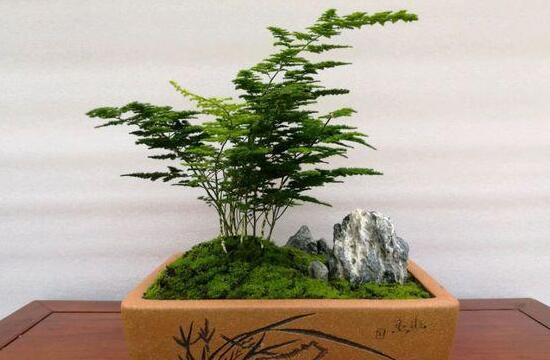
Dwarf asparagus fern likes a warm, humid environment with plenty of light. It dislikes strong light and cannot tolerate high temperatures. When grown indoors, it should be placed in a ventilated semi-shaded spot, and warmth should be provided in winter. As for the potting soil, it is best to choose loose, fertile soil with good drainage. So how do you grow dwarf asparagus fern? Just meet its growing habits.
2. Growing methods and precautions for dwarf asparagus fern
1. Soil
How to grow dwarf asparagus fern: first of all, you should reselect the potting soil. This is because many gardeners' dwarf asparagus fern bonsai are ready-made potted plants bought from flower shops or online, and normal care can keep the plant growing. But that soil is fairly cheap, so if you want the dwarf asparagus fern to grow well, it is best to choose new soil.
Soil choice: According to the growing habits of dwarf asparagus fern, it likes loose soil with good drainage. For this, the editor recommends using soil mixed in certain proportions from peat soil, perlite, garden soil, leaf mold and similar soil types.
Precautions: The flower pot for dwarf asparagus fern must not be too large, otherwise it will cause a lack of water. In addition, the soil must not be too alkaline; humus-rich soil needs to be added to neutralize it.
2. Light
The growth of dwarf asparagus fern cannot do without light, but it also fears strong light, so in the growing methods and precautions for dwarf asparagus fern, everyone should pay attention to light. In summer, when the light is strong, shade should be provided, and it should be given plenty of diffused light; in other seasons, if the light is not strong, you can let it get some sun outside.
3. Temperature
In the process of growing dwarf asparagus fern, adjusting the temperature in good time is also very important. Dwarf asparagus fern likes a warm environment, and its most suitable growing temperature is 5-25°C; it can grow normally above 10°C.
Precautions: Dwarf asparagus fern cannot tolerate high temperatures; above 30°C it will go dormant, and below 0°C the plant is also prone to cold damage. So when growing it indoors, in summer the dwarf asparagus fern should be placed in a ventilated, shady spot, and in winter it should be placed indoors with the room temperature kept above 5°C.
4. Watering
Water is the source of life, so how do you grow dwarf asparagus fern? Watering is indispensable. Dwarf asparagus fern likes a humid environment, but it dislikes waterlogging; if the soil surface is still moist, there is no need to water again.
Watering method: When watering dwarf asparagus fern, follow the principle of "do not water until dry, and water thoroughly when you do." Wait until the surface of the potting soil has no moisture at all, or is even cracked and dry, then water promptly. As for the watering frequency, it should be determined according to the growth of the dwarf asparagus fern.
5. Fertilizing
Having covered watering, let's talk about fertilizing, which is also a very important part of the growing methods for dwarf asparagus fern. However, when fertilizing dwarf asparagus fern, you should apply light fertilizer frequently; do not apply too much or too strong a concentration each time, otherwise it will cause poor growth or even death of the plant.
How to grow asparagus fern: growing methods and precautions for asparagus fern
Asparagus fern, an evergreen ornamental plant, belongs to the genus Asparagus in the lily family and comes from Africa. It is a common potted ornamental plant in homes. How do you grow asparagus fern? Below we will tell you the growing methods and precautions for asparagus fern.
Growing methods for asparagus fern:
1. Soil choice: Asparagus fern is generally suited to pot culture, because potting soil can ensure good drainage and humus is easier to add. The soil should also be clean, otherwise the plant may be harmed. The soil should be moist, and the soil should be loosened in time to ensure air circulation.
2. Watering: Asparagus fern is actually not strict about water. The general standard for watering is to water when the soil is dry, and when watering, water thoroughly, which means the leaves should be watered too, but be careful not to cause waterlogging. Spring and autumn air is relatively humid, so water according to the standard, while in summer the soil dries easily, so you can appropriately spray the leaves.
3. Fertilizer control: Asparagus fern actually does not care much about fertilizer, unlike pothos, snake plant and others; just like with money tree, applying light fertilizer is enough, generally nitrogen-based, usually once a month, otherwise, because the potting soil is relatively limited, nutrients cannot be replenished in time and the plant will become unhealthy.
4. Light duration: Asparagus fern is a semi-shade plant and should not be exposed to the sun for long periods, especially the summer sun, which needs to be blocked in time. In spring and summer, it can be given some sunlight appropriately.
5. Temperature adjustment: In daily care, asparagus fern only needs the temperature kept above 10°C to grow normally. In summer, place it in a ventilated, shady spot and water appropriately to cool it down, while in winter, the indoor temperature needs to be kept above 5°C, otherwise the plant will be frostbitten and die.
6. Environment choice: Asparagus fern is rather delicate; you could say it loves cleanliness, so if it is placed where there is smoke or a lot of smoke and dust, its leaves will turn yellow and dry up.
Precautions for growing asparagus fern:
1. The soil for asparagus fern needs to be kept relatively clean, and when caring for it, you must not add dirty things to the soil. Regularly changing the soil and adding fertilizer is a good guarantee for the growth of asparagus fern.
2. Watering asparagus fern should stick to one principle: do not water when not dry; water less in spring and autumn, more in summer, and preferably not at all in winter.
3. When applying fertilizer to asparagus fern, pay attention to using light fertilizer more often, with the appropriate amount being best, and nitrogen fertilizer being the best. Especially after the plant is established, fertilizer should be appropriately controlled so as not to cause leggy growth.
4. While providing light, remember that asparagus fern is semi-shade by nature and is not suited to long exposure; as long as you do not take it outside in summer, it is fine.
5. Asparagus fern does bloom, and when it blooms it should not be exposed to wind, as this will make the flowering period very short; it also should not be rained on, as this will also shorten the flowering period, and it will not be able to bear fruit. When grown in pots, it should be cared for well during the flowering period.
6. Generally, if asparagus fern is grown from seed, the sowing season is around April. It can normally become a mature plant within 3 years, and in the fourth year it can be divided, and generally in the fourth year it can bloom and bear fruit.
How to grow asparagus fern: growing methods and precautions for asparagus fern
The symbolism of asparagus fern represents eternal, pure friendship, and also everlasting romantic love, and it is often used in weddings. Asparagus fern can make fresh flowers look charming and full of life. Therefore asparagus fern is deeply loved by people! But growing asparagus fern is not easy! Below, the editor introduces the growing methods and precautions for asparagus fern:
Growing methods for asparagus fern
1. Watering and fertilizing: During the growing period, asparagus fern should be watered sufficiently, and the potting soil must be kept moist, but watering must not be excessive, and waterlogging must not occur, otherwise root rot and leaf drop easily occur, reducing its ornamental value. After autumn, watering should be reduced. During the growing period, apply a light fertilizer containing nitrogen and phosphorus 1-2 times a month to encourage lush branches and leaves; other liquid fertilizers may also be used. Note that during the flowering period, do not fertilize too much; applying liquid fertilizer twice each in May-June and September-October is enough. The amount of watering should be flexibly controlled according to the size of the plant, following the principle of seeing dry and seeing wet. When the branches grow long, a support should be set up and tied in time, and appropriate shaping and pruning should be done to keep the plant neat and attractive.
2. Planting and repotting with soil change: Asparagus fern is generally grown in pots. It has fleshy fibrous roots and is strict about soil during growth. For pot culture, use a growing medium fully mixed from leaf mold and a small amount of fine sand, and the soil must be well aerated and well drained. Change the potting soil once a year. When the root system fills the pot, replace it with a larger pot. When repotting, cut off the outer fibrous roots, remove part of the old potting soil, and add new fertile soil. As the plant grows taller, a support should be inserted.
3. Temperature and light: In winter, asparagus fern should be brought indoors for care, with the room temperature kept above 10°C; below 5°C it is prone to cold damage. In southern China it can overwinter outdoors. The suitable growing temperature is 15-25°C; above 32°C it will stop growing and the leaves will turn yellow. If exposed to direct sunlight, besides the leaves turning yellow, scorched symptoms will also appear. Poor ventilation will not only cause heavy leaf drop, but also prevent it from setting fruit. Therefore, asparagus fern should be placed indoors or under a shade shed, but it should not be shaded for long periods; it should be placed in a bright spot indoors. In late autumn and winter, it should be placed near a south-facing window to get more sunlight.
Precautions for growing asparagus fern
1. Insufficient nutrients: If a potted asparagus fern is not repotted for many years, the soil will lack nutrients. If only clear water is poured and no fertilizer is applied, nutrient deficiency will also occur. For potted asparagus fern, apply a thin, fully rotted liquid fertilizer once a week, and loosen the soil and water in time.
2. Too much light: Asparagus fern likes half shade and half sun, and dislikes direct strong sunlight, otherwise the branches and leaves will turn yellow, so asparagus fern should be shaded.
3. Improper watering: Asparagus fern likes moisture but fears waterlogging, so it is best to use an air-permeable, water-seeping sandy loam for cultivation. Watering should be appropriate; too much will rot the roots, too little will make the leaves wither and turn yellow. When the weather is hot and dry, spray clean water on the branches and leaves every day to increase environmental humidity and compensate for water evaporation from the branches and leaves.
4. Improper fertilizing: If fertilizer that is too concentrated or not fully rotted is applied, it will damage the roots and cause the leaves to turn yellow and fall off. Rinse the potting soil with water to dilute the fertilizer concentration, or immediately rescue it by changing the soil.
5. Smoke and dust pollution: Asparagus fern fears smoke, dust and toxic gases, so it should be placed in a place with good air circulation to avoid smoke and dust pollution. It should also be sprayed with water frequently to wash off dust. The pros and cons of improper placement of asparagus fern
6. Poor winter management: Asparagus fern likes warmth and fears cold. In winter it should be placed indoors in a sunny, warm spot, with the room temperature kept above 8-12°C; being in shade for a long time and at a room temperature below 8°C will cause the branches and leaves to turn yellow. In addition, watering must be controlled.
I hope the growing methods and precautions for asparagus fern introduced by the editor today will be helpful to everyone!