How to grow Daphne odora? Cultivation methods and precautions: likes fertilizer but hates waterlogging
Daphne odora, also known as Fengliu Shu, has a natural and elegant tree shape, small white flowers, and a rich fragrance, making it a flower deeply loved by gardening enthusiasts. In daily life, after learning about Daphne odora, many people want to grow it, so how do you grow Daphne odora? Below are the cultivation methods and precautions for Daphne odora compiled by the editor, very detailed, so those who want to grow it must take a look~
I. How to grow Daphne odora indoors, understand its habits
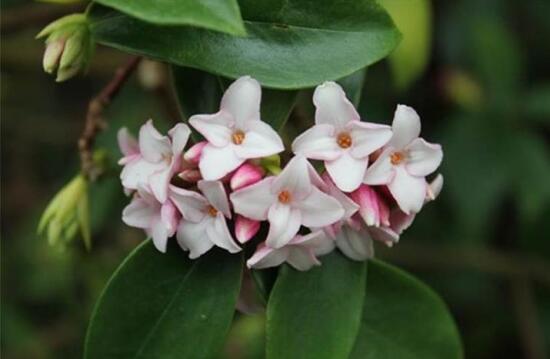
Daphne odora prefers a warm, humid, semi-shaded environment. It is not cold-tolerant, hates heat, and fears direct strong light. When growing it indoors, the potted Daphne odora should be placed in a semi-shaded spot, watered appropriately to keep the potting soil moist, and protected from the cold in winter. As for the growing medium, it is best to choose a loose, fertile, well-draining sandy loam. So how to grow Daphne odora requires us to satisfy its growth habits.
II. Cultivation methods and precautions for Daphne odora
1. Soil
Although Daphne odora has been cultivated and domesticated, it is still difficult to grow well, so for how to grow Daphne odora, we should first reselect the potting soil, starting from the most basic. Because gardening enthusiasts' potted plants are basically purchased online, and that soil is very cheap. Normal care can ensure plant growth, but if you want Daphne odora to grow well, it is best to reselect the soil.
Soil selection: According to the growth habits of Daphne odora, it likes loose, fertile, well-draining, humus-rich, slightly acidic sandy loam. For this, the editor recommends using: a soil mix of 5 parts garden soil (mountain soil) and 2 parts leaf mold (pine needle soil).
2. Light
The growth of Daphne odora cannot do without light, but it also fears strong light, so in the cultivation methods and precautions for Daphne odora, everyone should pay attention to light. In summer, place the potted Daphne odora in a well-ventilated semi-shaded spot; in spring, autumn, and winter it should also be placed in a semi-shaded spot, and when the temperature is relatively low, it can be placed on a balcony to receive sunlight.
3. Watering
Water is the source of life, so how to grow Daphne odora? Watering is indispensable. However, Daphne odora has fleshy roots, so it is relatively drought-tolerant. When watering, water less, not too much. Otherwise, it is easy to cause the potting soil to remain wet for a long time, which easily causes root rot, resulting in poor plant growth and even death.
4. Fertilizing
Having covered watering, let's talk about fertilizing, which is also a very important part of Daphne odora cultivation methods. Daphne odora likes fertilizer. During its rapid growth period, we should apply liquid fertilizer every 10 days, paying attention to keeping the fertilizer concentration low.
Precautions: When fertilizing Daphne odora, there are a few points to note. First, human feces and urine cannot be used as its fertilizer; second, in summer when temperatures are high, Daphne odora enters a dormant state, and at this time fertilization should be stopped to avoid burning the roots.
5. Pruning
In the process of growing Daphne odora, for the healthy growth of the plant and also for its appearance, we should prune it in a timely manner. First, before sprouting, cut off relatively dense branches to facilitate ventilation and light penetration; second, after the flowering period of Daphne odora, shorten the branches bearing withered flowers, and cut off leggy branches, crossing branches, overly dense branches, and overlapping branches, which can maintain its appearance.
6. Repotting
In the cultivation methods for Daphne odora, there is another point everyone should note, which is repotting. Everyone should change the potting soil for Daphne odora every 2-3 years, generally after the flowers fade. When repotting, replace 2/3 of the old soil, or replace all the old soil with new soil.
Introduction to the cultivation methods and precautions for golden-edged Daphne odora
Even though Daphne odora is actually a traditional famous flower of our country, it is of course also a world-famous flower. In modern horticultural history, it was praised together with Changchun monk's clivia and Japanese five-needle pine as the three treasures of world horticulture, and golden-edged Daphne odora is famous worldwide for its four excellences of color, fragrance, posture, and charm, and has even left behind the chant that among peonies the national beauty and heavenly fragrance, among Daphne odora the golden-edged one is best. So what do we need to pay attention to if we want to grow it? Today let the editor explain it to everyone in detail.
[Growth habits]
For generally potted golden-edged Daphne odora, its potting soil is most suitable as fertile, loose, humus-rich, acidic leaf mold, and an appropriate amount of river sand and decomposed cake fertilizer can also be mixed in. The roots of golden-edged Daphne odora are fleshy, so during usual care and management special attention must be paid to controlling watering for it. If watered too much and the potting soil remains too wet for a long time, it will very easily cause root rot. After rain, the accumulated water in the pot must be poured out promptly.
Although golden-edged Daphne odora likes semi-shade, in winter and spring it should be placed in an environment with sunlight, and during its growth period if there is sufficient light and suitable fertilizer, it can make the branches plump and the leaves dark, with bright flowers and rich fragrance. In summer it should be placed in a cool, well-ventilated spot, and when it is hot, water should also be sprayed to lower the temperature. Because golden-edged Daphne odora relatively likes fertilizer, we can water it with a thin liquid fertilizer about every 10 days during its growing season. Before and after flowering, it is suitable to apply a thin cake fertilizer water once each. After Frost's Descent, move it indoors to a sunny spot, keep the room temperature at around 5°C, and control watering; the water content of the potting soil should be controlled at around 45% so it can make it through winter safely. In addition, the branches and trunks of golden-edged Daphne odora grow in clusters, with strong sprouting ability and tolerance to pruning, so branch training must be carried out after flowering.
[Cultivation methods]
Potted management: Daphne odora is actually also called Penglai Hua or Qianli Xiang. It also belongs to the evergreen shrub category of the Thymelaeaceae family, and is even more famous for its fragrance. Its variety is golden-edged Daphne odora, which is even the best among Daphne odora. And we should know that the propagation method of golden-edged Daphne odora mainly uses old branch and young branch cuttings, and this method has the characteristics of a high survival rate, being simple and easy to learn, and saving labor and effort. For potted golden-edged Daphne odora, the potting soil is also most suitable as loose, humus-rich, slightly acidic leaf mold or mountain soil (or frozen and crumbled pond soil), mixed with an appropriate amount of river sand and decomposed cake fertilizer.
Although golden-edged Daphne odora is a plant that likes semi-shade, in winter and spring it should still be placed in an environment with sunlight, because during its growth period if there is sufficient light and suitable fertilizer, it can make the branches supple and the leaves dark. Before and after flowering, it is suitable to apply once each a thin cake fertilizer water or decomposed chicken or duck manure water. After Frost's Descent, move it indoors to a sunny spot, keep the room temperature at around 5 degrees, and control watering; the water content of the potting soil should be controlled at around 45% so it can safely pass the winter. In addition, the branches and trunks of golden-edged Daphne odora grow in clusters, and its sprouting ability is relatively strong and it is also relatively tolerant of pruning. We generally can carry out branch training after its flowering.
Watering: The leaves of golden-edged Daphne odora are leathery, glossy, and contain a large amount of wax, so the transpiration of the leaves is very small, and therefore it is not tolerant of wetness. In usual watering, it is best to water when dry and stop when wet. In early spring when the buds are about to sprout, water once thoroughly, and afterward water thoroughly again after the potting soil has dried out. In summer, besides maintaining alternating dry and wet potting soil, it is also necessary to regularly spray water around it and on the leaf surface to lower the temperature. In late autumn, keep the potting soil in a semi-dry state to slow down the growth vigor, which is beneficial for overwintering. In winter when growth stagnates, the potting soil should be on the dry side, and watering should be reduced.
Fertilizing: Although golden-edged Daphne odora does not like heavy fertilizer, in normal times we still need to apply a decomposed thin fertilizer liquid once a month for it. Applying a thin fertilizer liquid once before and after it flowers can make the plant lush, with fragrant flowers and bright colors. Be careful not to splash the fertilizer liquid onto the leaves, and fertilizing should also be done when the potting soil is dry. It is taboo to apply human feces and chemical fertilizers to it.
Cultivation methods and precautions for Daphne odora
Chinese scientific name: RuixiangLatin scientific name: Daphne odora ThunbOther names: Shuixiang, Penglai Zi, Fengliu Shu, Mao Ruixiang, Qianli Xiang, Shanmeng HuaKingdom: PlantaePhylum: AngiospermsClass: DicotyledoneaeSubclass: ArchichlamydeaeOrder: MyrtalesFamily: ThymelaeaceaeGenus: DaphneSpecies: Daphne odoraDistribution area: Distributed in the provinces and regions south of the Yangtze River basin, and also distributed in Japan.Form: Golden-edged Daphne odora (form)Daphne odora, other names: Shuixiang, Lujia, Fengliu Shu, Penglai Hua, Qianli Xiang, Ruilan, Shending Hua, Penglai Zi, Duopi Xiang, Latin name: Daphne odora Thunb. Thymelaeaceae, Daphne genus evergreen erect shrub; branches stout, usually dichotomously branched, branchlets nearly cylindrical, purplish red or purplish brown, glabrous. Leaves alternate, papery, oblong or obovate-elliptic, apex obtuse-acute, base cuneate, margin entire, green above, light green below, glabrous on both surfaces, lateral veins 7-13 pairs, conspicuously raised on both surfaces together with the midrib; petiole stout, anthers oblong, ovary oblong, glabrous, apex obtuse, style short, stigma capitate. Fruit red. Flowering period March-May, fruiting period July-August. Image from the Chinese Plant Image Database1. Morphological characteristics
Evergreen erect shrub; branches stout, usually dichotomously branched, branchlets nearly cylindrical, purplish red or purplish brown, glabrous. Leaves alternate, papery, oblong or obovate-elliptic, 7-13 cm long, 2.5-5 cm wide, apex obtuse-acute, base cuneate, margin entire, green above, light green below, glabrous on both surfaces, lateral veins 7-13 pairs, conspicuously raised on both surfaces together with the midrib; petiole stout, 4-10 mm long, sparsely covered with very few minute pubescence or glabrous.Flowers pale purplish red outside, flesh-red inside, glabrous, several to 12 forming a terminal capitate inflorescence; bracts lanceolate or ovate-lanceolate, 5-8 mm long, 2-3 mm wide, glabrous, veins conspicuously raised; calyx tube tubular, 6-10 mm long, glabrous, lobes 4, cordate-ovate or ovate-lanceolate, base cordate, equal to or exceeding the calyx tube; stamens 8, in 2 whorls, the lower whorl stamens inserted above the middle of the calyx tube, the upper whorl anthers 1/2 exserted from the throat of the calyx tube, filaments 0.7 mm long, anthers oblong, 2 mm long; ovary oblong, glabrous, apex obtuse, style short, stigma capitate. Fruit red. Flowering period March-May, fruiting period July-August.
2. Growth habits
It likes semi-shade and ventilated environments, fears exposure to the sun, and is not tolerant of waterlogging or drought. It likes fertile and moist, well-draining, slightly acidic loam, has strong sprouting ability, and is tolerant of pruning.3. Geographical distribution
Distributed in China and the Indochinese Peninsula, and only cultivated in Japan. We examined a large number of specimens from major herbaria in our country and found no wild ones, only cultivated in some parks or gardens. From this it appears that this species is a cultivated species, widely cultivated in both China and Japan, and rarely wild.4. Taxonomy
Daphne odora, other names: Shuixiang, Lujia, Fengliu Shu, Penglai Hua, Qianli Xiang, Ruilan, Shending Hua, Penglai Zi, Duopi Xiang, Latin name: Daphne odora Thunb. Angiosperms; Dicotyledoneae; Myrtales; Thymelaeaceae; Daphne; Daphne odora.5. Species under the genus
Daphne odora(Guo Tuotuo's Book on Tree Planting) Shuixiang, Lujia, Fengliu Shu (Qunfang Pu), Penglai Hua (Hua Jing), Qianli Xiang, Ruilan (Henry's Chinese Seed Plant List), Shending Hua, Penglai Zi, Duopi Xiang (New Materia Medica Compendium)Daphne odora Thunb. Fl. Jap. 159. 1784; Sims in Curtis′s Bot. Mag. 38: t. 1587. 1813; Keiss. in Bot. Jahrb. 25: 89. 1898; Matsum. et Hayata, Pl. Formos. 354. 1906; Rehd. in Sarg. Pl. Wils. 2: 545. 1916; H. Winkl. in Fedde, Repert. Sp. Nov. Beih. 12: 441. 1922; Kanehira, Formos. Trees, ed. Rev. 482. 1936. ——D. triflora Lour. Pl. Cochinch. 1: 236. 1790. ——D. japonica Thunb. in Mus. Acad. Upsal. 13: 106. 1792. ——D. mazeli Carr. in Rev. Hort. 1872: 392. t. 1872. ——D. odora Thunb. var. mazeli (Carr.) Hemsl. in Gardeniana 14: 442. t. 1878.
Daphne odora(Original form) Plate 67: 1-5
f. odora.
Golden-edged Daphne odora(Form) (Chinese Tree Taxonomy)
f. marginata Makino in Bot. Mag. Tokyo 23: 69. 1909; Hamaya in Bull. Tokyo. Univ. Forests. 55: 69. 1959.
Leaf margins pale yellow, center green.
Cultivated in all major cities of our country. Also cultivated in Japanese gardens. Besides being ornamental, the roots of this form can be used medicinally; the stem bark fibers can be used as papermaking material.
Types
White-flowered Daphne odora, flower color pure white;
Red-flowered Daphne odora, flowers red;
Purple-flowered Daphne odora, flowers purple;
Yellow-flowered Daphne odora, flowers yellow;
Golden-edged Daphne odora, leaf margins golden yellow, flower buds red, opening white; Mao Ruixiang, flowers white, the outside of the perianth densely covered with grayish-yellow silky pubescence; golden-edged Daphne odora is the best among Daphne odora, and there is a saying that among peonies the national beauty and heavenly fragrance, among Daphne odora the golden-edged one is best;
Rose Daphne odora, petals white inside and light red outside;
Concave-leaved Daphne odora, leaf margins recurved, apex obtuse with a small concave notch.
6. Cultivation techniques
Planting methods
The propagation of Daphne odora is mainly bycuttings, and can also uselayering, graftingorseeds. Cuttings are mostly carried out before Qingming and the Beginning of Summer, and can also be done in autumn. Cut 8-10 cm of stout top branches, keep 2-3 leaves, soak in a rooting agent, and insert into a sand bed at a depth of 1/2 to 1/3 of the total length, then shade immediately; they will root in about 40 days. When taking Daphne odora cuttings, folk practice often splits the lower end of the cutting, inserts a grain-sized pebble, and increases the contact surface between the scion and the substrate to facilitate rooting. When taking cuttings at the Beginning of Autumn, the cutting bed can be covered with film to increase temperature. For field-planted Daphne odora, when transplanting, a soil ball is needed, and it should be done in spring or autumn. Apply base fertilizer before frost, then topdress 1-2 times afterward, and apply a flower-promoting fertilizer once more before winter. For potted Daphne odora, first choose a cultivation substrate that both retains water and drains well, mostly pond soil. Because Daphne odora likes fertilizer, it should be topdressed at any time, but human feces and urine should not be used. The flowerpot should avoid direct sunlight, and in summer it must be shaded.Cutting propagation
Golden-edged Daphne odora likes sun but fears intense sunlight, tolerates dryness but avoids waterlogging, and is suitable for planting in potting soil made of sun-exposed pond soil and humus. Flowering at Spring Festival can be ensured by controlling light, temperature, and water.
Golden-edged Daphne odora does not set seed after flowering and is mainly propagated by cuttings, which can be done in spring, summer, and autumn, with the highest survival rate in summer cuttings. Select semi-lignified branches of the current year as cuttings, make the cut smooth, sterilize the scissors or blade with an alcohol lamp or lighter at high temperature, cut the branches into 8 cm lengths, keep 4-6 leaves, soak the inserted part in a special rooting agent, then dip it in carbendazim powder, and insert 3/5 of the plant into the growing medium. The growing medium is rice husk ash burned to carbonization but not to ash and extinguished by pouring cold water, then scalded with boiling water or treated with potassium permanganate solution to remove alkali and sterilize. Cover with film for 15 days to retain moisture; generally roots in 30 days and can be transplanted into pots in 50 days. It is better to apply air-isolated fermented and decomposed human feces and urine or cake fertilizer water, applying small amounts multiple times and appropriately increasing phosphorus and potassium fertilizer. Combine pruning and shaping with pest elimination to make golden-edged Daphne odora upright and elegant. By the Spring Festival of that year it can bloom with bursts of rich fragrance and brilliantly colored flowers, and after the second year it can grow into a large ornamental bonsai with a graceful posture.
Field management
Propagation can be done by cuttings in spring, summer, and autumn. Spring cuttings are from late February to late March, selecting annual stout branches about 10 cm long, cutting off the lower leaves, keeping 2-3 leaves, and then inserting into the seedbed; summer cuttings from mid-June to mid-July; autumn cuttings from late August to late September, all selecting current-year branches. For summer and autumn cuttings, cut robust current-year branches, and the base of the cutting is best with an internode, which is more conducive to rooting. Insert into a river sand pot at about 2/3 depth, shade after insertion, and keep moist but not overly wet; they will root in 45-60 days. If the base of the cutting is dipped in woody rooting powder, it is even more conducive to rooting.High-pressure propagation is suitable in March-April when the plant sprouts new buds. First select 1-2 year old robust branches, carry out 1-2 cm wide ring-barking treatment, then wrap the cut with plastic sheeting, fill it with soil, tie the lower end tightly, and tie the upper end of the plastic sheeting tightly as well, but leave a small hole for ventilation and watering, keeping the soil in the bag moist; generally it will root after more than 2 months. After autumn, cut it off from the mother plant and pot it or plant it separately.
It likes a warm environment, fears intense sunlight, likes shade, and fears cold. In summer it should be shaded, protected from rain and strong wind; in winter place it indoors in a sunny, wind-sheltered spot and maintain a room temperature above 8°C. Keep the leaf surface clean and keep the potting soil from being too dry or too wet; do not let it freeze, and do not let there be coal smoke or cooking fumes indoors. It likes loose, fertile, well-draining acidic soil (pH 6 to 6.5), and alkaline soil should be avoided. Mountain soil or garden soil mixed with 40% peat soil, leaf mold, pine needle soil, and an appropriate amount of coal ball ash, rice husk ash, urban waste, etc. can be used as the growing medium. When cultivating, choose semi-shaded, semi-sunny, deep topsoil, and moist land for planting. To avoid direct sunlight while still being able to get sunlight in winter, the method of mixed planting with deciduous trees and shrubs is often used. Transplanting can be done in both spring and autumn, but transplanting during the spring flowering period or the plum rain period is preferable. Adult trees are not tolerant of transplanting, so when transplanting, be sure to bring as much original soil as possible and also prune heavily.
Management after planting: open-field cultivation is relatively extensive, watering only when the weather is too dry; before overwintering, apply some decomposed barnyard manure around the plant clump. For potted Daphne odora, keep the potting soil half dry and half wet, and apply fertilizer once each in spring and autumn. In spring during the bud sprouting and shoot growing period, use a mixed liquid fertilizer of 30% decomposed soybean cake and chicken manure; in autumn in late September, the fertilizer concentration should be light. Fertilizing should be chosen on a sunny day, preferably before 10 a.m. After 5 p.m. on the day of fertilizing, spray water once on the leaf surface. The water cannot be newly drawn tap water; it is best to use water that has been exposed to sunlight or stored indoors for a day, and the water temperature cannot be lower than the indoor temperature. Do not spill the fertilizer liquid on the leaf surface; if spilled, immediately rinse it off with water from a watering can. Fertilizer is mainly nitrogen fertilizer and potassium fertilizer, that is, often a mixture of cake fertilizer and fishy fertilizer. But it must be fully fermented fertilizer liquid, and a small amount of black alum water should also be added. Daphne odora should not be fertilized heavily, but lightly. Note that fertilization is not suitable when the potting soil is too wet and the temperature is too high or too low. From early summer, potted Daphne odora should be placed under tree shade or in a shade shed to avoid strong light. The pot should not be placed directly on the ground, so that the flower's fragrance does not attract ants and earthworms. Daphne odora is relatively tolerant of pruning. Generally before sprouting, densely growing small branches can be pruned away, leaving a certain gap to facilitate ventilation and light penetration. Daphne odora should be shaped and pruned after flowering, shortening the branches that have flowered, and cutting off leggy branches, overlapping branches, overly dense branches, crossing branches, and other branches that affect the beauty of the tree shape, so as to maintain a graceful form. Daphne odora should be repotted and have its soil changed every 2 to 3 years, generally after the flowers fade, and also in autumn. When repotting, remove 2/3 of the old soil, appropriately trim away some overly long fibrous roots, and combined with repotting, appropriately raise the roots.
Before Qingming at the end of March, Daphne odora can be moved outdoors, but it must be protected from strong wind and heavy rain so that the newly sprouted tender buds of Daphne odora are not damaged. By the end of April, gradually shorten the light duration. From mid-June to mid-September it can be without light all day. Because by summer Daphne odora basically stops growing and enters a semi-dormant state. During this period, prevent heavy rain, and strictly prohibit fertilization. Also create a cool and ventilated good environment for it, and reduce the amount of watering. After Daphne odora passes the summer, from late September to early October it can see some morning sunlight, 2 to 3 hours is good, and afterward the light duration can be gradually extended; by the end of October it can have all-day light. According to different local climate conditions, in October or early November Daphne odora should be moved indoors, and after being moved indoors it should be placed in a position with a long light duration. In mid-November and early and late December, apply a thin fertilizer liquid once each. Because the flower buds of Daphne odora grow relatively slowly, fertilizer cannot be applied too frequently, too much, or too concentrated, but it also cannot be not applied at all.
Golden-edged Daphne odora has poor sexual reproduction ability and mostly uses vegetative organ propagation, so seedlings are in short supply and expensive. Vegetative propagation of golden-edged Daphne odora can be carried out all year round, usually using methods such as cuttings, grafting, and air layering. Below is an introduction to water cuttings and bud cuttings propagation methods. Water cuttings and bud cuttings
Water cuttings.Water cuttings are generally carried out in summer, when new branches tend to mature, making it a good season for water cuttings. The water cutting method roots quickly and has a high survival rate (almost 100%), and can reduce the number of water sprays. The specific method is: take current-year branches, 8-12 cm long. The day before cutting the branch, it is best to cut a ring at 1-2 mm from the branching point with a sharp knife (scissors cannot be used), which can accelerate healing and rooting. After ring-cutting at the branching point, smooth the wound, remove the leaves on the lower half of the branch, keep 3-4 leaves on the upper part, and cut off the rest. Then insert it into a prepared wide-mouth bottle. Fill the bottle with about 3/4 water and drop in 2-3 drops of vinegar. The cutting should be about 1/3 in the water, held upright and fixed. Cover the bottle mouth with gauze and tie it tightly. After insertion, place it on an indoor windowsill. When the water amount decreases, add water to the original water level. After about 5 days, spray water on the leaf surface 1-2 times, change the water once a week, and it can root within one month. Transplant into pots promptly.
Bud cuttings.Bud cuttings are carried out before sprouting in spring. Select plump, robust current-year branches from the middle and upper part of the crown as cuttings, keep one leaf on the upper part, and there should be an obvious bud point at the leaf axil; a cutting with one leaf and one bud is best. When taking the cutting, use a sharp knife, start the cut from above the axillary bud, cut diagonally, and shape it into a horse-ear form, being careful not to damage the axillary bud, so as to facilitate rooting and sprouting. Use pine needle soil plus 30% fine sand as the cutting substrate, which facilitates the insertion and fixing of short cuttings. Note that before cutting, the pine needle soil and fine sand substrate must be placed in the sun to be exposed and sterilized. When cutting, insert 1/2 into the soil, press firmly after insertion, sprinkle a little water, and keep moist; it can root and survive in about 40 days. After new branches grow, transplant into pots in the spring of the following year.
Bonsai making
Material selection and cultivation measures[Artificial propagation]: Daphne odora propagation mostly uses cuttings and layering, and can also use water cuttings, division, and sowing. Cuttings can be done all year round, but early March to late June is the best time for cuttings. For spring cuttings, select annual stout branches as cuttings, about 5-10 cm long. The day before cutting the branch, use a sharp knife to ring-cut once at 0.1 cm from the branching point to promote healing and rooting. For those ring-cut at the branching point, cut them off in a timely manner and smooth the cut, and the upper part of the cutting should retain 2-4 leaves; for those not ring-cut at the branching point, if there are several divisions they can be cut separately. The insertion depth is about 1/3 or 1/2, and it should not be too deep. For home cuttings, a cutting pot can be used; for large-scale cuttings, a seedbed must be used, and the seedbed soil should preferably be loose, fertile, well-draining, slightly acidic soil. After insertion, a protective shed must be set up to prevent sun and rain (bamboo strips can be arched into a 50-60 cm high frame and covered with plastic film). When the temperature is too high, a corner of the film shed must be opened for ventilation, and attention should be paid to controlling moisture; it should not be too wet. Generally, spring cuttings can root in about 30 days, and can be divided and transplanted in about 2 months. If cutting in summer and autumn, the cuttings must be selected from semi-lignified new branches of the current year, and stout branches about 8 cm long with a heel should be selected. After insertion, keep the seedbed soil moist, and pay attention to insulation when the temperature drops; generally they can also root in about 40 days, and then be transplanted for cultivation after the following spring warms up.
[Layering propagation]: Usually the air layering method can be used. Air layering is best done from May to June. First select suitable branches, determine the air-layering position, use the notching method to make one or two horizontal cuts or ring-barking at the layered position, with the cut reaching the xylem, then wrap the cut part with a plastic bag or half a bamboo tube, tie the lower end tightly, apply growth hormone to the wound, then fill in the prepared growing soil, and tie the upper end of the bag tightly. Keep the soil in the bag moist, and fix the air-layered branch well so it is not broken. Generally it can root in about 40-50 days, and after about 2 months it can be cut from the mother branch and potted for cultivation. Propagating Daphne odora by water cutting is simple and easy, and the survival rate is also relatively high.
Potting process[Pot selection]: For Daphne odora, a slightly deep round pot or square pot is suitable, and an oval or rectangular pot can also be used. The texture of the pot is best as purple clay pottery. The pot color can be chosen as sunflower yellow or light gray, to set off the green leaves and white flowers and produce a contrast effect.
[Soil]: Daphne odora likes to grow in fertile, loose, well-draining sandy loam, requiring slightly acidic soil with a pH between 6 and 6.5. For potting, leaf mold or sun-dried, weathered garden soil mixed with an appropriate amount of rice husk ash or sand can be used.
[Planting]: It is suitable to pot and plant in April in spring. At this time the climate is mild and humid, and the temperature difference between day and night is small, which is conducive to Daphne odora adapting to the pot and growing. Planting in autumn is also possible. When transplanting, more original soil must be brought, and the branches should be appropriately pruned.
Shaping techniques
[Processing]: Daphne odora bonsai is suitable for wire training, combined with pruning for shaping. But care must be taken to remove the wire in time, so as not to cause wire embedding, affecting appearance and growth. Processing and shaping are suitable during the dormant period, and can also be done after flowering.
[Tree shape]: The tree shape of Daphne odora bonsai is suitable to be made into a natural large-tree form. The branches and trunks should be upright and graceful, and attention should be paid to appropriate density so as to make the branches elegant and the flowers abundant, with rich color and fragrance, enhancing the ornamental effect.
Maintenance and management
[Placement location]: Daphne odora bonsai is suitable to be placed in a warm, humid, semi-shaded, semi-sunny location. In summer it should avoid exposure to sunlight, and in winter it should be placed under a south-facing window with light and air circulation.
[Watering]: Daphne odora is not tolerant of wetness. Usually the potting soil should be on the dry side and must not have standing water. In summer when temperatures are high, water twice a day in the morning and evening; in spring and autumn, watering should be correspondingly reduced, but in autumn during the bud gestation period, note that the potting soil must not be too dry. When the weather is clear and dry, leaf surface water can be sprayed frequently so that the branches and leaves are often moist, which is conducive to growth. In the rainy season, the pot can be moved under the eaves or windowsill to avoid rain.
[Fertilizing]: In winter, apply sufficient base fertilizer. In spring, apply decomposed cake fertilizer water 2-3 times, and the fertilizer water should not be concentrated. In summer during the dog days, stop applying to avoid burning the roots. After autumn begins, apply thin fertilizer frequently until the flower buds open. In spring, apply fertilizer water mainly of nitrogen and potassium; after autumn, fertilizing is mainly phosphorus. After the flower buds form, potassium dihydrogen phosphate at a concentration of 0.1-0.2% can be used to spray the branches and leaves for foliar feeding, but the fertilizer water must be sprayed on the back of the leaves to improve fertilizer efficiency and promote abundant flowers and lush leaves. Daphne odora avoids the use of human feces and urine fertilizer.
[Pruning]: Daphne odora is mostly pruned after flowering. Generally the branches that have flowered can be shortened to promote more branching and increase the number of flowers the following year. Cut off leggy branches, crossing branches, and overlapping branches, and also promptly cut off branches that affect appearance, so as to maintain a certain tree shape.
[Repotting]: It is suitable to be done every 2-3 years, preferably after flowering in spring, and also in autumn. When repotting, more old soil must be brought, the root system must not be disturbed much, and some overly long fibrous roots can be appropriately trimmed. Sufficient base fertilizer must be placed at the bottom of the pot.Winter care
During the day, Daphne odora should be placed in a sunny spot to receive light, and at night it needs to be moved to a place not lower than 5°C. In addition, avoid potting soil that is too wet, avoid applying concentrated fertilizer or raw fertilizer, and avoid rain. Usually pay attention to observing the leaves of Daphne odora. If the leaves are upright and facing upward, it indicates that fertilizer and water are normal; if the leaves droop, then the fertilizer used is too concentrated, too raw, or too frequent, or watering is too much or too frequent, and the cause must be identified and corresponding measures taken. If watered too much, it is easy to correct. If fertilizer was used improperly, continuously water thoroughly to let the fertilizer drain away from the pot, then place it in a ventilated spot to let the potting soil dry quickly. If it is root rot, then repotting is needed, cutting off the rotten roots, washing them clean with a fungicide, and then planting in sandy soil to let it grow new roots. The upper branches and leaves should also be correspondingly pruned.
The potting soil is mainly neutral, slightly acidic sandy soil, and in addition 40% leaf mold, pine needle soil, peat soil, or rice husk ash needs to be mixed in. Base fertilizer should not be applied to the potting soil, and liquid fertilizer should be topdressed in a timely manner. The liquid fertilizer is best applied as a mixture of soybean water (grind or boil the soybeans thoroughly, and ferment for at least 1 year. Soybean fertilizer is mild in nature, while animal-based fertilizers are more irritating) and potassium dihydrogen phosphate solution (a highly efficient and quick-acting phosphorus-potassium fertilizer, dilute the crystal granules with 1000 times water).
Pest and disease control
Daphne odora has relatively strong disease resistance. Occasionally there is damage from aphids and red spider mites, which can be controlled by spraying 80% dichlorvos 1200 times solution or 0.5 degree Baumé lime sulfur mixture. The root system of Daphne odora has a sweet taste and easily attracts earthworms, so when repotting, all earthworms in the potting soil can be picked out, and usually the flowerpot should not be placed on bare ground, to avoid earthworms burrowing in from the bottom of the pot.Diseased plants show color spots and deformities on the leaf surface, and at the same time flowering is poor, with a rotten heart phenomenon appearing. Control method: before the high-temperature and high-humidity season arrives, spray Bordeaux mixture 2-3 times, and place in a cool spot. If rotten heart is found, promptly cut off the branches, leaves, and flowers, and burn them to prevent spread. In particular, golden-edged Daphne odora is delicate and difficult to grow, fearing humid and low-pressure climates, so cultivation should choose a high and dry place and strengthen protection.
There are three main causes of Daphne odora leaf drop.
First, in the midsummer season, not only is the weather hot, but there are also many heavy rains, rainstorms, and thunderstorms. Especially thunderstorms, which come suddenly and with relatively great intensity, causing the temperature to drop sharply and very easily damaging the capillary roots of Daphne odora;
Second, after the rain clears, water accumulates in the pot, and the plant is in an environment of being sunned above and steamed below, which obstructs the respiration of the roots and easily causes root rot;
Third, excessive fertilization, exceeding the plant's actual needs, causes toxicity and inhibits the plant's growth. Or when unfermented, undecomposed heavy fertilizer is applied, the root system suffers fertilizer damage.
Once something goes wrong with Daphne odora, it is hard to notice at first; while its leathery leaves are still bright and emerald green, the plant may suddenly drop all its leaves. For a plant that has already lost its leaves, promptly remove it from the flowerpot, rinse it clean with water, cut off all damaged and rotten roots, then replant it in a flowerpot using medium-grained river sand, and place it in a well-ventilated shady spot. Frequently spray the plant and the flowerpot with a fine-nozzle watering can or sprayer, and keep the surrounding environment moist. After more than a month, small, very unspread leaves will sprout from the branches and trunk; at this point the plant can be moved to diffused-light conditions, where it will carry out weaker photosynthesis, produce various organic substances for its own metabolism, and be prompted to resume normal growth. Once the diseased plant has sprouted new roots, replant it again into loose, well-drained soil with a pH of 5.5-6.5.
Rotten heart and rotten roots
The phenomenon of rotten heart and rotten roots during Daphne odora cultivation is mainly caused by improper management. Daphne odora adapts to a warm climate, but does not tolerate strong light and prefers semi-shade; its roots are fleshy, tolerate drought and dislike wetness, and in seasons of high temperature and high humidity it is prone to mosaic disease, which can be prevented by spraying Bordeaux mixture 2-3 times before the high-temperature, high-humidity season arrives. During the growth period, take care not to apply heavy fertilizer or water heavily, and keep the potting soil in a semi-moist state. In summer, avoid windstorms, rain soaking and sun showers; if suddenly struck by wind and rain, it will immediately wilt and die. When such conditions are approaching, move it indoors in advance to take shelter; if it has already been struck by wind and rain, promptly use a knife to make a longitudinal cut 1-1.5 cm long on a thick branch or trunk, from the cortex to the xylem, so that excess water and gases in the plant can be released, facilitating normal growth. If the plant's leaves are found drooping, completely lacking gloss, and showing fine wrinkles, it indicates that the roots have begun to rot. If it has just started, it can still be saved: dig out the seedling, wash the roots clean with water, cut off the rotten roots, then move it into a new pot, cover it with plastic film and place it in a cool place; if after two weeks the leaves are standing upright, it has been saved.
7. Main value
Medicinal value
According to the compilation in the "Dictionary of Traditional Chinese Medicine", the roots, stems, leaves and flowers of Daphne odora can all be used as medicine. It is sweet in nature and non-toxic, and has the functions of clearing heat and relieving heat, reducing inflammation and swelling, and promoting blood circulation and removing blood stasis. In folk practice, fresh leaves are often pounded and applied to treat sore and swollen throat, toothache, blood boils and hot furuncles, and the flowers are steeped in wine to apply to unnamed swelling and toxic sores and various skin diseases.[Aliases]: Xuedonghua, Xuehuapi, Duixuekai, Xuedi Kaihua, Xuedonghua, Jin Yaodai, Tie Niupi, Shan Mianpi, Nuan Gufeng, Hong Zongguan
[Source]: The plant Daphne odora Thunb. of the genus Daphne in the family Thymelaeaceae, with its roots, bark, leaves and flowers used as medicine. It can be collected throughout the year, and used dried in the sun or fresh.
This product also contains a large amount of umbelliferone.
[Medicinal properties]: When white daphnin is given orally to rabbits at 30-50 mg/kg, it can reduce blood coagulability, with the strongest effect on days 2-3, lasting 1-3 days.
As time is prolonged, the blood's tolerance to heparin decreases, and the activities of factors II, VII and X decline.
Thromboelastography also shows prolongation of the reaction time (τ) and clot formation (k).
This effect can be antagonized by vitamin K.
White daphnin can also promote the excretion of uric acid in the body.
The bark of the related plant Daphne mezereum, especially the fresh bark (known as white daphne bark), contains mezerein, a strong vesicant; internal use can cause vomiting, bloody stools, etc., and absorption poisoning can cause elevated body temperature, excitement, rapid pulse, difficulty breathing, and finally death from collapse.
[Nature, flavor and meridian entry]: Pungent, sweet, warm.
[Functions and indications]: Dispels wind and removes dampness, promotes blood circulation and relieves pain. Used for rheumatoid arthritis, sciatica, pharyngitis, toothache, early-stage breast cancer, and traumatic injuries.
[Dosage and usage]: 2-4 qian.
[Excerpt]: "National Compilation of Chinese Herbal Medicines"
Ornamental value
Landscape useDaphne odora is most suitable for planting in forest clearings, along forest-edge roadsides, on hillside terraces and on the shady side of rockeries; if planted scattered among rocks, its charm is all the greater. Japanese gardens are also very fond of using Daphne odora, often pruning it into a spherical shape and planting it in front of pines and cypresses as an accent. Daphne odora has very high ornamental value; although its flowers are small, they cluster in abundance, and the floral fragrance is fresh and elegant. The root of Daphne odora is sweet and salty, non-toxic, and mainly treats acute throat wind; the stem bark fiber is a good raw material for papermaking.
Flower appreciation
Daphne odora has a graceful tree form, a rounded crown, supple branches and thick leaves, spreading branches and trunks, abundant and fragrant flowers, and an auspicious meaning; it is best appreciated at its flowering period in early spring in the second month. If earlier flowering is desired, increase the temperature of the water used for watering 1 month before flowering, which can advance flowering by half a month; withholding water at full bloom can prolong the flowering period.
Daphne odora is a traditional famous flower of China, and there are many verses of praise for it in ancient poetry. The Song Dynasty poet Wang Shipeng wrote in his poem "Daphne odora Flower": "Truly the auspicious flower among flowers, its fame was first heard in this dynasty."