Pink Anthurium Flower Meaning, Symbolism, and Detailed Soil and Water Culture Care Methods
The pink anthurium has a unique flower shape and pink flowers, making it popular all over the world. There is no doubt that the pink anthurium has many uses and benefits, so what meanings does this plant have? What are the flower meaning and symbolism of the pink anthurium? What does the pink anthurium symbolize? Before giving it to someone else, let me explain it to everyone.
Pink Anthurium Flower Meaning and Symbolism
Flower Meaning One / Passion, Boldness
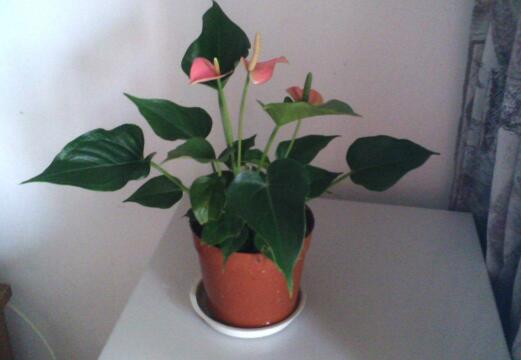
The flower of the pink anthurium has a spathe-like outer form, with flower buds emerging from the leaf axils. The flower color is usually pink, and depending on the variety, it can also appear in milky white, multicolored, and other colors. The flower resembles a palm and is very large, giving people a feeling of passion and boldness. This is one of its flower meanings.
Flower Meaning Two / Joy
The pink anthurium has dense branches and leaves, and its flowers often emerge from the thick foliage. The pink flowers paired with green leaves make the scene appear quite joyful. Therefore, people later regarded joy as one of the flower meanings and symbols of the pink anthurium, indicating that it can bring joy to people and make them feel happy.
What Does the Pink Anthurium Symbolize
Symbolism One / Yearning for Love
Pink is one of the colors many women like, so the pink anthurium is often regarded as a symbol of love. Those who grow it have a yearning for beautiful love, and giving it to others expresses one's admiration for them, making it suitable as one of the gifts for a confession.
Symbolism Two / A Passionate, Open Heart
The pink anthurium often appears at festive ceremonies, meetings with guests, and other important occasions because it symbolizes a passionate and open heart, expressing a warm welcome to friends, colleagues, leaders, and guests, and also reflecting the host's hospitality. So if guests come to the home, the pink anthurium can be placed in the living room.
How to Best Grow the Pink Anthurium
1. Soil Culture
Using soil and flower pots to grow the pink anthurium can allow its roots to develop and grow faster, which is most beneficial for its growth. During cultivation, attention should be paid to watering, fertilizing, light, and moderate temperature. When growing in soil, try to ensure the potting soil is replaced once every 1-2 years.
2. Water Culture
If you want to maximize the ornamental value of the pink anthurium, you can grow it in water. This way, you can not only enjoy the flowers and leaves but also observe the growth of its roots, and maintenance and management are also easier. However, when grown in water, the flowering period is generally 1-2 months, so the flower-viewing time is slightly shorter than in soil.
Complete Guide to Pink Anthurium Cultivation Methods and Precautions: Choose Between Pot Culture and Water Culture
Everyone has seen plenty of the seductive and fiery red anthurium and the pure white and elegant white anthurium, but I believe many people have seen relatively few of the soft and warm pink anthurium. However, there are now more and more pink anthuriums on the market, and many people have chosen the pink anthurium to decorate and beautify their homes. But what are the cultivation methods and precautions for the pink anthurium? Is the pink anthurium toxic? Can it be placed indoors? With these questions, let us learn more:
Basic Information About the Pink Anthurium:
Pink anthurium (Latin scientific name: Anthurium andraeanum), also called flamingo flower, Anthurium, and fire crane flower, is a perennial evergreen herbaceous flower. It likes a warm, hot, and humid environment with good drainage, and fears drought and strong direct sunlight. Its suitable growing daytime temperature is 26-32°C, and nighttime temperature is 21-32°C. The highest temperature it can tolerate is 35°C, and the lowest temperature it can tolerate is 14°C. The suitable light intensity is 16000-20000 lx, and the optimal relative air humidity (RH) is 70%-80%. Its plant height is generally 50-80cm, varying by variety. It has fleshy roots, no stem, and leaves emerging from the rhizome, with long petioles, solitary, heart-shaped, bright green, and with sunken veins. Flowers are axillary, with a waxy spathe, from perfectly round to ovate, bright red, orange-red flesh color, or white, with a spadix, cylindrical, and upright. It blooms in all four seasons.
Cultivation Methods for Potted Pink Anthurium:
1. Soil:When growing the pink anthurium, it is best to use soil that is loose, breathable, well-draining, and able to retain water and fertilizer. It is best if the soil contains a certain amount of nutrients. You can choose leaf mold or peat soil mixed with some perlite or coal cinder and base fertilizer to make nutrient soil. Some broken brick pieces can be added at the bottom of the pot to help with drainage.
2. Watering:The pink anthurium likes moisture and fears drought, so the soil should often be kept moist. In summer, water according to how dry or wet the soil is, about once every one to two days. Never allow water to accumulate in the pot, to avoid damaging the roots. Especially in winter, watering should be reduced. If there is too much water, the root system will rot. Slightly acidic water is best, and water with a pH value of 4.5-5 can be used. In dry seasons, the plant should also be misted with water.
3. Light:The pink anthurium is a shade-loving plant. It is best placed in a shaded area, but it should not be completely unable to receive any light source, as this will cause the plant to lack color light. When in sunlight, a certain amount of shading should be provided so that it is not fully exposed to the sun. But in winter, when sunlight is weaker, there is no need for shading, and it can be placed in the sun with confidence.
4. Temperature:The pink anthurium likes warmth and fears cold, so in summer high temperatures should be prevented and in winter frost damage should be prevented. The suitable growing temperature is 19-25°C. Below 13°C, the plant enters dormancy and should be placed indoors or wrapped in plastic bags to prevent frost damage. When the temperature is above 32°C, growth stops. Generally, when the temperature is above 25°C, windows should be opened for ventilation to ease the adverse effects of high temperatures.
5. Fertilizing:Fertilizer can promote the growth of the pink anthurium. When fertilizing, you can choose liquid fertilizer or a compound fertilizer with a nitrogen-phosphorus-potassium ratio of 1:1:1. Fertilize about once every 7-12 days. It is best to fertilize in the morning or evening for better results, or regularly apply fertilizer water, which means adding one or two drops of fertilizer liquid to the water when watering. For fertilizer water, once every three days is generally enough, but only one fertilizing method can be chosen, not both.
6. Pests and Diseases:Common diseases of the pink anthurium include leaf blight and root rot. For leaf blight, use a small spray bottle to spray fungicides such as mancozeb or junduqing for prevention and control, once about every month. Common pests mainly include termites and aphids. When there are not many, they can be removed with a brush, a small brush, or a wet cloth.
Precautions for Growing Potted Pink Anthurium:
1. When potting, the flower pot should not be too large. It should be suitable for the size of the plant. If it is too large, the soil will not dry for a long time after watering, thereby damaging the root system.
2. Do not let water accumulate in the pot. It is best to keep the soil moist, and watering should not be too frequent.
3. When it is cold in winter, it should be placed indoors. When it is too hot in summer, it should also not be placed in sunlight.
4. Do not water at night in winter, because the temperature difference between day and night is large. Watering at night, as the temperature drops, may freeze and damage the rhizome.
5. Repotting must be done in time to avoid affecting plant growth. If changing to a ceramic pot, the new pot needs to be soaked in water for one or two days before use.
6. When repotting, avoid damaging the root system.
Propagation Methods for Pink Anthurium:
The pink anthurium is commonly propagated by division. When repotting an old plant, cut off side branches with 3-4 leaves and aerial roots, and plant them separately.
Cultivation Methods for Water-Cultured Pink Anthurium:
The pink anthurium is a very good ornamental plant. Many flower enthusiasts are not satisfied with soil-grown pink anthurium and begin trying water culture, but they often fail. Below we will discuss how to grow pink anthurium in water.
The pink anthurium is a plant in the Araceae family and is a plant with relatively strong hydrophilicity. But growing it in water is much more difficult than spider plant or pothos. Generally, flower enthusiasts mistakenly think it can survive just by being placed in water. Because of its strong hydrophilicity, even if placed in water, it can still survive for several months.
The roots of the pink anthurium breathe very strongly, and placing them directly in water easily obstructs their breathing. The best method is to use a substrate, and the best substrate is ceramsite. Since the roots of the pink anthurium are fleshy roots and the leaves emerge from the roots, the general method of custom orchid + stone + [unclear] is not easy for small leaves to emerge. Ceramsite is light in texture and has enough space, making it easy for small leaves to emerge. The pink anthurium I currently grow in water in the office uses ceramsite cultivation and has already been grown for 2 years, with each plant producing 3-4 flowers.
To grow pink anthurium in water with ceramsite, first wash the roots clean, trim old roots and residual roots, and remove flowers. Then place the plant into a container. Fill it with ceramsite, then dilute rooting powder in proportion, spray the ceramsite moist, and be careful not to let too much water accumulate below. If there is too much water, pour it out. After a long wait, you will be pleasantly surprised to find that the thick white fleshy roots of the pink anthurium are growing in all directions, all clinging to the edge of the container. At this point, congratulations, a water-cultured pink anthurium is considered complete. What remains is to regularly add nutrient solution and care for its growth.
Precautions for Growing Water-Cultured Pink Anthurium:
A pink anthurium newly grown in ceramsite water culture is not suited to direct sunlight. Placing it in a shady room is enough.
At the beginning of water culture, do not add nutrient liquid. Adding rooting powder is best.
The container for growing pink anthurium should be slightly larger, preferably wide at the top and narrow at the bottom, forming a V shape, and it should also have a certain height.
How long can water-cultured pink anthurium live? Those grown in ceramsite water culture can live for a very long time. I have grown them for 2 years and they still produce leaves and flowers every year. It is estimated that they can live even longer.
If you want to grow pink anthurium in water, it is recommended to use ceramsite to induce it first, then switch to pure water culture. Directly placing it in water is not recommended.
The Flower Meaning of the Pink Anthurium:
With the beautiful meanings of "passion, boldness, and joy," the pink anthurium represents a "passionate, open heart" and is frequently used for festive ceremonies, business opening celebrations, meeting guests, and other moving occasions. It also symbolizes the yearning for love.
Is the Pink Anthurium Toxic? Is It Suitable to Keep at Home?
The so-called toxicity of the pink anthurium mainly comes from the mucus secreted after the stems and leaves are broken. It mainly contains two components: one is calcium oxalate, which has a mild irritating effect on the skin, and the other is a hydrolyzed protein, to which a small number of people are allergic. It is said to be toxic not because it releases toxic gas, but because the pink anthurium contains toxic chemical substances in its body. As long as you do not eat it, how could you be poisoned? Moreover, the pink anthurium can absorb benzene and trichloroethylene from the air and can purify the air, so it is quite good to grow. Just be careful not to frequently touch it with bare skin and not to accidentally eat it, and there is no problem. As for the gas secreted through normal transpiration, it is completely non-toxic, so it can be grown with confidence, and it is fine to place it in the bedroom.
The pink anthurium can be grown in pots or in water. Regardless of the cultivation method, the pink anthurium gives people a soft and comfortable feeling and will have a very good decorative effect in the home. That is all for sharing the cultivation methods and precautions for the pink anthurium. For more information, please continue to follow us.
Pink Anthurium Anthurium andraeanum Pink Anthurium Guide: How to Grow Pink Anthurium / How to Propagate Pink Anthurium
Pink Anthurium ProfilePink Anthurium Anthurium andraeanum
Cultivation Methods and Precautions for Pink Anthurium, Introduction to Pink Anthurium
The pink anthurium is properly named Pink Champion and is a perennial evergreen herbaceous flower of the genus Anthurium in the tribe Anthurieae of the Araceae family. The pink anthurium can be grown in water or in soil. In water culture, avoid sunlight and expose it to sunlight once a month. It likes a warm, hot, and humid environment with good drainage, and fears drought and strong direct sunlight.
The flowers of the pink anthurium are unique, and the spathe is bright and gorgeous, rich in color, and highly variable. It also has a long flowering period. In water culture, a single flower can last 2-4 months. The pink anthurium is a famous and high-quality flower with great development prospects.
The pink anthurium blooms in all four seasons.
Morphological Characteristics of the Pink Anthurium
The pink anthurium is a perennial epiphytic evergreen herbaceous flower. The plant height can reach 1 m, with short internodes. Leaves emerge from the rhizome, have long petioles, are solitary, oblong-cordate or ovate, deep bright green, and glossy. Flower buds emerge from the leaf axils, and the spathe is upright and spreading, leathery, perfectly round-ovate, pink or scarlet.
Its variant varieties include those with milky white spathes, white-green mosaic spathes, multicolored spathes, and varieties with fine red edges, and they are extremely variable. The spadix is sessile, cylindrical, upright, and slightly leaning outward. Flowers are bisexual, with a perianth having four lobes, 4 stamens, and a 2-locular ovary, with each locule having 1-2 ovules. The small berry contains 2-4 seeds, pink, densely clustered on the spadix.
The pink anthurium is a perennial evergreen herbaceous flower. Its plant height is generally 50-80cm, varying by variety. It has fleshy roots, no stem, and leaves emerging from the rhizome, with long petioles, solitary, heart-shaped, bright green, and with sunken veins. Flowers are axillary, with a waxy spathe, from perfectly round to ovate, bright red, orange-red flesh color, or white, with a spadix, cylindrical, and upright.
The pink anthurium blooms in all four seasons.
Ecological Habits of the Pink Anthurium
The pink anthurium originated in the tropical rainforests of southwestern Colombia in South America and is distributed in South America, Africa, Europe, and Asia, where it is hot and humid year-round, the sunlight reaching the ground is sparse, and the humus is loose and rich, which determines the growth habits of the pink anthurium.
The pink anthurium likes a warm, hot, and humid environment with good drainage, and fears drought and strong direct sunlight. Its suitable growing daytime temperature is 26-32°C, and nighttime temperature is 21-32°C. The highest temperature it can tolerate is 35°C, and the lowest temperature it can tolerate is 14°C. The suitable light intensity is 16000-20000lx, and the optimal relative air humidity (RH) is 70%-80%.
The pink anthurium likes an environment with high air humidity and smooth drainage, and likes shade and warmth. In an environment where the daytime temperature is not higher than 28°C and the nighttime temperature is not lower than 20°C, it can bloom and bear fruit year-round. Above 35°C, sunscald will occur; below 14°C, growth will be affected; and continuous low temperatures below 0°C will freeze the plant to death. It requires air humidity of 80%, soil pH of 5.5, and Ec value of 1.2 as suitable. It requires loose, fertile soil, and soilless cultivation is best.
The pink anthurium likes a warm, humid, and semi-shaded environment, and avoids direct sunlight.
Temperature
The optimal growing temperature is 20-28°C, and the highest temperature should not exceed 35°C. If the temperature is too high, growth will be poor; the lowest temperature is 14°C, and below 10°C there is always the possibility of frost damage.
Humidity
The optimal relative air humidity for the pink anthurium is 70-80%, and it should not be lower than 50%. If humidity is low, the leaf surface and spathe will be rough, with poor glossiness and low ornamental value.
Light
The optimal light intensity for the pink anthurium is 10000-20000Lux. It should not be exposed to full light at any time, and winter is no exception. It is suitable to cultivate it under appropriately shaded weak light throughout the year. Strong light will scorch the leaves and affect the normal growth of the plant.
Cultivation Techniques for the Pink Anthurium
The pink anthurium can be grown in pots or in water. Regardless of the cultivation method, the pink anthurium gives people a soft and comfortable feeling and will have a very good decorative effect in the home.
Potted Care
Soil
When growing the pink anthurium, it is best to use soil that is loose, breathable, well-draining, and able to retain water and fertilizer. It is best if the soil contains a certain amount of nutrients. You can choose leaf mold or peat soil mixed with some perlite or coal cinder and base fertilizer to make nutrient soil. Some broken brick pieces can be added at the bottom of the pot to help with drainage.
Watering
The pink anthurium likes moisture and fears drought, so the soil should often be kept moist. In summer, water according to how dry or wet the soil is, about once every one to two days. Never allow water to accumulate in the pot, to avoid damaging the roots. Especially in winter, watering should be reduced. If there is too much water, the root system will rot. Slightly acidic water is best, and water with a pH value of 4.5-5 can be used. In dry seasons, the plant should also be misted with water.
Light
The pink anthurium is a shade-loving plant. It is best placed in a shaded area, but it should not be completely unable to receive any light source, as this will cause the plant to lack color light. When in sunlight, a certain amount of shading should be provided so that it is not fully exposed to the sun. But in winter, when sunlight is weaker, there is no need for shading, and it can be placed in the sun with confidence.
Temperature
The pink anthurium likes warmth and fears cold, so in summer high temperatures should be prevented and in winter frost damage should be prevented. The suitable growing temperature is 19-25°C. Below 13°C, the plant enters dormancy and should be placed indoors or wrapped in plastic bags to prevent frost damage. When the temperature is above 32°C, growth stops. Generally, when the temperature is above 25°C, windows should be opened for ventilation to ease the adverse effects of high temperatures.
Fertilizing
Fertilizer can promote the growth of the pink anthurium. When fertilizing, you can choose liquid fertilizer or a compound fertilizer with a nitrogen-phosphorus-potassium ratio of 1:1:1. Fertilize about once every 7-12 days. It is best to fertilize in the morning or evening for better results, or regularly apply fertilizer water, which means adding one or two drops of fertilizer liquid to the water when watering. For fertilizer water, once every three days is generally enough, but only one fertilizing method can be chosen, not both.
Toxicity Analysis
The so-called toxicity of the pink anthurium mainly comes from the mucus secreted after the stems and leaves are broken. It mainly contains two components: one is calcium oxalate, which has a mild irritating effect on the skin, and the other is a hydrolyzed protein, to which a small number of people are allergic.
It is said to be toxic not because it releases toxic gas, but because the pink anthurium contains toxic chemical substances in its body. As long as you do not eat it, you will not be poisoned. Moreover, the pink anthurium can absorb benzene and trichloroethylene from the air and can purify the air, so it is quite good to grow. Just be careful not to frequently touch it with bare skin and not to accidentally eat it, and there is no problem. As for the gas secreted through normal transpiration, it is completely non-toxic, so it can be grown with confidence, and it is fine to place it in the bedroom.
Cultivation Methods for Pink Anthurium and Precautions for Growing Potted Pink Anthurium
When potting, the flower pot should not be too large. It should be suitable for the size of the plant. If it is too large, the soil will not dry for a long time after watering, thereby damaging the root system. Do not let water accumulate in the pot. It is best to keep the soil moist, and watering should not be too frequent.
When it is cold in winter, it should be placed indoors. When it is too hot in summer, it should also not be placed in sunlight. Do not water at night in winter, because the temperature difference between day and night is large. Watering at night, as the temperature drops, may freeze and damage the rhizome.
Repotting must be done in time to avoid affecting plant growth. If changing to a ceramic pot, the new pot needs to be soaked in water for one or two days before use. When repotting, avoid damaging the root system.
Water Culture Methods
The pink anthurium is a plant in the Araceae family and is a plant with relatively strong hydrophilicity. But growing it in water is much more difficult than spider plant or pothos.
The roots of the pink anthurium breathe very strongly, and placing them directly in water easily obstructs their breathing. The best method is to use a substrate, and the best substrate is ceramsite. Since the roots of the pink anthurium are fleshy roots and the leaves emerge from the roots, the general method of custom orchid + stone + [unclear] is not easy for small leaves to emerge. Ceramsite is light in texture and has enough space, making it easy for small leaves to emerge.
To grow pink anthurium in water with ceramsite, first wash the roots clean, trim old roots and residual roots, and remove flowers. Then place the plant into a container. Fill it with ceramsite, then dilute rooting powder in proportion, spray the ceramsite moist, and be careful not to let too much water accumulate below. If there is too much water, pour it out. After a long wait, the thick white fleshy roots of the pink anthurium grow in all directions, all clinging to the edge of the container. What remains is to regularly add nutrient solution and care for its growth. [3]
Precautions for Growing Water-Cultured Pink Anthurium
A pink anthurium newly grown in ceramsite water culture is not suited to direct sunlight. Placing it in a shady room is enough.
At the beginning of water culture, do not add nutrient liquid. Adding rooting powder is best.
The container for growing pink anthurium should be slightly larger, preferably wide at the top and narrow at the bottom, forming a V shape, and it should also have a certain height.
If you want pure water culture for pink anthurium, it is recommended to use ceramsite to induce it first, then switch to pure water culture. Directly placing it in water is not recommended.
Propagation Methods for Pink Anthurium
The pink anthurium is commonly propagated by division. When repotting an old plant, cut off side branches with 3-4 leaves and aerial roots, and plant them separately.
Disease and Pest Control for Pink Anthurium
Common diseases of the pink anthurium include leaf blight and root rot. For leaf blight, use a small spray bottle to spray fungicides such as mancozeb or junduqing for prevention and control, once about every month.
Common pests of the pink anthurium mainly include termites and aphids. When there are not many, they can be removed with a brush, a small brush, or a wet cloth.
Distribution Areas of the Pink Anthurium
The pink anthurium is native to tropical rainforest areas such as Costa Rica and Colombia. It often grows epiphytically on trees, and sometimes on rocks or directly on the ground.
The pink anthurium is now widely cultivated in Europe, Asia, and Africa. At present, scientific research on anthurium in the world has entered a relatively in-depth stage. Among them, Europe is at a relatively high level, Asia is next, and Africa is poorer. The Netherlands holds a leading position in systematic research on anthurium.
China began introducing and cultivating Anthurium andraeanum in the 1970s.
The role and uses of Anthurium andraeanum: potted ornamental
The flowers of Anthurium andraeanum are unique, taking the form of a spathe, with bright, gorgeous colors and rich hues, making it a world-famous precious flower. The flowering period is long; as a cut flower it can be kept in water for up to 1 month, and the cut leaves can serve as foliage in flower arrangements. It can also be grown as a potted plant, and a single flowering period in a pot can last up to 4-6 months. It is currently a high-end tropical cut flower and potted flower with rapid global development and relatively high demand.
Air purification
Anthurium andraeanum is suitable for decoration in homes, office environments and other settings, and plays a good role in beautifying the environment and purifying the air, absorbing benzene and trichloroethylene harmful to the human body from the air.
The flower language of Anthurium andraeanum
With the beautiful meaning of "warmth, boldness and joy," Anthurium andraeanum represents a "fiery, cheerful heart" and is frequently used in touching occasions such as festival ceremonies, business opening celebrations and meetings with guests. It also symbolizes the yearning for love.
Pictures of Anthurium andraeanum