Does Pilea glauca (diamond emerald) bloom? Care for it like this after flowering and pull out the flower spike
As for the diamond emerald, many plant lovers probably know it; it is also called white-veined peperomia, named for its leaf color being as green as jade and as white as diamond, and it is a beautiful foliage plant. And we know that all plants bloom, so does the diamond emerald plant bloom? If it blooms, how do you care for the emerald diamond after flowering? Today the editor will solve this problem for everyone.
1. Does the diamond emerald plant bloom? Yes, it does
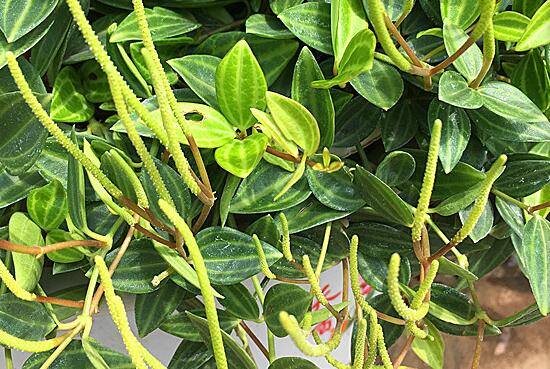
The diamond emerald is a beautiful foliage plant; its plant form is small and delicate, and its leaf color combines the white of diamonds and the green of jade. This scene of alternating white and green is truly gorgeous! As for whether the diamond emerald plant blooms, there is no need to doubt it, because all plants bloom, it is just that the degree of difficulty differs! And the diamond emerald is the kind of plant that does not bloom easily.
2. What month does the diamond emerald bloom? May
Although the flowers of the diamond emerald are rarely seen, if you care for it strictly according to the diamond emerald cultivation method, after 2-3 years it will bloom in May. However, the flower shape of the diamond emerald is not really a flower; instead, a small stick-like thing extends from the middle of the leaf, like a little tail, and it does not look good.
3. How to care for the emerald diamond after flowering
1. Keep it for viewing
After the diamond emerald blooms, if you want to see its flowers, you can leave it untreated. However, its flowering requires a large amount of nutrients, so in order for the diamond emerald to grow without problems, everyone should water and fertilize appropriately:
(1) Fertilizing: When the diamond emerald blooms, it consumes a large amount of nutrients, so after it finishes flowering, in addition to pruning the spent flowers and branches and leaves, everyone should best give appropriate fertilizer, so that its leaves can remain plump and the plant's growth is not affected.
(2) Watering: The diamond emerald likes a moist environment. After it blooms, we should replenish water for it: regularly observe its growth condition and water in time to avoid growth stagnation caused by dry potting soil.
2. Pull out the flower spike
How to care for the emerald diamond after flowering? If its flowers look ugly to you, you can cut them off right away: pull the flower spike out from the base to avoid consuming too many nutrients. Note that when pulling out the flower spike, you should use your hand to wiggle it left and right while pulling, so as to avoid residual flower stems remaining between the leaves and causing adverse effects on the growth of future new leaves.
4. Complete picture collection of diamond emerald flowering
The green jade among succulents - Haworthia cooperi
Haworthia cooperiHaworthia cooperi is a succulent plant of the Asphodelaceae family and Haworthia genus, also known as a "soft-leaf series" variety among succulents. It is native to South Africa and can now be cultivated in many places around the world. The Haworthia cooperi plant is exquisite and small, rich in varieties, and its leaf color is crystal clear and full of variation, like a living handicraft, very lovely, and it is one of the more popular small succulent plant varieties in recent years.
Chinese scientific name Haworthia cooperi
Binomial name Haworthia cooperi
A perennial succulent herbaceous plant; the plant is initially solitary and later gradually forms clusters. The fleshy leaves are arranged in a compact rosette, the leaves are thick and plump, emerald green, and the upper half is transparent or semi-transparent, called the "window", with dark linear veins; under conditions of relatively sufficient sunlight, the veins are brown, and the leaf tips have small "whiskers". Loose raceme, small white flowers.
Haworthia cooperi likes a cool, semi-shaded environment. Its main growth period is in spring and autumn. It is drought-tolerant, not cold-tolerant, and avoids high temperature, humidity, and exposure to blazing sun. It is afraid of shade, afraid of humidity, and also afraid of water accumulation in the soil.
Propagation
1. Division
This can be done together with repotting, or in the growing season you can dig out the young plants beside the mother plant; both rooted and unrooted ones can survive. Rooted ones can be planted directly; unrooted seedlings should be dried for 1-2 days, and planted after the wound is dry. Newly planted plants should not be watered too much, so as to avoid rot, and normal management can begin after new roots grow.
2. Cuttings
Haworthia cooperi will grow young buds in the leaf axils of the lower part of the plant. For species that do not easily produce young buds, you can damage the growth point at the center of the plant to encourage it to sprout young buds. After the small buds grow to 2-3 cm, remove them, dry them for 2-3 days, and after the wound is dry, insert them into the culture soil for cuttings. After insertion, keep the soil semi-dry, and new roots can grow after 2-3 weeks.
3. Leaf cuttings
You can choose robust and plump fleshy leaves and insert them during the growing season in a well-drained medium such as vermiculite or coarse sand. After insertion, keep the potting soil slightly moist. The base of the fleshy leaf easily takes root and grows small buds. After the small buds are somewhat larger, plant them separately.
4. Sowing
Only through artificial pollination can Haworthia cooperi produce seeds. Generally, this is done on a sunny morning when it is flowering. The method is to choose two Haworthia cooperi plants that are flowering at the same time; you can also use varieties of the same Haworthia genus such as Haworthia retusa and Haworthia maughanii for pollination. The parent plants are required to have a compact plant form, thick and plump leaves, and high transparency of the "window". During pollination, remove the petals, take the pollen and smear it onto the stigma of the flower of another plant. You can also remove the pollen the afternoon of the previous day, store it carefully, and pollinate the next morning, for a relatively high success rate. Sow after the plant's seeds mature.
Among the sown seedlings, some variant plants may appear. You can select the young plants with compact plant form, thick fleshy leaves, high transparency of the "window", and prominent veins to keep as seed stock. If you find small seedlings with a different leaf color, you should also keep them; perhaps it is a precious variegated variant plant.
The propagation of Haworthia cooperi can be done by division together with repotting, or in the growing season you can dig out the young plants beside the mother plant; both rooted and unrooted ones can survive. Rooted ones can be planted directly; unrooted seedlings should be dried for 1 to 2 days, and planted after the wound is dry. Newly planted plants should not be watered too much, so as to avoid rot, and normal management can begin after new roots grow. You can also, in the growing season, choose robust and plump fleshy leaves for leaf cuttings. After insertion, keep the potting soil slightly moist, and it will easily take root at the base and grow small buds. After the small buds are somewhat larger, plant them separately.
Sowing is also one of the propagation methods of Haworthia cooperi, but it requires artificial pollination. Seeds can be sown as soon as they are collected. The sowing soil can be a mix of 3 parts vermiculite and 2 parts leaf mold or peat soil. Before sowing, it is best to sterilize the soil at high temperature to eliminate pathogens and insect eggs inside. After sowing, cover with a piece of glass, and seedlings will emerge in about 20 days or so. After the seedlings emerge, remove the glass, pay attention to ventilation, do not let the soil become too dry, and when the seedlings are too crowded, pay attention to separating and transplanting them. Among the sown seedlings, some variant plants may appear. You can select the young plants with compact plant form, thick fleshy leaves, high transparency of the "window", and prominent veins to keep as seed stock. If you find small seedlings with a different leaf color, you should also pick them out; who knows, when they grow up they may be a precious variegated variant plant.
Haworthia cooperi variegata, whose value doubles.
For the management and care of Haworthia cooperi. During the growing period, it should be given sufficient light. If it is too shaded, the plant form will become loose and not compact, the leaves will be thin and long, and the transparency of the "window" will be poor. If the light is too strong, the leaves will grow poorly and become light reddish-brown, and sometimes strong direct sunlight will also scorch the leaves, leaving ugly marks. Plants grown in semi-shade have thick and plump leaves and high transparency. During the growing period, watering should follow "do not water if not dry, water thoroughly when watering", avoid water accumulation, and even more avoid rain, especially not long-term rain, all of which is to avoid root rot. But it should also not be dry for a long time, otherwise although the plant will not die, the leaves will be shriveled, the leaf color dull, and it will lack vitality. Haworthia cooperi likes an environment with a certain amount of air humidity. When the air is dry, you can often spray water on the plant and the surrounding environment to increase air humidity. In the growing season, you can also use a transparent colorless beverage bottle with the upper half cut off to cover the plant for care, so that it grows in a small environment with moist air; this can make the leaves plump and the transparency of the "window" higher. But in the high-temperature summer season, be sure to remove the flower spike, so as to avoid stuffiness. Note that the flower spike should not be cut with scissors; it should be pulled out by wiggling it left and right with your hand, so as to avoid residual flower stems remaining between leaf and leaf and causing adverse effects on the growth of future new leaves.
Haworthia cooperi is rich in varieties, with crystal-clear leaves, and the bright windows are like living handicrafts. It is a succulent plant star that everyone loves and every flower blooms for. Below is a list one by one of the members of the Haworthia cooperi family that often appear.
Purple-skinned Haworthia cooperi is divided into 2 types: large purple and small purple. The size is similar to Haworthia cooperi 'Hime'. The basic color is purple, and after sun exposure it turns so purple it becomes black, and it is not prone to etiolation.
Large-window Haworthia cooperi belongs to a hybrid variety of Haworthia cooperi: the window surface is huge, as big as a 1-yuan coin. Because the window surface is relatively large, the plant is relatively loose. Under insufficient light, the degree of etiolation is relatively small. It has tip hairs, and the window surface is still quite beautiful.
Cicada Haworthia cooperi has a relatively small window surface, thin as a cicada's wing. The lines are crisp and clean, and it is relatively easy to cluster. The degree of etiolation is relatively small
Haworthia cooperi 'Hime' is divided into large type and small type. This is also one of the more common varieties.
Green Haworthia cooperi is divided into large type and small type; here the large green Haworthia cooperi is provided.
Haworthia cooperi has high ornamental value and is often used as a household or office ornamental plant. The leaves are crystal clear, as if carved, strange and beautiful, fresh and elegant, like living handicrafts, very distinctive. It is suitable for planting in small pots and displaying on windowsills, desks, writing tables, balconies, and other places. In leisure time, you can carefully observe its unique plant form and leaves, and from them comprehend the wonder of nature and the charm of plants. Placing plants can not only beautify the environment, but also purify the air. In fact, placing flowers and plants is also related to feng shui. Placing the right plants can also greatly help your fortune. Haworthia cooperi is a wealth-attracting plant for people born in the Year of the Rooster: people born in the Year of the Rooster have very prosperous wealth luck, but do not quite know how to keep wealth; money is either lent away or lost in investments, and the chance of losing money is very high. If you want to keep your money, you can place Haworthia cooperi in the living room, which can help you block the god of wealth loss, and then money can naturally be kept. Therefore Haworthia cooperi can naturally rival jade.
Although grass Haworthia cooperi is not a rare species, its charm should not be underestimated. It easily clusters. The degree of etiolation is relatively small.
Ice Lantern Haworthia cooperi is an excellent selected variety chosen after hybridizing good Haworthia cooperi. The window surface is larger than ordinary Haworthia cooperi, and the lines are clearer and more concise. The surrounding large window surface has no tip hairs. The plant form is larger than ordinary Haworthia cooperi and smaller than Haworthia cooperi 'Emperor'. Its fleshy leaves are crystal bright, named for being as clear and transparent as an ice lantern. Ice Lantern Haworthia cooperi has a relatively large plant form, with a single plant diameter of 7 to 10 cm, and it almost does not produce side buds, let alone form clustered plants. The top of its fleshy leaves is very transparent, as transparent as ice.