What to do when Chinese lantern (flowering maple) gets bugs? 3 pests and 2 diseases: spraying control methods
As a common beautiful flower, the Chinese lantern has strong benefits; its flowers look like lanterns, and besides being attractive, it is also used medicinally to treat kidney deficiency! Such a plant is naturally loved, but if it suffers from pests and diseases, the beauty of the Chinese lantern will be gone forever, and by then, flower lovers will surely be anxious! So what should you do when the Chinese lantern gets bugs? Below are 5 pest and disease control methods for the Chinese lantern; let's take a look together!
1. When the Chinese lantern gets bugs, spray with pesticide
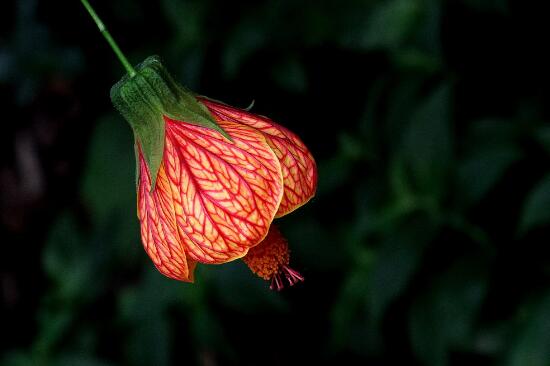
For indoor potted plants, growing the Chinese lantern is not difficult, but no matter how easy a plant is to grow, not caring for it or caring for it blindly can still cause problems, such as bugs and disease, which seriously affect the plant's ornamental value. So what should you do when the Chinese lantern gets bugs? Actually, it is very simple: find out exactly which pest it is, then spray to solve it. Let's continue below for the specifics.
2. Pest and disease control for the Chinese lantern
1. Aphids
This is one of the most common pests on flowers, and it also harms the health of the Chinese lantern. Aphids mainly harm the tender leaves and stems of the Chinese lantern, parasitizing on the leaves and sucking the sap. Once aphids appear, they are densely packed and look very frightening, so protection must be timely.
Control method: when only a few aphids are found, you can remove them by hand, brushing them off with a tool such as a soft brush; when there are many aphids, spray with 2.5% rotenone emulsifiable concentrate at 1200 times dilution, and after several consecutive sprays the effect is excellent.
2. Red spider mites
This is one of the main pests of the Chinese lantern. It mainly harms the underside of the leaves and survives by sucking the sap of the Chinese lantern leaves. Symptoms of infestation: the plant becomes nutritionally unbalanced, and symptoms such as yellowing leaves and leaf drop may appear.
Control method: after discovering red spider mites, rinse the whole plant thoroughly with a strong stream of water, then spray with 20% dicofol emulsifiable concentrate at 2000 times dilution, and several consecutive applications will show results. If you do not have pesticide, you can also use chili water or tobacco-soaked water sprays to repel the pests.
3. Whiteflies
If the Chinese lantern has bugs and you have ruled out aphids and red spider mites, then it is basically whiteflies. These insects suck the sap from the leaf tissue and mainly harm the tender leaves of the Chinese lantern, causing the leaves to curl and dry up.
Control method: after discovering whiteflies, promptly spray with 25% buprofezin wettable powder at 1500-2000 times dilution for control, then spray once more after 15 days, and the plant will basically recover its health.
4. Gray mold
Besides getting bugs, the Chinese lantern can also get sick under improper care, and one of the most common diseases is gray mold. This disease often occurs when the temperature is relatively high and the humidity is also relatively high, and its scope of damage is fairly wide; the leaves, flowers, and stems of the Chinese lantern may all be affected.
Control method: clean up the parts already affected by the disease to reduce the source of infection; then spray with metalaxyl for control, once every 5 days, using it 2 times in a row, which can effectively control the condition, and generally after 7—10 [days] it no longer shows harmful symptoms.
5. Root rot
When watered too much, or when drainage is not timely during the rainy season, the Chinese lantern is prone to root rot. Symptoms: in the early stage, rot occurs at the roots of the Chinese lantern; in the later stage, because it cannot absorb water and nutrients, the entire plant may die.
Control method: when the above symptoms are found, if the condition is mild, spray with 500 times dilution of zineb solution; if the rot is severe, just throw it away.
That is all from the editor on pest and disease control for the Chinese lantern. I believe everyone should know what to do when encountering bugs or disease! Overall, the Chinese lantern is still quite easy to grow, but if you are not careful it can also be troubled by pests and diseases, so everyone must care for it attentively; only in this way will bugs not come knocking. Finally, may everyone's Chinese lantern bloom with beautiful flowers!
Home gardening tips——17 key points
[Alibaba Agriculture] Gardening is for appreciation. Containers, balconies, courtyards, fields…… turn all kinds of places into comfortable gardening spaces. Plants cultivated with love, grasses, trees, and flowers, grow healthily and vigorously according to people's hopes. However, there are some tips for choosing flower seedlings, applying water and fertilizer, and daily care. Here, the matters that need to be understood for enjoying gardening are summarized one by one as key points.
1. Among flowers, some bloom every year and some wither within 1-2 years
Perennial herbs: once planted, their flowers can be enjoyed every year. Depending on the species, the lifespan of plants also differs. Plants that bloom every year, such as chrysanthemums and lily of the valley, are called perennial herbs. Among them, plants whose aboveground parts wither in winter but whose roots remain and begin growing in spring are called herbaceous perennials. Although their growth rate is slow, they can let people enjoy their flowers every year, and that is their charm.
Annual and biennial herbs: need to be repurchased every year. Plants such as pansies and marigolds that bloom and wither within one year after sowing are called annual herbs. Depending on the sowing period, they can be divided into spring-sown annual herbs and autumn-sown annual herbs. In addition, plants that bloom and wither more than one year but within two years after sowing are called biennial herbs. There are many flower types that are short-lived, long-blooming, gorgeous, and distinctive. For the annual herb marigold, sow new flower seeds or plant new flower seedlings the following year.
2. Flowers with long blooming periods and short blooming periods
Flowers that bloom in spring, flowers that bloom in summer…… depending on the plant, the blooming season differs, and the length of time blooming lasts also differs. There are flowers such as pansies and Impatiens walleriana that have long blooming periods and can bloom for more than half a year; and there are also flowers such as hydrangeas and forget-me-nots that can only bloom for 1-2 months. In addition, flowers such as geraniums and wax begonias that bloom almost all year round are called ever-blooming flowers, with representative plants including petunias, marigolds, and so on. Conversely, flowers that bloom only in a certain season are called seasonal bloomers, blooming for only a few months a year. Pansies have a very long blooming period and can be enjoyed from winter to early spring.
3. Among plants, some tolerate cold and heat, while others fear cold and heat
Depending on the plant species, the ability to resist cold and heat also differs. Plants that can withstand intense summer heat are said to have heat tolerance, referring to those that can withstand high temperatures above 30°C. Conversely, plants that can withstand severe cold are said to have cold tolerance, referring to those that can withstand low temperatures below 0°C, that is, plants that can overwinter outdoors. These are mainly plants native to high, cold regions. Plants with heat tolerance and cold tolerance grow and are cultivated in places and environments suitable to each. Plants that are not heat-tolerant should be placed in shaded, cool places in summer; plants that are not cold-tolerant should be cultivated in containers such as flower pots and are better moved indoors in winter. They have strong heat tolerance but poor cold resistance, so they are suitable for indoor planting in winter.
4. Some are grown from seeds and some from bulbs
As is well known, plants such as morning glories and cosmos are grown from seeds, while plants such as tulips and hyacinths are grown from bulbs. Plants grown from seeds require some effort after sowing, including watering, fertilizing, and waiting until they grow branches and leaves and bloom. In contrast, plants grown from bulbs can be cultivated easily after transplanting and planting, without much trouble. This is because the bulbs store the nutrients needed for sprouting and blooming. Beginners in flower growing can also start with simple bulb flowers. According to the transplanting period of bulb flowers, they can be divided into spring-planted bulbs, summer-planted bulbs, and autumn-planted bulbs. Spring-planted bulbs bloom from summer to autumn, summer-planted bulbs bloom in autumn, and autumn-planted bulbs bloom the following spring. Cyclamen is a flower whose bulbs are planted in autumn and which is suitable for indoor gardening in winter.
5. If planting in large quantities, use seeds; beginners should use flower seedlings
Although many kinds of flowers and herbs can be grown from seeds, beginners are advised to find flowering seedlings sold in black plastic pots and plant those. Growing from seeds takes time and effort, and bagged seeds sold on the market are too many for the average household's courtyard or containers, so there is generally some left over. Friends who have already mastered flower-growing skills, want to plant a large number of flowers, and have become interested in growing flowers through repeated planting should next be sure to try growing from seeds. For mass planting, use pot seedlings. Place the flower seedlings at the center of the container, and it is best to consider the arrangement while observing the overall balance.
6. Choose robust flower seedlings
Choosing flowers that have reached their blooming period. Generally, garden shops and the like put fresh flowers in front of the store slightly earlier than the natural blooming period. Rather than buying when flower seedlings first go on sale, it is better to wait until the period when they are widely available, because at that time you can choose flower color and quality and buy good flower seedlings. When choosing flower seedlings that are blooming, it is best to choose seedlings with some flowers open and still having buds. If the flowers are open, the flower color can be confirmed. And if there are buds, the next flowers can bloom early.
Choose flower seedlings without pests and diseases; do not buy flower seedlings with withered leaves or bugs. Also do not buy flower seedlings with thin, weak stems and poor overall balance. Choose seedlings with flowers and buds and thick, sturdy stems.
7. Group plants with similar characteristics together
When mass-planting flowers and herbs in planter boxes and gardens, fully consider their different characteristics. Putting plants with similar characteristics together makes management a little easier. For the same plant, for example, several pansies of different colors mass-planted together are no problem, but for different plants with different characteristics, for example, lavender, which likes dryness, mass-planted with plants that need a lot of water and fertilizer, management of watering and fertilizing becomes difficult. Also, combinations such as heat-tolerant but not cold-tolerant African daisies and cold-tolerant but not heat-tolerant pansies are difficult in terms of placement. On the basis of understanding in detail the characteristics of various plants, it is better to then decide which plants can be planted. If plants with similar characteristics are chosen for mass planting, management will be much easier.
8. Consider the size of the flower seedlings
After purchasing pot seedlings, transplant them as early as possible into containers such as flower pots and planter boxes, or into places such as flower beds. Flower seedlings taken out of pots often have roots spreading in all directions, which is a signal from the plant that it needs transplanting. If transplanted into a container slightly larger than the soil-covered root ball (the roots and the soil around them), the roots can still spread in the soil and grow vigorously. Pot seedlings are usually sold mostly in No. 3 plastic pots (9 cm diameter), so with that as a guide, for pot planting use No. 4—5 pots (12—15 cm diameter), and for mass planting consider the size of all the flower seedlings and then choose containers for planting. When planting in the ground in a flower bed, plant with appropriate spacing between plants on the premise that they can spread. When mass planting, consider the balance between all the seedlings and the container.
9. Pay attention to the environment and place for growing plants
Whether flowers bloom or not, whether they can be enjoyed for a long time or wither in a very short time, differs greatly depending on the growing environment. For example, a flowering lavender plant that blooms beautifully in Furano, Hokkaido, if suddenly taken to Tokyo to grow, sometimes will not bloom. This is an extreme example; however, cyclamen cultivated in the warm greenhouse of a shop, after purchase, if grown by a cold north-facing window, often withers. That is to say, when potted flowers or flower seedlings are first purchased, it is very important to first grow them temporarily in the same environment as when they were sold, and then gradually let them get used to the new environment. Plants are originally things that adapt to environmental changes, so except for extremely unsuitable environments, they can all grow vigorously. Nasturtium, which likes a cool climate, keeps blooming from spring to autumn in high, cold regions, but in warm regions, in summer, the flowers no longer open.
10. With good sunlight, flowers can bloom more abundantly
To make flowers bloom, sunlight is very important. Whether grown in pots or in the ground, the more abundant the sunlight, the more flowers bloom. Looking at some plants, most flowers are suitable for cultivation outdoors with sufficient sunlight. If possible, growing them all day in a place with sufficient sunlight is ideal, but even with only about half a day in a sunny place, most flowers can bloom beautifully. When growing indoors, also try to place them by a bright window with good sunlight, and on days with little wind and clear weather, put them outdoors to receive sunlight. Although many plants like sunny locations, some plants can grow well in shade or semi-shade (relatively bright shade). After deciding the growing place, choosing plants that match it is also very important. Pansies and tufted violets grown under brilliant sunlight. If sunlight is abundant, a large number of flowers will bloom.
11. With good ventilation, they can grow vigorously
To let plants grow healthily, wind is also very important. As is well known, plants carry out photosynthesis through sunlight, produce energy, release oxygen, and the carbon dioxide needed for this is carried over by wind. That is to say, if there is no wind, carbon dioxide will be insufficient, and photosynthesis cannot be carried out well, hindering growth. Moreover, when branches and leaves are crowded and stifled, if ventilation is good, they can recover their health. Therefore, on balconies or outdoors, try to choose places with very good ventilation; if indoors, sometimes letting outdoor wind blow through is very important. However, in places such as balconies, when the wind is too strong, flower pots may tip over or fall, so be careful. On windy days, take down hanging baskets.
12. For planter box cultivation, commercially sold potting soil is recommended
Plant roots breathe in the soil and absorb water and nutrients. Plants can fully carry out these activities and grow vigorously in soil with good drainage and water retention. At first glance this easily seems contradictory, because if water retention is poor, the soil dries quickly and flowers easily wither, while if drainage is poor, the soil is always wet and roots easily rot. So-called soil with good drainage and water retention refers to a granular, clod-like soil structurally formed by many small particles gathering together. Cultivation soil is made by mixing many kinds of soil such as akadama soil, black soil, and leaf mold. For beginners, it is recommended to use commercially sold potting soil that is well mixed from these. Because there are many types, choose the type of potting soil suited to the plants being grown. Among commercially sold potting soils, HYPONEX potting soil is of good quality and can be used with confidence.
13. When planting in flower beds, improve the soil first
When planting and enjoying plants in flower beds or courtyards, improving the soil is very necessary. Because soil compacted by footsteps makes it hard for air and water to pass through, roots cannot grow fully. Just by digging up the soil a little, creating gaps between soil particles, drainage and water retention become much better. A dug depth of 20-30 cm is enough. If leaf mold is mixed in, drainage and water retention will be even better. When planting plants with weak resistance to soil acidity, neutralize the soil before planting. Akadama soil as a base material, and leaf mold or dolomitic lime for improvement, are easily available in garden shops. Akadama soil: red soil commonly seen everywhere in the Kanto region; made into granular form, it can be used as a basic growing medium, with three granule sizes: large, medium, and small. Because after mixing with soil it can form gaps, it facilitates drainage and water storage. Leaf mold: a representative soil improver formed after fallen leaves rot. It is rich in nutrients and is often used to make soft soil, with good drainage and water retention. Dolomitic lime: rich in magnesium and lime (calcium), which are necessary for plant growth. After mixing with soil, it can neutralize soil acidity.
14. Supply fertilizer suited to growth and development
The nutrients necessary for healthy plant growth include nitrogen (N) for growing leaves, phosphoric acid (P) for providing nutrition to flowers and fruits, and potassium (K) for extending roots. Chemical fertilizers sold on the market combine them well in proportion. As for fertilizing methods, there are two kinds: mixing base fertilizer into the soil when transplanting and planting, and top-dressing during the plant's growth and development. Base fertilizer adds nutrients to the soil itself and adjusts the living environment for smooth plant growth, so it is more suitable to use slow-release granular fertilizer that maintains a stable effect over a long period. Top-dressing is fertilizer applied during growth and development to supplement nutrients, and you can use fast-acting liquid fertilizer (liquid feed) that takes effect immediately and slow-release solid fertilizer (placed fertilizer) that only needs to be placed on the soil, and so on. There are many kinds of compound fertilizers sold on the market, including those used as base fertilizer, liquid fertilizer for top-dressing, and tablet fertilizer, all of which are very easy to use.
15. Watering differs between pot planting and ground planting
Pot planting: “As soon as the surface of the soil dries, supply sufficient water.” When the surface of the soil in the pot turns white and dry, water sufficiently so that water flows out from the bottom of the pot. The condition of the soil drying changes according to season, placement, and environment, so in summer, when it dries easily, water more frequently, and in winter, reduce it. During periods when air conditioning is used, indoor pots dry easily, so attention is needed. Watering in flower beds is left to nature. When planting in the ground, roots spread in the soil, and because it rains, watering can be left to nature. Before planting, mix leaf mold into the soil, and if good drainage and water retention are maintained, nutrients can be absorbed from the soil. However, when the soil dries, water sufficiently before the plant wilts. When growing in hanging baskets, if the soil is too dry, add water directly, and it can quickly recover its vitality.
16. Frequently remove spent flowers, and you can enjoy them for a long time
Removing flowers that have bloomed before they set seed is called “deadheading,” and this is an important task in care during the blooming period. In order to leave descendants, plants set seed after blooming. Then they wither. If spent flowers are removed before setting seed, then in order to leave descendants, the plant will bloom again. Repeating this allows you to enjoy a large number of fresh flowers for a long period. Moreover, once seeds are set, the seeds absorb nutrients, and the number and frequency of subsequent flowers gradually decrease. Also, if spent flowers are left as they are on the stems, or allowed to fall into the soil just like that, they can become a source of pests and diseases, so remove spent flowers frequently. After some flowers have bloomed, cut off their stems at the flower stalk
17. Trim withered leaves and overextended branches
For plants that bloom all year round (ever-blooming), plants with long blooming periods, perennial herbaceous herbs, and so on, after blooming it is necessary to cut off 1/2 to 1/3 of the plant's length, which is called “cutting back.” When the whole plant is exhausted and its form is messy, cutting back is needed. Specifically, the following conditions: a state where flowers or leaves are densely packed, poor bud extension, stems extending excessively upward, flowers becoming smaller, etc. Many people feel a little reluctant to cut back a plant that has finally grown large and is still blooming, but cutting back is a way to restore the plant's vigor and make it bloom more flowers. Also, pruning and shaping the branches and trunks of flowering trees after blooming is called training and pruning, and this is also necessary work to maintain a beautiful form. Cutting back nasturtium. After the flowers have bloomed in early summer, cut it back near the roots, and in autumn you can again enjoy fresh flowers.
Essential little knowledge for home gardening and care
Gardening is for appreciation. Containers, balconies, courtyards, fields... turn all kinds of places into comfortable gardening spaces. Plants cultivated with love, grasses, trees, and flowers, grow healthily and vigorously according to people's hopes. However, there are some tips for choosing flower seedlings, applying water and fertilizer, and daily care. Here, the matters that need to be understood for enjoying gardening are summarized one by one as key points.
1. Among flowers, some bloom every year and some wither within 1-2 years. Perennial herbs
Once planted, their flowers can be enjoyed every year. Depending on the species, the lifespan of plants also differs. Plants that bloom every year, such as chrysanthemums and lily of the valley, are called perennial herbs. Among them, plants whose aboveground parts wither in winter but whose roots remain and begin growing in spring are called herbaceous perennials. Although their growth rate is slow, they can let people enjoy their flowers every year, and that is their charm.
Annual and biennial herbs: need to be repurchased every year. Plants such as pansies and marigolds that bloom and wither within one year after sowing are called annual herbs. Depending on the sowing period, they can be divided into spring-sown annual herbs and autumn-sown annual herbs. In addition, plants that bloom and wither more than one year but within two years after sowing are called biennial herbs. There are many flower types that are short-lived, long-blooming, gorgeous, and distinctive. For the annual herb marigold, sow new flower seeds or plant new flower seedlings the following year.
2. Flowers with long blooming periods and short blooming periods
Flowers that bloom in spring, flowers that bloom in summer... depending on the plant, the blooming season differs, and the length of time blooming lasts also differs. There are flowers such as pansies and Impatiens walleriana that have long blooming periods and can bloom for more than half a year; and there are also flowers such as hydrangeas and forget-me-nots that can only bloom for 1-2 months. In addition, flowers such as geraniums and wax begonias that bloom almost all year round are called ever-blooming flowers, with representative plants including petunias, marigolds, and so on. Conversely, flowers that bloom only in a certain season are called seasonal bloomers, blooming for only a few months a year. Pansies have a very long blooming period and can be enjoyed from winter to early spring.
3. Among plants, some tolerate cold and heat, while others fear cold and heat
Depending on the plant species, the ability to resist cold and heat also differs. Plants that can withstand intense summer heat are said to have heat tolerance, referring to those that can withstand high temperatures above 30°C. Conversely, plants that can withstand severe cold are said to have cold tolerance, referring to those that can withstand low temperatures below 0°C, that is, plants that can overwinter outdoors. These are mainly plants native to high, cold regions. Plants with heat tolerance and cold tolerance grow and are cultivated in places and environments suitable to each. Plants that are not heat-tolerant should be placed in shaded, cool places in summer; plants that are not cold-tolerant should be cultivated in containers such as flower pots and are better moved indoors in winter. They have strong heat tolerance but poor cold resistance, so they are suitable for indoor planting in winter.
4. Some are grown from seeds and some from bulbs
As is well known, plants such as morning glories and cosmos are grown from seeds, while plants such as tulips and hyacinths are grown from bulbs. Plants grown from seeds require some effort after sowing, including watering, fertilizing, and waiting until they grow branches and leaves and bloom. In contrast, plants grown from bulbs can be cultivated easily after transplanting and planting, without much trouble. This is because the bulbs store the nutrients needed for sprouting and blooming. Beginners in flower growing can also start with simple bulb flowers. According to the transplanting period of bulb flowers, they can be divided into spring-planted bulbs, summer-planted bulbs, and autumn-planted bulbs. Spring-planted bulbs bloom from summer to autumn, summer-planted bulbs bloom in autumn, and autumn-planted bulbs bloom the following spring. Cyclamen is a flower whose bulbs are planted in autumn and which is suitable for indoor gardening in winter.
5. If planting in large quantities, use seeds; beginners should use flower seedlings
Although many kinds of flowers and herbs can be grown from seeds, beginners are advised to find flowering seedlings sold in black plastic pots and plant those. Growing from seeds takes time and effort, and bagged seeds sold on the market are too many for the average household's courtyard or containers, so there is generally some left over. Friends who have already mastered flower-growing skills, want to plant a large number of flowers, and have become interested in growing flowers through repeated planting should next be sure to try growing from seeds. For mass planting, use pot seedlings. Place the flower seedlings at the center of the container, and it is best to consider the arrangement while observing the overall balance.
6. Choose robust flower seedlings
Choosing flowers that have reached their blooming period. Generally, garden shops and the like put fresh flowers in front of the store slightly earlier than the natural blooming period. Rather than buying when flower seedlings first go on sale, it is better to wait until the period when they are widely available, because at that time you can choose flower color and quality and buy good flower seedlings. When choosing flower seedlings that are blooming, it is best to choose seedlings with some flowers open and still having buds. If the flowers are open, the flower color can be confirmed. And if there are buds, the next flowers can bloom early.
Choose flower seedlings without pests and diseases; do not buy flower seedlings with withered leaves or bugs. Also do not buy flower seedlings with thin, weak stems and poor overall balance. Choose seedlings with flowers and buds and thick, sturdy stems.
7. Group plants with similar characteristics together. When mass-planting flowers and herbs in planter boxes and gardens, fully consider their different characteristics.
Putting plants with similar characteristics together makes management a little easier. For the same plant, for example, several pansies of different colors mass-planted together are no problem, but for different plants with different characteristics, for example, lavender, which likes dryness, mass-planted with plants that need a lot of water and fertilizer, management of watering and fertilizing becomes difficult. Also, combinations such as heat-tolerant but not cold-tolerant African daisies and cold-tolerant but not heat-tolerant pansies are difficult in terms of placement. On the basis of understanding in detail the characteristics of various plants, it is better to then decide which plants can be planted. If plants with similar characteristics are chosen for mass planting, management will be much easier.
8. Consider the size of the flower seedlings
After purchasing pot seedlings, transplant them as early as possible into containers such as flower pots and planter boxes, or into places such as flower beds. Flower seedlings taken out of pots often have roots spreading in all directions, which is a signal from the plant that it needs transplanting. If transplanted into a container slightly larger than the soil-covered root ball (the roots and the soil around them), the roots can still spread in the soil and grow vigorously. Pot seedlings are usually sold mostly in No. 3 plastic pots (9 cm diameter), so with that as a guide, for pot planting use No. 4-5 pots (12-15 cm diameter), and for mass planting consider the size of all the flower seedlings and then choose containers for planting. When planting in the ground in a flower bed, plant with appropriate spacing between plants on the premise that they can spread. When mass planting, consider the balance between all the seedlings and the container.
9. Pay attention to the environment and place for growing plants. Whether flowers bloom or not, whether they can be enjoyed for a long time or wither in a very short time, differs greatly depending on the growing environment.For example, a flowering lavender plant that blooms beautifully in Furano, Hokkaido, if suddenly taken to Tokyo to grow, sometimes will not bloom. This is an extreme example; however, cyclamen cultivated in the warm greenhouse of a shop, after purchase, if grown by a cold north-facing window, often withers. That is to say, when potted flowers or flower seedlings are first purchased, it is very important to first grow them temporarily in the same environment as when they were sold, and then gradually let them get used to the new environment. Plants are originally things that adapt to environmental changes, so except for extremely unsuitable environments, they can all grow vigorously. Nasturtium, which likes a cool climate, keeps blooming from spring to autumn in high, cold regions, but in warm regions, in summer, the flowers no longer open.
10. With good sunlight, flowers can bloom more abundantly
To make flowers bloom, sunlight is very important. Whether grown in pots or in the ground, the more abundant the sunlight, the more flowers bloom. Looking at some plants, most flowers are suitable for cultivation outdoors with sufficient sunlight. If possible, growing them all day in a place with sufficient sunlight is ideal, but even with only about half a day in a sunny place, most flowers can bloom beautifully. When growing indoors, also try to place them by a bright window with good sunlight, and on days with little wind and clear weather, put them outdoors to receive sunlight. Although many plants like sunny locations, some plants can grow well in shade or semi-shade (relatively bright shade). After deciding the growing place, choosing plants that match it is also very important. Pansies and tufted violets grown under brilliant sunlight. If sunlight is abundant, a large number of flowers will bloom.
11. With good ventilation, they can grow vigorously
To let plants grow healthily, wind is also very important. As is well known, plants carry out photosynthesis through sunlight, produce energy, release oxygen, and the carbon dioxide needed for this is carried over by wind. That is to say, if there is no wind, carbon dioxide will be insufficient, and photosynthesis cannot be carried out well, hindering growth. Moreover, when branches and leaves are crowded and stifled, if ventilation is good, they can recover their health. Therefore, on balconies or outdoors, try to choose places with very good ventilation; if indoors, sometimes letting outdoor wind blow through is very important. However, in places such as balconies, when the wind is too strong, flower pots may tip over or fall, so be careful. On windy days, take down hanging baskets.
12. For planter box cultivation, commercially sold potting soil is recommended
Plant roots breathe in the soil and absorb water and nutrients. Plants can fully carry out these activities and grow vigorously in soil with good drainage and water retention. At first glance this easily seems contradictory, because if water retention is poor, the soil dries quickly and flowers easily wither, while if drainage is poor, the soil is always wet and roots easily rot. So-called soil with good drainage and water retention refers to a granular, clod-like soil structurally formed by many small particles gathering together. Cultivation soil is made by mixing many kinds of soil such as akadama soil, black soil, and leaf mold. For beginners, it is recommended to use commercially sold potting soil that is well mixed from these. Because there are many types, choose the type of potting soil suited to the plants being grown. Among commercially sold potting soils, HYPONEX potting soil is of good quality and can be used with confidence.
13. When planting in flower beds, improve the soil first
When planting and enjoying plants in flower beds or courtyards, improving the soil is very necessary. Because soil compacted by footsteps makes it hard for air and water to pass through, roots cannot grow fully. Just by digging up the soil a little, creating gaps between soil particles, drainage and water retention become much better. A dug depth of 20-30 cm is enough. If leaf mold is mixed in, drainage and water retention will be even better. When planting plants with weak resistance to soil acidity, neutralize the soil before planting. Akadama soil as a base material, and leaf mold or dolomitic lime for improvement, are easily available in garden shops. Akadama soil: red soil commonly seen everywhere in the Kanto region; made into granular form, it can be used as a basic growing medium, with three granule sizes: large, medium, and small. Because after mixing with soil it can form gaps, it facilitates drainage and water storage. Leaf mold: a representative soil improver formed after fallen leaves rot. It is rich in nutrients and is often used to make soft soil, with good drainage and water retention. Dolomitic lime: rich in magnesium and lime (calcium), which are necessary for plant growth. After mixing with soil, it can neutralize soil acidity.
14. Supply fertilizer suited to growth and development
The nutrients necessary for healthy plant growth include nitrogen (N) for growing leaves, phosphoric acid (P) for providing nutrition to flowers and fruits, and potassium (K) for extending roots. Chemical fertilizers sold on the market combine them well in proportion. As for fertilizing methods, there are two kinds: mixing base fertilizer into the soil when transplanting and planting, and top-dressing during the plant's growth and development. Base fertilizer adds nutrients to the soil itself and adjusts the living environment for smooth plant growth, so it is more suitable to use slow-release granular fertilizer that maintains a stable effect over a long period. Top-dressing is fertilizer applied during growth and development to supplement nutrients, and you can use fast-acting liquid fertilizer (liquid feed) that takes effect immediately and slow-release solid fertilizer (placed fertilizer) that only needs to be placed on the soil, and so on. There are many kinds of compound fertilizers sold on the market, including those used as base fertilizer, liquid fertilizer for top-dressing, and tablet fertilizer, all of which are very easy to use.
15. Watering differs between pot planting and ground planting
Pot planting: "As soon as the surface of the soil dries, supply sufficient water." When the surface of the soil in the pot turns white and dry, water sufficiently so that water flows out from the bottom of the pot. The condition of the soil drying changes according to season, placement, and environment, so in summer, when it dries easily, water more frequently, and in winter, reduce it. During periods when air conditioning is used, indoor pots dry easily, so attention is needed. Watering in flower beds is left to nature. When planting in the ground, roots spread in the soil, and because it rains, watering can be left to nature. Before planting, mix leaf mold into the soil, and if good drainage and water retention are maintained, nutrients can be absorbed from the soil. However, when the soil dries, water sufficiently before the plant wilts. When growing in hanging baskets, if the soil is too dry, add water directly, and it can quickly recover its vitality.
16. Frequently remove spent flowers, and you can enjoy them for a long time
Removing flowers that have bloomed before they set seed is called "deadheading," and this is an important task in care during the blooming period. In order to leave descendants, plants set seed after blooming. Then they wither. If spent flowers are removed before setting seed, then in order to leave descendants, the plant will bloom again. Repeating this allows you to enjoy a large number of fresh flowers for a long period. Moreover, once seeds are set, the seeds absorb nutrients, and the number and frequency of subsequent flowers gradually decrease. Also, if spent flowers are left as they are on the stems, or allowed to fall into the soil just like that, they can become a source of pests and diseases, so remove spent flowers frequently. After some flowers have bloomed, cut off their stems at the flower stalk
17. Trim withered leaves and overextended branches
For plants that bloom all year round (ever-blooming), plants with long blooming periods, perennial herbaceous herbs, and so on, after blooming it is necessary to cut off 1/2 to 1/3 of the plant's length, which is called "cutting back." When the whole plant is exhausted and its form is messy, cutting back is needed. Specifically, the following conditions: a state where flowers or leaves are densely packed, poor bud extension, stems extending excessively upward, flowers becoming smaller, etc. Many people feel a little reluctant to cut back a plant that has finally grown large and is still blooming, but cutting back is a way to restore the plant's vigor and make it bloom more flowers. Also, pruning and shaping the branches and trunks of flowering trees after blooming is called training and pruning, and this is also necessary work to maintain a beautiful form. Cutting back nasturtium. After the flowers have bloomed in early summer, cut it back near the roots, and in autumn you can again enjoy fresh flowers.