What to Do When Daphne odora 'Aureomarginata' Gets Bugs: Pest and Disease Control for Daphne odora 'Aureomarginata'/2 Pests 3 Diseases
During the growth of Daphne odora 'Aureomarginata', the last thing we want to encounter is pests and diseases. Such problems are extremely harmful to the plant, not only affecting its ornamental value, but in severe cases also causing the plant to wither and die. So what should you do when Daphne odora 'Aureomarginata' gets bugs? How should pest and disease control for Daphne odora 'Aureomarginata' be carried out? Let's take a look below.
I. What to Do When Daphne odora 'Aureomarginata' Gets Bugs: Find the Cause
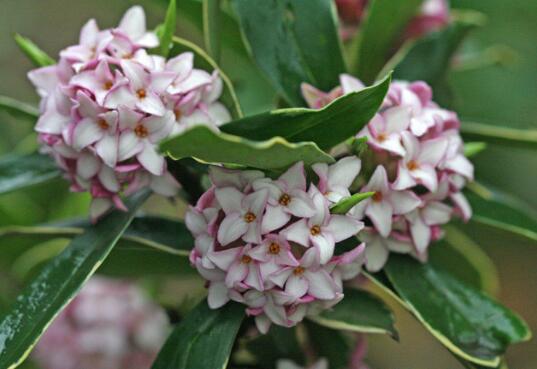
To understand what to do when Daphne odora 'Aureomarginata' gets bugs, we first need to know what kind of bug it is, so that we can carry out targeted treatment, because the treatment methods for each pest and disease are different. Specific details are introduced below; interested friends can take a look.
II. Pest and Disease Control for Daphne odora 'Aureomarginata' (Pests)
Aphids
Aphids are one of the most destructive pests on Earth. This pest harms many plants, and Daphne odora 'Aureomarginata' is no exception. It mainly sucks the sap from the plant, causing a massive loss of nutrients, and finally the plant gradually withers and dies.
Control method: For aphids, this pest of Daphne odora 'Aureomarginata', we can use a 1500-2000 times dilution of 40% imidacloprid water-soluble concentrate to spray and kill them. Generally, 2-3 consecutive sprays can eliminate them.
Scale insects
Scale insects are a pest that appears during the growth of many plants, and Daphne odora 'Aureomarginata' is no exception. This pest mainly feeds on the sap in the leaves and stems of Daphne odora 'Aureomarginata'. It gradually sucks out the sap, causing the nutrients of Daphne odora 'Aureomarginata' to gradually drain away, and finally the plant shrivels.
Control method: When dealing with scale insects, this pest of Daphne odora 'Aureomarginata', we can use a 2000 times dilution of 10% omethoate to spray and kill them. Generally, three consecutive sprays can completely kill this pest.
III. Pest and Disease Control for Daphne odora 'Aureomarginata' (Diseases)
Stem rot
Stem rot is a relatively common disease of Daphne odora 'Aureomarginata'. This disease mainly harms the roots of the plant. When it occurs, the phloem of the roots turns black and rots, and it gradually spreads toward the roots, finally causing the entire plant to rot and die.
Control method: When dealing with this disease of Daphne odora 'Aureomarginata', we can use a 1000 times dilution of 38% oxadixyl-cupric-cymoxanil fungicide to drench the roots, generally once every 5-7 days, and after 3-4 times it can be cured.
Fusarium wilt
Fusarium wilt is a disease caused by fungi. The pathogen generally invades through wounds on the roots and gradually spreads over time. Generally, from onset to death, the course of the disease is 15-45 days. It is an extremely harmful disease.
Control method: For this disease of Daphne odora 'Aureomarginata', we can use an 800-1000 times dilution of carbendazim or benlate to water the roots of Daphne odora 'Aureomarginata', generally once a week, and after 5-6 times it can be cured.
Leaf spot
Leaf spot is a disease that can appear in many plants, and Daphne odora 'Aureomarginata' is no exception. When it occurs, small chlorotic round spots appear on the leaf surface, and in the later stage they expand into larger, nearly circular lesions. In severe cases, the leaves all drop off, the growth weakens, and the entire plant dies.
Control method: When dealing with this disease of Daphne odora 'Aureomarginata', we can use a 500-800 times dilution of thiophanate-methyl to spray the affected plants, generally once every 7-10 days, and after 2-3 times it can be cured.
What to Do When Daphne Gets Bugs: Pest and Disease Control for Daphne/4 Pests 2 Diseases, Spray with Chemicals
Daphne, a beautiful ornamental flower, is not only good-looking but also has strong disease resistance, making it very suitable for growing indoors and deeply loved by flower enthusiasts. However, during cultivation, for certain reasons, Daphne can still get bugs and fall ill, affecting plant growth. So what should you do when Daphne gets bugs? The following is pest and disease control for Daphne. Let's take a look together!
I. What to Do When Daphne Gets Bugs: Spray with Chemicals
Although Daphne has strong disease resistance, under poor growing conditions and improper care, it can also suffer pest infestations and occasionally diseases. The main pests include: aphids, red spider mites, scale insects, earthworms, etc.; the diseases include: mosaic disease, root rot, etc. So what should you do when Daphne gets bugs? It's simple. You just need to identify the pest and then spray the corresponding chemical to solve it.
II. Pest and Disease Control for Daphne
1. Aphids
Although Daphne is not prone to bugs, in hot summer weather, if the environment is not ventilated, it is also susceptible to aphid infestation. This pest generally parasitizes on the leaves and sucks sap. Symptoms of infestation: Daphne leaves turn yellow and dry up, and in severe cases the flowers fade and quickly wither.
Control method: After discovering aphids, if there are very few, you can take manual aphid control by brushing them off with a writing brush or small brush and burying them in the potting soil; when there are many aphids, you can spray a 2000-3000 times dilution of 40% kuailing wettable powder, with excellent results.
2. Red spider mites
When it comes to Daphne getting bugs, red spider mites are also something to watch out for. They pierce the leaves of Daphne with their mouthparts and suck the sap, damaging the plant's chlorophyll. The leaves show grayish-yellow spots or patches, become withered and yellow, and even drop off.
Control method: Usually, pay attention to observing the flowers. When the above symptoms are found, promptly check the underside of the leaves. When individual leaves are affected, the affected leaves can be removed; when many leaves are affected, spray early with propargite, dicofol, dimethoate, huachongjing, fenvalerate and other chemicals for control.
3. Scale insects
Scale insects are one of the pests that all flowers hate. When Daphne gets bugs, it may also be them. These pests often gather on branches, leaves and fruits. The mouthparts of adults and nymphs are inserted into the leaf and branch tissues of peace lily to suck sap, causing the leaves to wilt and inducing sooty mold, doing great harm.
Control method: When there are few scale insects, gently brush them off with a soft brush or wipe them clean with cotton balls or loofah stems; when there are many scale insects, you can choose an 800-1000 times dilution of 40% omethoate, 50% malathion, or 80% dichlorvos emulsifiable concentrate, spraying once every 7-10 days for 2-3 consecutive times, which can effectively prevent scale insect damage.
4. Earthworms
Because the root system of Daphne has a sweet taste, it is relatively easy to attract earthworms. These pests wrap around the Daphne roots, thereby affecting the root system's normal absorption of water and nutrients and causing various poor growth conditions in the plant.
Control method: Repot more often; when earthworms hiding in the potting soil are found, remove them. In daily care, place flower pots on soil ground less often to avoid earthworms entering through the bottom of the pot.
5. Mosaic disease
Besides getting bugs, Daphne also occasionally has diseases, one of which is mosaic disease, the most common disease of flowers. Symptoms: The affected leaves of Daphne show color spots and become deformed, resulting in poor flowering and stunted plant growth.
Control method: When diseased plants are found, they should be promptly removed to reduce the source of the disease. In severe cases, you can spray the leaf surface with a 1200 times dilution of 50% thiophanate-methyl for disinfection to prevent spread.
6. Root rot
In winter, if watered too much or if the potting soil drains poorly, causing the potting soil to be too wet, or when applying unrotted organic fertilizer, Daphne is often prone to root rot. Symptoms: The roots and stems of Daphne turn black and rot.
Control method: After discovering the above symptoms, cut off the rotted parts of Daphne, apply sulfur powder, then replace with fresh culture soil and replant. Afterward, move the potted plant to a ventilated, sunny place, and before long, Daphne will recover its health.
Control Methods for Pests and Diseases of Daphne odora 'Aureomarginata'
The main diseases of Daphne odora 'Aureomarginata' are stem rot, root rot and mosaic disease, and the main pests are aphids, scale insects, etc. Its control should adhere to the principle of “prevention first, integrated control”.
(1) Strengthen flower garden management.
1. Strictly control the movement of diseased seedlings and the use of diseased branches to propagate young plants.
2. Fertilize reasonably and water scientifically. Nitrogen fertilizer should not be applied too heavily; appropriately increase phosphorus and potassium fertilizer to enhance the plant's disease resistance.
3. Do a good job of flower garden sanitation. Diseased plants, dead branches, fallen leaves and weeds in the flower garden should be promptly removed to eliminate the source of pathogenic organisms.
(2) Chemical control.
1. Stem rot. It mainly harms the root crown, which turns yellow-brown and rots, and the plant withers and dies. Choose a 500 times dilution of 50% carbendazim or an 800 times dilution of 40% sanlitong junling wettable powder, spraying alternately and continuously 4-5 times, for relatively good control.
2. Root rot. It is mainly caused by overly wet, waterlogged potting soil or excessive, overly concentrated fertilizer burning the root system. Choose a 1000 times dilution of 30% jingangmycin powder or a 500 times dilution of genfuning, spraying alternately and continuously 4-5 times, for relatively good control.
3. Mosaic disease. Spray with a 600 times dilution of 10% bingduwang, while also controlling aphids.
4. Pests. Pests can occur in all four seasons. Mainly use a 1000 times dilution of 40% omethoate emulsifiable concentrate or a 1000 times dilution of 40% isocarbophos emulsifiable concentrate and other chemicals for control.