2 pests and 2 diseases of anthurium: chemical control works best
During the growth of anthurium, the last thing we want to encounter is pests and diseases. Such problems are extremely harmful to the plant, and if not dealt with in time, they can easily cause the plant to wither and die. So what should you do when anthurium gets bugs? How should pest and disease control for anthurium be carried out? Below, the editor takes you through it.
I. What to do when anthurium gets bugs: find the cause
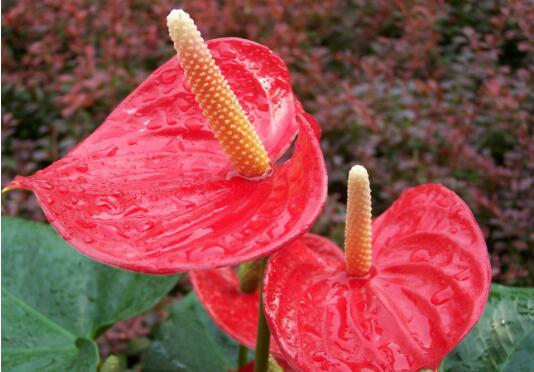
To know what to do when anthurium gets bugs, we first need to understand what kind of insect it is, so that we can deal with it in a targeted way, because the control methods for each pest and disease are different. The details are introduced below, and those interested can take a look.
II. Pest and disease control for anthurium (pests)
Scale insects
Scale insects are extremely harmful pests, mainly threatening the leaves, branches and fruits of anthurium. They gather densely on branches, leaves and fruits, causing yellowing leaves, withered shoot tips, declining tree vigor and other symptoms, and they can also trigger sooty mold.
Control method: When dealing with this anthurium pest and disease problem, we can use a 750-1000 times dilution of Jiebizhi. After the solution is absorbed by the plant, the scale insects suck the toxic plant sap and die of poisoning, giving a good insecticidal effect.
Thrips
Thrips are a very small pest, mostly yellow in color. They mainly harm the flower stalks, leaf stalks and spathes of anthurium. Plants disturbed by them show rough, uneven leaf stalks and flower stalks, and deformed flowers when the spathe opens.
Control method: Thrips are one of the economic pests. For this anthurium pest and disease problem, we can use a 25% thiamethoxam water-dispersible granule at 3000-5000 times dilution to spray and kill them.
III. Pest and disease control for anthurium (diseases)
Leaf spot disease
Leaf spot disease is a disease found in many plants, and anthurium is no exception. When it occurs, many oval and elongated brown spots appear on the leaves, and over time they gradually spread, eventually causing the plant to wither and die.
Control method: When dealing with this anthurium pest and disease problem, we can use a 20% silazole · prochloraz 1000 times dilution to spray the diseased plant, generally once every 5-7 days, and after 2-3 times it can recover.
Anthracnose
Anthracnose is a disease caused by fungi and is extremely harmful to anthurium. When it occurs, many round brown spots appear on the leaves of the anthurium, 2-8mm in size, and over time they gradually spread, eventually causing the plant to rot.
Control method: When controlling this anthurium pest and disease problem, we can use a 70% anthracnose fumate 600 times dilution to spray it, generally once every 7-10 days, and after 2-3 times it can recover.
Pest and disease control for anthurium
Anthurium diseases: inflorescence rot, leaf spot disease and anthracnose
Solutions: Inflorescence rot, leaf spot disease and anthracnose are common diseases. When they occur, a dedicated chemical can be used to spray and kill them; at the same time, all affected branches and leaves must be cut off. Leaf spot disease can invade through plant wounds and mostly occurs in humid and warm environments, and too much nitrogen fertilizer can make leaf spot disease more severe.
Anthurium pests: red spider mites, scale insects, thrips
Red spider mites: Normally red spider mites occur in mid-May, with the peak from July to August. The most obvious symptom is that the leaves gradually turn white. They are most likely to occur in dry, high-temperature environments and when nutrition is poor.
Solutions: A dedicated chemical can be used to spray and kill them; at the same time, branches and leaves with severe pest damage should be cut off and burned. In daily care, pay attention to the humidity of the environment, and in summer cool the plant down.
Scale insects: They generally occur in May, August and November, mainly harming the leaves of the plant.
Solutions: You can repeatedly wipe the leaves with laundry detergent water, then wipe once more with clean water. You can also spray the plant with a dedicated chemical before the pest occurs, to prevent it in advance.
Thrips: June to September is the peak period for this pest. The areas eroded by the pest turn black when exposed to sunlight.
Solutions: A dedicated chemical can be used to spray and kill them.
If pests and diseases occur that year, after winter begins, all pest- and disease-affected branches on the plant should be pruned off.
What to do when bougainvillea gets bugs: pest and disease control for bougainvillea / 2 pests and 2 diseases
In the process of growing bougainvillea, the last thing we want to encounter is problems such as pests and diseases. Such problems are extremely harmful to the plant, not only affecting its ornamental value, but in severe cases also causing the plant to wither and die. So what should you do when bougainvillea gets bugs? How should pest and disease control for bougainvillea be carried out? Below, the editor takes you through it.
I. What to do when bougainvillea gets bugs: find the cause
To know what to do when bougainvillea gets bugs, we first need to understand what kind of insect it is, so that we can deal with it in a targeted way, because the treatment methods for each pest and disease are different. The details are introduced below, and those troubled by this can take a look.
II. Pest and disease control for bougainvillea (pests)
1. Aphids
Aphids are a pest that can appear on many plants, and bougainvillea is no exception. They mainly use nymphs to suck the sap from leaves, stems, tender tips and tender ears, causing the plant to lose a large amount of nutrients and finally wither.
Control method: For aphids, this bougainvillea pest and disease problem, the most direct method is to use a chemical to spray and kill them. In terms of chemicals, we can choose a 50% pirimicarb wettable powder 3000 times dilution.
2. Scale insects
Scale insects are extremely harmful pests, mainly threatening the leaves, branches and fruits of anthurium. They gather densely on branches, leaves and fruits, causing yellowing leaves, withered shoot tips, declining tree vigor and other symptoms, and they can also trigger sooty mold.
Control method: When dealing with scale insects, this bougainvillea pest and disease problem, we can directly use a 45% malathion emulsifiable concentrate 1000 times dilution to spray and treat it.
III. Pest and disease control for bougainvillea (diseases)
1. Leaf spot disease
Leaf spot disease, as its name suggests, harms plant leaves. When it occurs, many irregular spots appear on the leaves of bougainvillea, and over time small black spots also appear on the spots, greatly affecting the ornamental value.
Control method: When dealing with this bougainvillea pest and disease problem, we can use a 50% carbendazim wettable powder 500 times dilution to spray the diseased plant, generally once every 7-10 days, and after 3-4 times it can recover.
2. Brown spot disease
Brown spot disease, also called Rhizoctonia solani blight, is a fungal disease caused by Rhizoctonia solani. When it occurs, many yellow-brown to light-brown spots 0.1-0.5cm in diameter appear on the leaves, and over time the spots gradually spread, eventually causing the plant to wither and die.
Control method: When we find this bougainvillea pest and disease problem, if the number of diseased leaves is relatively small, we can promptly remove and destroy them. If there are many, we need to use a 70% mancozeb wettable powder 400 times dilution for treatment, generally spraying the diseased plant once every 10 days, and after 3 times it can recover.