How to prevent and control pests and diseases in hibiscus: 2 pests and 2 diseases, with medicinal control being the most direct
Pests and diseases are problems that no plant wants to encounter, and hibiscus is no exception. If we are not careful during cultivation, they can easily take advantage of the situation. These problems are extremely harmful to the plant, so when they appear, we must deal with them promptly. Regarding how to prevent and control pests and diseases in hibiscus, let us take a look below.
I. How to prevent and control pests and diseases in hibiscus: find the cause
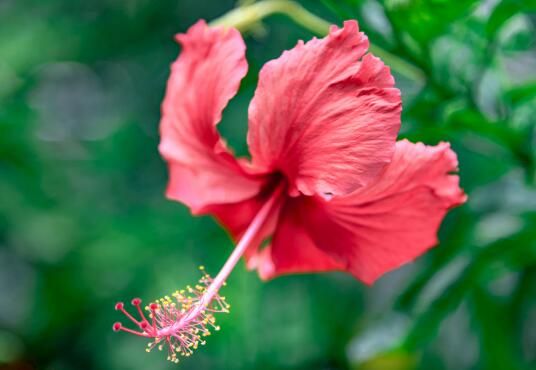
To know how to prevent and control pests and diseases in hibiscus, we first need to understand which type of pest or disease has appeared, so that we can carry out targeted treatment. Aphids, root-knot nematodes, and leaf spot disease are all relatively common pests and diseases. Their specific control methods are described in detail below. Let us take a look.
II. Pest and disease control for hibiscus (pests)
1. Root-knot nematode
Root-knot nematode is a highly specialized omnivorous plant pathogenic nematode. It is extremely harmful to plants. In the early stage, many red necrotic spots appear on the leaves, and over time the leaves gradually fall off, and the plant also gradually dries up.
Control method: When dealing with root-knot nematode, a pest and disease of hibiscus, we can use 10% ethoprophos or 5% fosthiazate to treat the plant, generally once every 5-7 days, and 2-3 applications can completely eliminate this pest.
2. Red spider mite
Red spider mite is a relatively common pest of many plants, and hibiscus is no exception. When this pest appears on the plant, the leaves gradually turn yellow and whitish. If it is not dealt with for a long time, it can also cause the plant to wither.
Control method: For this pest and disease of hibiscus, the humidity of the environment can be increased to prevent its reproduction. It can also be directly sprayed with 10% fenbutatin oxide emulsifiable concentrate at 1000 times dilution.
III. Pest and disease control for hibiscus (diseases)
1. Stem rot
Stem rot is a disease caused by fungi. Its peak period is in hot and rainy seasons, so we must pay special attention at these times. When the plant is affected by this disease, it is not very obvious in the early stage; only the cortex of the affected area shrinks. However, over time the subcutaneous tissue gradually rots, eventually causing the plant to die.
Control method: When dealing with this pest and disease of hibiscus, we can use 800 times dilution of hymexazol or 500 times dilution of thiram to drench the roots of diseased plants, generally once a week, and about 3 applications can cure it.
2. Leaf spot disease
Leaf spot disease is a disease that can appear in many plants, and hibiscus is no exception. When the disease occurs, many brown lesions appear on the leaves of the plant, and they gradually spread, eventually causing the plant to gradually dry up and die.
Control method: For this pest and disease of hibiscus, we can spray diseased plants with 38% oxadixyl-cupric-cymoxanil at 800-1000 times dilution or 80% mancozeb at 400-600 times dilution, generally once every 10-15 days, and 1-2 applications can cure it.
What to do when pilea peperomioides gets pests: pest and disease control for pilea peperomioides / 3 pests and 2 diseases
As a beautiful foliage plant, pilea peperomioides has many benefits. It not only looks good and can purify the air, but also has good medicinal uses, so it is often grown as a potted plant at home. However, when growing pilea peperomioides indoors, for certain reasons it can get pests and diseases. So what should be done when pilea peperomioides gets pests? The following are several pest and disease control methods for pilea peperomioides. Let us learn about them together.
I. What to do when pilea peperomioides gets pests
During the growth of pilea peperomioides, for various reasons, the plant will inevitably be harmed by pests and diseases. According to research, the main pests and diseases include: scale insects, red spider mites, leaf spot disease, anthracnose, etc. They all harm the health of the plant. So once discovered, everyone should immediately spray pesticide for control. As for what pesticide to spray, let us continue reading below.
II. Pest and disease control for pilea peperomioides
1. Scale insects
When it comes to pilea peperomioides getting pests, it is generally scale insects. Their appearance is caused either by untimely disinfection or by the breeding of insect eggs. This insect is relatively small and often gathers together. It mainly attacks the leaves of the plant, affecting photosynthesis, which causes the leaves of pilea peperomioides to turn yellow and detracts from its ornamental value.
Control method: If a small number of scale insects are found, they can be brushed off with a writing brush and then rinsed clean with water; when there are many scale insects, when there are many scale insects, 40% omethoate at 1000 times dilution can be used, sprayed once every 8 days, and 2 to 3 consecutive applications can effectively control them.
2. Aphids
As a foliage plant, pilea peperomioides can also get aphids when improperly cared for. This insect sucks the sap from stems and leaves, causing nutritional deficiency in pilea peperomioides. Moreover, aphids reproduce quickly. Once overlooked, they will appear in patches, looking very frightening, so they must be controlled promptly.
Control method: When there are few aphids, they can be brushed off with a writing brush dipped in water, and the brushed-off aphids should be promptly collected and destroyed; when aphids are abundant, spray 40.7% emulsifiable concentrate diluted 1000-2000 times for control, spraying once every 7-10 days, and 3-4 consecutive applications give excellent results.
3. Red spider mite
When it comes to pilea peperomioides getting pests, besides scale insects and aphids, red spider mites are also common. When cultivated indoors, if ventilation is poor, pilea peperomioides often also suffers from red spider mite damage. Although this insect is small, it can use its sharp mouthparts to suck nutrients from the leaves, thereby affecting the normal growth of pilea peperomioides.
Control method: If red spider mites are found, spray 1000 times dilution of dimethoate or 20% dicofol emulsifiable concentrate at 1000 times dilution for control, once every 5-7 days, and 2-3 consecutive applications can kill them completely.
4. Anthracnose
Besides getting pests, pilea peperomioides can also get diseases, the most common of which is anthracnose. It is generally caused by bacteria and easily occurs in hot and humid summers. This disease causes brown small spots to appear on the leaves of pilea peperomioides, which later expand into round or oval shapes. In severe cases, the entire plant is damaged.
Control method: When diseased leaves are found, remove them immediately to reduce the source of disease; in the early stage of the disease, first open windows for ventilation, lower the indoor air humidity and temperature, then spray with 50% thiophanate-methyl wettable powder at 800-1500 times dilution, spraying once every 7-10 days, supplemented with 1% Bordeaux mixture of equal amounts, once every half month. After doing this, the disease can basically be cured.
5. Leaf spot disease
When the indoor temperature fluctuates greatly in a short period, or when too much water is given during the dormant period, pilea peperomioides is also prone to leaf spot disease. Symptoms: many brown small spots appear on the leaves of pilea peperomioides, and in severe cases the spots cover the entire leaf.
Control method: When the above symptoms are found, promptly remove diseased leaves and destroy them centrally to reduce the source of disease; then use 800 times dilution of chlorothalonil for foliar spraying, once every 7-8 days, and 2-3 consecutive applications can basically cure it.
Prevention and control of major pests and diseases of medicinal flowers
For the prevention and control of pests and diseases of medicinal flowers, we must first understand the causes of the disease and the types of pests and diseases, grasp the patterns of occurrence and development of pests and diseases, and implement the policy of “prevention first, integrated control”; secondly, we must consider comprehensively, pursue benefits and avoid harm, not only improving the yield and quality of medicinal flowers, but also reducing environmental pollution. In particular, we must prevent toxic residues from harming the body. After mastering these principles, the following control methods can be used:
1. Plant quarantine is a method of preventing and controlling pests and diseases of medicinal flowers based on a series of quarantine laws and measures formulated by the state, in order to prevent the introduction of new dangerous pests and diseases from other countries or other epidemic areas and to limit the spread of local pests and diseases outward.
Therefore, quarantine procedures must be strictly carried out in the introduction of medicinal flowers and the transportation of seedlings.
2. Agricultural control is the method of comprehensively using cultivation and management technical measures to control and eliminate pests and diseases, called agricultural control methods. The following methods are commonly used:
(1) Breeding pest- and disease-resistant varieties. Different varieties of medicinal flowers differ greatly in resistance to pests and diseases. Therefore, breeding high-quality, high-yield medicinal flower varieties resistant to diseases is an economic and effective measure for pest and disease control. For example, thorny safflower is more resistant to anthracnose than thornless safflower. Within the same variety, disease- and pest-resistant individual plants should also be selected for seed preservation. In addition, disease-free or less-diseased types should be selected to reduce sources of disease.
(2) Reasonable crop rotation. Different medicinal flowers have different pests and diseases, and various pests and diseases have certain host ranges.
Therefore, often rotating different medicinal flowers or crops in one area or on one piece of land causes those pests and diseases unsuited to the new environment and food to gradually decrease and naturally die out; for soil-borne pests and diseases as well as monophagous and oligophagous pests, good results can also be achieved. At the same time, crop rotation can also improve the soil, promote the growth and development of medicinal flowers, and enhance resistance to
pests and diseases. For example, for medicinal flowers generally suffering from severe root rot, rotating with gramineous plants in paddy and dryland rotation for more than 4 years can reduce the occurrence of root rot and southern blight.
(3) Adjusting the sowing period. Some pests and diseases are often closely related to a certain phenological stage of the growth and development of medicinal flowers. If this growth and development stage can be made to avoid the dangerous period of massive infestation and damage by pests and diseases, the harm of pests and diseases can be avoided or reduced. For example, sowing safflower early at the right time can avoid the harm of anthracnose and safflower fruit fly; sowing coix late at the right time can reduce the occurrence of smut; sowing daylily in summer can avoid the harm of spring seedling-stage pests. Therefore, adjusting the sowing period is an effective means of avoiding disease and preventing pests.
(4) Deep plowing and intensive cultivation can promote the root development of medicinal flowers, enhance fertilizer absorption capacity, make them grow robustly, and at the same time play a direct role in killing pests and diseases.
(5) Cleaning the field. Diseased and pest-damaged residual plants in the field, as well as dead branches, fallen leaves, and weeds in the field, are often places where pests and diseases hide and overwinter, becoming sources of pests and diseases for the coming year. Therefore, collecting and burning diseased plant residues and fallen leaves and cleaning the field can reduce the occurrence of pests and diseases.
(6) Strengthening field management includes technical measures such as reasonable fertilization, timely drainage and irrigation, and intertillage and weeding. Through meticulous field management, the effect of preventing and controlling pests and diseases is achieved.
3. Biological control is the method of using certain beneficial organisms in nature to eliminate or inhibit a certain pest or disease, called biological control.
Biological control is currently mainly carried out by using insects to control insects, using fungi to control insects, using fungi to control diseases, and using birds to control insects. For example, using predatory beneficial insects such as ground beetles, aphid-eating ladybugs, aphid-eating hoverflies, and lizard-eating flies to control aphids, etc.; using braconid wasps, trichogramma, etc. to control cabbage caterpillars; using parasitic bacteria and fungi such as Beauveria bassiana, Bacillus thuringiensis, and Serratia marcescens to control cabbage caterpillars, fruit borers, grubs, scarab beetles, cutworms, and many other pests; using antibiotics such as kasugamycin, “5406”, and neomycin to control rhizopus rot, anthracnose, etc. Biological control is an important aspect of integrated control. It has the advantages of being harmless to humans, livestock, and plants, safe to use, without toxic residues, not polluting the environment, with lasting effects, and being preventive. It has broad prospects for development.
4. Physical and mechanical control is the method of using physical and mechanical means such as temperature, light, and equipment to eliminate pests and diseases according to their living habits and occurrence patterns, called physical and mechanical control methods. For example, for pests and diseases with weak mobility, concentrated damage, or death-feigning behavior, manual capture and killing can be carried out; for phototactic Lepidoptera and certain underground pests, moth-attracting lamps or black light lamps can be used for trapping and killing; high-temperature and low-temperature methods can be used to control warehouse pests. Because diseased seeds weigh less than healthy seeds, wind selection and water selection can be used to eliminate diseased seeds, etc. In recent years, new physical technologies such as ultrasound and radiation have also been used to directly kill pathogenic bacteria and pests.
5. Chemical control is the method of applying chemical pesticides to prevent and control pests and diseases, called chemical control. It has the characteristics of fast action, good effect, convenient use, ability to eliminate or control a large number of pests and diseases in a short period, and relatively small restrictions by region and season. It is currently a commonly used method for pest and disease control. However, it also has major disadvantages, such as long-term use of pesticides making pathogenic organisms prone to developing resistance, while also harming some beneficial organisms and being unfavorable to biological control. In addition, it also has disadvantages such as pesticide residues, environmental pollution, and effects on the quality of medicinal flowers.
Among the chemicals commonly used as pesticides at present, according to their toxic effects on pests and diseases, they can be divided into two major categories: insecticides and fungicides. In addition, there are also herbicides, etc. Insecticides, according to their properties and the method and effect of entering the pest body, can be further divided into stomach poisons (such as lead arsenate, trichlorfon, etc.), contact poisons (such as pyrethrum), systemic agents (such as dimethoate, “1059”, “1605’, etc.), and fumigants (dichlorvos, chloropicrin, etc.). Fungicides currently used are mostly protective agents (such as Bordeaux mixture, zineb, etc.). Protective agents need to be applied before the onset of disease in medicinal flowers, and then repeatedly used each time the efficacy period is reached. Fungicides also include therapeutic agents (such as lime sulfur mixture, thiram, etc.) and systemic agents (such as nabam, fenaminosulf, antibiotics, etc.).
When using the above chemicals, methods such as spraying, dusting, fumigation, seed dressing, seed soaking, smearing, soil treatment, and making poisoned grain, poisoned bait, and poisoned soil can be used to prevent and control pests and diseases.
When using chemical agents, attention should be paid to: understanding the properties of the pesticide, applying the right medicine for the disease, seizing the opportunity, spraying at the right time, mastering techniques, ensuring efficacy, paying attention to safety, and avoiding pesticide damage and poisoning of humans and livestock. In recent years, with the development of atomic physics, ionizing radiation has begun to be used to directly kill pests. In addition, lasers can also be used to control pests.