What to Do When the Rosa Rubus Gets Bugs: Pest and Disease Control and Response: 2 Pests, 2 Diseases
In the process of growing Rosa rubus, the last thing we want to encounter is pests and diseases. Such problems are extremely harmful to the plant, not only affecting its ornamental value, but in severe cases even causing the plant to wither and die. So what should you do when the Rosa rubus gets bugs? And how should pest and disease control for Rosa rubus be done? Let's take a look below.
1. What to Do When the Rosa Rubus Gets Bugs: Find the Cause
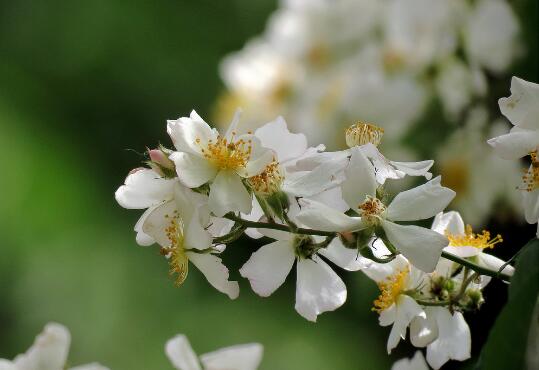
If you want to know what to do when the Rosa rubus gets bugs, we first need to understand what kind of bug it is, so that we can deal with it in a targeted way, because the treatment methods and the pesticides used for each pest and disease are different, and we need to suit the remedy to the case. Below are detailed treatment methods for various pests and diseases; friends troubled by this can take a look.
2. Pest and Disease Control for Rosa Rubus (Pests)
Red Spider Mite
The red spider mite is an animal of the class Arachnida, family Tetranychidae. It has a very wide distribution and a very diverse diet, and can harm more than 110 kinds of plants. Because this pest is relatively small in size, by the time we usually discover it, the flowers have already suffered serious damage. This pest mainly sucks the sap from the leaves, thereby destroying the chlorophyll of the Rosa rubus, causing the leaves to dry out, turn yellow, and even fall off.
Control method: When dealing with this pest and disease of Rosa rubus, if only individual leaves are affected, we can simply pick off the affected leaves and destroy them. If the affected area is relatively large, we can use a 1000-1500 times dilution of 40% dicofol emulsifiable concentrate to spray and kill them.
Aphids
Aphids are a pest that exists on many plants, and Rosa rubus is no exception. They are a phytophagous insect that mainly harms the leaves and stems of Rosa rubus, gradually absorbing the sap within, causing the plant to lose a large amount of nutrients, and over time causing the plant to gradually wither and die.
Control method: When dealing with this pest and disease of Rosa rubus, if the number of pests is relatively small, we can prune off the affected branch tips and then disinfect the plant. If the number is relatively large, we can directly use a 3000 times dilution of 50% pirimicarb wettable powder to spray and kill them.
3. Pest and Disease Control for Rosa Rubus (Diseases)
Powdery Mildew
Powdery mildew is a disease caused by fungi. When this disease appears, many powdery white mold spots appear on the Rosa rubus. This phenomenon seriously affects the photosynthesis of the Rosa rubus, gradually causing the leaves to fall off and the plant to wither. This shows the harmfulness of powdery mildew among the pests and diseases of Rosa rubus.
Control method: When controlling powdery mildew, we can use an 800-1000 times dilution of 50% amobam to spray the Rosa rubus, generally spraying once every 7-10 days, and after 2-3 times it can be cured.
Anthracnose
Anthracnose mainly occurs on the leaves of Rosa rubus. In the early stage of the disease, many water-soaked yellow lesions appear on the leaves. After expanding, they become oval to irregular brown or yellowish-brown lesions. In the later stage, the lesions connect into one patch, causing the leaves to dry out and producing small black dots arranged in concentric rings.
Control method: The appearance of this disease is mainly caused by poor ventilation in the growing environment, so when growing it we must keep the environment well ventilated. As for treating this disease, we can use a 1500 times dilution of 70% thiophanate to spray the affected areas, generally spraying once every week, and after 3-4 times it can be cured.
How Does Rosa Rubus Reproduce? Rosa Rubus Propagation Methods / Mainly by Cuttage Propagation
Rosa rubus is a relatively common ornamental flowering plant in people's lives, and many people across our country grow it. As more people grow it, questions about its propagation have also become a concern. How does Rosa rubus reproduce? What are the propagation methods for Rosa rubus? Let's take a look below.
1. How Does Rosa Rubus Reproduce? Cuttage / Layering
When it comes to how Rosa rubus reproduces, it is mainly divided into two methods: cuttage propagation and layering propagation. Among them, cuttage propagation is the more commonly used one. Although layering propagation is used relatively less, its survival rate is not low at all. Below are the specific operation methods for the two propagation methods; let's take a look.
2. Propagation Methods for Rosa Rubus
Cuttage Propagation
1. Substrate selection, humus soil
Before propagating Rosa rubus, we first need to choose a substrate. This is the step of laying a solid foundation, so we must choose the most suitable one. Generally, it is best to choose loose and fertile humus soil as the substrate. This kind of soil has relatively good drainage and air permeability, allows the plant to absorb nutrients better, and is not prone to water accumulation.
2. Substrate disinfection, high-temperature disinfection
After choosing the substrate, we also need to disinfect it to prevent bacteria in it from infecting the Rosa rubus. There are two disinfection methods. One is that we can break it up and spread it flat under strong sunlight to bake it, and we can also put it into a pot and stir-fry it over high heat. In this way, even if there are pests and diseases in it, they will be killed by the high temperature.
3. Cutting selection, choose robustly growing branches
After choosing the substrate, we also need to choose cuttings. Generally, it is best to choose branches that grow relatively robustly and are free from pest and disease infestation as cuttings, as the survival rate will be relatively high. If we choose branches that already look frail, then it is basically very difficult for them to survive, so everyone should not be too casual when choosing.
4. Cuttage method, remove the bottom leaves
Among the propagation methods for Rosa rubus, cuttage propagation is considered a relatively simple one. Before cutting, we can use chopsticks to poke a hole in the substrate, then trim off the leaves at the bottom of the cutting, and afterward insert the cutting halfway in. This operation can prevent the cutting from being damaged and is very practical. After that, water thoroughly and place it in a cool place for a week, and then it can be grown in sunlight.
Layering Propagation
When layering Rosa rubus, we should choose a robustly growing long branch, then bend it and bury it in the soil, or use wavy layering. After it takes root, separate it from the mother plant. This method is generally best carried out in spring and autumn, because the climate is more suitable for its growth, so the survival rate will be somewhat higher.
The Flower Language of Rosa Rubus
The flower language of Rosa rubus carries the meaning of "the beauty of the end of the road." When the Rosa rubus blooms, it means the end of a relationship, meaning that the most brilliant and prosperous years of life have passed. So when the Rosa rubus has bloomed out, the entire flowering season has also passed, which gives rise to the saying often heard now: "When the Rosa rubus blooms, all flowers are done." Some people also compare it to a woman's youth; the blooming of the flower means the passing of a woman's youth.
The flower language of Rosa rubus is so sad. Do you know the cultivation methods for Rosa rubus?