What to Do When Alocasia Flowers Get Pests? 2 Pest and 3 Disease Control Methods
Pests and diseases can be said to be a problem that all plants fear, and Alocasia flowers are no exception. Such problems not only affect their ornamental value, but in severe cases can also cause the plant to wither and die. So what should you do when Alocasia flowers get pests? How should pest and disease control for Alocasia flowers be done? Below, the editor will walk you through it.
I. What to Do When Alocasia Flowers Get Pests - Find the Cause
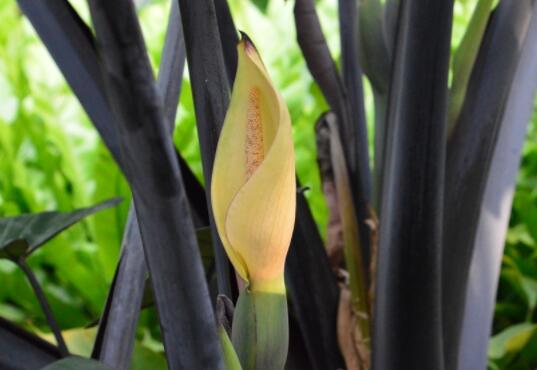
To know what to do when Alocasia flowers get pests, we first need to understand what kind of pest it is, so that we can carry out targeted treatment, because the treatment methods for each pest and disease are different. The specific details are introduced below, and those troubled by this issue can take a look.
II. Pest and Disease Control for Alocasia Flowers (Pests)
1. Scale insects
Alocasia flowers prefer to grow in warm and humid environments. If the growing environment is too dry, scale insects are very likely to appear. They mainly threaten the branches, leaves and fruits of Alocasia flowers, causing the leaves to gradually turn yellow, the tree vigor to gradually decline, and finally a withering phenomenon to appear.
Control method: When dealing with this pest and disease of Alocasia flowers, we can use 255 phosmet 1000x solution or 2.5% deltamethrin 3000x solution to spray and kill them directly.
2. Red spider mites
Red spider mites are a relatively common pest for many plants, and Alocasia flowers are no exception. When this pest appears on the plant, the leaves will gradually turn yellow and white, and if it is not dealt with for a long time, it will also cause the plant to wither.
Control method: When dealing with this pest and disease of Alocasia flowers, we can increase the humidity of the environment to prevent its reproduction. We can also directly use 10% fenbutatin oxide emulsifiable concentrate 1000x solution to spray and kill them.
III. Pest and Disease Control for Alocasia Flowers (Diseases)
1. Southern blight
Southern blight mainly threatens the leaves of Alocasia flowers. In the early stage, the leaves will appear withered and yellow, and as time goes on, the stems will also become shriveled, white thread-like structures will appear on the soil surface and roots, and in severe cases it will cause the plant to wither and die.
Control method: For this pest and disease of Alocasia flowers, we can directly use 50% thiophanate 500-800x solution spray for treatment, generally applying once every 10 days, and it can be cured after 2-3 times.
2. Gray mold
Gray mold is a disease that can appear in many plants, and Alocasia flowers are no exception. This disease mainly infects the leaves and flowers of the plant. When it occurs, some water-soaked brown lesions will appear on the leaves and flowers, and as time goes on they will gradually turn into black mold layers.
Control method: When dealing with this pest and disease of Alocasia flowers, we can use 50% vinclozolin wettable powder 1500x solution to spray the plant, generally once every 7-12 days, and it can be cured after about 3 times.
3. Mosaic disease
Mosaic disease is a worldwide viral disease with extremely great harm to Alocasia flowers. In the early stage of the disease, chlorotic angular lesions appear on the leaves, which finally turn brown, and in severe cases it will also affect the yield and quality of cut flowers.
Control method: When dealing with this pest and disease of Alocasia flowers, we can use 40% dimethoate emulsifiable concentrate 1000x solution to spray the plant, generally once every 7-10 days, and it can be cured after 2-3 times.
How to Plant Alocasia Flowers, Alocasia Flower Planting Techniques / Survival Rate as High as 95%
There are many propagation methods for the Alocasia flower plant, including five methods: sowing, cuttings, division, bulb method and tissue culture. Among them, sowing propagation is a relatively commonly used one, but to succeed in planting, there are many points that need attention. Regarding how to plant Alocasia flowers? What are the planting techniques for Alocasia flowers? Below, the editor will walk you through it.
I. How to Plant Alocasia Flowers
When it comes to how to plant Alocasia flowers, there are actually many points that need attention, such as the selection and disinfection of the substrate, the germination of seeds, and the planting method. However, as long as we operate properly, the survival rate is still very high. After all, this method has been tested by countless people and has accumulated a lot of experience. As for the specific planting techniques, they are introduced in detail below. Let's take a look.
II. Planting Techniques for Alocasia Flowers
1. Substrate selection, good drainage required
Before planting Alocasia flowers, we must first choose the substrate. This is the step of laying a good foundation, so we must choose the most suitable one. Generally, it is best to choose loose and fertile humus soil as the substrate. This kind of soil has relatively good drainage and breathability, can allow the plant to better absorb nutrients, and is not prone to water accumulation.
2. Substrate disinfection, high-temperature disinfection
After choosing the substrate, we cannot immediately plant the Alocasia flowers. We also need to disinfect the substrate to prevent pests and diseases in it from infecting the Alocasia flowers. When disinfecting, we can choose to break it up and spread it flat under the hot sun for disinfection, or put it in a pot and stir-fry it over fire. In this way, if there are pests in the soil, they will also be killed.
3. Seed germination, soaking in warm water
Harvested Alocasia flower seeds are not suitable for direct sowing. Before sowing, we had best first soak them in warm water for 1-2 days. After the seeds begin to absorb water and swell, we can take them out and plant them. This can play a role in promoting germination and allow them to sprout faster.
4. Planting method, cover with 1 cm of soil
When planting Alocasia flowers, we should first apply an appropriate amount of base fertilizer into the soil, then evenly scatter the seeds on the soil surface. After scattering, cover them with 1 cm of soil, and then we can water. When watering, it is best to use the immersion pot method: place the flower pot half into water, and let the water slowly soak up. This is because the seeds of Alocasia flowers are relatively small, and if watered directly, they are easily washed away.
5. Follow-up management, pay attention to daily care
After successfully planting Alocasia flowers, we can carry out follow-up care. There are also many points that need attention in terms of care, such as watering and fertilizing, which all have particular requirements. If you do not know how to care for them, you can refer to the article on Alocasia flower cultivation methods, which contains detailed care instructions.
How to Propagate Alocasia Flowers, Alocasia Flower Propagation Methods / Mainly Sowing and Cuttings
Alocasia flowers are relatively common ornamental plants in people's lives, with high ornamental value, and many people cultivate them in various places. As more people cultivate them, questions about their propagation have also become a concern. Regarding how to propagate Alocasia flowers? What are the propagation methods for Alocasia flowers? Below, the editor will walk you through it.
I. How to Propagate Alocasia Flowers, Mainly by Cuttings
When it comes to how to propagate Alocasia flowers, there are actually many methods, including five methods: sowing, cuttings, division, bulb method and tissue culture. Among them, sowing and cuttings propagation are two relatively commonly used methods, but as long as they are operated properly, the survival rates of all five methods are very high. The specific propagation details are introduced below. Let's take a look.
II. Propagation Methods for Alocasia Flowers
1. Sowing propagation
Before carrying out sowing propagation for Alocasia flowers, we must first soak the seeds in warm water, which can play a role in promoting germination. The soaking time is between 12-24 hours. After they begin to absorb water and swell, they can be taken out for sowing. When sowing, we should first apply an appropriate amount of base fertilizer into the soil, then evenly scatter the seeds on the soil surface, then cover them with 1-2 cm of soil, then water thoroughly and place them in a cool place to wait for germination.
2. Cutting propagation
Among the propagation methods for Alocasia flowers, cutting propagation is a relatively commonly used method, and it is also relatively simple to operate. First, we should choose healthy and vigorous cuttings, then insert them into the soil. Of course, before cutting, it is best to loosen the soil first to avoid damaging the cuttings when inserting them. At the same time, you can also use chopsticks to first make a hole in the soil, then insert the cuttings into it. This operation can avoid damage to the cuttings and is also very practical.
3. Division propagation
When carrying out division propagation, we can do it together with repotting. When dividing, we should take the overly dense mother plant out of the pot soil, then divide and cut it into several clumps, and pot them separately. Plant them as you divide them, and they are very easy to survive. Generally, after potting, it is already a complete ornamental plant. This propagation method for Alocasia flowers is also a relatively simple one.
4. Bulb method
Compared with other propagation methods, the bulb method is used relatively less, but the survival rate is not low at all. This method mainly involves digging out and grading the small bulbs naturally produced at the roots of Alocasia, then replanting them. This method is generally more suitable for large-scale propagation of Alocasia flowers.
5. Tissue culture method
The tissue culture method is a method that can produce callus tissue through leaves, petioles, roots and inflorescences, and then induce adventitious buds for rapid propagation. First, we should cut off leaves, petioles, etc., cut them into small pieces of 1-2 square centimeters, and then inoculate them onto the culture medium. The cultivation period of this method is slightly longer, generally requiring 2-3 months.