What to do when a Ginseng Ficus gets scale insects? Pest and disease control spraying methods
Ginseng Ficus, a beautiful ornamental plant, has well-developed roots that protrude above the soil surface and are shaped like ginseng, giving it a uniquely striking appearance and making it highly ornamental when grown indoors. Normally, Ginseng Ficus has strong adaptability and is not prone to pests or diseases, but sometimes it can still be threatened by diseases and plagued by pests. So what should you do when a Ginseng Ficus gets bugs? Let's take a look together at the pest and disease control for Ginseng Ficus.
I. Ginseng Ficus gets bugs, spray with pesticide
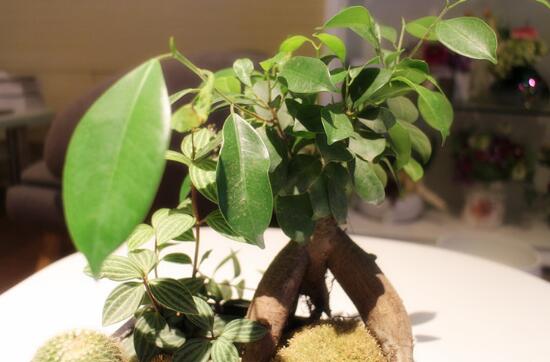
As a common indoor potted plant, Ginseng Ficus is very easy to grow, but no matter how easy a plant is to grow, it still needs care! Once management is neglected, or the indoor environment is too poor, Ginseng Ficus will get bugs and diseases. As for what to do when a Ginseng Ficus gets bugs, it is actually very simple -- you just need to identify the specific pest, and then deal with it accordingly.
II. Pest and disease control for Ginseng Ficus
1. Scale insects
During cultivation, pests and diseases are rare on Ginseng Ficus, but when the environment is poorly ventilated and care is improper, scale insects occasionally cause damage. These insects use their piercing-sucking mouthparts to suck sap from leaves and small branches. If not noticed for a long time, this can also cause the leaves of Ginseng Ficus to turn yellow, and in more severe cases, leaf drop can occur.
Control method: When a small number of scale insects are found, promptly remove them by hand and place the plant in a well-ventilated area; when there are many scale insects, you need to spray with pesticide. A pesticide such as Kuangshajie at 800-1000 times dilution can be used, and generally one application is enough to achieve control.
2. Brown spot disease
When it comes to the pests and diseases of Ginseng Ficus, besides scale insects, the most common one is brown spot disease. It mainly harms the leaves and is one of the main causes of blackening leaves on Ginseng Ficus. Symptoms: In the early stage, circular or oval spots appear on the diseased leaves, appearing purplish-brown and later turning black; in severe cases, the leaves even wither, turn yellow and fall off.
Control method: When the above symptoms are found, promptly remove the diseased leaves and burn them in a centralized manner to reduce the source of infection. In the early stage of the disease, spray with 70% mancozeb wettable powder at 400 times dilution, once every 10 days, for 3 to 4 consecutive times, for good control results.
3. Other conditions
Besides scale insects and brown spot disease, Ginseng Ficus can also suffer from other conditions, such as cold damage when temperatures are low, and sunscald when light is too intense. The specific symptoms and control methods are as follows:
① Cold damage
Ginseng Ficus is not cold-tolerant. In winter, the indoor temperature should be kept above 10°C. Once the temperature drops below 6°C, combined with soggy potting soil, the tender leaves are prone to freezing damage and collapse, and in severe cases, the tuber can rot and be very difficult to revive.
Control method: During the cultivation of Ginseng Ficus, the temperature needs to be adjusted appropriately, keeping it at 18-33°C, ensuring the overwintering room temperature is above 10°C, and keeping the potting soil slightly dry.
② Sunscald
Ginseng Ficus likes light but dislikes direct strong light. Once exposed to direct sunlight for a long time, the leaves are easily sunscalded, causing parts of the leaves to lose chlorophyll and turn white, or the entire leaf to be scorched, with the necrotic parts later turning brown and black.
Control method: When light is too intense, especially in summer, Ginseng Ficus should be moved indoors to a spot with diffused light for care; in early spring, late autumn, and winter, the plant can be moved outside from time to time to get some sun.
Overall, Ginseng Ficus has good benefits and is very easy to grow, making it very suitable for indoor cultivation. However, once management is neglected, it will be targeted by pests and diseases, seriously affecting its ornamental value. So for the health of your Ginseng Ficus, everyone must care for it carefully. That is all for the pest and disease control of Ginseng Ficus. I hope it can be of help to everyone.
What to do when a Sago Palm gets bugs, pest and disease control for Sago Palm / 2 pests and 2 diseases, spray with pesticide
The Sago Palm is toxic, and I believe many flower enthusiasts know this, but even so, some people still keep it at home because the Sago Palm is truly beautiful. However, during cultivation, due to negligence, the Sago Palm can also get bugs and diseases, which will damage its ornamental value. So what should you do when a Sago Palm gets bugs? Here are 4 pest and disease control methods for Sago Palm. Come take a look with me!
I. Sago Palm gets bugs, spray with pesticide
During the cultivation of Sago Palm, factors such as high temperature, dryness, poor ventilation, and high air humidity can cause the plant to get bugs and diseases. The main pests include scale insects and small gray butterflies, and the main diseases include white spot disease and sooty mold. Once bugs or diseases appear, they will affect the growth of the Sago Palm, so as soon as they are discovered, you should immediately spray pesticide for control. Specifically, you can refer to the pest and disease control for Sago Palm.
II. Pest and disease control for Sago Palm
1. Scale insects
The Sago Palm has strong adaptability and is generally rarely affected by pests and diseases, but under high temperature, dryness, and poor ventilation, its leaves are also susceptible to damage from scale insects. These insects use their piercing-sucking mouthparts to suck sap from leaves and small branches, causing the leaves of the Sago Palm to turn yellow, and in severe cases, the branches or leaves wither and die.
Control method: When there are few scale insects, they can be brushed off with a soft brush and then rinsed clean with water; when there are many scale insects, promptly spray 50% omethoate emulsion or 50% monocrotophos, which are highly effective against scale insects. Generally one application is enough to achieve control.
2. Small gray butterfly
Besides scale insects, the small gray butterfly is also one of the main pests of the Sago Palm. It generally appears from May to November. This pest mainly bites and feeds on the tender leaves of the Sago Palm, causing the plant to produce no new leaves all year round and lose its ornamental value.
Control method: Knowing the habits of this pest, flower enthusiasts can start from June and observe daily. When small gray butterflies are found, promptly spray pesticide for control. Pesticide options include 21% mieshabii emulsion at 1000-1500 times dilution, 20% jusha emulsion at 800-1000 times dilution, 5% laifuling at 2500-3000 times dilution, etc.
3. Sooty mold
Sooty mold, also known as black mildew or soot disease, is one of the main diseases of the Sago Palm. It mainly harms the leaves, and the affected surface forms a black mold layer that looks like a layer of soot. This severely hinders photosynthesis in the Sago Palm, weakens its growth vigor, and in severe cases causes the branches and leaves to wither and die.
Control method: When the above symptoms are found, you can manually wipe them off or spray with Bijunsha at 800-1000 times dilution, 70% thiophanate-methyl, or other pesticides for control.
4. White spot disease
Under high temperature and high air humidity, besides sooty mold, the Sago Palm is also prone to white spot disease. This disease mainly harms the leaves of the Sago Palm, causing irregular lesions on the diseased leaves. In the later stage, the lesions gradually expand, and purplish-red or reddish-brown spots can be seen on both the front and back sides.
Control method: After autumn, thoroughly prune off diseased leaves and burn them in a centralized manner to reduce the source of infection; in the early stage of the disease, use 50% carbendazim wettable powder or 70% thiophanate wettable powder diluted 1000 times with water, and spray the diseased plants in the early morning.
That is all for the pest and disease control of Sago Palm. I believe everyone now knows what to do when the Sago Palm gets bugs or diseases! Overall, as long as you care for it according to the cultivation methods for Sago Palm, it generally will not suffer from pests and diseases. Of course, if the Sago Palm does get bugs or diseases, do not be afraid -- just solve it according to the methods above. Finally, may everyone's Sago Palm grow beautifully~
What to do when a pencil cactus gets bugs, pest and disease control for pencil cactus / 1 pest and 2 diseases, spray with pesticide
The pencil cactus, also called green spurge, is a beautiful succulent plant. Its straight stems are green throughout, making it highly ornamental when grown indoors. Normally, the succulent pencil cactus is not prone to pests and diseases, but when care is improper, it can also be threatened by diseases and plagued by pests. So what should you do when a pencil cactus gets bugs? Let's take a look together at the pest and disease control for pencil cactus.
I. Pencil cactus gets bugs, identify the pest
As a common succulent, the pencil cactus is not difficult to grow, but because there are many beginners, they inevitably encounter situations of improper care, and the result is that the plant gets bugs and diseases. As for what to do when a pencil cactus gets bugs, first we need to identify the pest, and then spray pesticide accordingly to solve it. Specifically, it is all in the pest and disease control for pencil cactus. Let's continue reading.
II. Pest and disease control for pencil cactus
(1) Pests of pencil cactus, scale insects
Because of its strong adaptability, the pencil cactus has relatively few pests. When it does get bugs, it is usually scale insects. The eggs of these insects hide in the bark, and after growing up they mainly attack the leaves of the plant, causing the tender buds to curl and deform and unable to grow normally, and in severe cases can even lead to the death of the pencil cactus.
Control method: When a small number of scale insects are found, they can be brushed off with a soft brush and then rinsed clean with water; then spray 50% omethoate emulsion or 50% monocrotophos. Generally one application is enough to achieve control.
(2) Diseases of pencil cactus, anthracnose and leaf spot disease
1. Anthracnose
The pencil cactus rarely gets sick, but under conditions of high temperature and high air humidity, it can also suffer from anthracnose. This disease mainly harms the leaves of the pencil cactus. In the early stage, circular lesions appear on the diseased leaves, then change from circular reddish-brown to grayish-white, and then to dark brown with black dots arranged in concentric rings; in severe cases, the leaves wither, turn black and die.
Control method: Once the pencil cactus suffers from anthracnose, you should immediately cut off the diseased branches and leaves and destroy them in a centralized manner to avoid reinfection; at the same time, spray pesticide on the diseased pencil cactus, such as 50% carbendazim wettable powder at 700-800 times dilution or 75% chlorothalonil at 500 times dilution, etc.
2. Leaf spot disease
Besides anthracnose, there is another common disease of the pencil cactus, which is leaf spot disease. This disease often occurs in late autumn and early winter. In the early stage of the disease, small purplish-brown spots appear on the diseased leaves. If not controlled in time, they will eventually turn grayish-white, endangering the life of the pencil cactus.
Control method: After discovering that the pencil cactus has leaf spot disease, thoroughly remove the diseased leaves at the end of winter to reduce the source of infection for the next year; in addition, during the disease period, promptly spray carbendazim at 800 times dilution. Spraying continuously several times gives excellent control results.
That is all for the pest and disease control of pencil cactus. I believe everyone now knows what to do when the pencil cactus gets bugs or diseases! Overall, the pencil cactus is not difficult to grow -- you just need to care for it according to the cultivation methods for pencil cactus. After doing so, bugs will not come looking for it. Finally, may everyone's pencil cactus grow beautifully~