What to Do When Lycoris aurea Gets Pests? 3 Pests and 1 Disease: Prevention and Control Methods
When we grow Lycoris aurea, if pests and diseases appear, the harm to the plant is very great. Such problems not only affect its ornamental value, but in severe cases can also cause it to wither and die. So what should you do when Lycoris aurea gets pests? How should pest and disease prevention and control for Lycoris aurea be done? Below, the editor will walk you through it.
I. What to Do When Lycoris aurea Gets Pests: Find the Cause
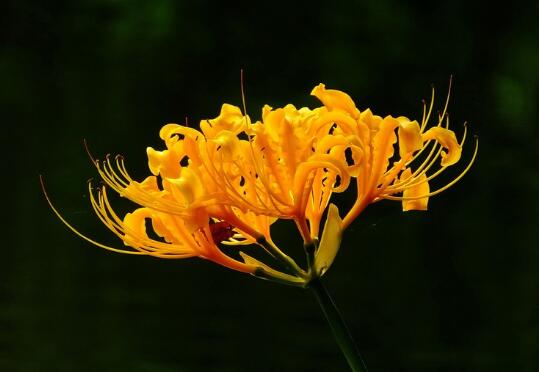
To know what to do when Lycoris aurea gets pests, we first need to understand what kind of pest it is, so that we can carry out targeted prevention and control, because the control methods for each pest and disease are different. The details are introduced below, and friends troubled by this can take a look.
II. Pest and Disease Prevention and Control for Lycoris aurea (Pests)
1. Spodoptera litura
Spodoptera litura is a crop pest belonging to the order Lepidoptera, family Noctuidae, genus Spodoptera. It is generally brown, with many markings on the forewings, including a broad grayish-white diagonal stripe. This pest mainly threatens the leaves, flower buds, and fruits of Lycoris aurea. It gradually gnaws away the leaf mesophyll and bores into the flower scape, causing the plant to gradually wither.
Control method: From late spring to November each year is its peak outbreak period, so we must pay special attention. When dealing with this pest and disease of Lycoris aurea, we can directly use a 5% fipronil suspension concentrate at 2500 times dilution to spray and kill it.
2. Lycoris noctuid moth
This pest mainly invades the plant during its larval stage and directly bores into and feeds on the inside of the bulb. The affected areas usually leave behind large amounts of green or brown frass pellets, and you can use this to judge whether it is this pest.
Control method: For this pest and disease of Lycoris aurea, we can combine control with plowing in early spring, digging out overwintering pupae to reduce the pest population base. At the same time, we can also directly use Lorsban at 1500 times dilution or phoxim emulsifiable concentrate at 800 times dilution to spray and kill the pests.
3. Thrips
Thrips is the collective name for insects of the order Thysanoptera. They are relatively small, generally 0.5-2 mm in body length, and rarely exceed 7 mm. This pest mainly harms the area where the corm of Lycoris aurea sends out leaves. It gradually absorbs the nutrients there, causing the leaves to gradually lose their green color and become yellow and dry.
Control method: When dealing with this pest and disease of Lycoris aurea, we can use 25% imidacloprid at 3000 times dilution and 70% Admire at 6000-10000 times dilution for alternating spray control.
III. Pest and Disease Prevention and Control for Lycoris aurea (Diseases)
Rot disease
Rot disease, also called bark rot, is a relatively common disease of Lycoris aurea. The onset of this disease follows no pattern and can occur in any season. When it strikes, many small black spots appear on the trunk and gradually spread to the lower part over time, eventually causing the plant to gradually rot.
Control method: When dealing with this pest and disease of Lycoris aurea, we can use 1 bottle of Hushu Dajiangjang mother liquor diluted with 30 kg of water, then apply it to the plant body. Generally, apply once every 15 days or so, and it can be cured after 2-3 applications.
What to Do When Zinnia Gets Pests: Pest and Disease Prevention and Control for Zinnia / 1 Pest and 3 Diseases
When we grow zinnias, the last thing we want to encounter is pests and diseases. Such problems are very harmful to the plant, not only affecting its ornamental value, but in severe cases also causing the plant to wither and die. So what should you do when zinnia gets pests? How should pest and disease prevention and control for zinnia be done? Below, the editor will walk you through it.
I. What to Do When Zinnia Gets Pests: Find the Cause
To know what to do when zinnia gets pests, we first need to understand what kind of pest it is, so that we can handle it in a targeted way, because the control methods for each pest and disease are different. The details are introduced below, and friends troubled by this can take a look. Of course, those who are not can also take a look, since prevention is better than cure.
II. Pest and Disease Prevention and Control for Zinnia
Aphids
Aphids are one of the most destructive pests on Earth and are harmful to many plants, and zinnia is one of them. The damage caused by this pest is mainly through adult and nymph aphids sucking the sap of leaves, stems, tender tips, and tender ears, causing the plant to lose large amounts of nutrients and wilt.
Control method: When dealing with this pest and disease of zinnia, we can use 10% imidacloprid wettable powder at 2000 times dilution as a spray to kill it.
White star disease
White star disease mainly threatens the leaves of zinnia. When it strikes, many dark brown lesions appear on the leaves, which later become dark brown around the edges with a grayish-white center. This disease mostly occurs on the lower leaves, and in severe cases the leaves become curled and dry.
Control method: For this pest and disease of zinnia, we can use 75% chlorothalonil wettable powder at 500-800 times dilution to spray the diseased plants, generally once every half a month or so, and it can be cured after 1-2 applications.
Mosaic disease
Mosaic disease is a worldwide viral disease. When it strikes, chlorotic angular lesions appear on the leaves of zinnia, and over time the color gradually turns brown. It also causes leaf deformation and yellowing, and in severe cases affects the yield and quality of cut flowers.
Control method: For this pest and disease of zinnia, we can use healthy seedlings and avoid dividing and propagating from diseased plants. We can also spray insecticides to prevent and control the plant.
Black spot disease
Black spot disease, also called brown spot disease, is a disease that can appear in many plants, and zinnia is no exception. Its leaves, stems, and flowers can all be harmed by this disease. This disease causes symptoms such as leaves turning brown and drying up and petals shriveling, and in severe cases can cause the plant to wither and die.
Control method: When dealing with this pest and disease of zinnia, we can use 50% zineb or mancozeb at 5000 times dilution as a spray to treat the symptoms, and when spraying, pay special attention to spraying the leaf undersides evenly.
What to Do When Forsythia Gets Pests: Pest and Disease Prevention and Control for Forsythia / 3 Pests and 3 Diseases
During the growth of forsythia, the last thing we want to encounter is pests and diseases. Such problems are very harmful to the plant, not only affecting its ornamental value, but in severe cases also causing the plant to wither. So what should you do when forsythia gets pests? And how should pest and disease prevention and control for forsythia be done? Below, the editor will walk you through it.
I. What to Do When Forsythia Gets Pests: Find the Cause
To know what to do when forsythia gets pests, we first need to understand what kind of pest it is, so that we can handle it in a targeted way, because the handling methods for each pest and disease are different. The details are introduced below, and friends whether troubled by this or not can take a look, since prevention is better than cure.
II. Pest and Disease Prevention and Control for Forsythia (Pests)
1. Leafminer
The leafminer gradually bores into and feeds on the internal tissues of forsythia leaves, forming snake-like white mines. Its excrement is deposited in the mines as black continuous linear strands. Adults feeding and laying eggs cause round wounds, and in severe cases can cause the plant to wither and die.
Control method: The peak outbreak period of this pest is from February to April each year, and we must pay close attention at this time. When dealing with this pest and disease of forsythia, we can directly use 75% cyromazine wettable powder at 5000 times dilution to spray and kill it.
2. Sophora looper moth
The Sophora looper moth is a leaf-eating pest. Its peak outbreak period is in summer each year, so everyone must pay special attention at this time. This pest mainly feeds on forsythia leaves, and in severe cases can even cause plant death.
Control method: For this pest and disease of forsythia, we can use 2.5% deltamethrin emulsifiable concentrate at 2000-3000 times dilution to spray and kill it.
3. Slug
The slug, also called the snout beetle, is a mollusk that looks similar to a snail without a protective shell. It mainly threatens forsythia leaves, gradually eating away at them, and finally causing many holes to appear on the leaves, greatly affecting their appearance.
Control method: When dealing with this pest and disease of forsythia, we can take advantage of its habit of crawling out to feed after watering, after rain, in the early morning, in the evening, and on cloudy days, and manually catch them by threading them with wire.
III. Pest and Disease Prevention and Control for Forsythia (Diseases)
1. Leaf spot disease
Leaf spot disease, as its name suggests, harms plant leaves. When it strikes, many irregular lesions appear on forsythia leaves, and over time small black dots also appear on the lesions, greatly affecting the ornamental value.
Control method: When dealing with this pest and disease of forsythia, we can use 50% carbendazim wettable powder at 500 times dilution to spray the diseased plants, generally once every 7-10 days, and it can be cured after 3-4 applications.
2. Rot disease
Rot disease, also called bark rot, is a relatively common disease of forsythia. The onset of this disease follows no pattern and can occur in any season. When it strikes, many small black spots appear on the trunk and gradually spread to the lower part over time, eventually causing the plant to gradually rot.
Control method: When dealing with this pest and disease of forsythia, we can use 1 bottle of Hushu Dajiangjang mother liquor diluted with 30 kg of water, then apply it to the plant body. Generally, apply once every 15 days or so, and it can be cured after 2-3 applications.
3. Powdery mildew
Powdery mildew is a relatively common disease of forsythia. This disease mainly threatens plant leaves. When it strikes, many powdery mildew spots appear on the leaves. In the early stage it causes the leaves to lose their green color, and in severe cases the entire leaf is covered with a powdery mildew layer, causing the plant to be unable to carry out photosynthesis and gradually shrivel.
Control method: When preventing and controlling this pest and disease of forsythia, we can use 70% thiophanate-methyl wettable powder at 1000 times dilution to spray the plant, generally once every 10 days, and it can be cured after about 2-3 applications.