What to do when Bleeding Heart Vine gets pests? 4 pests and 3 diseases, 7 pest and disease control methods in total
As a common ornamental flowering plant, Bleeding Heart Vine (Clerodendrum thomsoniae) is not difficult to grow and is exceptionally beautiful, so many people keep it at home. But because there are many beginners, they usually do not follow the proper methods when growing it, which results in the plant getting pests and diseases. So what should you do when Bleeding Heart Vine gets pests? For this, the editor has summarized 7 common pests and diseases of Bleeding Heart Vine. Let's take a look!
1. When Bleeding Heart Vine gets pests, spray with pesticide
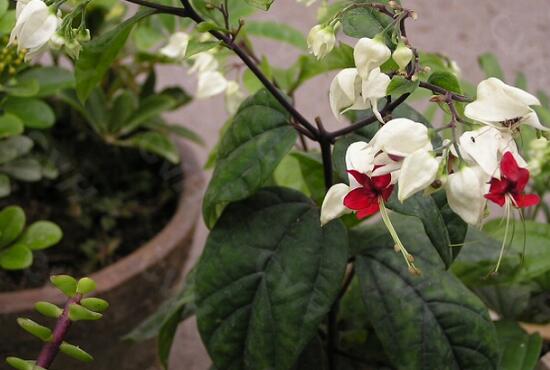
During the growth of Bleeding Heart Vine, the plant will inevitably get pests and diseases. The main pests include leaf beetles, stinging caterpillars (nettle grubs), scale insects and whiteflies, and the main diseases include leaf spot, rust and mosaic disease. Their appearance will all affect the growth of Bleeding Heart Vine. So once discovered, pesticide should be sprayed immediately for control. As for which pesticide to spray, let's continue reading below on the pest and disease control of Bleeding Heart Vine.
2. Pest and disease control methods for Bleeding Heart Vine
1. Leaf beetle
When it comes to Bleeding Heart Vine getting pests, the most common is still the leaf beetle. This insect generally appears in summer, and they often gnaw on the leaves, leaving the leaves completely disfigured and ruining the plant's ornamental effect.
Control method: Once leaf beetles are found, they should be caught and killed immediately, then spray 2.5% deltamethrin 3000 times dilution to prevent the larvae from continuing to grow and harm the plant.
2. Stinging caterpillar (nettle grub)
The stinging caterpillar is one of the main pests of Bleeding Heart Vine. This insect generally occurs from June to August, with August being the most severe. This insect gnaws on the leaves of Bleeding Heart Vine, causing damage to the leaves, and in severe cases the leaves become net-like.
Control method: In winter, promptly check the branches and stems of Bleeding Heart Vine, and when egg masses are found, prune them off in time to remove the source of infection. When stinging caterpillar larvae are found, spray 80% dichlorvos emulsifiable concentrate 1200 times dilution or 50% phoxim emulsifiable concentrate 1000 times dilution; spraying several times in succession gives an excellent effect.
3. Scale insect
When it comes to Bleeding Heart Vine getting pests, it is generally scale insects. This insect is relatively small and often gathers together, mainly attacking the plant's leaves, affecting the plant's photosynthesis, causing the leaves of Bleeding Heart Vine to turn yellow and impairing its ornamental value.
Control method: When brown soft scale is found, it can be brushed off with a writing brush, then rinsed clean with water; then spray 50% omethoate emulsion or 50% monocrotophos. Generally one application is enough to achieve the control effect.
4. Whitefly
One of the common pests that attack Bleeding Heart Vine, it is tiny in size and reproduces quickly, parasitizing the phloem of Bleeding Heart Vine and sucking its sap. Whiteflies feeding on plant sap will cause the leaves to fade, curl and shrink, and they also often serve as vectors for various toxins, triggering other diseases.
Control method: After whiteflies are found, pesticide should be sprayed immediately for control. The pesticide can be 25% phosmet emulsifiable concentrate 1000 times dilution, or 40% omethoate 1000 to 1500 times dilution. The best time to spray is in the early morning when the adult whiteflies are weak in activity.
5. Leaf spot disease
When the indoor temperature fluctuates greatly in a short period, or when too much water is given during the dormant period, Bleeding Heart Vine is prone to leaf spot disease. When the disease occurs, many small brown spots appear on the leaves of Bleeding Heart Vine, and in severe cases the spots spread over the entire leaf.
Control method: When the above symptoms are found, promptly remove the diseased leaves and destroy them in a concentrated manner to reduce the source of disease; then use chlorothalonil 800 times dilution for foliar spraying, once every 7-8 days, for 2-3 times in succession, and it can basically recover.
6. Rust disease
One of the pests and diseases of Bleeding Heart Vine. When the plant suffers from this disease, large rust-brown lesions appear on the epidermis of the stems, and the leaves also become wrinkled.
Control method: Promptly prune off the diseased leaves to reduce the source of disease and also let it sprout new buds again; then spray with 12.5% diniconazole wettable powder 2000-3000 times dilution, and the control effect is excellent.
7. Mosaic disease
This is one of the main diseases of Bleeding Heart Vine, and it mainly harms the leaves. Symptoms of the disease: in the early stage, green angular lesions appear on the leaves of Bleeding Heart Vine, then fade to brown; in severe cases, the plant becomes stunted, shrinks and turns yellow, affecting flowering. So suffering from mosaic disease is also a reason why Bleeding Heart Vine does not bloom.
Control method: Once diseased leaves are found, they should be pruned off in time to avoid attracting insects that suck sap and spread it through rubbing. In addition, spray pesticide on the leaf surface, mainly using 40% omethoate 1500 times dilution or 50% benomyl wettable powder 2500 times dilution for spray control.
That is all the editor has to introduce about the pest and disease control of Bleeding Heart Vine. I believe everyone should know what to do when they encounter pests or diseases on Bleeding Heart Vine again! If you are not careful, Bleeding Heart Vine is easily troubled by pests and diseases, so everyone must take careful care of it. Only in this way will pests not come knocking. Finally, may everyone's Bleeding Heart Vine bloom beautiful flowers~
What to do when Bleeding Heart Vine gets pests, pest and disease control of Bleeding Heart Vine / 2 pests and 2 diseases
When growing Bleeding Heart Vine, the last thing we want to encounter is pests and diseases. Such problems are very harmful to the plant, not only affecting its ornamental value, but in severe cases also causing the plant to wither and die. What to do when Bleeding Heart Vine gets pests? How should the pest and disease control of Bleeding Heart Vine be done? Below, the editor will take everyone to learn about it.
1. What to do when Bleeding Heart Vine gets pests, find the cause
To know what to do when Bleeding Heart Vine gets pests, we first need to understand what kind of insect is on it, so that we can handle it in a targeted way, because the treatment methods for each pest and disease are different. The specific details are introduced in detail below, and friends troubled by this can take a look.
2. Pest and disease control of Bleeding Heart Vine (pests)
Scale insect
Scale insect is a relatively common pest during the growth of Bleeding Heart Vine. It mainly harms the plant's leaves, branches and fruits. It will live parasitically on the branches, leaves and fruits of Bleeding Heart Vine for its entire life, causing its leaves to turn yellow and the branch tips to wither, and in severe cases even causing the entire plant to wither and die.
Control method: When controlling this pest and disease of Bleeding Heart Vine, we can use an insecticide made by mixing 40.7% chlorpyrifos emulsifiable concentrate and 80% dichlorvos emulsifiable concentrate at a 1:1 ratio, at 1000-1500 times dilution, to spray and kill it.
Whitefly
Whitefly is a very tiny pest, and even the largest ones do not exceed 3mm. This pest mainly feeds on the sap in Bleeding Heart Vine, gradually sucking it out, causing a large loss of nutrients from the plant and finally the phenomenon of withering. Among the pests and diseases of Bleeding Heart Vine, it is considered one of the most harmful.
Control method: This pest has an extremely strong reproductive capacity, so it must be dealt with as early as possible. When controlling it, we can use 40% omethoate emulsifiable concentrate 1200 times dilution to spray and kill it.
3. Pest and disease control of Bleeding Heart Vine (diseases)
Leaf spot disease
Leaf spot disease is one of the more common pests and diseases of Bleeding Heart Vine. Its peak period is from August to September each year, so everyone should pay extra attention at this time. Leaf spot disease mainly threatens the plant's leaves. When the disease occurs, many circular lesions appear on the leaves, and as time goes on the lesions gradually expand, finally causing the leaves to gradually fall off.
Control method: When controlling leaf spot disease, we can use 38% oxadixyl-copper-kresoxim-methyl 800-1000 times dilution to spray the diseased plant, spraying once every 5-7 days, and it can recover after 2-3 times.
Powdery mildew
Powdery mildew is a disease caused by fungi. When the disease occurs, many white powdery mold spots appear on the leaves of Bleeding Heart Vine, and as time goes on they gradually cover the entire leaf, affecting its photosynthesis and disturbing normal metabolism, thus causing the phenomenon of premature aging.
Control method: For this pest and disease of Bleeding Heart Vine, we can choose to use 2% antimycin aqueous solution 200 times dilution or 15% triadimefon 1000 times dilution for treatment, generally once every 3-6 days, and it can recover after 3-6 times in succession.
Control of the main pests and diseases of Bleeding Heart Vine
Bleeding Heart Vine belongs to the Verbenaceae family, and can developleaf spot disease, which is caused by infection with imperfect fungi. At first it is just small brown spots one by one, and if not treated in time, large black spots will appear, and the leaves will wither and turn yellow and die.
Therefore, once disease is found, chlorothalonil 800 times dilution should be used immediately for foliar spraying, once every 7-8 days, for 2-3 times in succession, and it can basically recover.
The main pests includescale insects, whitefliesand others.
Control method: 40% omethoate 1000 to 1500 times dilution can be sprayed. For leaves that cannot spread normally and lose green and turn yellow due to alkaline soil, 0.2% ferrous sulfate solution can be used for watering. For mosaic disease and fungal diseases, promptly remove fallen diseased leaves, strengthen ventilation, and keep the leaves dry, which can control the condition.