What to Do When Aglaonema modestum (Chinese Evergreen) Gets Bugs? 5 Common Pest and Disease Control Methods
As a common foliage plant, Aglaonema modestum is not difficult to grow and looks attractive, so many people keep it at home. But since there are many novice growers, they do not systematically care for it according to the proper methods, which results in the plant getting bugs and becoming sick. So what should you do when Aglaonema modestum gets bugs? In response, the editor has summarized 5 common pests and diseases of Aglaonema modestum. Let's take a look!
1. When Aglaonema modestum gets bugs, spray with pesticide
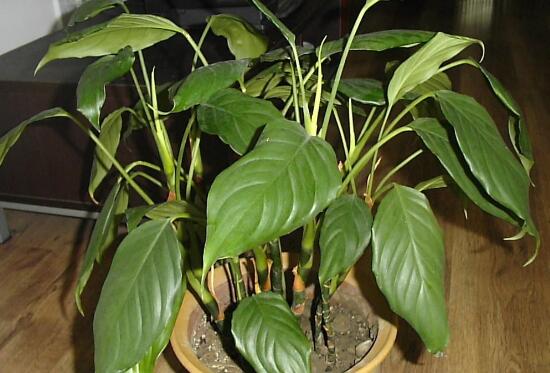
When you get home and look at the large, green leaves of Aglaonema modestum, eye fatigue is instantly relieved. However, beautiful things need to be carefully cared for. Once grown improperly, Aglaonema modestum will get bugs and become sick, which will seriously affect its ornamental value. As for what to do when Aglaonema modestum gets bugs, it is actually very simple: identify the specific pest, then spray the corresponding pesticide to solve it.
2. Pest and disease control for Aglaonema modestum
1. Brown soft scale
When it comes to Aglaonema modestum getting bugs, it is usually brown soft scale. This insect is relatively small and often gathers together. It mainly attacks the plant's leaves, affects the plant's photosynthesis, and causes the leaves of Aglaonema modestum to turn yellow, harming its ornamental value.
Control method: When brown soft scale is found, it can be brushed off with a writing brush, then rinsed clean with water; after that, spray 50% omethoate emulsifiable concentrate or 50% monocrotophos. Generally, one application can achieve the control effect.
2. Red spider mite
A type of mite, it is also one of the common pests of Aglaonema modestum. This pest often occurs when ventilation is poor and will harm the top of the plant, causing the top of Aglaonema modestum to become reddish-brown and covered with spider webs, affecting the plant's growth and development.
Control method: After discovering the pest, it can be treated with decis, or sprayed with 25% fenpyroximate emulsifiable concentrate at 800 times dilution, 73% propargite at 2000 times dilution, and other pesticides.
3. Leaf spot disease
When indoor temperatures fluctuate greatly in a short period, or when too much water is given during the dormancy period, Aglaonema modestum is prone to leaf spot disease. When the disease occurs, many small brown spots appear on the leaves of Aglaonema modestum, and in severe cases the spots cover the entire leaf.
Control method: When the above symptoms are found, promptly remove the diseased leaves and destroy them together to reduce the source of infection; then spray 65% zineb at 500 times dilution or 25% myclobutanil emulsifiable concentrate at 800 times dilution for control. Spray 1 to 2 times every 10 to 15 days, and the effect will be seen.
4. Anthracnose
When it comes to what diseases Aglaonema modestum can suffer from, anthracnose is unavoidable. This disease mainly harms the leaves. At the affected areas, several light yellow, dark brown, or light gray small patches initially appear. Over time, it will infect the stems and branches, seriously affecting the plant's growth.
Control method: When the above symptoms are found, promptly cut off the diseased leaves and burn them together to reduce the source of infection; in severe cases, spray 50% carbendazim at 1000 times dilution or 70% thiophanate-methyl at 1000 times dilution for preservation. The effect will be seen after 2-3 times.
5. Brown spot disease
In addition to the above pests and diseases, brown spot disease is also a common disease of Aglaonema modestum. This disease mainly harms the leaves, causing grass-yellow wet lesions at the leaf edges and tips; in severe cases, the leaf spots expand in patches and become brownish-yellow spots. The plant's growth is affected and its ornamental value is reduced.
Control method: When the above symptoms are found, pesticide should be sprayed for control. The pesticide can be 50% carbendazim wettable powder at 600 to 800 times dilution, or 50% thiophanate-methyl or sulfur suspension concentrate at 600 to 800 times dilution, sprayed alternately 3 to 4 times, once every 7 to 8 days, with good control effect.
That is all the editor has to introduce about pest and disease control for Aglaonema modestum. I believe everyone should know what to do when encountering Aglaonema modestum getting bugs or becoming sick! In general, with just a little carelessness, Aglaonema modestum is easily troubled by pests and diseases, so everyone must care for it carefully. Only in this way will bugs not come looking for it. Finally, may everyone's Aglaonema modestum grow beautifully~
What to Do When the Thick-Leaf Plant Gets Bugs: 4 Common Pest and Disease Control Methods for the Thick-Leaf Plant
The thick-leaf plant is a plant with extremely strong adaptability. A single leaf that falls into the soil can immediately take root! Such a plant should, logically, not be prone to getting bugs or becoming sick, but since there are many novices who simply do not know how to grow it, they end up inviting bugs. So what should you do when the thick-leaf plant gets bugs? The following are 4 pest and disease control methods for the thick-leaf plant. Let's take a look!
1. When the thick-leaf plant gets bugs, spray with pesticide
During the growth of the thick-leaf plant, it is inevitable that the plant will get bugs and become sick. The main pests are scale insects and aphids, and the main diseases are gray mold and powdery mildew. Their appearance will affect the growth of the thick-leaf plant. Therefore, once discovered, pesticide should be sprayed immediately for control. As for what pesticide to spray, let us continue to look at pest and disease control for the thick-leaf plant.
2. 4 pest and disease control methods for the thick-leaf plant
1. Scale insects
Although the thick-leaf plant is not prone to getting bugs, when the environment is not well ventilated and care is improper, it can also get scale insects. This insect uses its piercing-sucking mouthparts to suck the sap from leaves and small branches, affecting the plant's normal growth and development. In severe cases, branches or leaves wither and die.
Control method: After discovering a small number of scale insects, they can be gently brushed off with a soft brush and then rinsed clean with water; when there are many scale insects, pesticide must be sprayed. The pesticide can be Kuangshajie at 800-1000 times dilution. Generally, one application can achieve the control effect.
2. Aphids
One of the most common pests of indoor potted plants, it also harms the health of the thick-leaf plant. Aphids mainly harm the tender leaves and stems of the thick-leaf plant. They parasitize on the leaves and suck sap. Once aphids appear, they are densely packed and look very frightening, so protection must be timely.
Control method: When a small number of aphids is found, tools such as a writing brush can be used to brush the insects off; when there are many aphids, related insecticides are needed. The editor recommends using 2.5% rotenone emulsifiable concentrate at 1200 times dilution. After continuous spraying several times, the effect is excellent.
3. Gray mold
This disease mainly invades through weakened host tissues and can harm the plant's stems, leaves, and flowers, especially the flowers. When the leaves and petioles of the thick-leaf plant appear grayish-white, water-soaked, or even softened to the point of rotting, it may be suffering from gray mold.
Control method: When the above symptoms are found, promptly cut off the diseased leaves to reduce the source of infection; in the early stage of the disease, spray 70% thiophanate-methyl wettable powder at 1000 times dilution, or 50% carbendazim wettable powder at 800 to 1000 times dilution for control. Spray once a week, and the effect is excellent after 2 to 3 consecutive sprays.
4. Powdery mildew
Powdery mildew, another disease of the thick-leaf plant, mainly harms leaves, tender stems, flower buds, and flower buds and other parts. Symptoms: many white powdery lesions appear on the leaves of the thick-leaf plant. These lesions greatly affect its photosynthesis, and over time can even cause the plant to die.
Control method: Promptly cut off severely diseased plants or severely diseased parts and burn them together to reduce the source of infection; in the early stage of the disease, spray 50% carbendazim wettable powder at 800 times dilution, 80% zineb at 500 times dilution, or 75% chlorothalonil 500 solution for control. Alternating applications give a better effect.
That is all the editor has to introduce about pest and disease control for the thick-leaf plant. I believe everyone should know what to do when encountering bugs or illness again! In general, the thick-leaf plant is still not prone to getting bugs. As long as everyone cares for it according to the growing methods for the thick-leaf plant, bugs will not come looking for it. Finally, may everyone's thick-leaf plant grow green and strong!
What to Do When Butterfly Bush Gets Bugs: Common Pest and Disease Control for Butterfly Bush / 2 Pests and 2 Diseases
When growing butterfly bush, the last thing we want to encounter is pests and diseases. Such problems are extremely harmful to the plant, not only affecting its ornamental shape, but in severe cases also causing the plant to wither and die. So what should you do when butterfly bush gets bugs? What is needed for common pest and disease control of butterfly bush? Below, the editor will take everyone to learn about it.
1. What to do when butterfly bush gets bugs: find the cause
To know what to do when butterfly bush gets bugs, we first need to understand what kind of bug it is, so that we can handle it in a targeted way, because the treatment methods for each pest and disease are different. The details are introduced in the following text. Friends troubled by this can take a look.
2. Common pest and disease control for butterfly bush
1. Whiteflies
Whiteflies are a type of tiny plant-eating pest belonging to the order Hemiptera. They mainly harm the new buds, leaves, and flowers of butterfly bush. They insert their piercing-sucking mouthparts from the underside of the leaves and gradually suck out the sap, causing the plant to lose a large amount of nutrients and develop yellowing and withering.
Control method: For this pest and disease of butterfly bush, we can use 25% buprofezin emulsifiable concentrate at 1500 times dilution for direct spraying to kill them. It can kill eggs, nymphs, and adults.
2. Aphids
Aphids are one of the most destructive pests on Earth and harm many plants, and butterfly bush is one of them. The damage caused by this pest is mainly adult and nymph aphids sucking the sap of leaves, stems, tender tips, and tender spikes, causing the plant to lose a large amount of nutrients and develop withering.
Control method: When dealing with this pest and disease of butterfly bush, we can use 50% pirimicarb wettable powder at 3000 times dilution or 2.5% fenpropathrin emulsifiable concentrate at 3000 times dilution to spray and kill them.
3. Soft rot
Among the pests and diseases of butterfly bush, soft rot is a relatively common disease. When it occurs, many water-soaked lesions appear on the plant's roots. Over time, the roots and stems gradually rot and give off waves of foul odor, eventually causing it to gradually rot to death.
Control method: When controlling this disease, we can use 38% oxadixyl-fosetyl-copper at 1000 times dilution for root irrigation treatment. Generally, apply once a week, and after 2-3 times it can be controlled.
4. Leaf spot disease
Leaf spot disease is a common plant disease, and its peak period is generally in spring and autumn. When it occurs, many oval brown lesions appear on the leaves of butterfly bush, and over time the lesions gradually spread and the color slowly deepens, eventually causing the plant to be unable to carry out photosynthesis and wither to death.
Control method: For this pest and disease of butterfly bush, we can use 20% silylazole · prochloraz at 1000 times dilution to spray the diseased plant. Generally, spray once every 7-10 days, and after 2-3 times it can be cured.