What to Do When Marigolds Get Pests? Control Methods for 2 Pests and 3 Diseases
In the process of growing marigolds, the last thing we want to encounter is pests and diseases. Such problems are extremely harmful to the plants, not only affecting their ornamental value, but in severe cases causing them to wither and die. What to do when marigolds get pests? How should pest and disease control for marigolds be done? Let's take a look below.
I. What to Do When Marigolds Get Pests - Find the Cause
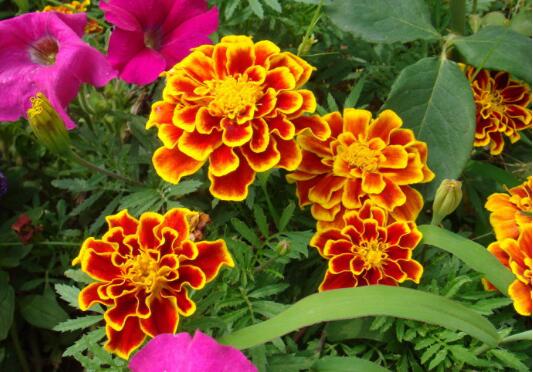
To know what to do when marigolds get pests, we first need to understand what kind of pest it is. Only when we know the specific pest or disease can we carry out targeted treatment, because the control methods for each pest and disease are different. The specific control details are in the text below. Let's take a look.
II. Pest and Disease Control for Marigolds (Pests)
1. Scale insects
Scale insects are a relatively common pest during the growth of marigolds. They mainly harm the plant's leaves, branches and fruits. They will live permanently on the branches, leaves and fruits of marigolds, causing the leaves to turn yellow and the branch tips to wither, and in severe cases even causing the entire plant to die.
Control method: The peak period for scale insects is in early spring each year, so we must pay extra attention at this time. The most direct way to deal with this pest is to use chemicals for spraying. In terms of chemicals, we can choose 50% malathion 1500x dilution.
2. Red spider mites
Among the pests and diseases of marigolds, red spider mites are a relatively common one. Their peak period is in summer each year, so everyone must pay extra attention at this time. When this pest appears, the plant's leaves will gradually turn yellow and white. If not treated for a long time, it will also cause the plant to wither.
Control method: When dealing with red spider mites, we can directly use 40% dicofol EC 1000-1500x dilution for spraying. Generally, three consecutive sprays can completely kill this pest.
III. Pest and Disease Control for Marigolds (Diseases)
1. Stem blight
This disease mainly threatens the stems and branches of marigolds. In the early stage of the disease, gray rash-like bumps will appear on the stems, round or spindle-shaped, greatly affecting plant development, and in severe cases causing the stems and branches to die.
Control method: When dealing with this marigold pest and disease, we can use 40% chlorothalonil suspension concentrate 500x dilution to spray it. Generally, once every week or so, and after 2-3 times it can be cured.
2. Leaf spot
Leaf spot is a relatively common pest and disease of marigolds. Its peak period is from August to September each year, so everyone should pay extra attention at this time. Leaf spot mainly threatens the leaves of the plant. When the disease occurs, many round spots will appear on the leaves. As time goes on, the spots will gradually expand, eventually causing the leaves to gradually fall off.
Control method: When dealing with leaf spot disease, we can use 20% simeconazole · prochloraz 1000x dilution to spray the diseased plants. Generally, spray once every 7-10 days, and after about 3-4 times it can be cured.
3. Powdery mildew
Powdery mildew is a disease that can appear in many plants, and marigolds are no exception. When the disease occurs, many white powdery substances will appear on the leaves, and as time goes on they will gradually spread, finally covering the entire leaf surface, thereby affecting photosynthesis and causing premature aging.
Control method: For this marigold pest and disease, we can use 70% thiophanate-methyl wettable powder 1000x dilution for control. Generally, apply once every 10 days, and after about 3 times it can be cured.
What to Do When Monkshood Gets Pests - Pest and Disease Control for Monkshood / 2 Pests and 2 Diseases
Pests and diseases are the most troublesome problem for all plants, and monkshood is no exception. Such problems will not only affect its ornamental value, but in severe cases also cause the plant to wither and die. So what to do when monkshood gets pests? How should pest and disease control for monkshood be done? Let's take a look below.
I. What to Do When Monkshood Gets Pests - Find the Cause
To know what to do when monkshood gets pests, we first need to understand what kind of pest it is, and then carry out targeted treatment, because the control methods for each pest and disease are different. As the saying goes, you must suit the remedy to the case. Below are control methods for various pests and diseases. Friends who are troubled by this can take a look.
II. Pest and Disease Control for Monkshood (Pests)
1. Aphids
Aphids are one of the most destructive pests on Earth, harming many plants, and monkshood is one of them. The damage caused by this pest is mainly that adults and nymphs suck the sap from leaves, stems, tender tips and tender ears, causing a large loss of nutrients from the plant and resulting in withering.
Control method: When dealing with this monkshood pest and disease, we can use 40% imidacloprid water-soluble concentrate 1500-2000x dilution to spray and kill them.
2. Red spider mites
Red spider mites are a pest that exists on many plants, and monkshood is no exception. This pest is very small in size and generally difficult to find. Its harmful method is to pierce its mouthparts into the leaves to suck sap, causing chlorophyll to be destroyed and resulting in yellowing. In severe cases, it can also cause leaves to fall off or even drop completely.
Control method: When dealing with this monkshood pest and disease, if only a few individual leaves are affected, we can remove them. If more leaves are affected, we can use 40% dimethoate EC 1500x dilution to spray the plant and eliminate this pest.
III. Pest and Disease Control for Monkshood (Diseases)
1. Black spot
Black spot is a disease caused by fungi. It mainly harms the leaves, petioles and tender shoots of monkshood. When the disease occurs, many purplish-brown spots will appear on the affected parts, and as time goes on the spots will gradually expand and the color will slowly change, eventually causing the plant to gradually wither.
Control method: For this monkshood pest and disease, we can use thiophanate-methyl or carbendazim and other chemicals to spray the diseased plants. Generally, once every 7-10 days, and after 2-3 times it can be cured.
2. Southern blight
Southern blight, also known as sclerotial root rot and sclerotial seedling blight, mainly harms the rhizome or stem base of monkshood seedlings. After the seedlings are affected, their ability to absorb nutrients and water will be affected, resulting in poor growth. In severe cases, it can also cause branches and leaves to wither. When the lesion encircles the stem completely, it will cause the entire plant to die.
Control method: When dealing with this monkshood pest and disease, we can use Juandun diluted 800-1000x or Fengqia Genbao 600-800x to drench the roots of the diseased plants. Generally, apply once every 10 days, and after 3 times it can be cured.
What to Do When Gotu Kola Gets Pests - Pest and Disease Control for Gotu Kola / 2 Pests and 2 Diseases
In the process of growing gotu kola, the last thing we want to encounter is pests and diseases. Such problems are extremely harmful to the plants, not only affecting their ornamental value, but in severe cases causing them to wither and die. So what to do when gotu kola gets pests? How should pest and disease control for gotu kola be done? Let's take a look below.
I. What to Do When Gotu Kola Gets Pests - Find the Cause
To know what to do when gotu kola gets pests, we first need to understand what kind of pest it is, so that we can carry out targeted treatment, because the treatment methods for each pest and disease are different. The specific details are described in the text below. Interested friends can take a look.
II. Pest and Disease Control for Gotu Kola (Pests)
1. Brown soft scale
Brown soft scale is a pest of the family Coccidae. It mainly threatens the leaves, petioles and tender branches of gotu kola. It will gradually suck the sap from them, causing the plant to gradually lose nutrients and finally wither and die.
Control method: When dealing with this gotu kola pest and disease, the most direct method is to use chemicals for control. We can use 50% monocrotophos EC 1000x dilution to directly spray and kill them.
2. Red spider mites
Red spider mites, also known as cotton red spider mites, are a pest of the family Tetranychidae. This pest is very small in size and generally difficult to find. Its harmful method is to pierce its mouthparts into the leaves to suck sap, causing chlorophyll to be destroyed and resulting in yellowing. In severe cases, it can also cause leaves to fall off or even drop completely.
Control method: When dealing with this gotu kola pest and disease, if only a few individual leaves are affected, we can remove them. If more leaves are affected, we can use 40% dimethoate EC 1500x dilution to spray the plant and eliminate this pest.
II. Pest and Disease Control for Gotu Kola (Diseases)
1. Rust
Rust is a type of plant disease caused by parasitic rust fungi. It mainly harms the leaves, stems and fruits of gotu kola. When the disease occurs, many small blister-like spots will appear on the affected parts. In severe cases, the blister spots will densely merge into patches, and the plant will rapidly wither and die due to massive evaporation of water from within.
Control method: When dealing with this gotu kola pest and disease, we can use 12.5% diniconazole wettable powder 2000-3000x dilution to spray the plants for control. Generally, spray once every ten days or so, and after 1-2 times it can be cured.
2. Sooty mold
Sooty mold mainly threatens the leaves and branch tips of gotu kola. When the disease occurs, many small black mold spots will appear on the leaves and branch tips, and the area will gradually spread, finally covering the entire leaves and branches, causing the plant to gradually wither and die.
Control method: When dealing with this gotu kola pest and disease, we can use amobam 500-800x dilution or folpet 400x dilution to spray the diseased plants. Generally, spray once every 12-15 days, and after 1-2 times it can be cured.