What to Do When Bougainvillea Gets Bugs? A Guide to Controlling 2 Pests and 2 Diseases
When growing bougainvillea, the last thing we want to run into is problems like pests and diseases. These problems are extremely harmful to the plant, not only affecting its ornamental value, but in severe cases even causing the plant to wither and die. So what should you do when bougainvillea gets bugs? And how should pest and disease control for bougainvillea be carried out? Below, the editor takes you through it.
I. What to Do When Bougainvillea Gets Bugs: Find the Cause
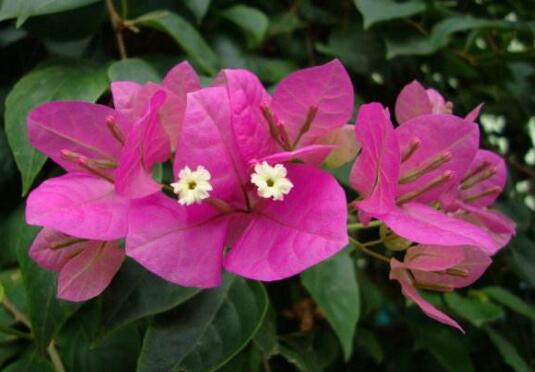
To know what to do when bougainvillea gets bugs, we first need to understand what kind of bug it is, so that we can deal with it in a targeted way, because the treatment methods for each pest and disease are different. The details are covered below, and those troubled by this can take a look.
II. Pest and Disease Control for Bougainvillea (Pests)
1. Aphids
Aphids are a pest that can appear on many plants, and bougainvillea is no exception. They mainly feed on the sap in leaves, stems, tender tips and young spikes through nymphs, causing the plant to lose a large amount of nutrients and eventually wither.
Control method: For aphids, this kind of bougainvillea pest, the most direct method is to use a pesticide to spray and kill them. As for the pesticide, we can choose 50% pirimicarb wettable powder at 3000 times dilution.
2. Scale insects
Scale insects are an extremely harmful pest, mainly threatening the leaves, branches and fruits of anthurium. They cluster on branches, leaves and fruits, causing yellowing of leaves, withering of branch tips, decline of tree vigor and other symptoms, and they can also trigger sooty mold.
Control method: When dealing with scale insects, this kind of bougainvillea pest, we can directly use 45% malathion emulsifiable concentrate at 1000 times dilution to spray and kill them.
III. Pest and Disease Control for Bougainvillea (Diseases)
1. Leaf spot disease
Leaf spot disease, as its name suggests, harms plant leaves. When it occurs, many irregular lesions appear on the leaves of bougainvillea, and as time goes on, small black dots also appear on the lesions, greatly affecting its ornamental value.
Control method: When dealing with this kind of bougainvillea pest and disease, we can use 50% carbendazim wettable powder at 500 times dilution to spray the diseased plant, generally once every 7-10 days, and it can recover after 3-4 applications.
2. Brown spot disease
Brown spot disease, also called Rhizoctonia solani blight, is a fungal disease caused by Rhizoctonia solani. When it occurs, many yellow-brown to light-brown lesions 0.1-0.5cm in diameter appear on the leaves, and as time goes on the lesions gradually spread, eventually causing the plant to wither and die.
Control method: When we find this kind of bougainvillea pest and disease, if the number of diseased leaves is relatively small, we can promptly remove and destroy them. If there are many, we need to use 70% mancozeb wettable powder at 400 times dilution for treatment, generally spraying the diseased plant once every 10 days, and it can recover after 3 applications.
What to Do When Bay Laurel Leaves Get Bugs: Pest and Disease Control for Bay Laurel / 2 Pests and 3 Diseases
Pests and diseases can be said to be the problem that all plants least want to encounter during growth, and bay laurel is no exception. Such problems are extremely harmful to it, not only affecting its ornamental value, but in severe cases even causing it to wither and die. So what should you do when bay laurel leaves get bugs? How should pest and disease control for bay laurel be carried out? Below, the editor takes you through it.
I. What to Do When Bay Laurel Leaves Get Bugs: Find the Cause
To know what to do when bay laurel leaves get bugs, we first need to understand what kind of bug it is, so that we can deal with it in a targeted way, because the treatment methods for each pest and disease are different. The details are covered below, and those troubled by this can take a look.
II. Pest and Disease Control for Bay Laurel (Pests)
Red wax scale
Red wax scale is an insect of the genus Ceroplastes in the family Coccidae of the order Hemiptera. This pest mainly parasitizes the branches and leaves of bay laurel, sucking the sap inside, thereby causing the plant's growth to decline, the crown to shrink, and in severe cases even causing the entire plant to wither and die.
Control method: If this pest appears on bay laurel, in the early stage we should promptly remove the insects or prune off the heavily infested branches and leaves, then destroy them in a centralized manner. If it is severe, we can use 20% buprofezin emulsifiable concentrate at 1500 times dilution to directly spray and kill the pests.
Large bagworm
The large bagworm is a moth of the genus Clania in the family Psychidae of the order Lepidoptera. Its larvae parasitize the leaves of bay laurel, gradually biting and feeding on its leaves and tender shoots, causing local tea bushes to become bare, and in severe cases even causing the entire plant to die.
Control method: When dealing with this kind of bay laurel pest and disease, we can use 90% cartap wettable powder at 1200 times dilution or 50% fenitrothion emulsifiable concentrate at 1000 times dilution to directly spray and kill them.
III. Pest and Disease Control for Bay Laurel (Diseases)
Anthracnose
Anthracnose mainly threatens the leaves of bay laurel. In the early stage of the disease, many brown lesions appear on the leaves, and as time goes on the lesions gradually expand and can occupy half the area of a small leaf, preventing the plant from carrying out photosynthesis and causing it to gradually wither and yellow, with the leaves also gradually falling off.
Control method: When controlling this kind of bay laurel pest and disease, we can use 75% thiophanate-methyl wettable powder at 1000 times dilution to spray the diseased plant, generally once every 7-10 days, and it can recover after 2-3 applications.
Black spot disease
Black spot disease is a disease caused by fungi, mainly harming the leaves, petioles and tender shoots of bay laurel. When it occurs, many purple-brown lesions appear on the affected parts, and as time goes on the lesions gradually expand and their color slowly changes, eventually causing the plant to gradually wither.
Control method: For this kind of bay laurel pest and disease, we can use thiophanate-methyl or carbendazim and the like to spray the diseased plant, generally once every 7-10 days, and it can recover after 2-3 applications.
Brown spot disease
Brown spot disease, also called Rhizoctonia solani blight, is a fungal disease caused by Rhizoctonia solani. When it occurs, many yellow-brown to light-brown lesions 0.1-0.5cm in diameter appear on the leaves, and as time goes on the lesions gradually spread, eventually causing the plant to wither and die.
Control method: When we find this kind of bay laurel pest and disease, if the number of diseased leaves is relatively small, we can promptly remove and destroy them. If there are many, we need to use 50% procymidone at 2000 times dilution for treatment, generally spraying the diseased plant once a week, and it can recover after about 3 applications.
What to Do When Snow Lotus Gets Bugs: Pest and Disease Control for Snow Lotus / 2 Pests and 2 Diseases
When growing snow lotus, the last thing we want to encounter is problems like pests and diseases. Such problems are extremely harmful to the plant, and if not dealt with promptly, they can easily cause the plant to wither and die. So what should you do when snow lotus gets bugs? How should pest and disease control for snow lotus be carried out? Below, the editor takes you through it.
I. What to Do When Snow Lotus Gets Bugs: Find the Cause
To know what to do when snow lotus gets bugs, we first need to understand what kind of bug it is, so that we can deal with it in a targeted way, because the control methods for each pest and disease are different. The details are covered below, and interested readers can take a look.
II. Pest and Disease Control for Snow Lotus (Pests)
1. Black cutworm
The black cutworm, also called the soil silkworm, is a kind of silkworm-type insect with a black body surface. It is more likely to appear in humid environments, so special attention must be paid at such times. This pest mainly harms snow lotus seedlings, gradually feeding on the tender leaves of the seedlings, ultimately causing snow lotus to lose nutrients and wither to death.
Control method: Because seedlings are relatively fragile, control must be carried out as early as possible. To deal with this pest, we can choose 40% cypermethrin-phoxim emulsifiable concentrate at 2000-3000 times dilution for direct spraying.
2. Noctuid moths
In the pest and disease control of snow lotus, noctuid moths are a relatively common pest, mainly harming the leaves of snow lotus. They gradually nibble away at the leaves, seriously affecting the plant's appearance, and in the later stage they will even eat all the leaves of the snow lotus, preventing the plant from growing.
Control method: The peak period for this pest is August-September each year, and special attention must be paid during this time. When controlling this pest, we can use 2.5% trichlorfon powder to spray the snow lotus.
III. Pest and Disease Control for Snow Lotus (Diseases)
1. Black spot disease
Among the pests and diseases of snow lotus, black spot disease is the most common disease of snow lotus. When it occurs, many gray-brown lesions appear on the leaves, and some mold-like substances also grow on the lesions. As time goes on, it causes the snow lotus to gradually wither and die.
Control method: When controlling this disease, we can generally use 75% chlorothalonil at 500-600 times dilution, spraying the plant once every 10-15 days, and it can basically recover after 1-2 applications.
2. Powdery mildew
Among the pests and diseases of snow lotus, powdery mildew is a relatively common disease. When this disease occurs, some powdery mildew layers appear on the leaves of snow lotus, and they gradually spread to the entire leaf, preventing the snow lotus from carrying out photosynthesis and causing premature aging and other symptoms.
Control method: When controlling this disease, we can use 80% sulfur at 400 times plus 72% benazolin-cymoxanil at 600 times as a spray to spray the plant.