How to Deal with Pests and Diseases on Variegated Spider Plants? 3 Pests and 3 Diseases Control Methods
As the finest among spider plants, the variegated spider plant (Chlorophytum comosum 'Vittatum') has powerful benefits. It not only has the ability to absorb formaldehyde, but is also more attractive than ordinary spider plants, and has good medicinal uses. However, during cultivation, many growers' plants develop pests and diseases. So what should you do when a variegated spider plant gets pests? In response, the editor has summarized 6 common pest and disease control methods for variegated spider plants. Let's take a look together.
1. When a variegated spider plant gets pests, spray with pesticide
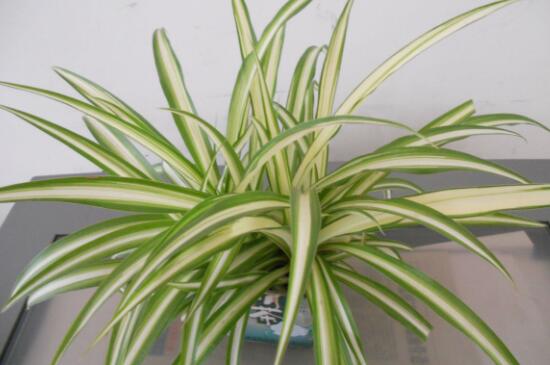
Although variegated spider plants are not prone to pests and diseases, if you do not follow the proper cultivation methods for variegated spider plants, problems such as waterlogged potting soil, poor ventilation, and root rot can easily occur, and as a result the plant will still get pests and diseases. As for what to do when a variegated spider plant gets pests, it is actually very simple: confirm the pest, then spray the appropriate pesticide to solve it. For the specific symptoms and control methods, let's continue reading below.
2. Pest and Disease Control for Variegated Spider Plants
1. Scale insects
Once you find pests on a variegated spider plant, you can consider scale insects. This pest easily breaks out in poorly ventilated environments, and it attaches to the leaves, causing them to lose their luster. Symptoms of infestation: the leaves of the variegated spider plant turn yellow, and in severe cases the plant will die.
Control method: If there are relatively few scale insects, you can dip a cloth in laundry detergent solution and wipe off the insects. When there are many pests, you can spray a solution made by diluting 40% omethoate to 1000 times, or you can use 50% malathion diluted to 1500 times for spraying control.
2. Aphids
One of the main pests of variegated spider plants, they mainly harm the leaves and buds, sucking large amounts of sap and causing poor plant growth. Because aphids reproduce in large numbers, they are usually found in dense clusters, which is not only frightening but also very disgusting.
Control method: If you find a small number of aphids, you can apply plant ash to the leaf surface and rinse it off to remove them. When there are many aphids, use 40% phosmet diluted to 1000 times and spray, generally once every 7-10 days; spraying continuously 2-3 times can eliminate the damage.
3. Whiteflies
One of the common pests that attack variegated spider plants. They are tiny in size and reproduce quickly, parasitizing the phloem of the variegated spider plant and sucking its sap. Whiteflies are generally hard to spot, and once discovered they are usually in large patches; by that time the plant has already had a large amount of sap sucked away and is very weakened.
Control method: Once whiteflies are confirmed, you should immediately use pesticide for control. You can use 25% phosmet emulsifiable concentrate at 1000 times, or 40% omethoate at 1000 times for spraying and killing. The best time to spray is in the early morning when adult whiteflies are less active.
4. Root rot
During cultivation, waterlogged potting soil and poor ventilation can cause the roots of the variegated spider plant to rot, leading the plant to suffer from root rot. Symptoms: the roots rot, the leaves wither and yellow and drop off, until death.
Control method: If the above symptoms are found, spray 50% carbendazim wettable powder at 500 times, or directly drench the roots with it, once a week. In severe cases, pull out the variegated spider plant, remove the rotted root parts, and change the soil and pot to replant.
5. Anthracnose
One of the common diseases of variegated spider plants, it mainly occurs under conditions of high humidity and stuffiness, waterlogged pots, overly dense clumps, and poor ventilation, and it harms the leaves. Symptoms: diseased leaves develop yellow-brown sunken small spots, which then expand into dark brown round spots; the leaf tips dry up, and then the whole plant dies.
Control method: Cut off diseased leaves and burn them in a centralized manner to reduce the source of disease. In severe cases, spray 50% carbendazim at 1000 times or 70% thiophanate-methyl at 1000 times for preservation, and results can be seen after 2-3 applications.
6. Leaf blight
Under conditions of relatively high environmental temperature, relatively high humidity, and poor ventilation, variegated spider plants can also suffer from leaf blight. Symptoms: the leaves of the variegated spider plant first turn yellow, then become brown diseased spots, and finally spread to the entire plant.
Control method: When the above symptoms are found, spray a solution made by diluting 70% zineb to 600 times for control, once every 15-20 days, and results can be seen after 2-3 applications.
How to Control Pests and Diseases on Variegated Spider Plants, and the Value of Variegated Spider Plants
The variegated spider plant (Chlorophytum comosum 'Vittatum') is an evergreen perennial herb, with rhizomes underground, slender leaves in a linear-lanceolate shape, with yellow-white longitudinal stripes in the center, clasping the stem at the base, and bright green. How should we control pests and diseases on variegated spider plants? Below, let's talk about the value of variegated spider plants and how to control pests and diseases.
How to Control Pests and Diseases on Variegated Spider Plants
Spider plants have relatively few pests and diseases, mainly physiological diseases, with yellowing at the front end of the leaves, and fertilizer and water management should be strengthened. Check frequently and promptly wipe off scale insects, whiteflies, and others on the leaves. Spider plants are not prone to pests and diseases, but if the potting soil is waterlogged and ventilation is poor, in addition to causing root rot, root rot disease may also occur. You can use carbendazim wettable powder at 500-800 times to irrigate the roots, once a week, for 2-3 consecutive applications.
The variegated spider plant likes a warm, humid, and semi-shaded environment. It is not cold-tolerant, and its cold tolerance is somewhat poorer than that of ordinary green-leaf spider plants. It fears high temperatures and strong direct sunlight, and is also not tolerant of drought, saline-alkali conditions, or waterlogging. The suitable growth temperature is 13-28°C, and the winter environmental temperature should not be lower than 7°C. After Frost's Descent, the lowest morning temperature may already be close to 4°C. Such temperature conditions will bring obvious cold damage to variegated spider plant plants. Although it may not show immediately at the time, after being moved indoors, due to insufficient light, dry air, relatively high room temperature, poor ventilation, and other reasons, variegated spider plant plants that have already suffered cold damage will inevitably show characteristics on the leaves such as green stripes turning yellow and leaf edges turning brown. However, as long as their fleshy root system has not rotted and died due to cold damage and other reasons, move them to a brightly lit place, control watering of the potting soil, increase leaf spraying, and before taking them outdoors the following spring, repot and change the soil, while pruning away leaves that have already withered and died. Strengthen fertilizer and water management, and the plant can quickly recover vigorous growth. For household potted spider plants, under ordinary circumstances, phenomena such as dry leaf tips and leaves gradually losing luster also commonly occur.
The Value of Variegated Spider Plants
Medicinal value
Spider plants have high medicinal value, and the whole plant can be used as medicine. They have the effects of nourishing yin and moistening the lungs, clearing heat and resolving phlegm, relieving cough and expelling phlegm, and activating blood circulation. They can be used to treat symptoms such as fever, lung heat or lung yin deficiency, cough, and vomiting blood or coughing blood. In addition, they can also be decocted and taken to treat pharyngitis and other oral diseases.
Environmental value
Spider plants have a very good air-purifying effect. They can absorb harmful gases to the human body in the air, such as carbon monoxide, carbon dioxide, formaldehyde, and benzene. In addition, the scent emitted by spider plants can also kill bacteria in the air.
Landscape use
The variegated spider plant is an excellent indoor hanging foliage plant. It can be planted inlaid in stone crevices along roadsides, or used as an accent on water-and-stone or tree-stump bonsai, all with distinctive features.
The above is an introduction to the value of variegated spider plants and how to control pests and diseases. We hope it can be helpful to everyone.
What to Do When Variegated Spider Plant Leaves Turn Yellow, What to Do When Variegated Spider Plant Leaves Become Soft
During the cultivation of variegated spider plants, phenomena such as leaves turning yellow and becoming soft are unavoidable. What should you do when variegated spider plant leaves turn yellow? What should you do when variegated spider plant leaves become soft? Let's look at the answers together below.
What to do when variegated spider plant leaves turn yellow:
More than 20 days after the variegated spider plant was moved indoors, an abnormal phenomenon of leaves turning yellow and brown appeared, which may be a characteristic shown by cold damage to its leaves caused by moving it indoors too late and the temperature under the low eaves.
Spider plants like a humid environment, and the potting soil should often remain moist. Water less in winter, and do not let the potting soil become too wet, because the roots of spider plants will absorb sufficient water in one watering, so they have relatively strong drought resistance. Too much watering easily causes the leaves to turn yellow.
The variegated spider plant likes a warm, humid, and semi-shaded environment. It is not cold-tolerant, and its cold tolerance is somewhat poorer than that of ordinary green-leaf spider plants. It fears high temperatures and strong direct sunlight, and is also not tolerant of drought, saline-alkali conditions, or waterlogging. All of these can cause variegated spider plant leaves to turn yellow.
Due to insufficient light, dry air, relatively high room temperature, poor ventilation, and other reasons, variegated spider plant plants that have already suffered cold damage will inevitably show characteristics on the leaves such as green stripes turning yellow and leaf edges turning brown.
Treatment method: As long as their fleshy root system has not rotted and died due to cold damage and other reasons, move them to a brightly lit place, control watering of the potting soil, increase leaf spraying, and before taking them outdoors the following spring, repot and change the soil, while pruning away leaves that have already withered and died. Strengthen water and fertilizer management, and the plant can quickly recover vigorous growth.
What to do when variegated spider plant leaves become soft:
Leaves drooping and breaking off on their own is caused by too weak light and too frequent watering. In the growth environment for maintaining spider plants, semi-shade should dominate, and watering should be controlled to some extent. Because they have fleshy roots, they are somewhat drought-tolerant, and controlling moisture can make their leaves short, wide, and sturdy. In winter, light should preferably be full sun; in other seasons, if the temperature is higher than 26°C, maintain them under semi-shade.
The suitable growth temperature for variegated spider plants is 15-25°C, and the overwintering temperature is 5°C. Spider plants like warm and humid climate conditions, are not cold-tolerant and not heat-tolerant, prefer semi-shade, and fear strong light. They are suitable for well-drained and fertile sandy soil, and are not cold-tolerant. In the north, in early October, spider plants should be moved indoors, hung in front of windows, or placed on top of bookshelves, and every five to seven days, spray and wash the branches and leaves once with water close to room temperature.
More information